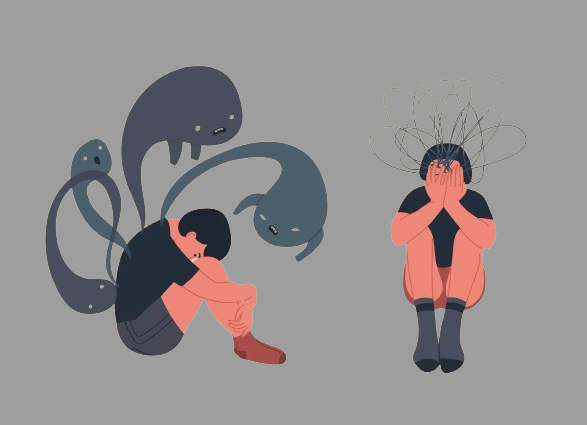
The signs you are emotionally exhausted not physically tired are remarkably easy to miss — because emotional exhaustion is designed to look like everything except what it actually is. You sleep eight hours and wake up drained. You rest all weekend and return to Monday feeling no better than you left Friday. Your body has energy but something deeper does not.

This is not laziness. It is not a character flaw. It is not something a holiday will fix. Emotional exhaustion is a clinically recognised state — the primary subscale of burnout as defined in the Maslach Burnout Inventory, the gold standard tool in occupational psychology — and it operates through entirely different mechanisms than physical fatigue.
Physical tiredness lives in the muscles and the cells. It responds to sleep, food, and rest. Emotional exhaustion lives in the nervous system, the limbic brain, and the HPA axis — the hormonal stress response system — and it does not recover through the same routes.
This article maps the full clinical picture: what emotional exhaustion actually is, what it does to the brain and body, and how to tell with precision whether what you are feeling is genuinely emotional rather than physical. By the end you will have a framework that most people spend years without encountering — and a clear picture of what recovery actually requires.
What is emotional exhaustion — and why it is not the same as being tired
Emotional exhaustion is a state of chronic depletion of emotional and psychological resources — not physical energy reserves. It emerges when a person has been managing high volumes of emotional demand over an extended period without sufficient recovery between those demands.
The clinical definition, drawn from Christina Maslach’s foundational burnout research, identifies emotional exhaustion as the first and most central dimension of burnout. It is the feeling of being emotionally overextended and depleted of the internal resources needed to engage with the demands of daily life.
Physical tiredness, by contrast, is a physiological state — muscles have consumed their glycogen stores, cells have accumulated metabolic waste, and the body’s recovery systems need time and rest to restore baseline function. Rest directly addresses physical tiredness because it targets the mechanism causing it.
Emotional exhaustion does not work this way. Its mechanism is neurobiological and psychological — involving the depletion of the stress response system, changes in limbic brain function, and the erosion of what psychologists call emotion regulation capacity. Rest alone, without addressing the source of emotional demand, may reduce surface symptoms temporarily but does not restore what emotional exhaustion depletes.
This distinction is clinically important because treating emotional exhaustion as physical tiredness — which most people do — leads to strategies that never reach the actual problem. More sleep, more holidays, more rest do not touch the HPA axis dysregulation or the limbic depletion that define true emotional exhaustion.
The neuroscience behind emotional exhaustion
Understanding what happens in the brain during emotional exhaustion explains why it feels so different from ordinary tiredness — and why it persists even when the body has rested. The central player is the hypothalamic-pituitary-adrenal axis, better known as the HPA axis.
The HPA axis governs the body’s stress response. When emotional demand is sustained over months, the axis is activated repeatedly and chronically, flooding the system with cortisol — the primary stress hormone. At acute levels, cortisol is adaptive and helpful. At chronic levels, it becomes damaging to the very systems it is meant to protect.
Chronic cortisol exposure degrades hippocampal volume — the brain region responsible for memory, emotional regulation, and contextualising experience. A smaller, less functional hippocampus means the brain struggles to put emotional experiences into perspective, making every emotional event feel heavier, more permanent, and more overwhelming than it actually is.
The prefrontal cortex — the brain’s rational, decision-making centre — also loses efficiency under sustained cortisol load. Its ability to regulate the amygdala, the brain’s alarm system, diminishes. The result is a nervous system that is simultaneously exhausted and hyperreactive — depleted but unable to switch off.
The limbic system — the emotional processing network — undergoes what researchers describe as emotional resource depletion. It loses the capacity to process emotional experience efficiently, in the same way a muscle loses the ability to contract efficiently after prolonged use without recovery.
This neurobiological profile is what produces the hallmark experience of emotional exhaustion: feeling simultaneously empty and overwhelmed, exhausted but unable to rest, numb and yet exquisitely sensitive to the smallest additional demand. Physical rest cannot restore limbic function or reset the HPA axis — which is why sleep alone never resolves true emotional exhaustion.
Signs you are emotionally exhausted not physically tired — the full clinical picture
Identifying the signs you are emotionally exhausted not physically tired requires paying attention to a specific cluster of experiences that distinguish this state from ordinary fatigue. These signs operate at emotional, cognitive, relational, and physical levels simultaneously.
The first and most defining sign is emotional numbness combined with emotional reactivity. You feel flat and disconnected from things that used to matter — but then react disproportionately to small irritations or frustrations. This paradox of numbness and reactivity is the limbic system operating in a depleted, dysregulated state.
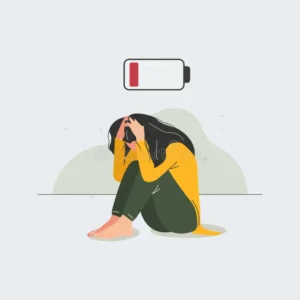
The second sign is the absence of recovery after rest. You sleep adequately, you take breaks, but you do not feel restored. The exhaustion is present when you wake up — which indicates that the fatigue is not physiological but neurological and psychological.
Cynicism and detachment are the third sign — particularly toward things, people, or roles you previously cared about deeply. This is not a personality change. It is the brain’s protective mechanism when emotional resources are critically low: it reduces engagement to reduce the demand on a depleted system.
Difficulty making decisions — even small ones — is the fourth sign. The prefrontal cortex, impaired by chronic cortisol exposure, loses the cognitive bandwidth needed for even routine choices. Decision fatigue that appears disproportionate to the complexity of the decisions is a reliable signal of emotional exhaustion.
The fifth sign is a pervasive sense of dread or heaviness that precedes the day rather than appearing in response to specific events. This anticipatory emotional weight is the nervous system signalling that its reserves are critically depleted and it cannot face another cycle of demand.
A sixth sign is the physical expression of emotional load — tension in the jaw, shoulders, and neck; disrupted digestion; frequent infections. These are the body’s physical symptoms of a nervous system in chronic stress, not signs of physical illness or tiredness in the ordinary sense.
Emotional exhaustion vs burnout — understanding the difference
The terms emotional exhaustion and burnout are frequently used interchangeably — but they describe different things, and understanding the distinction matters for both diagnosis and recovery. Emotional exhaustion is the first and primary dimension of burnout. Burnout is the full syndrome — a three-part state that emotional exhaustion eventually produces if unaddressed.
Burnout, as defined by Maslach, consists of three dimensions: emotional exhaustion, depersonalisation, and reduced personal accomplishment. Emotional exhaustion comes first. Depersonalisation — the development of cynical or detached attitudes toward the people, work, or roles causing the exhaustion — follows as a coping mechanism.
Reduced personal accomplishment is the third dimension — a growing sense that effort is no longer producing meaningful results, leading to declining performance and motivation. This three-stage progression shows why catching emotional exhaustion early matters enormously: it is the point of intervention before depersonalisation and performance collapse develop.
Someone experiencing emotional exhaustion alone still cares about their work or relationships — they simply lack the internal resources to engage effectively. Someone in full burnout has often detached from those concerns entirely, which represents a more serious psychological state requiring more intensive recovery.
Emotional exhaustion without full burnout is recoverable through environmental change, reduced emotional demand, and targeted recovery practices. Full burnout typically requires structural change — not just a holiday but a genuine reduction in the sources and volume of emotional demand, often supported by professional psychological help.
How emotional exhaustion affects your relationships and decisions
Emotional exhaustion does not stay contained in the person experiencing it — it radiates outward into relationships, decisions, and daily functioning in ways that compound the original depletion. The relational effects are among the most painful and least understood consequences of this state.
When emotional resources are depleted, the capacity for empathy reduces measurably. The emotionally exhausted person finds it genuinely harder to tune into others’ emotional states — not because they do not care, but because empathy requires emotional bandwidth that simply is not available in adequate supply.
Partners, children, colleagues, and friends often experience this as withdrawal, coldness, or emotional unavailability. The relational friction this creates adds to the emotional load — producing a cycle in which the exhaustion itself generates new sources of emotional demand.
Decision-making is similarly impaired in ways that go beyond ordinary stress. The emotionally exhausted brain defaults to avoidance — deferring choices, postponing conversations, withdrawing from situations that require emotional engagement.
This avoidance is not a character weakness. It is a neurologically adaptive response: a brain operating with depleted emotional resources redirects what remains away from demanding processing tasks. The problem is that avoidance accumulates — decisions get delayed, problems grow, and the emotional weight of unaddressed situations adds to an already depleted system.
Emotional dysregulation — crying unexpectedly, snapping at minor provocations, or feeling overwhelmed by ordinary situations — is the direct result of the prefrontal cortex losing its regulatory influence over the amygdala. These responses are embarrassing and confusing to the person experiencing them, which adds shame to an already difficult emotional state.
Who is most at risk of emotional exhaustion
Emotional exhaustion does not discriminate by profession or personality — but certain patterns consistently increase vulnerability. Understanding who faces elevated risk is the first step in prevention.
People in high-care occupations face the greatest structural risk. Healthcare workers, teachers, social workers, therapists, caregivers, and emergency responders are exposed to sustained and intense emotional demand as an inherent part of their role.

Compassion fatigue — a specific form of emotional exhaustion that develops through sustained empathic engagement with others’ suffering — is disproportionately prevalent in these populations. It is clinically distinct from general emotional exhaustion in that the primary depleting force is not the volume of work but the emotional weight of consistent exposure to pain, trauma, or need.
People in high-stakes leadership roles face comparable risk through a different mechanism. The emotional labour of maintaining composure, managing team dynamics, making high-consequence decisions, and absorbing organisational stress produces sustained HPA axis activation over time.
Parents — particularly those managing young children alongside demanding careers — face a form of emotional exhaustion that receives far less clinical attention than occupational burnout. The continuous nature of parental emotional demand, without the defined working hours that create natural boundaries in professional roles, creates particularly persistent depletion.
People with anxious attachment styles or high trait neuroticism also face elevated risk because they process emotional experience more intensely and expend more cognitive and emotional resource in interpersonal situations. The combination of higher emotional expenditure and a greater need for relational reassurance creates a significant demand-resource imbalance over time.
What to do when you recognise the signs of emotional exhaustion
Recognising the signs you are emotionally exhausted not physically tired is valuable only if it leads to action that targets the actual mechanism — not the surface symptoms. The most important initial step is not rest but reduction: reducing the volume and intensity of emotional demand on the system before it can begin recovery.
Emotional load reduction is not the same as taking a day off. It means identifying the specific sources of sustained emotional demand in your life — roles, relationships, responsibilities — and finding ways to reduce their volume, frequency, or intensity, even temporarily.
Boundary-setting is a clinical intervention in this context, not a self-help buzzword. The nervous system cannot begin recovery while it continues to receive the same level of demand that produced the depletion. Reducing inputs is a physiological necessity, not a luxury.
Sleep quality — not just sleep duration — becomes critical during emotional exhaustion recovery. Deep slow-wave sleep is the primary window during which the brain clears cortisol metabolites and restores hippocampal function. Sleep hygiene that maximises slow-wave sleep depth accelerates neurobiological recovery.
Mindfulness-based practices have a documented neurological effect on HPA axis regulation — reducing cortisol output and restoring prefrontal cortex function with consistent practice. Even ten minutes of daily non-judgmental attention to the present moment reduces the default mode network’s tendency to amplify emotional processing.
Physical exercise — particularly aerobic exercise at moderate intensity — reduces cortisol, increases BDNF (a brain growth protein that supports hippocampal recovery), and provides a physiological discharge for the sympathetic nervous system activation that emotional exhaustion maintains. Thirty minutes of moderate aerobic activity three to four times per week has measurable effects on mood regulation and HPA axis function within two to three weeks.
Professional psychological support — specifically Cognitive Behavioural Therapy, Acceptance and Commitment Therapy, or compassion-focused therapy — addresses the cognitive and relational patterns that typically sustain emotional exhaustion beyond its original triggers. Therapy is not a sign of severity. It is the most efficient route to recovery for emotional exhaustion that has persisted beyond a few weeks.
How long does emotional exhaustion take to recover from
Recovery timelines for emotional exhaustion are one of the most important and least discussed aspects of this condition — and the honest answer requires acknowledging a significant range. The duration of recovery depends on how long the emotional exhaustion has been developing, how severe it is at the point of recognition, and what changes are made to address it.
Mild emotional exhaustion — recognised early before significant neurobiological changes have accumulated — typically responds to load reduction and targeted recovery practices within four to eight weeks. People at this stage often notice meaningful improvement in emotional capacity and cognitive function within two to three weeks of genuine load reduction.
Moderate emotional exhaustion — where the signs have been present for months and depersonalisation has begun — typically requires three to six months of consistent recovery-focused change. This timeline assumes real structural changes in the sources of emotional demand, not simply additional coping strategies layered on top of unchanged conditions.
Severe emotional exhaustion that has progressed to full burnout — with persistent cognitive impairment, significant depersonalisation, and complete erosion of motivation — may require six to twelve months of sustained recovery, often including professional support and significant life or career changes. This timeline is not a sentence. It is a realistic framework that prevents the secondary despair of expecting rapid recovery from a condition that accumulated over years.
The most important clinical insight about recovery is that it is not linear. Weeks of clear progress will be interrupted by days of regression — particularly during periods of increased life stress, disrupted sleep, or illness. These regressions do not undo neurobiological progress. They are temporary setbacks that a recovering nervous system is expected to experience.
Frequently Asked Questions
Can emotional exhaustion cause physical symptoms? Yes, and this is one of the most clinically important aspects of the condition. Chronic cortisol elevation from emotional exhaustion produces measurable physical symptoms including jaw tension, neck and shoulder pain, disrupted digestion, frequent infections, and disrupted sleep architecture. These physical symptoms are not imagined — they have a clear neurobiological mechanism in the sustained sympathetic nervous system activation that emotional exhaustion maintains.
Is emotional exhaustion the same as depression? They share features — low mood, reduced motivation, impaired cognition — but they are clinically distinct conditions. Emotional exhaustion is specifically tied to the depletion of emotional resources through sustained demand and is primarily situational in origin. Depression involves more pervasive neurobiological changes, is less directly tied to identifiable triggers, and typically requires different treatment. Emotional exhaustion can, however, progress into clinical depression if left unaddressed.
Can you be emotionally exhausted without being burnt out at work? Absolutely. Emotional exhaustion can develop through any sustained source of high emotional demand — caregiving for a family member, navigating a difficult relationship, managing chronic illness, or processing unresolved grief. Burnout as a clinical construct is often described in occupational terms, but emotional exhaustion itself has no occupational prerequisite.
Why do I feel more emotionally exhausted on days when I have done less? This counterintuitive experience is common and has a clear explanation. When the emotional demand of a day decreases, the nervous system begins to lower its defensive arousal — and the underlying depletion that the arousal was masking becomes more apparent. Busier days maintain the adrenaline that suppresses the felt sense of exhaustion. Quieter days let the true depth of depletion surface.
Does emotional exhaustion affect memory and concentration? Yes, significantly. Cortisol-induced hippocampal changes and prefrontal cortex impairment directly affect working memory, attention regulation, and the ability to retain new information. People with emotional exhaustion frequently describe feeling cognitively foggy, unable to concentrate, and forgetful in ways that feel out of proportion to their circumstances. These are genuine neurological effects, not signs of ageing or incompetence.
How do I know if I need therapy or can recover on my own? A useful clinical marker is duration and trajectory. If the signs of emotional exhaustion have been present for more than six weeks, are not improving despite genuine load reduction, or are significantly affecting your relationships and functioning, professional support is indicated. Therapy is most effective precisely because it reaches the cognitive and relational patterns that self-directed recovery cannot always address.
Can children experience emotional exhaustion? Yes. Children in high-pressure academic environments, children who carry emotional responsibility beyond their developmental stage (parentified children), and children exposed to sustained family stress can develop emotional exhaustion that looks different from adult presentations — often appearing as irritability, school refusal, somatic complaints, or withdrawal. Adult recognition and intervention is critical because children lack the developmental capacity to identify or articulate what they are experiencing.
Conclusion
The signs you are emotionally exhausted not physically tired are real, measurable, and neurobiologically grounded — and they deserve to be taken as seriously as any physical illness. Emotional exhaustion is not a weakness, a complaint, or a failure of resilience. It is a predictable consequence of sustained emotional demand without adequate recovery — a condition as physiological in its mechanism as any physical injury.
The brain that has been running on depleted emotional resources is not broken. It is responding exactly as a nervous system should when its reserves have been chronically exceeded. The recovery is real and it follows predictable patterns — but it requires targeting the actual mechanism: reducing demand, supporting neurobiological recovery, and where necessary, professional support.
Recognising what you are experiencing is the most important step. You cannot address emotional exhaustion with the tools designed for physical tiredness. But once you name it accurately, you can approach it with the interventions that actually work — and the brain that feels depleted today is fully capable of recovering to something far better.