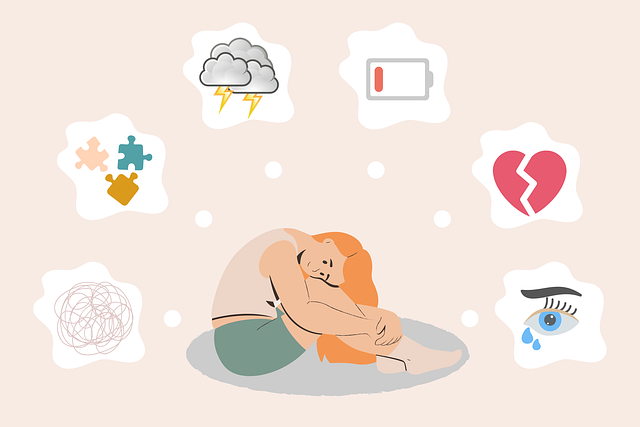
Can loneliness cause false memory formation — this question sounds almost philosophical, but the neuroscience answer is both clear and deeply unsettling. Chronic loneliness does not simply make people feel sad or disconnected. It physically alters the brain systems responsible for encoding, storing, and retrieving memories.

Memory is not a recording device. It is a reconstructive process — each time you remember something, your brain rebuilds the experience from fragments rather than playing it back like a video file. That reconstruction process is vulnerable to interference, and loneliness creates precisely the neurological conditions under which false memories form most readily.
The research emerging from cognitive neuroscience, social psychology, and neuroimaging is building a consistent and alarming picture. Social isolation changes the hippocampus, floods the brain with cortisol, disrupts the neural systems that tag memories as real or imagined, and drives the brain to fill social gaps with invented recollections.
This is not an abstract risk for a small population. Loneliness now affects an estimated one in three adults in developed nations, and its cognitive consequences are unfolding silently in millions of people who have no idea their memories are being compromised.
This article examines every dimension of the relationship between loneliness and false memory formation — the neuroscience, the mechanisms, the risk factors, and whether the damage can be reversed. By the end, you will understand exactly what chronic loneliness does to memory and why the stakes are far higher than most people realise.
How memory is formed and why it is vulnerable to distortion
Before examining whether loneliness can cause false memory formation, it is essential to understand how memory works — because its architecture explains exactly where loneliness can interfere.
Memory formation begins with encoding, the process by which the brain converts an experience into a neural representation. Encoding is not passive — it is selective, shaped by attention, emotional state, and the existing knowledge structures the brain uses to make sense of new information.
The hippocampus sits at the centre of memory formation, acting as the brain’s indexing system. It binds together the separate elements of an experience — the sights, sounds, emotions, and context — into a coherent memory trace that can later be retrieved.
When a memory is retrieved, the hippocampus does not simply locate a stored file. It reconstructs the memory from its component parts, reassembling the experience each time it is accessed.
This reconstruction process introduces vulnerability. Each time a memory is retrieved and rebuilt, it is subject to modification — by current mood, by new information, by suggestion, and by the brain’s tendency to fill in missing details with plausible substitutes.
Elizabeth Loftus, the pioneering memory researcher, demonstrated decades ago that false memories can be implanted through suggestion alone. People confidently remember events that never happened when those events are presented plausibly and repeatedly.
The critical insight is that false memories do not feel different from real ones. They carry the same subjective sense of familiarity, the same emotional weight, and the same confidence — which makes them impossible to identify through introspection alone.
Understanding this reconstructive vulnerability is the foundation for understanding how loneliness exploits it.
Can loneliness cause false memory formation — what the research says
The direct research on whether loneliness can cause false memory formation is still emerging, but what exists is consistently concerning. Studies across multiple disciplines converge on the same conclusion: chronic loneliness creates neurological conditions that significantly increase the frequency and confidence of false memory formation.

A landmark study from the University of Chicago found that chronically lonely individuals show measurably different patterns of hippocampal activation during memory tasks compared to socially connected individuals. Lonely participants demonstrated weaker pattern separation — the hippocampal function that distinguishes between similar but distinct memories — making them more likely to confuse related memories or merge separate events into false composites.
Research on social isolation in animal models shows rapid and measurable hippocampal changes within weeks of isolation. Hippocampal neurogenesis — the production of new neurons — decreases dramatically in isolated animals, reducing the structural capacity for accurate memory encoding.
Human neuroimaging studies confirm that chronic loneliness is associated with reduced grey matter density in the hippocampus and adjacent medial temporal lobe structures. These are precisely the regions most critical for accurate memory formation and the ability to distinguish real from imagined events.
Social cognition research adds another dimension to the picture. Lonely individuals show heightened sensitivity to social threat cues and a bias toward interpreting ambiguous social information negatively. This perceptual bias influences what gets encoded in the first place — and a biased encoding process produces a biased memory.
The research does not yet establish a simple causal chain, but the convergence of evidence is substantial. Loneliness changes the brain in ways that directly compromise the accuracy of memory — and the longer the loneliness persists, the more pronounced those changes become.
How chronic loneliness changes the hippocampus and memory systems
The hippocampus is among the brain structures most sensitive to the effects of chronic loneliness, and the changes it undergoes help explain why false memory formation increases with social isolation.
The hippocampus has two functions especially relevant to memory accuracy: pattern separation and pattern completion. Pattern separation allows the brain to encode similar experiences as distinct memories rather than merging them into a single blurred recollection.
Pattern completion allows the brain to retrieve a full memory from a partial cue — filling in details when only fragments are available. In a healthy brain, these two functions are balanced. In a lonely brain under chronic stress, pattern completion begins to dominate.
When pattern completion dominates pattern separation, the brain fills in more gaps than it should. Details that were never experienced get added to memories. Events that happened in different contexts get merged. Things that were imagined get encoded with the same weight as things that actually occurred.
Chronic loneliness reduces hippocampal volume through two primary mechanisms. The first is elevated cortisol — the stress hormone — which is consistently elevated in chronically lonely individuals and is directly neurotoxic to hippocampal cells at chronic levels.
The second mechanism is reduced hippocampal neurogenesis. Social interaction is one of the strongest environmental drivers of new neuron production in the hippocampus. When social interaction is chronically absent, one of the brain’s primary triggers for hippocampal growth is removed.
The result is a hippocampus that is structurally compromised — smaller in volume, producing fewer new neurons, and less capable of the precise pattern separation that accurate memory requires. This structural compromise is the neurological foundation upon which false memories build.
The role of cortisol: how stress hormones distort memory recall
Cortisol’s role in the relationship between loneliness and false memory formation deserves dedicated examination, because it operates across multiple stages of the memory process simultaneously.
Loneliness is a chronic stressor. The brain registers the absence of social connection as a threat to survival — an evolutionarily ancient response rooted in the fact that social exclusion once meant physical danger. This threat response maintains elevated cortisol levels in lonely individuals across days, weeks, and months.
At the encoding stage, elevated cortisol narrows attentional focus. The brain under stress prioritises threat-relevant information and deprioritises neutral contextual details — the very details that anchor memories accurately in time and place.
Memories encoded under high cortisol are therefore detail-poor. They capture the emotional core of an experience but lack the contextual scaffolding that allows accurate reconstruction later.
At the consolidation stage — the process by which short-term memories are transferred to long-term storage during sleep — elevated cortisol disrupts the hippocampal-cortical dialogue that this transfer requires. Memories consolidated under chronically elevated cortisol are fragmentary, emotionally charged, and stripped of stabilising context.
At the retrieval stage, elevated cortisol biases recall toward threat-consistent content. The lonely brain searching its memories for information about a social situation is more likely to retrieve — or construct — a version of events that confirms social danger and rejection.
This retrieval bias is not dishonest fabrication. It is the brain accurately reflecting its emotional state through the only means available to it — by colouring memory with the feelings that dominated at encoding. The lonely person who remembers a conversation as more hostile than it was is not lying. Their cortisol-shaped memory genuinely feels that way.
Social isolation and confabulation — filling gaps with invented memories
Confabulation is the neuropsychological term for the production of fabricated or distorted memories without conscious intent to deceive. It is the brain’s automatic response to memory gaps — and chronic loneliness dramatically increases the frequency of those gaps.

In clinical settings, confabulation is most commonly seen in patients with damage to the frontal lobe or hippocampus. The brain, unable to retrieve an accurate memory, generates a plausible substitute and presents it with full confidence as a genuine recollection.
Chronic loneliness does not cause clinical confabulation in most people. But it creates a subclinical version of the same process — a persistent tendency to fill social memory gaps with emotionally plausible but factually inaccurate content.
The mechanism is straightforward. Lonely individuals have fewer social interactions, which means fewer real social memories to draw upon when reconstructing past events. When the brain attempts to retrieve a social memory and finds insufficient material, it completes the reconstruction with inference, imagination, and emotional extrapolation.
This is compounded by the fact that lonely individuals spend more time in social imagination — mentally rehearsing conversations, replaying past interactions, and simulating future social scenarios. Neuroscience research consistently shows that vividly imagined events can be encoded in ways that are neurologically indistinguishable from actual events.
The lonely person who has rehearsed an imaginary conversation many times may later remember that conversation as something that actually occurred. Not through any fault or weakness — but because the brain’s memory systems cannot reliably distinguish between a vividly imagined event and a real one after sufficient repetition.
This is one of the most concrete mechanisms by which loneliness can cause false memory formation, and it operates in everyday life far more commonly than most people realise.
Loneliness-driven imagination and how it blurs real and false memories
The relationship between imagination and memory is one of the most consequential — and least discussed — aspects of how loneliness causes false memory formation. The lonely brain is an imaginative brain, and imagination is both a coping mechanism and a memory contamination risk.
When social connection is absent, the brain’s social cognition systems do not simply power down. They continue to seek social stimulation through imagination — constructing detailed mental simulations of social interactions, relationships, and scenarios.
This imaginative activity recruits many of the same neural systems involved in real social experience. The medial prefrontal cortex, the temporoparietal junction, and the posterior cingulate cortex — collectively the social brain network — activate during both real social experience and imagined social experience.
Because the neural overlap between imagination and real experience is so significant, the brain’s source monitoring system — its ability to track where a memory came from — is placed under sustained pressure. Source monitoring errors occur when the brain misattributes the origin of a memory, labelling an imagined event as a real one or vice versa.
Lonely individuals, who engage in substantially more social imagination than socially connected people, are exposed to this source monitoring pressure more frequently. Over time, the accumulated source monitoring errors create a memory landscape in which real and imagined social experiences are blended without clear demarcation.
This has practical consequences that extend beyond simple misremembering. Relationships can be damaged when someone insists on a version of events that their partner or friend knows did not occur. Self-perception can become distorted when imagined social failures are remembered as real ones. Treatment decisions can be complicated when a patient’s reported history contains imagined events that feel indistinguishable from real ones.
The lonely brain is not malfunctioning. It is doing exactly what brains do when deprived of their primary source of real social input — it generates its own. The cost is a gradual blurring of the boundary between experience and imagination that can have consequences across every domain of life.
Who is most vulnerable to loneliness-induced false memory formation
While chronic loneliness affects the memory systems of all individuals to some degree, certain populations face substantially elevated vulnerability to false memory formation as a consequence of social isolation.
Older adults face the highest risk at the intersection of two converging factors. Age-related hippocampal decline reduces the structural buffer that protects against false memory formation, while social isolation — disproportionately common in older populations — simultaneously accelerates cortisol-driven hippocampal degradation.
Research consistently shows that socially isolated older adults demonstrate accelerated cognitive decline, including memory impairment, at a rate that exceeds what age alone predicts. The combination of structural vulnerability and chronic loneliness creates a compounding risk that can produce clinically significant memory distortion relatively quickly.
Adolescents represent another high-risk group for a different reason. The adolescent hippocampus is still developing its full pattern separation capacity, making it inherently more vulnerable to the false memory formation that social stress promotes.
Social rejection and exclusion — common experiences in adolescence — trigger cortisol responses that are disproportionately large compared to adult responses to equivalent social stressors. The developing hippocampus, flooded with cortisol during formative social experiences, may encode those experiences in ways that distort subsequent social memory.
People with pre-existing anxiety or depression face elevated risk because both conditions independently compromise hippocampal function and source monitoring accuracy. When chronic loneliness is added to an already compromised memory system, the effect is multiplicative.
People who live alone and work remotely — an increasingly large population — face a novel form of loneliness that combines social isolation with the absence of the incidental social interactions that historically provided constant low-level memory anchoring. Without the regular reality checks that social contact provides, imagination fills an increasing proportion of the social landscape.
Can you reverse loneliness-related memory distortion?
The question of whether loneliness-related damage to memory systems can be reversed is one of the most important practical questions in this field — and the answer, supported by neuroplasticity research, is cautiously optimistic.
The hippocampus is one of the few brain structures that continues generating new neurons throughout adult life through the process of neurogenesis. Social interaction is one of the most potent known stimulators of hippocampal neurogenesis.
Animal studies show that isolated animals placed back into social environments demonstrate rapid recovery of hippocampal neurogenesis within weeks. The brain responds quickly to restored social input by rebuilding the cellular infrastructure that accurate memory depends on.
Human studies on social re-engagement show corresponding cognitive benefits. Older adults who participate in structured social engagement programmes demonstrate measurable improvements in memory performance, with neuroimaging evidence of increased hippocampal activity accompanying those improvements.
Cortisol reduction is the second mechanism of recovery. As social connection reduces the chronic threat state that loneliness maintains, cortisol levels normalise. The hippocampus, no longer under sustained cortisol bombardment, begins to recover structural integrity over weeks and months.
Cognitive training that specifically targets source monitoring — practising the conscious tracking of where information came from — can strengthen the frontal lobe systems that distinguish real from imagined memories. This is a skill that can be improved with deliberate practice regardless of the underlying social conditions.
The speed and completeness of recovery depend on the duration and severity of the preceding isolation and on the quality of social reconnection. Superficial social contact produces weaker hippocampal recovery than deep, meaningful, emotionally engaging social interaction.
The research suggests that the brain’s memory systems are more resilient than the damage caused by loneliness might imply — but that resilience requires genuine social engagement, not simply the presence of other people.
Frequently Asked Questions
Is the connection between loneliness and false memory formation proven? The direct causal chain is still being established through ongoing research, but the convergent evidence from hippocampal neuroscience, cortisol research, and social cognition studies is substantial and consistent. The neurological mechanisms that would explain why loneliness causes false memory formation are well established — the direct experimental evidence in humans is still accumulating.
Can a single period of loneliness cause lasting memory distortion? Brief or situational loneliness is unlikely to produce measurable structural changes in memory systems. The neurological changes associated with false memory formation appear to require chronic, sustained loneliness — typically measured in months rather than days or weeks.
How do I know if my memories have been affected by loneliness? There is no reliable way to identify false memories through introspection, because false memories feel identical to real ones. If you are concerned, discussing specific memories with people who were present during those events is the most reliable available reality check.
Does social media use reduce loneliness enough to protect memory? Research consistently shows that passive social media consumption — scrolling and observing — does not produce the social cognitive engagement that protects hippocampal function. Active, reciprocal social engagement that involves genuine emotional exchange appears to be required to trigger the neurobiological benefits that protect memory.
Can loneliness cause false memories about specific types of events? Social and interpersonal memories appear to be the most vulnerable to loneliness-related distortion, because these are the domains most directly affected by the social brain network’s imaginative compensations. Memories of emotionally neutral, non-social events appear to be less directly affected by the mechanisms described in this article.
Is loneliness-related memory distortion the same as gaslighting? No — they are entirely different phenomena. Gaslighting is a deliberate interpersonal manipulation in which one person intentionally causes another to doubt their memories. Loneliness-related memory distortion is an involuntary neurological process with no deliberate intent involved.
Can therapy help with loneliness-related false memory formation? Therapy that directly addresses loneliness and promotes social re-engagement can reduce the neurological conditions that promote false memory formation. Specific therapeutic approaches targeting source monitoring accuracy and social anxiety — which often accompanies chronic loneliness — can also strengthen the cognitive systems that distinguish real from imagined experience.
Conclusion
Can loneliness cause false memory formation — the answer is yes, through multiple converging neurological mechanisms that are now well described in the research literature. Chronic loneliness elevates cortisol, degrades the hippocampus, drives compensatory social imagination, and overloads the source monitoring systems that separate real from imagined experience.
The result is a memory landscape that quietly shifts away from accuracy — not through any failure of character or intelligence, but through the direct neurological consequences of sustained social deprivation.
The stakes are higher than most people appreciate. Memory is not simply a record of the past. It is the foundation of identity, relationships, decision-making, and mental health. When loneliness distorts memory, it distorts everything built upon it.
The good news embedded in this research is that the brain is recoverable. Social re-engagement, cortisol reduction, and meaningful connection produce measurable hippocampal recovery — and with it, measurable improvements in memory accuracy.
The brain that is lonely enough to fabricate social experience is also resilient enough to heal when genuine social experience returns. That is not simply a hopeful conclusion — it is what the neuroscience shows.