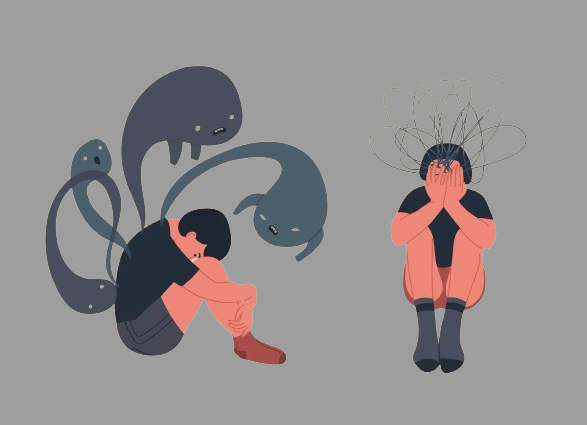
Sleep drunkenness confusional arousal mental health effects long term remain one of the most overlooked areas in psychiatric and sleep medicine today. Millions of people wake up each morning in a state of profound confusion, aggression, or panic — and never connect it to their deteriorating mental health.

Confusional arousal is a parasomnia, a sleep disorder that occurs during the transition out of deep slow-wave sleep. The brain wakes the body before it has fully disengaged from the deepest stage of sleep, leaving the person in a bizarre half-asleep, half-awake state.
Unlike insomnia or sleep apnoea, confusional arousal rarely makes headlines. Most people who experience it either laugh it off, feel embarrassed, or simply do not know it has a name.
But the long-term consequences of repeated confusional arousal episodes are serious. Persistent disruption to slow-wave sleep architecture does not just ruin mornings — it quietly erodes mental health across months and years.
This article explains exactly what confusional arousal is, how it affects the brain each morning, and what the research reveals about its long-term effects on mood, memory, anxiety, and cognitive function. If you wake up confused, panicked, or disconnected from reality on a regular basis, this is the article you have been looking for.
What is sleep drunkenness (confusional arousal)?
Sleep drunkenness is the informal name for confusional arousal, a condition recognised in the International Classification of Sleep Disorders. It describes a state of profound disorientation, slowed thinking, and impaired behaviour that occurs immediately upon waking.
During a confusional arousal episode, the person may appear conscious — eyes open, moving around — but their brain is not fully awake. They may speak incoherently, respond to questions with nonsense answers, or perform automatic behaviours with no memory of them afterward.
Episodes typically last between one minute and forty minutes, though severe cases can extend longer. The person usually has little or no memory of what happened once full wakefulness is restored.
Confusional arousal occurs during the transition from N3 sleep — the deepest, most restorative stage of the sleep cycle — to wakefulness. When this transition is abrupt or incomplete, the brain gets stuck between two states simultaneously.
The condition affects an estimated 15 percent of the general population at some frequency, making it far more common than most people realise. In people with irregular sleep schedules, high stress, alcohol use, or certain medications, the prevalence is significantly higher.
What separates confusional arousal from simply feeling groggy in the morning is the severity of the cognitive impairment and the involuntary nature of the behaviours. A person experiencing true confusional arousal is temporarily not in control of their responses or actions.
How confusional arousal affects your brain each morning
Each confusional arousal episode represents a failure of the brain’s normal waking transition. Understanding what is happening neurologically explains why repeated episodes cause such cumulative damage.
During N3 sleep, brain activity shifts to slow, synchronised delta waves. This is the stage during which the b

rain performs its most important maintenance — clearing metabolic waste, consolidating memories, and regulating emotional processing.
When confusional arousal disrupts the exit from this stage, the brain is denied the clean transition it needs. The glymphatic system, which flushes waste products from the brain during deep sleep, has its cycle interrupted before completion.
The result is that the brain begins each day carrying residual metabolic waste and incompletely processed information from the night before. Over days and weeks, this accumulation has measurable effects on cognitive performance and emotional regulation.
The amygdala — the brain’s emotional alarm system — is particularly sensitive to disrupted slow-wave sleep. When deep sleep is repeatedly fragmented, the amygdala becomes hyperreactive, triggering disproportionate emotional responses to ordinary daily stressors.
The prefrontal cortex, which normally keeps the amygdala in check, loses efficiency when deprived of restorative sleep. This creates an imbalance that shows up as mood instability, impulsive reactions, and difficulty managing negative emotion.
Each morning of confusional arousal is not a neutral event — it is a neurological disruption that compounds with every recurrence. The brain that starts the day in chaos is the brain that spends that day trying to recover rather than function.
The connection between sleep drunkenness and anxiety disorders
The relationship between confusional arousal and anxiety is bidirectional and deeply underappreciated. Anxiety disrupts sleep architecture, and disrupted sleep architecture intensifies anxiety — creating a cycle that can persist for years without the person understanding what is driving it.
Waking in a state of panic or extreme confusion — hallmarks of severe confusional arousal episodes — activates the body’s fight-or-flight response before the person is even fully conscious. Cortisol and adrenaline flood the system within the first moments of waking, setting a state of hyperarousal that can persist for hours.
People who experience frequent confusional arousal begin to develop anticipatory anxiety around sleep itself. The fear of waking in a distressed or uncontrolled state makes falling asleep harder, which deepens sleep deprivation, which worsens the arousal episodes.
Generalised anxiety disorder symptoms are significantly more common in people with diagnosed parasomnias than in the general population. The chronic unpredictability of not knowing how a morning will begin keeps the nervous system in a sustained state of low-level threat detection.
Panic disorder is also disproportionately represented among people with confusional arousal. Episodes that involve waking with a racing heart, terror, or physical symptoms of panic can seed the association between waking and danger that defines panic disorder.
Social anxiety can also develop indirectly, as people who have behaved strangely or aggressively during episodes feel shame and begin withdrawing from situations where sleep might be observed by others. Avoiding sleepovers, travel, shared accommodation, or relationships to conceal the condition is more common than clinicians typically realise.
Long-term mental health effects of confusional arousal — what the research shows
The long-term mental health effects of sleep drunkenness confusional arousal have only recently begun to receive serious research attention, and the findings are significant. Studies examining parasomnia populations consistently show elevated rates of psychiatric comorbidity compared to non-parasomnia controls.

Research published in sleep medicine journals indicates that individuals with chronic confusional arousal have substantially higher rates of major depressive disorder. The disruption of slow-wave sleep — which is essential for emotional regulation and memory consolidation — creates neurobiological conditions that closely resemble those found in clinical depression.
Elevated cortisol from chronic sleep disruption has been directly linked to hippocampal volume reduction in longitudinal neuroimaging studies. A smaller hippocampus impairs emotional regulation, stress response, and the ability to distinguish between genuine and perceived threats.
Chronic sleep fragmentation has also been associated with increased inflammation markers including interleukin-6 and C-reactive protein. These inflammatory markers are independently associated with both depression and anxiety, suggesting a physiological pathway between confusional arousal and psychiatric illness.
Personality changes observed in people with long-term confusional arousal include increased irritability, reduced empathy, emotional blunting, and reduced frustration tolerance. These changes are often attributed to personality or character by the person’s family and colleagues, obscuring the sleep disorder driving them.
Perhaps most concerning is the link between chronic sleep disruption and increased suicide risk. Research consistently finds that insomnia and sleep fragmentation are independent risk factors for suicidal ideation, separate from diagnosed depression.
The cumulative picture from the research is clear: confusional arousal that persists over years is not a benign quirk. It is a chronic stressor on the brain with measurable psychiatric consequences.
Sleep drunkenness and its link to depression and mood disorders
The connection between confusional arousal and depression is one of the most clinically important relationships in sleep psychiatry. Yet it remains poorly communicated to patients and frequently missed in routine psychiatric assessment.
Slow-wave sleep is when the brain processes and integrates emotional experience from the previous day. This process — sometimes called overnight emotional processing — is how the brain reduces the emotional charge of difficult events and prepares for the next day.
When confusional arousal repeatedly disrupts slow-wave sleep, this emotional processing fails to complete. The person wakes carrying the full emotional weight of the previous day, unfiltered and unresolved.
Over weeks and months, this accumulation of unprocessed emotional experience creates the subjective experience of being emotionally overwhelmed, persistently sad, or incapable of finding pleasure — the hallmark triad of depression.
REM sleep, which also affects mood regulation, is indirectly disrupted when slow-wave sleep architecture is unstable. The brain cycles through sleep stages in a specific order, and when slow-wave sleep is compromised, the subsequent REM periods are shorter, lighter, or absent.
Bipolar disorder also has a complex relationship with sleep disruption, and confusional arousal has been reported at elevated frequency in bipolar populations. Sleep disturbance is both a trigger for and a consequence of mood episodes in bipolar disorder, creating a feedback loop that is difficult to interrupt without addressing the sleep component.
Seasonal patterns in confusional arousal episodes — worsening in winter months with reduced light exposure — mirror the seasonal pattern seen in major depressive disorder and seasonal affective disorder. This parallel suggests shared neurobiological vulnerability between the conditions.
Cognitive effects: memory, focus, and decision-making over time
Beyond mood, the long-term cognitive effects of chronic confusional arousal represent a significant and underrecognised public health concern. The brain requires complete, uninterrupted slow-wave sleep to perform the memory consolidation that transforms short-term experiences into long-term knowledge.
When confusional arousal interrupts this consolidation process night after night, the person experiences progressive difficulty retaining new information. Tasks that once felt automatic — recalling names, following multi-step instructions, remembering recent conversations — begin to require disproportionate effort.
Working memory, the cognitive system that holds and manipulates information in real time, is acutely sensitive to slow-wave sleep disruption. Reduced working memory capacity shows up as difficulty concentrating, losing track of conversations, and making errors in tasks that require sustained attention.
Executive function — the brain’s capacity for planning, problem-solving, and impulse control — also degrades with chronic slow-wave sleep disruption. People report making poorer decisions, acting impulsively, and struggling to think through consequences in the way they once could.
Processing speed slows measurably in people with chronic sleep fragmentation. Reaction times lengthen, and the ability to rapidly switch between tasks — cognitive flexibility — diminishes.
These cognitive changes are often mistaken for early-onset dementia, ADHD, or burnout. The critical diagnostic question that rarely gets asked is: how does this person wake up each morning?
In older adults, the cognitive consequences of chronic confusional arousal are amplified. Slow-wave sleep naturally decreases with age, meaning older adults with confusional arousal have a smaller buffer of restorative sleep to lose before cognitive impairment becomes clinically apparent.
Who is most at risk of long-term mental health effects from sleep drunkenness
Not everyone with confusional arousal will develop long-term mental health consequences — but certain groups face substantially elevated risk. Identifying these risk factors early is the most effective way to prevent compounding harm.
People with pre-existing anxiety or depression who also experience confusional arousal face a multiplicative rather than additive risk. The mental health condition disrupts sleep, the disrupted sleep worsens the mental health condition, and the confusional arousal adds a third layer of neurobiological stress.
Shift workers and people with chronically irregular sleep schedules are among the highest-risk groups. Frequent disruption to circadian rhythm destabilises sleep architecture and dramatically increases the frequency and severity of confusional arousal episodes.
People who use alcohol as a sleep aid face compounded risk, as alcohol suppresses slow-wave sleep while simultaneously fragmenting the sleep cycle in the second half of the night. What feels like better sleep with alcohol is neurologically impoverished sleep that accelerates confusional arousal and its consequences.
Adolescents and young adults are disproportionately affected by confusional arousal due to natural circadian phase delay combined with social and academic pressures to wake early. The mismatch between biological sleep timing and demanded wake time is a powerful trigger for confusional arousal.
People in high-stress occupations — healthcare workers, emergency responders, military personnel — who combine sleep deprivation with high emotional load face the greatest risk of both more frequent episodes and more severe long-term mental health outcomes. This population is also among the least likely to report or seek help for sleep symptoms.
How to reduce confusional arousal and protect your mental health
Reducing confusional arousal frequency is achievable for most people through a structured combination of sleep hygiene, behavioural change, and in some cases clinical intervention. The earlier action is taken, the less cumulative neurological damage needs to be reversed.
Maintaining a consistent sleep and wake time — including weekends — is the single most impactful behavioural change available. Irregular sleep timing is one of the primary drivers of slow-wave sleep instability, and consistency alone reduces confusional arousal frequency in a significant proportion of people.
Gradual, gentle waking alarms reduce the abruptness of the N3-to-wake transition. Progressive light alarm clocks, which simulate sunrise over 20 to 30 minutes, allow the brain to move through lighter sleep stages before waking and dramatically reduce the severity of morning confusion.
Alcohol and cannabis should be avoided in the four hours before sleep. Both substances suppress slow-wave sleep architecture and increase the likelihood of incomplete sleep stage transitions.
Treating underlying anxiety or depression with evidence-based interventions improves sleep architecture as a downstream effect. In many cases, people report confusional arousal episodes reducing significantly once their primary psychiatric condition is addressed.
For people whose confusional arousal is severe, frequent, or causing significant distress, a sleep study — polysomnography — can confirm the diagnosis and identify any co-occurring sleep disorders such as sleep apnoea that may be amplifying the problem. Targeted pharmacological treatment guided by a sleep medicine specialist is available and effective for severe cases.
Mindfulness-based stress reduction has shown measurable improvements in slow-wave sleep depth and duration across multiple controlled trials. Practising mindfulness before sleep reduces the cognitive arousal that prevents the brain from descending fully into N3.
Frequently Asked Questions
Is sleep drunkenness the same as sleep inertia? Sleep inertia and confusional arousal share some features but are distinct conditions. Sleep inertia is the normal grogginess most people feel briefly after waking, while confusional arousal involves severe disorientation, automatic behaviour, and memory gaps that persist for many minutes.
Can confusional arousal be dangerous? Yes, in some cases confusional arousal can lead to dangerous behaviours performed without conscious awareness. People have been known to send incoherent messages, leave the house, or respond aggressively to partners during episodes, with no memory of any of it afterward.
Does confusional arousal go away on its own? Mild, infrequent confusional arousal often improves with better sleep hygiene and stress reduction. Severe or frequent episodes are less likely to resolve without targeted intervention and benefit from assessment by a sleep medicine specialist.
Can children experience confusional arousal? Confusional arousal is actually most prevalent in children, affecting up to 17 percent of those under thirteen. Most children naturally grow out of it as their sleep architecture matures, but adults who continue experiencing it require more active management.
How is confusional arousal diagnosed? Diagnosis is primarily clinical, based on a detailed sleep history and account of morning episodes from both the patient and a bed partner if applicable. Polysomnography is used in ambiguous cases or when co-occurring sleep disorders need to be ruled out.
Can medication cause or worsen confusional arousal? Several classes of medication including sedative-hypnotics, antidepressants, antipsychotics, and antihistamines can increase confusional arousal frequency. Anyone who notices worsening episodes after starting a new medication should discuss this with their prescribing doctor.
Is there a link between confusional arousal and psychosis? Confusional arousal episodes can superficially resemble psychosis due to the disorientation, incoherent speech, and disconnection from reality they cause. However, they are neurologically distinct — a sleep specialist or psychiatrist familiar with parasomnias can distinguish between the two.
Conclusion
Sleep drunkenness confusional arousal mental health effects long term are real, measurable, and entirely preventable with the right knowledge and action. What begins as a confusing and embarrassing way to start the morning can, over months and years, erode mood, memory, cognitive function, and emotional stability in ways that profoundly affect quality of life.
The brain needs complete, undisturbed slow-wave sleep to regulate emotion, consolidate memory, and maintain the neurobiological balance that mental health depends on. Every episode of confusional arousal represents an incomplete night’s work for the brain — and the debt accumulates.
The good news is that the brain responds quickly to improved sleep conditions. Consistent sleep timing, gentle waking methods, and addressing underlying stress or psychiatric conditions can reduce episodes significantly within weeks.
Understanding that your morning confusion is not a character flaw but a treatable neurological event is the first and most important step. The brain that wakes in chaos every morning deserves — and is entirely capable of — something far better.