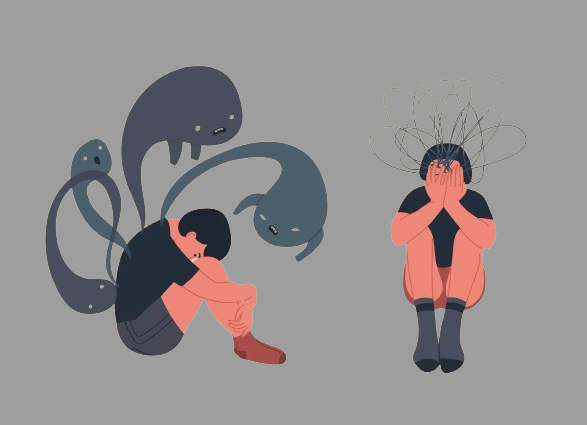
Anticipatory anxiety is the particular suffering of living through an event in your mind long before it happens — and sometimes long after it fails to. It is not merely worrying about the future; it is the brain generating a full stress response to a scenario that exists only in thought, consuming energy, sleep, and psychological bandwidth for something that may never arrive.

Most people who experience it know, on some level, that their dread is disproportionate. Knowing that, however, does not reduce it — because the part of the brain generating the dread is not the part that evaluates proportionality. The mechanism is neurological, not logical, and that distinction is the entire foundation of why it persists and how it can be treated.
What follows is a clinical account of why the brain does this, how to recognize it with precision, how it differs across the disorders it inhabits, and what evidence-based treatment actually does to the neural pathways driving it.
What Is Anticipatory Anxiety? The Clinical Definition
Anticipatory anxiety is excessive, disproportionate dread of a future event, situation, or experience — driven by the brain’s predictive threat-modeling systems operating beyond their adaptive purpose. The key word is disproportionate: every human being experiences concern about the future, and that concern is biologically useful when it motivates preparation and appropriate caution.
The clinical distinction lies in the response’s relationship to actual probability and functional impact. Normal preparatory concern is proportionate to realistic risk, motivates effective action, and resolves once the preparation is complete. Anticipatory anxiety is disproportionate to the actual likelihood of harm, does not resolve through preparation — and in many cases, intensifies with it — and persists in ways that impair rather than improve functioning.
Anticipatory anxiety does not carry its own standalone entry in the DSM-5, but it is a recognized feature of multiple anxiety and related disorders: Generalized Anxiety Disorder, Panic Disorder, Social Anxiety Disorder, PTSD, Specific Phobias, and OCD. This diagnostic reality matters, because the treatment approach is shaped significantly by which underlying disorder it appears within.
The defining temporal characteristic separates it from all other forms of anxiety. Unlike present-moment anxiety triggered by an identifiable current threat, anticipatory anxiety is entirely future-projected — the nervous system suffers an event that has not yet occurred and may never occur, sometimes for days, weeks, or months in advance. Clinicians sometimes describe this as suffering twice: the prolonged dread before the event, and then either the event itself or the protracted distress of having feared something that never materialized.
The Neuroscience of Anticipatory Anxiety — Why Your Brain Does This
The Amygdala’s Threat Prediction Engine
The amygdala — a paired almond-shaped structure in the brain’s temporal lobe — is the neurological center of threat detection, and it does considerably more than react to danger that is currently present. Neuroimaging research published in the American Journal of Psychiatry confirmed that anticipating aversive events recruits the amygdala and anterior cingulate cortex in patients with GAD, with amygdala activity elevated not just during threat exposure but during the anticipation period itself — the waiting.

Increased amygdala activity leads to wrongful threat processing and overly intense worry about the future, while the anterior insula drives emotional responses to predicted events that, when overactivated, create a state of threat-uncertainty that sustains the anticipatory stress response. The critical insight is that the amygdala does not evaluate whether a feared scenario is likely — it evaluates whether the pattern of information resembles past threat, and it responds to that resemblance with the same urgency as a present danger.
Research published in the Journal of Psychiatry and Neuroscience demonstrated that sustained anticipatory anxiety increases intrinsic amygdala-prefrontal cortex coupling, with the dorsomedial prefrontal cortex serving as the functional structure that maintains anxiety states over prolonged anticipatory periods — not just during acute threat exposure. This means that for a person with clinically significant anticipatory anxiety, the amygdala and prefrontal cortex are in sustained conversation about a threat that the external environment does not contain.
The Default Mode Network and Mental Time Travel
The Default Mode Network — the brain circuit most active during mind-wandering, self-referential thought, and mental simulation of the future — is the neurological substrate of anticipatory anxiety’s most exhausting feature: the inability to stop rehearsing feared scenarios. Research published in PNAS confirmed that changes in default mode network activity are directly implicated in anxiety disorders, and that mindfulness training modifies DMN engagement through attentional reorientation — specifically reducing the stimulus-independent thought that the network generates during mind-wandering.
Mental time travel — the cognitive capacity to project consciousness forward into imagined future scenarios — is one of the most sophisticated abilities the human brain possesses. Research from BioRxiv (2026) characterizes it as enabling autobiographical continuity, goal-directed planning, and affective forecasting, with excessive negative future prospecting in generalized anxiety representing a clinical manifestation of mental time travel gone awry — the same system that enables planning producing maladaptive negative simulations when dysregulated.
Each time the DMN runs a simulation of a feared future scenario, the amygdala responds to that simulation with the same neurochemical urgency it would deploy for a real event. The brain does not stamp imagined futures as “hypothetical” before generating its stress response — which is precisely why anticipatory anxiety is physiologically exhausting even when nothing has actually happened.
Cortisol, the HPA Axis, and Chronic Anticipatory Stress
The HPA axis — the hypothalamic-pituitary-adrenal axis, your body’s central stress-response command system — does not require a real threat to activate. It requires the amygdala’s threat signal, which anticipatory anxiety generates reliably and repeatedly. Every episode of anticipatory dread activates the HPA axis, driving cortisol and adrenaline into the bloodstream as if the feared event were actively occurring.
The downstream consequences of chronically elevated cortisol are not abstract discomfort. Cortisol and adrenaline released through the HPA axis and sympathetic nervous system produce irritability, anxiety, jitteriness, and palpitations — and sustained activation over days or weeks of anticipatory dread carries cumulative costs: hippocampal volume reduction impairing contextual memory and threat evaluation, disrupted sleep architecture, immune suppression, and progressive sensitization of the amygdala itself. The longer anticipatory anxiety is maintained, the more neurologically reactive the system becomes to the next triggering thought.
If you have noticed that your anticipatory anxiety is worse now than it was five years ago, this is not a psychological failure — it is a neurological consequence of repeated, unaddressed HPA axis activation building structural vulnerability over time.
The Role of Uncertainty Intolerance
Intolerance of uncertainty (IU) — the tendency to find the state of not-knowing inherently threatening, regardless of what outcome is being awaited — is one of the most robustly researched psychological constructs in the anxiety disorder literature and the primary cognitive driver of anticipatory anxiety for many people. Research published in ScienceDirect (2023) found that IU prospectively predicts transdiagnostic severity of emotional psychopathology over six months, with changes in IU corresponding to increased social anxiety, worry, depression, and negative affect — establishing it as a key therapeutic target across anxiety-related disorders.
The critical clinical insight about IU is that the target of the anxiety is not primarily the feared outcome — it is the uncertainty itself. A person high in IU is not predominantly afraid that the medical test will be positive; they are afraid of existing in the state of not-yet-knowing whether it is. This explains the compulsive “what if” thinking that characterizes anticipatory anxiety: it is not an attempt to solve a problem but an attempt to eliminate uncertainty by imagining every possible outcome — a strategy that is structurally impossible to complete and that perpetuates the very distress it is meant to resolve.
Avoidance and the Anxiety Maintenance Cycle
Behavioral avoidance is the mechanism that transforms anticipatory anxiety from an acute experience into a chronic condition — and it does so through one of psychology’s most reliable principles: negative reinforcement. When a person avoids the feared event or situation, the anxiety temporarily subsides, and that relief reinforces the avoidance behavior, increasing the probability of avoidance the next time the feared situation approaches.
Research from Nature Reviews Neuroscience confirms that avoidance and worry tendencies are negatively reinforced because feared events typically fail to occur, leading anxious individuals to develop false beliefs that their avoidance prevented the harm — beliefs that maintain the anxiety cycle and prevent the fear extinction that only exposure can produce. Every avoided situation is an opportunity for the amygdala to update its threat assessment that never occurred. The feared outcome remains, in the brain’s records, not just possible but imminent — because it was never disconfirmed.
Recognizing Anticipatory Anxiety — Symptoms Across Mind and Body
The cognitive symptom profile of anticipatory anxiety is distinctive once you know what to look for. Intrusive “what if” thinking — involuntary, repetitive, future-directed scenarios that resist voluntary interruption — is the most consistent cognitive feature, operating through exactly the uncertainty intolerance and DMN activation mechanisms described above. Catastrophizing — the cognitive distortion of jumping from a possible difficulty to its worst-case outcome without adequate consideration of intermediate probabilities — accompanies it, and decision paralysis frequently follows when every option carries an imagined catastrophic risk.

The physical symptoms are equally well-defined and often more immediately distressing than the cognitive ones. Muscle tension — particularly in the shoulders, jaw, and neck — is the body’s preparation for threat that never arrives. Sleep-onset insomnia, driven by the mind running through feared scenarios at the precise moment external stimulation ceases, is one of the most functionally impactful symptoms. Anticipatory nausea and gastrointestinal disturbance before feared events represent the gut-brain axis responding to the brain’s threat signal; the digestive system genuinely preparing as if the feared event were imminent.
Behaviorally, anticipatory anxiety produces a cluster that is worth recognizing precisely because each component appears rational in isolation. Procrastination as avoidance — delaying engagement with the feared task to delay the anxiety it generates — looks like laziness. Excessive reassurance-seeking — repeatedly asking others to confirm a feared outcome is unlikely — looks like neediness. Over-preparation as compulsion — spending hours preparing a presentation that requires 20 minutes of work — looks like conscientiousness. None of these behaviors are what they appear; they are all anxiety management strategies that temporarily reduce distress while maintaining and strengthening the underlying pattern.
The temporal pattern is the clearest diagnostic marker clinicians use to identify anticipatory anxiety. Symptoms are consistently worst in the days or hours before an event and frequently diminish substantially — sometimes dramatically — once the event begins or concludes. The presence itself is almost invariably less distressing than its anticipation, and this pattern, repeated across many situations and months, is the experiential evidence that the suffering is being generated by the brain’s prediction rather than by external reality.
Anticipatory Anxiety vs. Related Conditions — A Clinical Comparison
Anticipatory anxiety as a feature of Generalized Anxiety Disorder is pervasive and domain-spanning. GAD involves persistent worry across multiple life areas — health, finances, relationships, work, safety — without necessarily being anchored to a specific upcoming event. Anticipatory anxiety within GAD can feel like a continuous background dread that attaches to whatever the next identifiable event happens to be, moving from one focus to another as events resolve.
Within Panic Disorder, anticipatory anxiety takes a specific and particularly disabling form — the fear of fear itself. Patients who have experienced panic attacks frequently develop intense dread of having another one, monitoring their physical sensations constantly for early warning signs and avoiding any situation where a panic attack would be inconvenient or witnessed. Research consistently demonstrates that this anticipatory fear of panic is often more functionally impairing than the panic attacks themselves, and it is the primary driver of the agoraphobic avoidance that develops in a significant proportion of panic disorder patients.
Social Anxiety Disorder generates a form of anticipatory anxiety that is among the most temporally extended — beginning days or weeks before a social event, involving detailed mental rehearsal of humiliation scenarios, and frequently peaking during the preparatory period rather than during the event itself. Post-event processing — the ruminative review of perceived social failures after an interaction — extends the anxiety cycle backward in time as well, so that the period between social events is filled with both retrospective rumination and prospective anticipatory dread.
In PTSD, anticipatory anxiety develops around stimuli and contexts associated with past trauma, where the brain predicts future threat based on documented prior harm rather than imagined possibility. This mechanistic difference — prediction grounded in past experience versus prediction generated from imagination — is clinically important because it shapes the specific exposure protocol required and the role of trauma processing in treatment.
The clinical reason these distinctions matter is direct: the treatment for anticipatory anxiety as a feature of panic disorder involves interoceptive exposure and panic-specific cognitive restructuring, while the treatment for anticipatory anxiety in PTSD involves trauma-focused processing. Identifying anticipatory anxiety as a symptom rather than a standalone diagnosis is the necessary first step toward the correct treatment.
Anticipatory Anxiety in Specific Life Contexts
Medical Appointments and Health Anxiety
Health anxiety produces some of the most clinically significant anticipatory anxiety patterns, because the feared outcome — serious illness — is both plausible and consequential enough to generate sustained dread. The cruel functional paradox is that anticipatory anxiety about medical appointments drives avoidance of the very care that would either confirm a treatable condition early or provide the reassurance that nothing is wrong.
White coat syndrome — the elevation of blood pressure and heart rate during medical visits — is a direct manifestation of HPA axis activation in the anticipatory period. For patients with significant anticipatory anxiety about medical contexts, the anxiety response can be severe enough to produce false clinical readings, and the anticipatory dread generated by each appointment becomes its own feedback loop reinforcing avoidance of future care.
Work Performance and Professional Evaluations
Anticipatory anxiety in professional contexts — before presentations, performance reviews, interviews, or any high-stakes evaluation — occupies precisely the cognitive resources that the task requires. The prefrontal cortex capacity needed for preparation, organization, and articulate performance is partially consumed by the amygdala-driven worry, producing the irony of anxious over-preparation that still feels inadequate.
The Yerkes-Dodson curve describes the relationship between arousal and performance as an inverted U: moderate arousal improves performance by increasing focus and motivation, while excessive arousal degrades it by overwhelming executive function. Clinical-level anticipatory anxiety sits firmly on the descending side of that curve — generating the physiological costs of high arousal without the performance benefits.
Relationships and Social Commitment
Anticipatory anxiety about relational outcomes — conflict, rejection, disappointment, or abandonment — drives the preemptive withdrawal that is one of the most relationship-damaging patterns anxiety produces. The person dreading rejection withdraws from intimacy before it can be refused, creating the relational distance they feared while attributing it to the other person’s eventual departure.
The self-fulfilling prophecy mechanism in relationship anticipatory anxiety deserves clinical recognition because it turns the anxiety’s prediction into its own evidence. When withdrawal, reassurance-seeking, or emotional unavailability generated by anticipatory anxiety damages a relationship, the person’s belief that “relationships always end badly for me” receives apparent confirmation — not from external reality but from their own anxiety-driven behavior.
Travel and New Environments
Anticipatory anxiety about travel builds in a predictable crescendo during the weeks before departure, peaks in the hours before leaving, and frequently collapses almost entirely once the journey is underway. This temporal pattern is among the most clinically transparent examples of anticipatory anxiety available, and experienced clinicians use it as a psychoeducational tool precisely because of how clearly it demonstrates the disproportion between anticipatory suffering and actual experience.
The post-travel reflection — “the anticipation was so much worse than the trip itself” — is direct experiential disconfirmation of the amygdala’s threat prediction. Collecting these experiences deliberately and explicitly, as a form of informal cognitive challenging, is one of the most accessible self-administered treatments for travel-specific anticipatory anxiety.
Evidence-Based Treatments for Anticipatory Anxiety
Cognitive Behavioral Therapy and the Cognitive Restructuring Model
Cognitive Behavioral Therapy remains the gold-standard treatment across anxiety disorders, and its specific mechanism for anticipatory anxiety operates through the prefrontal cortex — training the brain’s rational appraisal system to engage with feared predictions rather than accepting them. Cognitive restructuring targets the catastrophizing and probability distortions that sustain anticipatory dread: the patient is taught to identify the feared prediction explicitly, estimate its actual probability using evidence rather than feeling, and de-catastrophize by identifying the coping resources that would be available even in the feared outcome occurred.
The therapeutic logic of CBT for anticipatory anxiety is to restore the amygdala-prefrontal balance that chronic anxiety has disrupted. CBT programs specifically targeting intolerance of uncertainty have been found effective for excessive worry and GAD, with assessment of IU clinically informative for case formulation and for selecting and augmenting standard CBT components including exposure and reduction of avoidance. The “what if” loop does not collapse because the patient is told to stop it; it weakens because the prefrontal cortex is given accurate probability estimates and concrete coping plans that reduce the loop’s apparent necessity.
Exposure Therapy — Facing What the Brain Has Declared Dangerous
Exposure therapy is the most mechanistically direct treatment for anticipatory anxiety because it targets the amygdala’s threat assessment at source — not by arguing with the assessment cognitively, but by providing the behavioral evidence that disconfirms it. Research published in Cognitive, Affective, and Behavioral Neuroscience (2023) characterizes anxiety disorders as fundamentally disorders of uncertainty learning, with exposure therapy working by remediating maladaptive avoidance from dysfunctional explore-exploit decisions in uncertain, potentially aversive situations.
Fear extinction — the neurological process through which repeated non-reinforced exposure to a feared stimulus reduces the amygdala’s threat response — is what exposure therapy produces. The patient enters the feared situation, the catastrophic outcome does not occur, and the amygdala updates its prediction model accordingly. For panic-related anticipatory anxiety, interoceptive exposure — deliberately inducing feared physical sensations like elevated heart rate or breathlessness in a controlled setting — teaches the nervous system that those sensations are not dangerous, dismantling the fear-of-fear cycle that maintains panic disorder’s anticipatory component.
Acceptance and Commitment Therapy — Tolerating Uncertainty
Acceptance and Commitment Therapy (ACT) addresses the specific driver of anticipatory anxiety that CBT’s restructuring approach does not fully resolve: the intolerance of uncertainty itself. Where CBT attempts to reduce anxiety by improving the accuracy of feared predictions, ACT trains the patient to tolerate uncertainty without the compulsive need to resolve it — a fundamentally different therapeutic target.
Psychological flexibility — ACT’s core construct, defined as the ability to hold difficult thoughts and feelings without being behaviorally controlled by them — is the clinical skill that allows a patient to notice the “what if” thought without treating it as a prediction requiring response. Cognitive defusion — the ACT technique of observing a thought as a mental event rather than fusing with it as a factual statement — produces this shift: instead of “something terrible will happen at the interview,” the patient learns to hold “I am having the thought that something terrible will happen at the interview.” The thought remains present, but its command over behavior weakens.
Pharmacological Options
SSRIs and SNRIs are first-line pharmacological treatments for the anxiety disorders within which anticipatory anxiety appears — operating by normalizing serotonin and norepinephrine signaling in the circuits that govern threat appraisal and emotional regulation. They address the neurochemical substrate of anxiety vulnerability but do not build the psychological skills that exposure and cognitive work develop, which is why combined treatment — medication plus psychotherapy — consistently outperforms either alone for moderate-to-severe presentations.
Beta-blockers, particularly propranolol, offer a specifically useful tool for situational anticipatory anxiety — especially performance anxiety in professional or social contexts. Their mechanism is peripheral: they block adrenaline receptors in the body, reducing heart rate, tremor, and sweating without producing sedation or cognitive impairment. They do not reduce the cognitive experience of anxiety but remove its most physically distressing and visible manifestations, which for many patients is sufficient to enable functional performance. It is worth knowing that benzodiazepines, while effective for acute relief, worsen anticipatory anxiety over the long term: they reinforce the message that the feared situation is genuinely too threatening to face without pharmacological support, strengthening rather than extinguishing the underlying threat prediction.
Mindfulness-Based Interventions
Mindfulness-Based Cognitive Therapy (MBCT) addresses anticipatory anxiety through a different neurological mechanism than CBT or ACT — by training present-moment attentional anchoring to interrupt the Default Mode Network’s forward simulation loops. Research from PNAS confirms that mindfulness experience is associated with differences in default mode network activity and connectivity, with meditation reducing the self-referential and stimulus-independent thought that characterizes DMN overactivation in anxiety.
The breathing anchor — sustained attention to the physical sensations of breathing as an attentional training tool — is not a relaxation technique, though relaxation is a side effect. It is a DMN interrupt: each time the mind wanders forward into a feared future scenario and the patient returns attention to the breath, that return is a repetition of the attentional skill that, over thousands of repetitions, strengthens the neural circuitry competing with DMN overactivation.
Practical Self-Regulation Strategies for Immediate Relief
Scheduled worry time — a CBT-derived technique that designates a specific, bounded 15–20 minute daily window for deliberate worry — produces a counterintuitive but well-supported effect: confining anticipatory thinking to a defined period trains the brain out of all-day rumination by providing a legitimate time for the worry without permitting it to colonize the entire day. When anticipatory thoughts arise outside the scheduled window, the patient notes them and defers them — not suppresses them, which rebounds — to the designated time.
The action plan technique is the most immediately accessible cognitive tool for acute anticipatory anxiety episodes: writing down the feared scenario explicitly, estimating its realistic probability in percentage terms, identifying the three most likely actual outcomes rather than only the worst-case one, and specifying the concrete coping actions available if the feared event does occur. This process engages the prefrontal cortex with specific, articulated content — giving the brain’s rational appraisal system something to work with rather than leaving the amygdala’s undefined dread unanswered.
When Anticipatory Anxiety Becomes Clinically Significant — Seeking Help
The clinical threshold for professional evaluation is not the presence of anticipatory anxiety — nearly everyone experiences it — but its functional impact. When anticipatory anxiety consistently prevents meaningful life participation — avoided medical appointments, declined promotions, withdrawn friendships, or daily functioning below the person’s actual capacity — that pattern warrants clinical assessment. The question is not whether the dread is subjectively intense but whether it is making you smaller.
The diagnostic pathway begins with a psychologist or psychiatrist assessing which anxiety disorder framework best captures the presentation, since the specific therapeutic approach is shaped by that determination. A person whose anticipatory anxiety is primarily organized around social situations will benefit from protocols developed for Social Anxiety Disorder; one whose dread centers on physical sensations and panic recurrence will benefit from panic-specific CBT. General anti-anxiety advice exists on a spectrum from marginally useful to actively counterproductive without this specification.
The help-seeking paradox deserves explicit acknowledgment because it is not marginal — it is one of the most common barriers to treatment in this population. The anticipatory anxiety about therapy itself — about what will be discovered, how the therapist will judge the patient, whether the anxiety is too severe to treat, whether engaging with it will make it worse — prevents the very intervention that would address it. This is anticipatory anxiety doing what it always does: generating worst-case predictions about an uncertain future event, producing dread that exceeds what the event warrants.
The anticipation of therapy is almost always more distressing than therapy itself — which is, clinically speaking, exactly what anticipatory anxiety predicts about everything.
Conclusion
Living with prolonged dread of things that have not yet happened — and may never happen — is one of the most genuinely exhausting experiences anxiety produces, precisely because there is no external event to confront, manage, or recover from. The suffering is self-generated by a brain doing its job too well, predicting too far ahead, with too little capacity to discount what it imagines.
Anticipatory anxiety is not a character flaw, a thinking habit that determination alone can break, or evidence that the feared outcomes are actually probable. It is a neurologically driven pattern rooted in the amygdala’s threat prediction system, the Default Mode Network’s future simulation, and the HPA axis’s inability to distinguish imagined threats from real ones — and it is maintained over time primarily by the avoidance that provides short-term relief while blocking the disconfirming experience that would allow the brain to update its predictions.
The three things worth holding with certainty: the mechanism is biological, not moral; avoidance reliably maintains the condition while exposure reliably dismantles it; and the treatments available — CBT, exposure therapy, ACT, mindfulness, and targeted pharmacology — have evidence bases strong enough to produce durable relief. The anticipation of treatment is almost certainly worse than treatment. That is not a platitude. It is a prediction your anxiety has already made that the evidence does not support.
Frequently Asked Questions
What is the difference between anticipatory anxiety and normal worry?
Normal worry is proportionate to realistic risk, resolves once preparation is complete, and motivates action; anticipatory anxiety is disproportionate, intensifies despite preparation, and impairs rather than supports functioning.
Can anticipatory anxiety cause physical symptoms?
Anticipatory anxiety activates the HPA axis and sympathetic nervous system, producing measurable physical symptoms including muscle tension, heart palpitations, nausea, sleep disruption, and sweating — identical to those of present-moment threat response.
Is anticipatory anxiety a disorder?
Anticipatory anxiety is not a standalone DSM-5 diagnosis but a clinically recognized feature of GAD, Panic Disorder, Social Anxiety Disorder, PTSD, Specific Phobias, and OCD — making identification of the underlying disorder essential for targeted treatment.
How do you stop anticipatory anxiety before an event?
Cognitive restructuring to challenge catastrophic predictions, diaphragmatic breathing to activate the parasympathetic nervous system, and scheduled worry time to contain rumination are evidence-based interventions that reduce anticipatory anxiety before specific events.
Does anticipatory anxiety go away on its own?
Without behavioral change, anticipatory anxiety typically persists or worsens because avoidance — the most natural response — negatively reinforces the anxiety cycle and prevents the fear extinction that direct exposure produces.
What therapy is best for anticipatory anxiety?
CBT with exposure components is the gold-standard treatment, with ACT offering particular benefit for anxiety driven by intolerance of uncertainty — and MBCT providing additional support through Default Mode Network regulation.