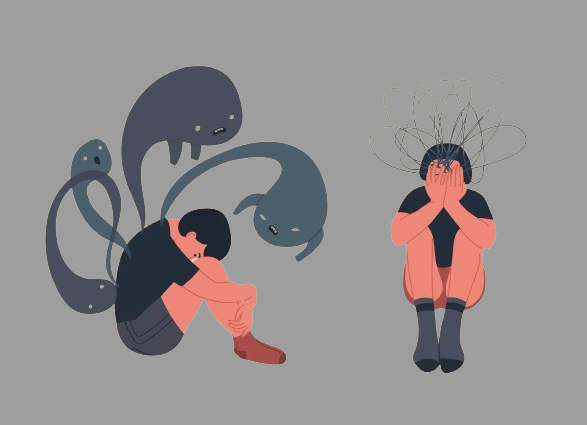
Quick Answer: What is PTSD classified as?
Post-Traumatic Stress Disorder (PTSD) is classified as a Trauma- and Stressor-Related Disorder in the American Psychiatric Association’s DSM-5-TR. Globally, the World Health Organization classifies it under conditions specifically associated with stress in the ICD-11, where it sits alongside a distinct sibling diagnosis known as Complex PTSD. Both frameworks require that symptoms are directly anchored to a traumatic event.
For decades, clinical diagnostic manuals grouped trauma responses alongside general fear-based and hyperarousal conditions. However, the medical consensus has fundamentally shifted. Modern psychiatry now recognizes that trauma does not merely produce fear it can generate deep-seated anger, profound numbness, dissociation, and a complete fragmentation of self-concept.
Because of this realization, PTSD was relocated into its own highly specific diagnostic category. This shift is not just an administrative detail; it entirely dictates how clinicians screen patients, how insurance companies process therapeutic claims, and which trauma-informed interventions are prioritized.
The DSM-5-TR Classification Shift
When the DSM-5 was published in 2013 (and later updated in the 2022 Text Revision, DSM-5-TR), the American Psychiatric Association made a landmark decision. They moved PTSD into a newly minted chapter: trauma- and stressor-related disorders.
Every condition within this chapter shares one absolute diagnostic requirement: an external traumatic event or severe stressor must precede the symptoms.
To meet Criterion A for PTSD under this classification, an individual must have been exposed to actual or threatened death, serious injury, or sexual violence. This exposure can be:
- Experienced directly.
- Witnessed in person.
- Learned about happening to a close loved one.
- Encountered repeatedly through indirect, professional exposure (commonly seen in first responders or medical personnel).
The Four Diagnostic Symptom Clusters
Once Criterion A is established, the DSM-5-TR requires that a patient exhibit symptoms across four specific clinical clusters. These symptoms must persist for more than one month and cause significant impairment in daily occupational or social functioning.

1. Intrusion Symptoms (Criterion B)
The nervous system repeatedly and involuntarily pulls the individual back into the traumatic memory.
- Intrusive, distressing memories that interrupt daily thought patterns.
- Recurrent night terrors or sleep disturbances.
- Severe physical and emotional reactions to trauma reminders, often resulting in vivid emotional flashbacks.
2. Avoidance Behaviors (Criterion C)
A continuous, exhausting effort to insulate the mind and body from trauma triggers.
- Avoiding physical locations, people, or activities tied to the event.
- Deliberately suppressing thoughts, feelings, or conversations related to the trauma.
3. Negative Alterations in Cognition and Mood (Criterion D)
A measurable decline in the individual’s baseline mood, self-worth, and cognitive recall.
- Inability to remember critical aspects of the traumatic event (dissociative amnesia).
- Persistent, distorted beliefs about oneself or the world (e.g., “I am permanently broken”).
- A profound sense of detachment or alienation from loved ones.
4. Marked Alterations in Arousal and Reactivity (Criterion E)
The central nervous system becomes stuck in a chronic state of threat assessment.
- Irritability and sudden, unprovoked aggressive outbursts.
- Reckless, self-destructive behavior.
- Severe hypervigilance and a highly exaggerated startle response.
Refining the Diagnosis: Specifiers and Timing
PTSD is not a one-size-fits-all diagnosis. Clinicians utilize specific modifiers to accurately capture how the condition presents in different nervous systems.
- The Dissociative Subtype: Applied when an individual meets all core PTSD criteria but also experiences prominent depersonalization (feeling completely detached from their own body) or derealization (experiencing the surrounding world as dreamlike or entirely unreal).
- Delayed Expression: Applied when the full diagnostic criteria are not met until at least six months after the initial traumatic event, even if subtle behavioral shifts were present earlier.
- Acute Stress Disorder vs. PTSD: These conditions sit in the same diagnostic chapter and present almost identically. The defining boundary is time. If the symptom duration is under 30 days, it is classified as Acute Stress Disorder. If symptoms persist beyond the one-month mark, the diagnosis legally shifts to PTSD.
Global Classification: DSM-5-TR vs. ICD-11
While the United States primarily utilizes the DSM-5-TR, the rest of the world relies on the World Health Organization’s ICD-11. The international classification system draws clinical boundaries slightly differently, prioritizing the recognition of prolonged, repeated trauma.
|
Diagnostic Feature |
DSM-5-TR (APA Framework) |
ICD-11 (WHO Framework) |
|
Primary Category |
Trauma- and Stressor-Related Disorders |
Disorders Specifically Associated with Stress |
|
Core Symptom Requirement |
4 broad clusters (20 total distinct symptoms) |
3 focused clusters (6 core symptoms) |
|
Prolonged Trauma Recognition |
Addressed via the “Dissociative Subtype” specifier |
Recognized as a distinct, standalone diagnosis |
|
Sibling Diagnoses |
Acute Stress Disorder, Adjustment Disorders |
Complex PTSD, Prolonged Grief Disorder |

The Inclusion of Complex PTSD (C-PTSD)
The most significant divergence in modern classification is how the ICD-11 handles repeated, inescapable trauma such as childhood abuse, domestic violence, or captivity. The WHO classifies this as Complex PTSD.
To be diagnosed with C-PTSD under the ICD-11, a patient must meet the core criteria for standard PTSD, plus exhibit severe, ongoing disturbances in self-organization (DSO). This includes severe emotional dysregulation, a diminished sense of self-worth, and chronic relationship instability. Because the DSM-5-TR does not officially list C-PTSD as a standalone disorder, American clinicians often use the “other specified” category to accurately code this presentation for treatment.
Clinical Perspective: Why Classification Matters for Treatment
Understanding exactly what PTSD is classified as dictates the trajectory of a patient’s recovery. When trauma responses were improperly categorized in older medical texts, patients were frequently prescribed generalized medications that failed to address the root neurological injury.
Today’s classification mandates trauma-informed care. First-line treatments now bypass standard talk therapy in favor of specialized, evidence-based interventions that target memory processing and nervous system regulation.
These include Trauma-Focused Cognitive Behavioral Therapy (TF-CBT), somatic experiencing, and EMDR therapy, which utilizes bilateral stimulation to help the brain reprocess traumatic memories. For treatment-resistant cases, leading psychiatric facilities are increasingly utilizing advanced neuromodulation techniques to reset neurological pathways.
Frequently Asked Questions (FAQ)
Is PTSD classified as a mental disability?
Yes. When the symptoms documented across the four diagnostic clusters are severe enough to impair a person’s ability to work, maintain relationships, or handle daily life, PTSD is recognized legally and medically as a qualifying psychological disability.
Can PTSD be misdiagnosed as another condition?
Yes. Because trauma can present as severe emotional dysregulation, chronic fatigue, or profound sadness, it is frequently misdiagnosed as major depressive disorder or borderline personality disorder. An accurate diagnosis requires a comprehensive evaluation by a trauma-specialized clinician.
What chapter is PTSD in the DSM-5-TR?
It is located in the chapter titled “Trauma- and Stressor-Related Disorders,” completely separating it from generalized mood or fear-based psychiatric conditions.
How long must symptoms last before a clinical PTSD diagnosis is made?
Symptoms must actively persist for more than one month. If a patient is evaluated within the first 30 days following a trauma, they are typically evaluated for Acute Stress Disorder instead.
|
Medical Disclaimer & E-E-A-T Attribution This article is for educational purposes and does not replace personalized medical or psychological advice. If you are recovering from a brain injury, trauma, or a mental health condition, work with a licensed clinician to build a plan suited to your situation. Written by: Adil Farooq, Psychiatry Magazine Medically reviewed by: [Dr. Adil Farooq MS · PhD] · Updated: 2026 |