Quick Answer:When one partner has ADHD, common relationship strain comes from executive dysfunction, emotional dysregulation, and communication mismatches rather than a lack of love or effort. ADHD-informed couples counseling helps by replacing blame with psychoeducation, teaching structured communication tools, and using approaches like cognitive behavioral therapy (CBT) to rebuild trust, fairness, and intimacy. Most couples see meaningful improvement within 12 to 20 sessions when treatment addresses the neurological roots of the conflict rather than just the surface-level arguments. |
Loving someone with ADHD and relationships can feel like living two different love stories at once, the electric, hyperfocused romance of the early days, and the quieter frustration that builds when forgotten anniversaries, half-finished chores, and mid-sentence distractions pile up over years. If you’re the partner with ADHD, you may feel a persistent undertone of shame, as if you’re perpetually failing at something that seems to come naturally to everyone else. If you’re the non-ADHD partner, you may feel more like a project manager than a spouse, exhausted by carrying the mental load of the household and unsure whether your partner’s forgetfulness is a symptom or a choice.
Both experiences are valid, and neither partner is “the problem.” Attention-Deficit/Hyperactivity Disorder is a neurodevelopmental condition that reshapes how a person regulates attention, emotion, and impulse control, and those differences don’t stay confined to the workplace or the classroom. They show up at the dinner table, in the bedroom, and in every unfinished conversation about who forgot to pay the electric bill. This guide explains exactly how ADHD reshapes romantic partnerships, why generic relationship advice often falls short, and how a structured, ADHD-informed approach to couples counseling helps partners move from resentment back to connection.
Understanding the ADHD Relationship Dynamic
Adult ADHD rarely looks like the stereotype of a hyperactive child bouncing off classroom walls. In long-term relationships, it tends to surface as a set of quieter, more corrosive patterns: chronic lateness, half-completed projects around the house, difficulty following through on commitments, and a tendency to tune out mid-conversation, not from disinterest, but because a wandering attention system latched onto something else entirely. Over months and years, these small ruptures accumulate into something much larger: a partner who feels perpetually unseen, and a partner who feels perpetually criticized.
Research on adult ADHD and romantic relationships consistently finds that couples where one partner has the condition report lower relationship satisfaction, more frequent conflict, and higher rates of separation than the general population, not because ADHD makes someone incapable of love, but because untreated symptoms create recurring, predictable friction points that neither partner has the tools to interrupt. The good news is that once both partners understand ADHD as a brain-based difference in self-regulation rather than a character flaw, the entire emotional tone of the relationship can shift.
The “Parent-Child” Dynamic Trap
One of the most common, and most damaging, patterns that couples counselors see is what’s sometimes called the parent-child dynamic. The non-ADHD partner, out of necessity, gradually takes over more and more of the household’s executive functions: paying bills on time, tracking appointments, managing the calendar, initiating difficult conversations. Over time, this partner starts to feel less like a spouse and more like a manager or, worse, a parent nagging a reluctant child. The partner with ADHD, meanwhile, internalizes this dynamic as further proof that they are incompetent or unlovable, which paradoxically makes it harder for them to engage, a defensive withdrawal called task paralysis that reads to the other partner as laziness or indifference.

This is precisely the dynamic that ADHD-informed couples counseling is built to dismantle. Instead of one partner over-functioning and the other under-functioning, therapy works to rebalance responsibility around each partner’s actual capacity, using external systems rather than willpower or nagging to close the gap.
How Adult ADHD Shows Up in Romantic Partnerships
The presentation of adult ADHD in a relationship context tends to cluster around a handful of recognizable patterns. Forgotten commitments, a promise to call the plumber, pick up the kids, or complete a form, aren’t isolated incidents; they’re a predictable symptom of a working-memory system that struggles to hold future intentions in mind without external scaffolding. Interrupting or “conversation hijacking” during arguments often reflects impulsivity rather than disrespect, even though it frequently lands as the latter. And an inconsistent emotional presence, deeply attentive and affectionate one week, distracted and withdrawn the next, often traces back to fluctuating dopamine regulation rather than fluctuating feelings for the partner. Recognizing these patterns as neurological rather than moral is the first, and arguably most important, step toward de-escalating a relationship that has been stuck in a blame cycle.
The Core Relational Challenges: Why ADHD Complicates Intimacy
Four overlapping symptom clusters do most of the damage in ADHD-affected relationships: executive dysfunction, emotional dysregulation, Rejection Sensitive Dysphoria, and hyperfocus/novelty-seeking. Understanding each on its own terms, rather than lumping them together as “ADHD stuff”, is what allows a couple, and their therapist, to target interventions precisely.
Executive Dysfunction and the Mental Load Imbalance
Executive dysfunction refers to impairments in the brain’s self-management system, the network responsible for planning, prioritizing, initiating tasks, and holding multiple steps in mind at once. In a household, this translates directly into an uneven division of what researchers call the “invisible mental load”: remembering birthdays, tracking the family calendar, noticing when the pantry is running low, or anticipating a child’s school project deadline weeks in advance. When one partner’s executive function is neurologically less reliable for this kind of long-horizon planning, the other partner often absorbs the slack without ever explicitly agreeing to.
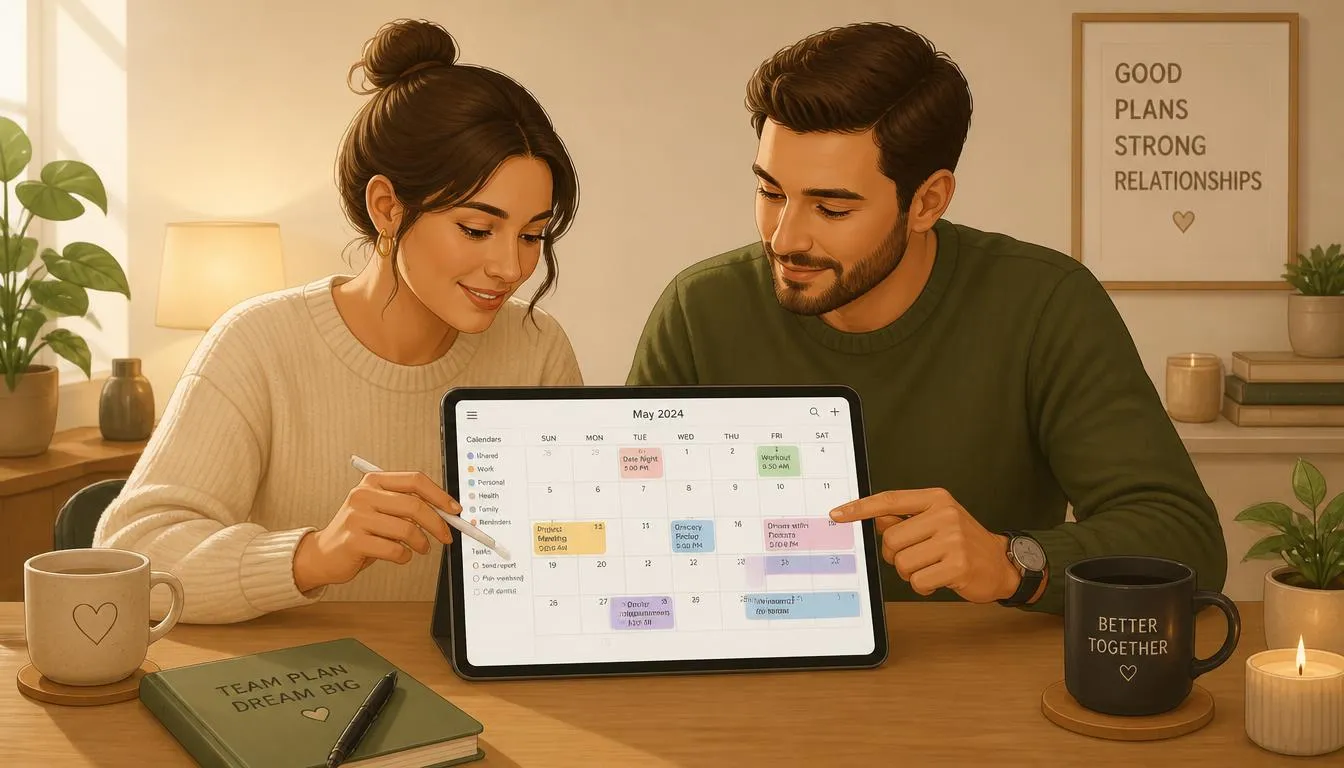
Left unaddressed, this imbalance breeds quiet resentment on one side and quiet shame on the other, a combination that erodes intimacy far more effectively than any single argument could. Couples counseling addresses this not by asking the ADHD partner to simply “try harder,” which rarely produces lasting change, but by building external systems, shared digital calendars, task-management apps, weekly planning rituals, that reduce reliance on working memory altogether.
Emotional Dysregulation and Conflict Escalation
Emotional dysregulation, a core but under-discussed feature of adult ADHD, refers to difficulty modulating the intensity and duration of emotional responses. For a couple, this often means an argument that would de-escalate in five minutes for most partners instead spikes quickly into flooding, a physiological state of overwhelm in which rational conversation becomes nearly impossible. The ADHD partner may say something they don’t mean in the heat of the moment, or shut down entirely, while the non-ADHD partner experiences the intensity as disproportionate or even frightening.
Effective couples counseling teaches both partners to recognize the early physiological signs of flooding and to use a structured time-out protocol, pausing the conversation, self-soothing, and returning to it once both nervous systems have settled, rather than pushing through an argument that neither partner is equipped to have productively in that moment.
Rejection Sensitive Dysphoria (RSD) and the Fear of Criticism
Perhaps the least understood, and most relationship-relevant, feature of adult ADHD is Rejection Sensitive Dysphoria (RSD): an intense, often disproportionate emotional pain triggered by perceived criticism, rejection, or failure. For a partner with RSD, even gentle, well-intentioned feedback (“Could you remember to lock the door?”) can land as a devastating indictment of their worth, triggering a defensive reaction, anger, withdrawal, or over-apologizing, that seems wildly out of proportion to the original comment.
This dynamic frequently confuses non-ADHD partners, who may start walking on eggshells to avoid triggering a reaction, which itself erodes honest communication. In counseling, RSD is addressed through psychoeducation (so the non-ADHD partner stops taking the reaction personally), individual work on self-compassion for the ADHD partner, and specific language frameworks, leading with appreciation, separating the behavior from the person’s character, that reduce the likelihood of triggering a rejection-sensitive spiral in the first place.
Hyperfocus, Novelty-Seeking, and Feeling “Unseen”
Hyperfocus, the flip side of inattention, is the capacity to become so intensely absorbed in an activity, a video game, a work project, a new hobby, that everything else, including a partner sitting in the same room, fades into the background. Early in a relationship, this same neurological trait often manifests as an intoxicating, all-consuming romantic attention that makes the ADHD partner feel like the most engaging person alive to be around. When that novelty wears off and hyperfocus redirects elsewhere, the contrast can feel like a personal rejection, even though it reflects a dopamine-driven attention system rather than diminished love.
Couples counseling helps partners name this cycle explicitly, and works with the ADHD partner to intentionally redirect some of that hyperfocus capacity back toward the relationship, through scheduled quality time, shared novel activities, and check-in rituals that recreate some of the engaged attention both partners remember from earlier in the relationship.
Symptom-to-Strategy Overview
| ADHD Symptom Cluster | How It Shows Up in the Relationship | Core Counseling Strategy |
| Executive dysfunction | Forgotten tasks, uneven mental load, missed deadlines | External systems (shared calendars, task apps), role redistribution based on capacity |
| Emotional dysregulation | Rapid escalation, flooding, disproportionate reactions | Time-out protocols, nervous-system regulation skills, structured conflict scripts |
| Rejection Sensitive Dysphoria (RSD) | Defensiveness or withdrawal after mild feedback | Psychoeducation, individual self-compassion work, “appreciation-first” feedback language |
| Hyperfocus / novelty-seeking | Partner feels unseen once initial romantic intensity fades | Scheduled quality time, shared novelty, intentional attention redirection |
| Impulsivity | Interrupting, blurted comments, impulsive purchases or decisions | Communication pacing tools, joint financial and decision-making agreements |
Why General Couples Therapy Often Falls Short for ADHD Couples
Not every therapist is trained to distinguish between a relationship problem and a neurological one, and this distinction matters enormously. A well-meaning but generalist therapist may interpret forgotten chores as passive-aggression, interrupted conversations as disrespect, or emotional flooding as poor anger management, and build an entire treatment plan around correcting “behavior” that is, in fact, a downstream symptom of executive dysfunction and emotional dysregulation. When the underlying neurology goes unaddressed, couples can spend months or years in therapy applying communication techniques that quietly assume both partners have equally reliable working memory, impulse control, and emotional regulation, an assumption that simply doesn’t hold in an ADHD-affected relationship.
This is why an accurate diagnostic picture matters before, or alongside, couples work begins. When ADHD has never been formally diagnosed, or a partner suspects undiagnosed ADHD is at play, starting with a comprehensive online ADHD assessment gives both the couple and their therapist a clear, evidence-based foundation to work from, rather than guessing at which symptoms are ADHD-driven and which reflect something else entirely, such as an underlying mood or anxiety disorder that can present with overlapping features.
How ADHD-Informed Couples Counseling Works
Effective treatment for ADHD-affected relationships typically unfolds across four interlocking phases, each building on the last rather than jumping straight to communication scripts before the groundwork is laid.
The process usually begins with assessment and psychoeducation, in which the therapist gathers a detailed history of both partners’ experiences, screens for ADHD if it hasn’t already been formally diagnosed, and teaches both partners how executive dysfunction, emotional dysregulation, and RSD actually function neurologically. This phase alone often produces a noticeable shift in the emotional temperature of the relationship, because it reframes months or years of “he never listens” or “she’s always nagging” into a shared, non-blaming understanding of what’s actually happening in each partner’s nervous system.
From there, treatment typically moves into structural rebalancing, the practical work of redistributing household and emotional labor according to each partner’s actual executive-function capacity rather than an assumed 50/50 split. This might involve external tools like shared task-management apps, visible household calendars, or weekly “planning meetings” that offload responsibilities from working memory into a system both partners can see and trust.
The third phase, skills-based communication training, draws heavily on cognitive behavioral therapy (CBT) techniques adapted specifically for ADHD-affected couples. This includes structured “speaker-listener” protocols that slow down conversations enough to prevent impulsive interruptions, time-out and re-engagement scripts for moments of emotional flooding, and cognitive reframing exercises that help both partners interrupt catastrophic thinking patterns, the ADHD partner’s fear that “I always ruin everything,” and the non-ADHD partner’s fear that “nothing will ever change.”
Finally, many couples benefit from ongoing maintenance and relapse prevention, since ADHD symptoms don’t disappear after a course of therapy, they need continuous, sustainable management. This is where working with a therapist who specializes in neurodivergent relationships pays long-term dividends, and it’s a major reason couples increasingly seek out structured online couples counseling built specifically around ADHD-informed frameworks, rather than generic relationship coaching, since ongoing access to a specialized clinician, without the friction of commuting to in-person sessions, makes consistent, long-term follow-through far more realistic for couples already managing executive dysfunction.
Comparing Therapeutic Approaches for ADHD-Affected Couples
| Approach | Core Focus | Best Suited For |
| ADHD-Informed CBT for Couples | Restructuring thought patterns, behavioral systems, and communication scripts around ADHD symptoms | Couples where executive dysfunction and RSD are the primary conflict drivers |
| Gottman Method Couples Therapy | Building friendship, managing conflict through structured research-based interventions | Couples needing general conflict-management skills alongside ADHD-specific work |
| Emotionally Focused Therapy (EFT) | Identifying attachment wounds and negative interaction cycles | Couples where emotional disconnection and trust rupture are central |
| ADHD Coaching (non-clinical) | Accountability, organizational systems, goal-setting for the ADHD partner individually | Supplementing, not replacing, couples counseling; not appropriate for clinical mood or anxiety symptoms |
In practice, many clinicians blend elements of ADHD-informed CBT with Gottman or EFT techniques, tailoring the mix to whichever relational wound, communication breakdown, trust erosion, or emotional disconnection, is most pressing for a given couple.
Practical Strategies Couples Can Start Today
While professional counseling provides the structure and accountability that produce lasting change, there are evidence-informed habits couples can begin practicing between sessions, or while deciding whether to seek treatment. Replacing vague, memory-dependent requests (“can you help out more around here?”) with specific, externally trackable commitments tends to reduce friction dramatically, because it removes the ADHD partner’s working memory from the equation entirely and replaces it with a visible system both partners can reference. Similarly, building in a standing weekly check-in, a brief, low-stakes conversation about logistics and feelings, separate from in-the-moment conflict, gives both partners a predictable container for issues to surface in, rather than letting resentment accumulate until it explodes during an unrelated argument.
When conflict does arise, agreeing in advance on a time-out signal, a word or gesture either partner can use to pause a conversation before it escalates into flooding, preserves both partners’ ability to return to the discussion once emotions have settled, rather than saying things in the heat of the moment that neither actually believes. And for the non-ADHD partner in particular, consciously separating the person from the symptom, reminding themselves that a forgotten errand reflects a neurological difference in prospective memory rather than a lack of care, tends to reduce the day-to-day emotional toll of the relationship even before formal treatment begins.
These strategies help, but they have real limits, and it’s important to be honest about where those limits sit.
When Self-Help Isn’t Enough: Recognizing the Limits of Relationship Strategies
It’s worth stating plainly: the communication techniques and household strategies described above are genuinely useful, but they are not a substitute for clinical treatment when ADHD symptoms are severe, when a co-occurring mood or anxiety disorder is present, or when the relationship has been affected by patterns such as chronic dishonesty, financial instability from impulsive spending, or emotional or verbal harm. Self-help strategies work best as a complement to, not a replacement for, professional assessment and treatment, particularly because ADHD very frequently co-occurs with depression, anxiety disorders, or other mood conditions that require their own targeted clinical care and that can mimic or intensify relational symptoms in ways a self-guided approach simply isn’t equipped to untangle.
If either partner is experiencing significant depression, escalating conflict that feels unsafe, or thoughts of self-harm, that calls for direct clinical attention rather than relationship exercises alone, and a licensed provider should be involved without delay. Couples navigating severe or complex symptom presentations should treat a formal diagnostic evaluation and licensed clinical treatment as the foundation, with relationship-strengthening strategies built on top of that foundation, not the other way around.
Building the Path Forward Together
The couples who navigate ADHD most successfully aren’t the ones who eliminate all symptoms, that isn’t a realistic goal for a neurodevelopmental condition, but the ones who stop interpreting those symptoms as character flaws and start treating them as a shared problem to be managed with the right tools and support. That reframe, more than any single communication technique, is usually what allows resentment to soften back into partnership. Getting there typically starts with an honest conversation about what each partner has been carrying, followed by professional support that understands ADHD not as a footnote to the relationship’s problems, but as central to solving them.
Frequently Asked Questions
Can a relationship survive when one partner has untreated ADHD?
Yes, though untreated ADHD symptoms, particularly executive dysfunction and emotional dysregulation, do meaningfully increase relationship strain over time. Relationships tend to fare best when the ADHD partner pursues an accurate diagnosis and appropriate treatment (which may include medication, therapy, or both) and when both partners engage in ADHD-informed couples counseling to rebuild communication and fairness around the condition rather than around blame.
How is ADHD-informed couples counseling different from regular marriage counseling?
Standard couples therapy often assumes both partners have comparable working memory, impulse control, and emotional regulation capacity, and builds communication techniques on that assumption. ADHD-informed counseling instead starts from an understanding of executive dysfunction, emotional dysregulation, and Rejection Sensitive Dysphoria, and tailors interventions, external organizational systems, modified conflict scripts, psychoeducation, to account for genuine neurological differences between partners.
Is ADHD coaching a substitute for couples counseling?
No. ADHD coaching is a non-clinical service focused on individual accountability, organization, and goal-setting, and it can be a valuable supplement to therapy. However, it isn’t designed to address relational dynamics between two partners or to treat co-occurring mental health conditions, so it works best alongside, not instead of, professional couples counseling with a licensed clinician.
What is Rejection Sensitive Dysphoria, and why does it matter for relationships?
Rejection Sensitive Dysphoria (RSD) is an intense emotional response to perceived criticism or failure that many adults with ADHD experience. In relationships, it can cause a partner to react to mild, well-intentioned feedback with disproportionate hurt, defensiveness, or withdrawal. Understanding RSD helps both partners interpret these reactions accurately, as a neurological sensitivity rather than an overreaction or a lack of accountability, which reduces conflict and defensiveness on both sides.
How long does couples counseling for ADHD-related relationship issues typically take?
There’s no universal timeline, since it depends on symptom severity, whether ADHD has been formally diagnosed and treated, and how entrenched existing conflict patterns are. Many couples begin noticing meaningful shifts in communication and household balance within the first eight to twelve sessions, with a fuller course of treatment, including relapse-prevention and maintenance work, often extending to twenty sessions or more.
If ADHD symptoms are affecting your relationship, professional support can help you and your partner move from blame to teamwork. Explore a comprehensive online ADHD assessment to get clarity on what you’re both experiencing, or connect directly with online couples counseling designed specifically for neurodivergent relationships.
| Medical Disclaimer & E-E-A-T AttributionThis article is for educational purposes and does not replace personalized medical or psychological advice. If you are recovering from a brain injury, trauma, or a mental health condition, work with a licensed clinician to build a plan suited to your situation.
Written by: Adil Farooq, Psychiatry Magazine Medically reviewed by: [Dr. Adil Farooq MS · PhD] · Updated: 2026 |