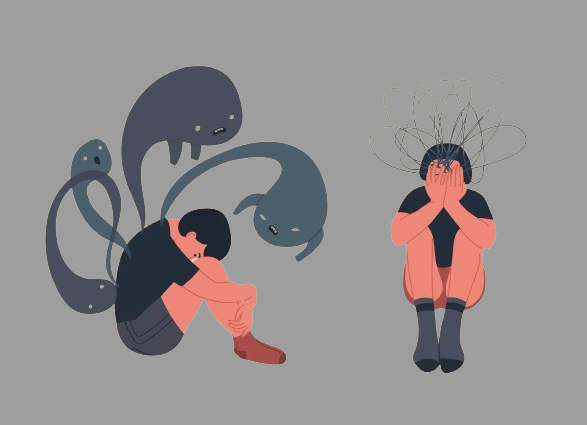
Something upsetting happens, and you wait for the tears, the anger, the grief — whatever the moment seems to call for — and nothing comes. You know, logically, that you should be feeling something. Instead there’s just pressure, a kind of internal blockage, like the emotion is stuck somewhere between recognizing it and actually feeling it. This experience has a fittingly blunt name: emotional constipation, the persistent inability to express or release emotions even when you’re aware they exist.

Quick answer: Emotional constipation refers to a pattern of suppressing, blocking, or being unable to access and express emotions, leaving them “stuck” internally rather than processed and released — often as a result of learned emotional suppression, trauma, or long-term avoidance of vulnerability.
This guide covers what emotional constipation actually is, why it develops, how it shows up in daily life, how it differs from related concepts like alexithymia, and what genuinely helps you start releasing what’s been stuck.
What Is Emotional Constipation?
Emotional constipation is an informal but widely used term describing a felt sense of emotional blockage — the awareness that you should be feeling something, or that something is building up internally, without being able to actually express, release, or sometimes even fully access that emotion.
Unlike simply being “unemotional,” emotional constipation typically involves real internal pressure. The feelings aren’t absent; they’re dammed up. People experiencing it often describe a physical sensation alongside the psychological one — tightness in the chest or throat, a lump that won’t dissolve into tears, a kind of pressure that has no outlet.
This pattern usually isn’t a conscious choice in the moment. It’s the result of a suppression system that’s become so automatic and well-practiced — often built up over years — that it now operates below conscious control, blocking emotional expression even when the person genuinely wants to let it out.
What Causes Emotional Constipation
Childhood emotional invalidation. Growing up in an environment where emotions were dismissed, punished, mocked, or simply ignored teaches a child, very early, that expressing feelings isn’t safe or welcome. That lesson doesn’t disappear in adulthood; it becomes an automatic suppression reflex.

Cultural or gendered conditioning. Many cultures and gender norms explicitly discourage emotional expression, particularly around vulnerability, sadness, or fear. Boys and men, in particular, are frequently socialized from a young age to suppress emotional expression as a marker of strength, which can create a deeply ingrained pattern of emotional constipation by adulthood.
Trauma. For trauma survivors, emotional expression can feel dangerous, especially if past vulnerability was met with punishment, abandonment, or further harm. Suppression becomes a protective strategy that, while adaptive at the time, often persists long after the original danger has passed.
Chronic high-functioning stress. People who’ve spent years operating in high-pressure environments — demanding careers, caregiving roles, crisis management — often learn to compartmentalize emotion simply to keep functioning, and that compartmentalization can become difficult to switch off even during safe, appropriate moments for emotional release.
Fear of losing control. Some people avoid emotional expression because they fear that once they start, they won’t be able to stop — that a single moment of vulnerability will open a floodgate they can’t close. This fear itself often becomes a major driver of the blockage.
Lack of emotional vocabulary. For some people, the block isn’t purely about safety — it’s practical. Without a strong emotional vocabulary, developed through early modeling and practice, it can be genuinely difficult to identify and articulate what’s being felt, which makes expression harder even when the person wants to try.
Signs and Symptoms of Emotional Constipation
- Knowing you “should” feel something in a given situation, but feeling numb or blocked instead
- A physical sensation of pressure, tightness, or a lump, especially in the chest or throat, without release
- Difficulty crying even during moments that clearly call for it
- Feeling emotions arrive late, sometimes hours or days after an event, rather than in the moment
- A general sense of being “full” or overwhelmed internally without an identifiable outlet
- Difficulty naming specific emotions beyond broad categories like “fine,” “stressed,” or “off”
- Physical symptoms that seem to have no clear medical cause — headaches, muscle tension, digestive discomfort — that improve after emotional release
- Feeling disproportionately triggered by small, unrelated frustrations, which may reflect unexpressed emotion building pressure elsewhere
- Avoiding situations, media, or conversations that might trigger strong emotion, even when part of you wants that release
- A pattern of intellectualizing feelings — talking about emotions analytically rather than actually feeling them
How Emotional Constipation Shows Up in Daily Life
In relationships. Partners of people with emotional constipation often describe feeling shut out, even when there’s no active conflict. The person may genuinely care deeply but struggle to express that care emotionally, which can create a painful mismatch between internal feeling and external expression that both people experience as distance.
At work. Emotional constipation can actually look like an asset in some professional contexts — composed, unflappable, always “fine” — until it manifests as sudden irritability, unexplained exhaustion, or physical symptoms that seem disconnected from any obvious cause.
In grief. One of the most common contexts where emotional constipation becomes painfully visible is grief. A person may feel enormous internal pressure after a loss but find themselves unable to cry, express sadness, or access the grief in any outward way, which can create additional distress on top of the loss itself — grieving the fact that they can’t seem to grieve properly.
In physical health. The body often bears the cost of unexpressed emotion. Chronic tension, digestive issues, headaches, and fatigue are commonly reported alongside emotional constipation, consistent with a growing body of research on the mind-body connection and how suppressed emotion can manifest physically over time.
In parenting. Emotionally constipated parents often love their children deeply while struggling to express that love outwardly in ways the child can clearly recognize. This can unintentionally pass the same pattern to the next generation, as children learn emotional norms largely by watching what’s modeled at home rather than what’s explicitly said.
Emotional Constipation vs. Alexithymia
These two are often confused, but they’re not identical.
Alexithymia is a broader, more stable trait involving genuine difficulty identifying and describing emotions — not necessarily an active suppression of emotions the person is already aware of, but a more fundamental gap in emotional self-awareness itself.

Emotional constipation, by contrast, usually involves an awareness that an emotion exists — the person can often sense that something is there, building pressure — but faces a specific block in expressing or releasing it, whether due to fear, habit, or learned suppression, rather than a fundamental inability to identify the feeling in the first place.
In practice, the two can overlap and reinforce each other: someone with limited emotional vocabulary (alexithymia-adjacent) may find it even harder to release emotions they can’t clearly name, compounding the sense of internal blockage.
Emotional Constipation vs. Being a “Private Person”
It’s worth distinguishing emotional constipation from simply being reserved or private by temperament. Some people are naturally less expressive, process internally, and prefer not to share every feeling openly — and that, on its own, isn’t a problem. The distinguishing factor is internal experience, not outward behavior.
A private person who chooses not to express an emotion outwardly usually still has access to that emotion internally; they know what they’re feeling, they’ve simply decided (or prefer) not to broadcast it. Someone with emotional constipation, by contrast, often wants to access and express the emotion — sometimes desperately — but experiences a genuine internal block preventing it, regardless of their preference or intention in the moment.
This distinction matters because it changes the goal. A naturally private person doesn’t necessarily need to become more expressive; that’s simply their temperament. Someone with emotional constipation, however, is usually working against a felt sense of restriction they didn’t choose and would often like to change.
The Psychology Behind Emotional Constipation
Emotion, at a physiological level, is designed to move — to be generated, expressed in some form (crying, speaking, physical release), and then to subside. This is sometimes described as the natural “wave” of emotional processing. Chronic suppression interrupts this wave partway through, repeatedly, until the interruption itself becomes the default pattern.
Over time, this repeated interruption doesn’t make the emotional charge disappear — it accumulates. Some researchers describe this in terms of allostatic load, the cumulative physiological cost of chronic stress and unprocessed emotional activation, which can manifest as the very tension, fatigue, and physical symptoms many people with emotional constipation report.
Suppression also reinforces itself neurologically. Every time an emotional response is blocked rather than expressed, the suppression pathway gets a small amount of additional practice, while the expression pathway gets a little weaker from disuse — not unlike a muscle. This is part of why emotional expression can feel almost physically unfamiliar or awkward for people who’ve suppressed consistently for years; the pathway genuinely needs to be rebuilt.
What This Looks Like in Real Life
Example 1: A man attends his father’s funeral, feels nothing during the service despite deep love for his father, and is privately ashamed of his apparent lack of grief. Three weeks later, a minor, unrelated frustration at work triggers an overwhelming, seemingly disproportionate wave of tears — the delayed release of grief that had been blocked at the time it “should” have appeared.
Example 2: A woman notices that she can discuss traumatic events from her past in detail, calmly and analytically, as though narrating someone else’s story, but feels almost nothing while doing so. Her therapist notes this as a hallmark of emotional constipation layered over trauma — the story is accessible, but the emotional charge attached to it has been walled off.
Example 3: A teenager raised in a household where crying was mocked grows into an adult who feels chronic, unexplained chest tightness during any emotionally significant event — weddings, arguments, even happy occasions — but cannot cry or articulate what he’s feeling in the moment, despite clearly sensing that something large is happening internally.
Common Myths About Emotional Constipation
Myth: “If you can’t cry, you don’t really care.” In reality, some of the deepest, most complicated grief shows up as an inability to cry, not an absence of feeling. The block is often precisely where the most significant emotional weight is sitting.
Myth: “You just need to try harder to feel your feelings.” Emotional suppression is typically an automatic, deeply practiced pattern, not a matter of insufficient effort. Willpower alone rarely dismantles a suppression system that took years to build; it usually requires deliberate, gradual practice instead.
Myth: “Talking about your feelings analytically means you’re processing them.” Intellectualizing emotion — discussing it clearly and calmly — can actually be one of the more subtle forms of emotional constipation, allowing a person to describe an experience thoroughly while remaining emotionally disconnected from it the entire time.
Myth: “Once you start expressing emotion, it gets easier immediately.” For many people, early attempts at emotional expression feel clumsy, disproportionate, or oddly delayed before they start to feel more natural. This is a normal part of rebuilding a suppressed pathway, not a sign that something is going wrong.
How to Cope With Emotional Constipation
1. Start with physical sensation, not the emotion itself. Rather than trying to force an emotional label, begin by noticing physical sensations — tightness, heaviness, a lump in the throat. This is often a more accessible entry point than trying to name the feeling directly.
2. Build emotional vocabulary deliberately. Using an emotion wheel or a simple list of feeling words can help translate vague internal pressure into more specific, workable language, which itself often begins to loosen the blockage.
3. Practice low-stakes expression first. Rather than starting with the biggest, most vulnerable emotions, practice expressing smaller, everyday feelings out loud — mild annoyance, small joys — to rebuild the expression pathway gradually.
4. Use writing as a private release valve. Journaling, particularly unfiltered, stream-of-consciousness writing, can provide a lower-risk outlet for emotional release when speaking to another person still feels too exposing.
5. Allow delayed emotional responses without judgment. If emotion tends to arrive late, treat that delay as information, not failure. Give yourself permission to feel something days after an event without deciding you’re “doing grief (or anger, or joy) wrong.”
6. Engage the body. Because suppressed emotion often manifests physically, somatic practices — movement, breathwork, even simple stretching — can help create physical conditions where suppressed emotion has room to surface and move.
7. Work with a therapist trained in emotion-focused approaches. Modalities like emotion-focused therapy, somatic experiencing, or trauma-informed talk therapy are specifically designed to help rebuild the connection between recognizing and expressing emotion, particularly when suppression has become deeply automatic.
When to Seek Professional Help
If emotional constipation is significantly affecting your relationships, causing persistent physical symptoms without a clear medical explanation, or if you notice a consistent pattern of emotional numbness that feels distressing or disconnecting, it’s worth speaking with a therapist. This is especially important if the pattern is linked to a trauma history, since safely rebuilding emotional expression after trauma often benefits significantly from professional, trauma-informed support rather than being attempted alone.
Frequently Asked Questions
Is emotional constipation a real psychological term?
It’s not a formal clinical diagnosis, but it’s a widely used and clinically recognized descriptive term for a real pattern: the suppression or blockage of emotional expression despite an underlying awareness that the emotion exists.
Why can’t I cry even when I know I’m sad?
This is a common feature of emotional constipation, often rooted in learned suppression from childhood, cultural conditioning, or trauma. The emotional response is often present internally but blocked from its natural expression, which is why it can feel like straining against something rather than simply not feeling sad at all.
Is emotional constipation the same as being emotionally numb?
They overlap but aren’t identical. Emotional numbness often implies an absence of felt emotion, while emotional constipation typically involves a felt internal pressure or awareness that emotion exists, just without an available outlet for expressing it.
Can emotional constipation cause physical symptoms?
Yes. Chronic tension, headaches, digestive issues, and fatigue are commonly reported alongside emotional constipation, consistent with research on how suppressed emotional activation can manifest physically over time.
Does emotional constipation get better on its own?
It can improve somewhat with increased self-awareness and small changes, but because the pattern is often deeply automatic, most people see meaningfully faster and more lasting improvement through deliberate practice — journaling, somatic work, therapy — rather than waiting for it to resolve passively.
Is emotional constipation more common in men?
Cultural and gendered conditioning around emotional expression means men are statistically more likely to report patterns consistent with emotional constipation, though it affects people of all genders, particularly those raised in environments where emotional expression was discouraged or unsafe.
Why do my emotions sometimes come out as anger instead of what I actually feel?
Anger is often a more socially “permitted” or accessible emotion than sadness, fear, or vulnerability, especially for people raised in environments that discouraged softer emotional expression. When those underlying feelings are blocked, anger can become the pressure valve that releases the built-up charge instead.
Can journaling really help release stuck emotions?
Yes, particularly unfiltered, private journaling. Writing bypasses some of the social risk associated with spoken expression, which can make it easier to access and articulate emotions that feel too exposed or unsafe to say out loud, especially early in the process of rebuilding emotional expression.
Conclusion
Emotional constipation is uncomfortable precisely because the feelings aren’t gone — they’re stuck, pressing against a system that’s learned, often for good reason, to hold them back. Understanding it as a learned suppression pattern rather than a personal deficiency makes it possible to approach it with curiosity instead of shame, and to gradually rebuild the pathway between recognizing an emotion and actually letting it move through you. That process takes practice, patience, and often support, but the blockage isn’t permanent.