Quick AnswerMindfulness based cognitive therapy (MBCT) is an eight-week, evidence-based psychotherapy program that merges cognitive behavioral techniques with guided mindfulness meditation. Originally developed to prevent relapse in patients with recurrent depression, it trains individuals to notice negative thought patterns early and relate to them as passing mental events rather than absolute facts. Today, MBCT is also widely utilized to treat anxiety, chronic stress, and physical pain. |
The Origins and Philosophy of MBCT
Mindfulness based cognitive therapy was developed in the 1990s by clinical psychologists Zindel Segal, Mark Williams, and John Teasdale. Their goal was to design a scalable, non-pharmacological intervention to stop patients with a history of recurrent depression from relapsing. To achieve this, they adapted Jon Kabat-Zinn’s Mindfulness-Based Stress Reduction (MBSR) program and integrated it with the established problem-solving frameworks of traditional cognitive therapy.
Through rigorous clinical trials spearheaded by institutions like the Oxford Mindfulness Centre and the University of Exeter, MBCT emerged as an international standard for depression management. The critical innovation of MBCT lies in a fundamental cognitive shift: emotional distress is governed not simply by what we think, but by how we relate to what we think.
The Core Shift: “Doing Mode” vs. “Being Mode”
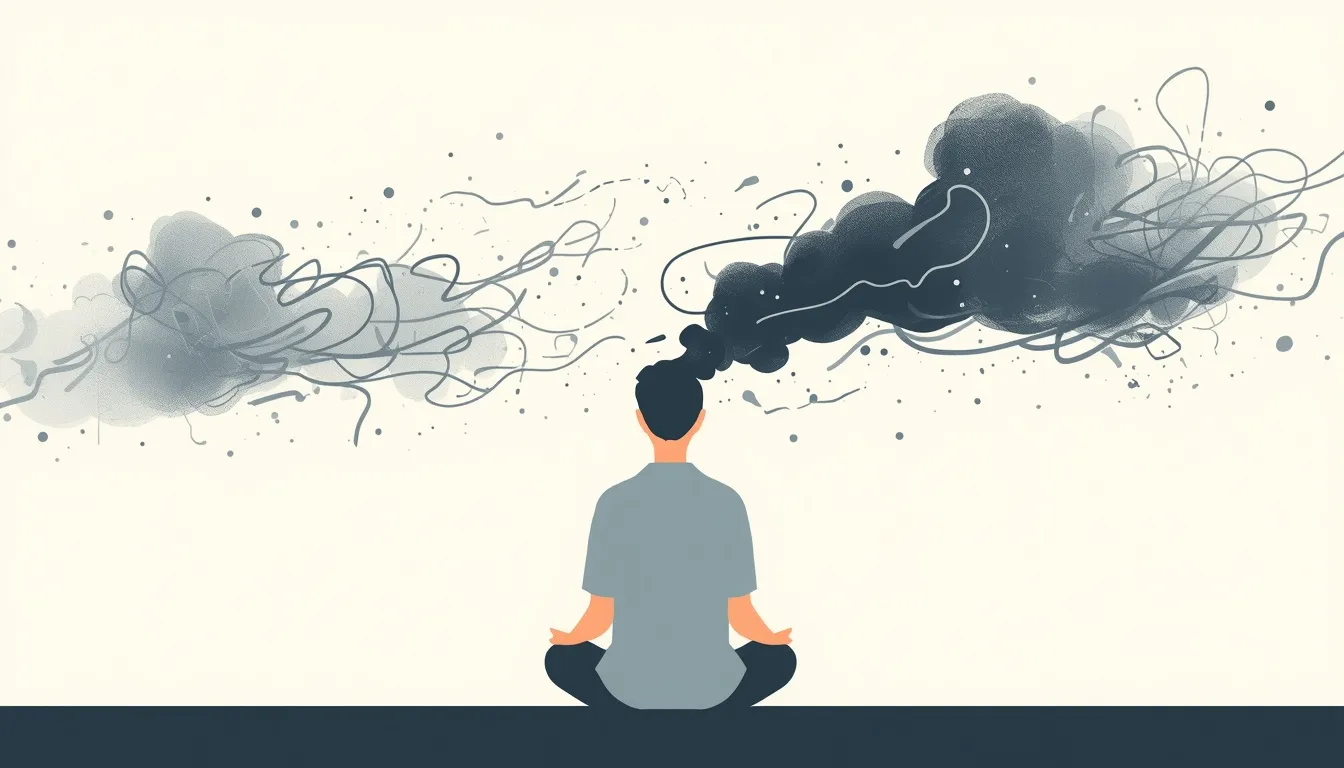
When faced with a problem, the human brain naturally enters a “doing mode”, an analytical state geared toward identifying a discrepancy between how things are and how we want them to be, and then trying to fix it. While effective for practical tasks, applying the “doing mode” to negative emotions often backfires, trapping the mind in a cycle of rumination.
MBCT trains the brain to switch into “being mode.” Instead of fighting, analyzing, or attempting to restructure a distressing thought, individuals are taught to simply observe the thought and allow it to exist without judgment. Clinicians refer to this as metacognitive awareness or cognitive decentering: the ability to step outside the stream of thinking rather than arguing with it from the inside.
Breaking the Relapse Cycle: How MBCT Works in Practice
Depressive relapse rarely occurs without warning. It typically begins when a minor drop in mood reactivates old, dormant self-critical thinking patterns. This creates an automatic chain reaction: negative feelings prompt catastrophic thoughts, which in turn deepen the low mood.
MBCT equips patients to catch this shift much earlier in the cycle. Through practices like the body scan and mindful breathing, participants learn to detect the earliest physiological and mental signatures of a downward spiral.
Clinical Example: In practice, this means when a patient feels the familiar chest-tightness of anxiety, they do not immediately shift into a catastrophic narrative (“I am having a panic attack, I need to escape”). Instead, using MBCT skills, they ground themselves in the present and observe, “I am noticing a sensation of tightness in my chest right now, and my mind is generating fearful thoughts.” This early interception prevents the thought from gathering the momentum needed to trigger a full depressive or anxious episode.
What Does MBCT Treat? The Clinical Evidence
While the modality has expanded, its most robust, gold-standard evidence base remains in the prevention of major depressive disorder relapse.
- Recurrent Depression: A 2016 individual-patient-data meta-analysis published in JAMA Psychiatry analyzed nine randomized controlled trials involving over 1,250 participants. The data demonstrated that patients completing MBCT were roughly 31% less likely to relapse into major depression within 60 weeks compared to control groups (a 38% relapse rate versus 49%). Furthermore, a UK trial found that patients using MBCT to taper off maintenance antidepressants relapsed 23% less often than those who remained on medication alone.
- Clinical Guidelines: Based on this overwhelming efficacy, the UK’s National Institute for Health and Care Excellence (NICE) specifically recommends MBCT for adults who have experienced three or more previous depressive episodes.
- Anxiety and Worry: MBCT is increasingly utilized for generalized anxiety disorder and social anxiety. Decentering skills effectively break the anticipatory “what if” cognitive loops that fuel chronic worry.
- Chronic Pain and Stress: For persistent physical pain and fatigue, MBCT shifts the treatment goal from eliminating the physical sensation to reducing the psychological suffering layered on top of it, leveraging the mind-body connection to regulate physiological tension.
Inside the 8-Week MBCT Curriculum
The standard clinical delivery of MBCT is a manualized 8-week course, typically conducted in groups of 8 to 15 participants who meet for 2 to 2.5 hours weekly, supplemented by up to four follow-up sessions across the next year. A significant component of the therapy is daily homework, requiring about 45 minutes of independent practice.
The curriculum systematically progresses through different phases of awareness:
- Weeks 1-2 (Recognizing Autopilot): Identifying how much of life is lived without conscious awareness and learning to bring attention to the present moment.
- Weeks 3-4 (Gathering the Scattered Mind): Transitioning from the “doing” mode to the “being” mode, and learning how to sit safely with difficult thoughts without reacting.
- Weeks 5-6 (Allowing and Letting Be): Developing a radically altered, accepting relationship with negative emotions and physical discomfort.
- Weeks 7-8 (Action and Relapse Prevention): Formulating concrete action plans for self-care and recognizing individual warning signs of a depressive mood shift.
Core Techniques and Practices
- The Body Scan: Participants slowly move their attention through various body parts, registering raw physical sensations without attempting to change them. This builds present-moment somatic awareness.
- The 3-Minute Breathing Space: This is the signature, portable coping skill of MBCT. It consists of three one-minute steps: Awareness (What is my internal weather right now?), Gathering (Focusing entirely on the physical sensation of the breath), and Expanding (Broadening awareness back to the whole body and surrounding environment).
- Mindful Movement: Incorporating gentle yoga and stretching to cultivate an awareness of the body in motion.
- Thought Observation: Explicitly labeling self-critical or anxious thoughts as mere mental events, neutralizing their emotional charge.

MBCT vs. CBT: Key Distinctions
Because MBCT evolved from standard cognitive behavioral therapy, they share foundational DNA but differ significantly in clinical execution.
| Dimension | Cognitive Behavioral Therapy (CBT) | Mindfulness-Based Cognitive Therapy (MBCT) |
| Core Goal | Change the content and validity of unhelpful thoughts. | Change your relationship and reactivity to your thoughts. |
| Primary Method | Identify and actively restructure cognitive distortions. | Observe thoughts non-judgmentally via decentering. |
| Format | Often delivered individually; flexible timeline. | Standardized 8-week group program. |
| Mindfulness Component | Not traditionally included. | Formal guided meditation is central to every session. |
| Ideal Clinical Timing | Highly effective for acute, active depressive or anxious episodes. | Most effective as a relapse-prevention tool during symptom remission. |
These modalities work best chronologically: CBT helps dismantle an acute crisis, while MBCT ensures the crisis does not return.
MBCT vs. Other “Third-Wave” Therapies
MBCT belongs to a family of clinical interventions known as “third-wave CBT,” which prioritize acceptance and mindfulness alongside behavioral changes.
While closely related, it differs from Acceptance and Commitment Therapy (ACT), which focuses on psychological flexibility and taking action aligned with personal values rather than explicitly targeting depression relapse. Similarly, Dialectical Behavior Therapy (DBT) utilizes mindfulness as a foundational skill module, but it was designed primarily for severe emotional dysregulation and self-harm reduction.
Is MBCT Safe? Contraindications and Clinical Caution
MBCT is exceptionally well-tolerated, and large-scale trials show no increased risk of harm when taught by accredited professionals. However, it is explicitly designed for individuals who are not currently in the middle of a severe psychiatric crisis.
Sitting in prolonged silence and turning attention inward can exacerbate symptoms for vulnerable patients. Consequently, MBCT is generally contraindicated, and should only be approached with extreme caution alongside a psychiatrist, during:
- Active, acute major depressive episodes
- Active suicidal crises
- Unmedicated psychosis or schizophrenia
- Active manic or hypomanic episodes
Practicing MBCT at Home
While structured MBCT is a group-based clinical intervention, foundational mindfulness skills translate well to daily self-care. Engaging in a brief daily body scan, 10 minutes of mindful breathing, or keeping a thought observation journal can significantly improve emotional regulation. Digital platforms and apps, such as Insight Timer, Calm, and Headspace, offer excellent MBCT-adjacent guided practices.
However, home practice cannot completely replace the therapeutic safety net of an accredited instructor. In the early weeks of mindfulness training, paying close attention to the mind often temporarily increases a patient’s awareness of distressing thoughts before it ultimately reduces them. A trained facilitator is critical for guiding patients through this initial discomfort safely.
Frequently Asked Questions
Is MBCT the same as mindfulness meditation?
No. Mindfulness meditation is a general practice of present-moment awareness. Mindfulness based cognitive therapy is a specific, eight-week clinical program that merges meditation with cognitive psychology education designed to intercept depressive relapse.
How effective is MBCT for depression?
Highly effective. Pooled clinical data indicates that patients who complete the 8-week MBCT course are approximately 31% less likely to experience a depressive relapse over the following 60 weeks, with efficacy rates rivaling maintenance antidepressant medication.
Can MBCT treat anxiety as well as depression?
Yes. MBCT is increasingly supported by research for the treatment of generalized anxiety disorder, social anxiety, and stress-related rumination, as it teaches patients to observe anticipatory “what if” fears without reacting to them as immediate threats.
What is the core difference between MBCT and CBT?
CBT focuses on analyzing and changing the actual content of your thoughts (cognitive restructuring). MBCT focuses on changing your relationship to those thoughts, training you to view them as passing mental events rather than facts.
Can I learn MBCT without a therapist?
You can practice basic mindfulness components independently using apps or workbooks, but the full MBCT framework, and the evidence supporting its success, relies on a trained clinical facilitator, which is especially important for individuals with a history of severe depression or trauma.
Mindfulness based cognitive therapy provides a scientifically validated pathway out of the relentless cycle of recurring depression and chronic anxiety. By fundamentally shifting how the mind interacts with its own negative narratives, it offers a sustainable, lifelong skill set for maintaining mental clarity and emotional resilience.
Medical Disclaimer & E-E-A-T AttributionThis article is for educational purposes and does not replace personalized medical or psychological advice. If you are recovering from a brain injury, trauma, or a mental health condition, work with a licensed clinician to build a plan suited to your situation. Written by: Adil Farooq, Psychiatry Magazine Medically reviewed by: [Dr. Adil Farooq MS · PhD] · Updated: 2026 |