Quick AnswerGeneralized Anxiety Disorder (GAD) is a chronic mental health condition marked by excessive, difficult-to-control worry about everyday matters, health, work, money, relationships, occurring more days than not for at least six months, alongside physical symptoms like muscle tension, fatigue, and sleep problems. GAD is treatable, most often with a combination of talk therapy and, when needed, medication. |
Nearly one in five U.S. adults experiences an anxiety disorder in any given year, and for a smaller but still substantial group, that anxiety isn’t tied to one trigger, it’s constant. Generalized Anxiety Disorder (GAD) affects an estimated 2.7% of U.S. adults annually and 5.7% at some point in their lives, according to the National Institute of Mental Health, and it’s nearly twice as common in women as in men.
Despite how common it is, GAD remains one of the most under-recognized anxiety disorders, frequently dismissed as “just being a worrier” or overshadowed by more visible conditions like panic disorder or depression. This comprehensive guide breaks down what Generalized Anxiety Disorder (GAD) actually is, how it’s diagnosed, why it develops, and which treatments the evidence actually supports, so you know what to do next, whether you’re trying to understand your own experience or supporting someone else through theirs.
What Is Generalized Anxiety Disorder (GAD)?
Everyone worries. GAD is different in degree, duration, and control. Under the DSM-5-TR, the diagnostic manual clinicians use in the United States, GAD is characterized by excessive anxiety and worry about a number of events or activities, occurring on more days than not for at least six months, that the person finds difficult to control.
Critically, the worry has to be disproportionate to the actual likelihood or impact of the feared event, and it has to come with physical or cognitive symptoms: restlessness, fatigue, muscle tension, irritability, sleep disturbance, or trouble concentrating.
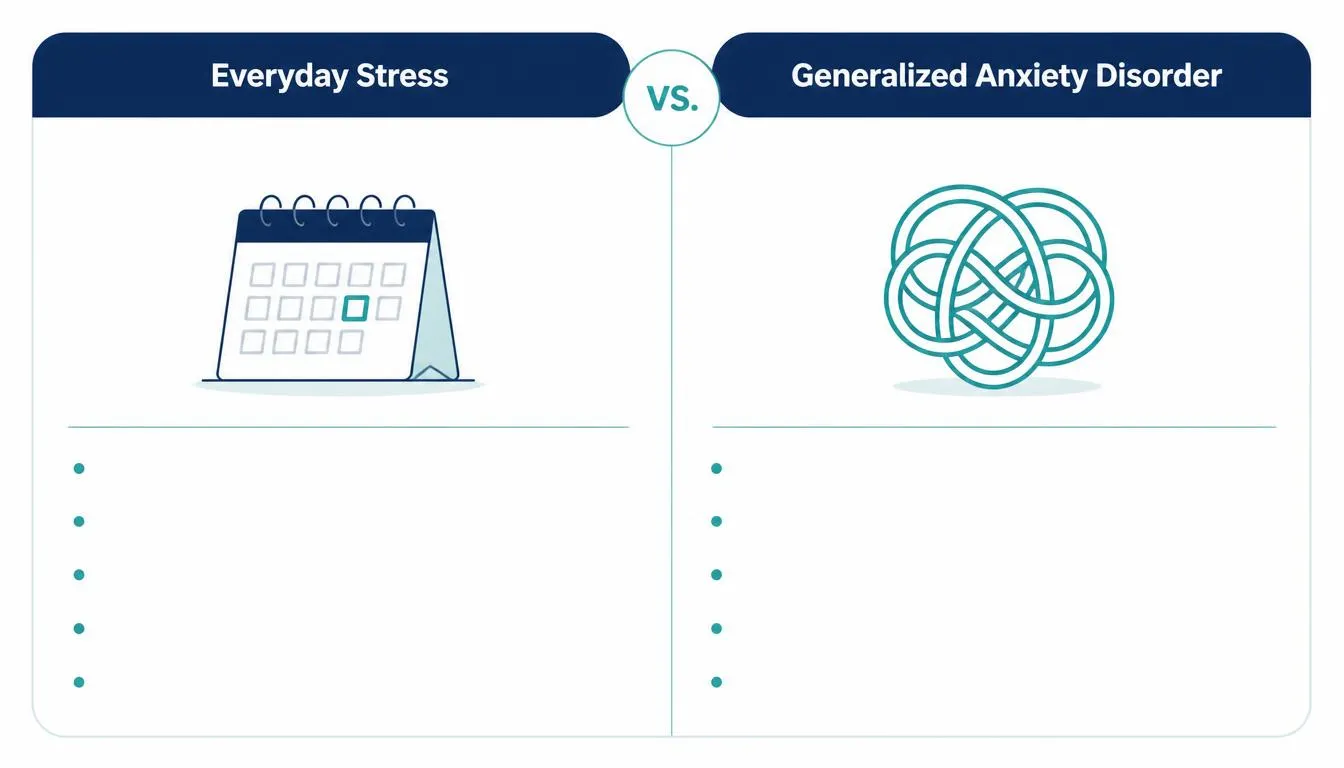
That last part is what separates GAD from ordinary stress. Everyday stress usually resolves once the situational trigger, a deadline, a bill, a hard conversation, passes. Understanding what’s the difference between stress and anxiety is crucial, because Generalized Anxiety Disorder does not wait for a reason. The mind moves from one worry to the next: if it’s not the job, it’s a relationship; if it’s not a relationship, it’s a health scare that hasn’t happened yet. People with GAD often describe a persistent sense that something is about to go wrong, even when there’s no evidence for it, and they struggle to switch that feeling off even when they know, rationally, that the worry isn’t proportionate.
Key GAD Statistics (2026 Snapshot)
- Past-year prevalence: ~2.7% of U.S. adults (NIMH)
- Lifetime prevalence: ~5.7% of U.S. adults
- Sex difference: 3.4% of women vs. 1.9% of men affected annually
- Severity: roughly one-third of cases are classified as serious, about 45% as moderate
- Treatment gap: fewer than half of adults with GAD receive treatment in a given year
Newer real-world data presented at recent managed-care and pharmacy conferences suggests the true burden may be even higher than historical survey estimates, with more than 1 in 10 adults showing signs of GAD in some recent claims-based analyses.
The Core Symptoms of GAD
GAD symptoms cluster into overlapping categories, emotional, cognitive, physical, and behavioral, and most people with the condition experience symptoms from several categories at once, not just “excessive worry” in isolation.
1. Emotional and Cognitive Symptoms
Emotionally, GAD tends to show up as a low-grade but persistent sense of dread, a feeling of being perpetually “on edge,” and irritability that can strain relationships and make small frustrations feel unmanageable.
- The Cognitive Loop: The hallmark is a mind that won’t settle. Worry about one topic bleeds into worry about the next, decisions feel high-stakes even when they’re trivial, and concentration suffers because so much mental bandwidth is occupied by rehearsing worst-case scenarios.
- Hyper-Rumination: Many people with GAD describe their thinking as “on a loop,” replaying the same what-ifs without ever landing on resolution. This pattern is a core reason GAD is sometimes mistaken for a simpler habit, though the two involve distinct physiological and diagnostic profiles.
2. Physical and Somatic Symptoms
Generalized Anxiety Disorder isn’t only “in your head”, it’s a full-body condition.
- Neurological Tension: Chronically elevated cortisol and sympathetic nervous system activation produce muscle tension (especially in the jaw, neck, and shoulders), headaches, gastrointestinal discomfort, and a racing or pounding heart that can feel alarming in the moment.
- Circadian Disruption: Sleep is almost always affected: people with GAD commonly report difficulty falling asleep because the mind won’t stop cataloguing tomorrow’s worries, along with daytime fatigue that has less to do with poor rest and more to do with the sheer metabolic cost of sustained anxiety.
Because these physical symptoms can mimic cardiac, gastrointestinal, or thyroid conditions, GAD is frequently investigated medically before it’s recognized as a psychiatric condition, one reason a formal evaluation matters rather than self-diagnosis alone.
How GAD Shows Up Differently Across Life Stages
GAD doesn’t look identical in every person. Recognizing these variations matters, because presentation shapes both diagnosis and the kind of support that actually helps.
- In Women and Hormonal Shifts: Symptoms often intensify during hormonally sensitive windows, the premenstrual phase, postpartum period, and perimenopause, when shifting estrogen and progesterone levels interact with the same neurotransmitter systems implicated in anxiety regulation.
- In Adolescents: GAD frequently centers on school performance, social belonging, and family conflict, and is easily mistaken for normal teenage stress until it starts limiting daily functioning.
- High-Functioning Workplace Anxiety: In working adults, chronic low-grade GAD can be functional enough to go unnoticed for years, a pattern sometimes described as high-functioning anxiety, where someone appears productive and composed on the outside while managing near-constant internal worry, often intensified by workplace pressure, job insecurity, or return-to-office demands.
What Causes GAD? The Biopsychosocial Model
Like most psychiatric conditions, Generalized Anxiety Disorder (GAD) doesn’t have one single cause. It develops through an interaction of genetic vulnerability, brain chemistry, personality, and life experience, a model clinicians describe as biopsychosocial.
Genetic and Neurobiological Factors
GAD runs in families: having a first-degree relative with an anxiety disorder measurably raises risk, though no single “anxiety gene” has been identified, it’s a polygenic vulnerability, similar to risk for depression or heart disease.
On a neurobiological level, GAD is associated with an overactive amygdala (the brain’s threat-detection center), reduced regulatory input from the prefrontal cortex, and dysregulation of the hypothalamic-pituitary-adrenal (HPA) axis, the system that governs the body’s stress response. Imbalances in serotonin, norepinephrine, and gamma-aminobutyric acid (GABA), the brain’s primary calming neurotransmitter, also play a role, which is part of why SSRIs, SNRIs, and GABA-modulating medications are effective treatments.

Psychological and Environmental Factors
Certain personality traits, perfectionism, low tolerance for uncertainty, and a tendency toward behavioral inhibition in childhood, are consistently linked to higher GAD risk. So are adverse childhood experiences, chronic family conflict, and early attachment disruption, which can leave the nervous system primed to interpret ambiguous situations as threatening well into adulthood.
Major life stressors, job loss, divorce, illness, caregiving strain, or prolonged financial pressure, don’t create GAD out of nothing, but they reliably trigger onset or relapse in people who already carry a biological or psychological predisposition. There’s also growing research interest in the gut-brain axis: because a large share of the body’s serotonin is produced in the gut, chronic gastrointestinal issues and anxiety symptoms frequently co-occur and may reinforce each other.
How Is Generalized Anxiety Disorder Diagnosed?
There’s no blood test or brain scan for GAD. Diagnosis is clinical, based on a structured conversation with a psychiatrist, psychologist, primary care physician, or licensed therapist, ideally combined with a validated screening tool and, importantly, a review to rule out medical mimics like hyperthyroidism, excessive caffeine intake, certain medications, and cardiac arrhythmias, all of which can produce anxiety-like symptoms.
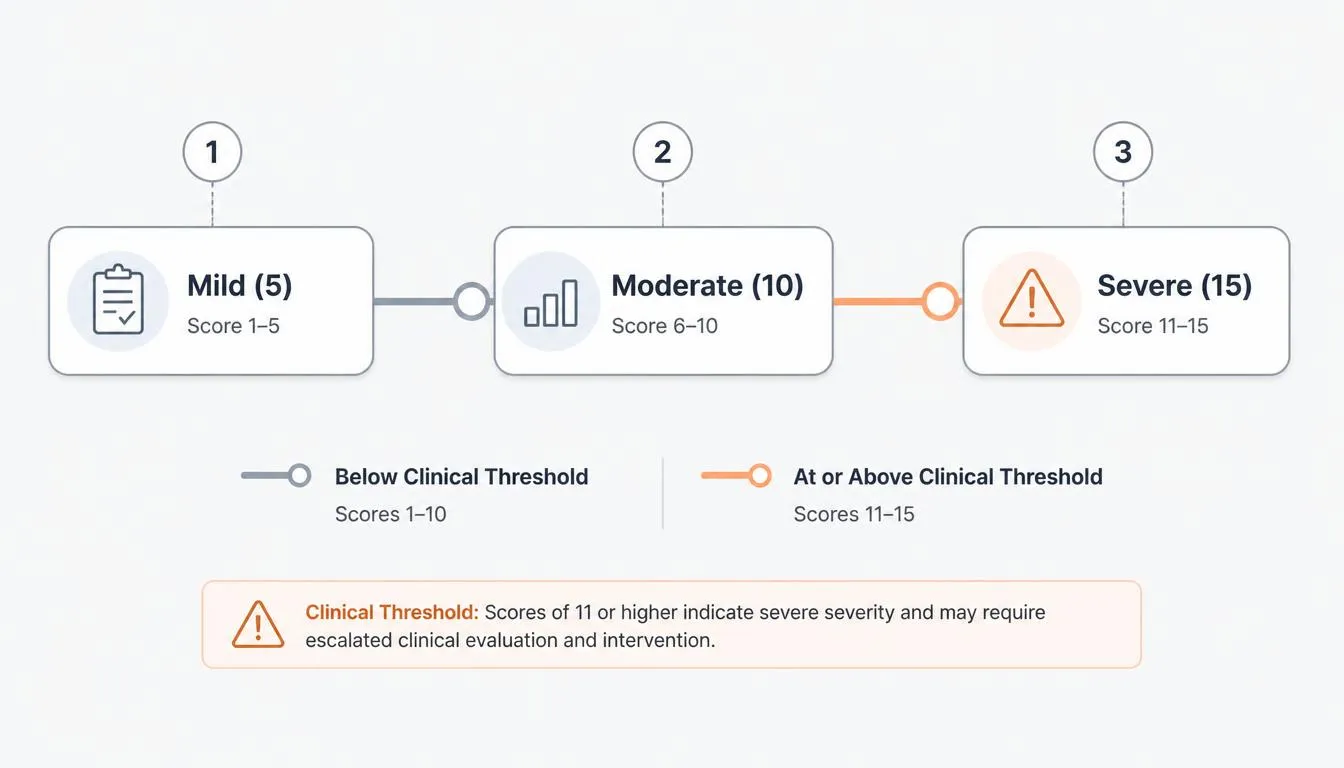
The GAD-7 Screening Tool: The most widely used screening instrument is the GAD-7, a seven-item, patient-reported questionnaire that scores the frequency of core anxiety symptoms over the previous two weeks. Scores of 5, 10, and 15 correspond to mild, moderate, and severe anxiety respectively, and a score of 10 or higher is generally considered the threshold that warrants a full clinical evaluation.
The GAD-7 is a useful starting point for self-awareness, but it’s a screening tool, not a diagnosis, a distinction that matters, since GAD symptoms overlap significantly with other conditions. A clinician will typically also assess for panic disorder, social anxiety disorder, illness anxiety disorder, and conditions like major depressive disorder, all of which can present alongside, or instead of, GAD; more than half of people diagnosed with GAD have at least one co-occurring mental health condition.
Evidence-Based Treatment for GAD
The good news: GAD responds well to treatment, and most people see meaningful improvement, though what “meaningful improvement” looks like, and how long it takes, varies by person, severity, and whether treatment starts early.
1. Psychotherapy
Applying CBT for anxiety techniques remains the gold-standard psychological treatment for GAD, with the strongest and most consistent evidence base of any therapeutic approach. It works by helping people identify the specific thought patterns that fuel excessive worry, catastrophizing, intolerance of uncertainty, overestimating threat, and systematically replace them with more accurate, flexible thinking, alongside behavioral techniques like scheduled “worry time” and graded exposure to uncertainty.
Acceptance and Commitment Therapy (ACT) offers a complementary approach, focusing less on eliminating anxious thoughts and more on changing a person’s relationship to them, so worry no longer dictates behavior. Mindfulness-Based Stress Reduction (MBSR) and related mindfulness protocols have also shown solid evidence for reducing GAD symptoms, particularly for people who find pure cognitive restructuring less accessible.
2. Medication Management
For moderate-to-severe GAD, or when therapy alone isn’t sufficient, medication is often added, and combination treatment tends to outperform either approach alone.
[Expert Insight Callout]
“While Benzodiazepines can relieve acute anxiety quickly, current prescribing guidance increasingly reserves them for short-term, situational use given their dependency and withdrawal risks, they aren’t considered an appropriate long-term GAD treatment on their own.”
Instead, Selective Serotonin Reuptake Inhibitors (SSRIs) such as sertraline, escitalopram, and paroxetine are typically first-line, alongside Serotonin-Norepinephrine Reuptake Inhibitors (SNRIs) like venlafaxine and duloxetine. Buspirone, a non-benzodiazepine anxiolytic, is another first-line option with a lower dependency risk. Some prescribers also use gabapentin or pregabalin off-label for anxiety symptoms, particularly when other options haven’t worked or side effects are a concern.
3. Lifestyle Strategies That Support Treatment
Self-management doesn’t replace professional treatment for GAD, but it meaningfully improves outcomes alongside it.
- Exercise & Sleep: Regular aerobic exercise has anxiety-reducing effects comparable to some medications in mild-to-moderate cases, largely through its impact on cortisol regulation and BDNF (brain-derived neurotrophic factor) production. Consistent sleep timing matters just as much as sleep duration, since a dysregulated circadian rhythm amplifies amygdala reactivity the following day.
- Dietary Adjustments: Reducing caffeine and alcohol, both of which disrupt the same neurotransmitter systems implicated in GAD, often produces a noticeable drop in baseline anxiety within a couple of weeks.
- Somatic Interventions: Implementing top grounding techniques for anxiety relief such as the 4-7-8 breathing method, the 5-4-3-2-1 sensory technique, and progressive muscle relaxation give the nervous system a fast, physiological off-ramp during acute worry spikes, complementing the slower, longer-term work of therapy.
Structured journaling, tracking specific worry triggers rather than free-writing, and deliberately protecting downtime from constant news and social media consumption round out the self-management toolkit clinicians most consistently recommend.
[Crisis Line Callout] It’s time to talk to a professional if worry is happening most days, has lasted six months or more, and is interfering with work, relationships, sleep, or your ability to enjoy ordinary life. If anxiety comes with thoughts of self-harm or suicide, or a sense of hopelessness that isn’t lifting, seek help the same day. In the U.S., the 988 Suicide & Crisis Lifeline is available by call or text, 24/7. Similar crisis lines exist in most countries for anyone who needs to talk immediately.
Frequently Asked Questions
Q: What is the difference between GAD and normal worry or stress?
A: Normal worry is proportionate to a specific situation and resolves once that situation passes. GAD involves excessive, hard-to-control worry across multiple areas of life, present on more days than not for at least six months, and accompanied by physical symptoms like fatigue, muscle tension, or sleep trouble, even when there’s little or no real reason to worry.
Q: What are the first signs of Generalized Anxiety Disorder?
A: Early signs often include persistent restlessness, trouble switching off racing thoughts, irritability over minor issues, unexplained fatigue, and difficulty falling or staying asleep. These become clinically significant when they occur most days for six months or longer and start interfering with daily functioning.
Q: Can GAD go away on its own without treatment?
A: For some people, mild GAD symptoms fluctuate and ease during lower-stress periods, but GAD is a chronic condition that typically doesn’t fully resolve without treatment. Without intervention, symptoms often persist for years and can worsen with additional life stress, which is why early treatment matters.
Q: Is GAD considered a disability?
A: In the U.S., GAD can qualify as a disability under the ADA and, in severe cases, under Social Security disability criteria if it significantly limits major life activities like working. Qualification depends on documented severity and functional impairment, not the diagnosis alone.
Q: What is the most effective medication for GAD?
A: SSRIs (such as sertraline or escitalopram) and SNRIs (such as venlafaxine or duloxetine) are considered first-line, with the strongest long-term evidence base. Buspirone is another first-line, non-habit-forming option. The “best” medication varies by individual response and side-effect tolerance, which is why medication decisions should be made with a prescriber.
Q: Can you have GAD without ever having a panic attack?
A: Yes. GAD and panic disorder are separate diagnoses. GAD is defined by chronic, diffuse worry, while panic disorder involves sudden, intense panic attacks. Many people with GAD never experience a panic attack, though the two conditions can co-occur.
Q: How is GAD different from social anxiety disorder?
A: Social anxiety disorder centers specifically on fear of judgment or embarrassment in social situations. GAD involves broader worry that spans health, work, relationships, and everyday decisions, not just social interaction, though the two conditions frequently occur together.
Q: What is the GAD-7 test, and what does my score mean?
A: The GAD-7 is a seven-question, self-report screening tool that measures anxiety symptom frequency over the past two weeks. Scores of 5, 10, and 15 mark the cutoffs for mild, moderate, and severe anxiety; a score of 10 or above generally indicates the need for a full clinical evaluation. It’s a screening aid, not a formal diagnosis.
Q: Can lifestyle changes alone treat GAD?
A: Lifestyle changes, exercise, sleep consistency, reduced caffeine and alcohol, and stress-management techniques, meaningfully reduce symptoms and support treatment, but for moderate-to-severe GAD, evidence-based therapy and, when appropriate, medication produce significantly better and more durable outcomes than lifestyle changes alone.
Q: Is Generalized Anxiety Disorder genetic?
A: GAD has a documented genetic component, it tends to run in families and shows meaningfully higher rates among close relatives of people with anxiety disorders. Genetics is only part of the picture, though; environmental stress, personality, and brain chemistry all interact with genetic risk to determine whether GAD actually develops.
Living With GAD
Generalized Anxiety Disorder is chronic for many people, but chronic doesn’t mean unmanageable. With an accurate diagnosis, evidence-based treatment, and consistent self-management, the large majority of people with GAD see substantial symptom reduction, and many reach full remission.
Stigma, the idea that persistent worry is a personality flaw rather than a legitimate, treatable medical condition, remains one of the biggest barriers to people getting help, often more so than access or cost. Naming GAD accurately, in yourself or in someone you care about, is frequently the first real step toward getting better.
| Medical Disclaimer & E-E-A-T Attribution
This article is for educational purposes and does not replace personalized medical or psychological advice. If you are recovering from a brain injury, trauma, or a mental health condition, work with a licensed clinician to build a plan suited to your situation. Written by: Adil Farooq, Psychiatry Magazine Medically reviewed by: [Dr. Adil Farooq MS · PhD] · Updated: 2026 |