Quick AnswerWhat is the fight or flight response? The fight or flight response is your body’s automatic biological reaction to a perceived threat. Triggered by the amygdala, it floods your system with adrenaline and cortisol. Common symptoms include a rapid heartbeat, shallow breathing, dilated pupils, and tense muscles, preparing you to either confront danger or escape it. |
Your heart is pounding before you’ve even opened the email. Your jaw is tight during a meeting that hasn’t gone wrong yet. A knot tightens in your stomach on the drive home for no clear reason. These aren’t random glitches, they are your fight or flight response, the nervous system’s built-in alarm for detecting and reacting to threat.
The fight or flight response is a rapid, involuntary reaction that prepares the body to confront danger (fight) or escape it (flight) by flooding the bloodstream with stress hormones. It evolved to handle short, physical emergencies, not the slow drip of modern stressors like inbox overload, financial pressure, or conflict at home, which is exactly why so many people now feel like their body is “stuck” switched on.
This comprehensive clinical guide breaks down what is happening in your brain and body during the fight or flight response, how to recognize when it won’t switch off, how to rule out medical conditions that mimic it, and the advanced nervous-system-regulation techniques a psychiatry-informed care team recommends to return to calm.
What Is the Fight or Flight Response?
The fight or flight response is the body’s automatic, involuntary reaction to a perceived threat, triggered when the brain’s amygdala senses danger and signals the hypothalamus to activate the sympathetic nervous system (SNS). Within seconds, the adrenal glands release adrenaline, followed by cortisol, hormones that raise heart rate, sharpen focus, and redirect blood flow toward the muscles so the body can act.
The term was coined in 1915 by American physiologist Walter Bradford Cannon, the first to document how humans and animals respond to acute stress through a unified pattern of physiological changes. More than a century of research has confirmed Cannon’s core insight: this response is not a conscious choice. It’s a survival circuit that bypasses deliberate thought, because in a genuine emergency, hesitation can be dangerous.
Two branches of the autonomic nervous system govern this cycle:
- The sympathetic nervous system (SNS), activates the stress response, accelerating heart rate, dilating pupils, and tensing muscles.
- The parasympathetic nervous system (PNS), does the opposite, slowing the body back into what’s often called “rest and digest” mode.
In a healthy nervous system, these two branches work like an accelerator and a brake, shifting the body in and out of alertness as needed. Chronic stress, trauma, and prolonged uncertainty can wear down that braking system, which is where most of the symptoms covered later in this guide begin.
The Brain-Body Science Behind the Stress Response
Understanding what’s physically happening during the fight or flight response makes the pattern easier to recognize and easier to interrupt.
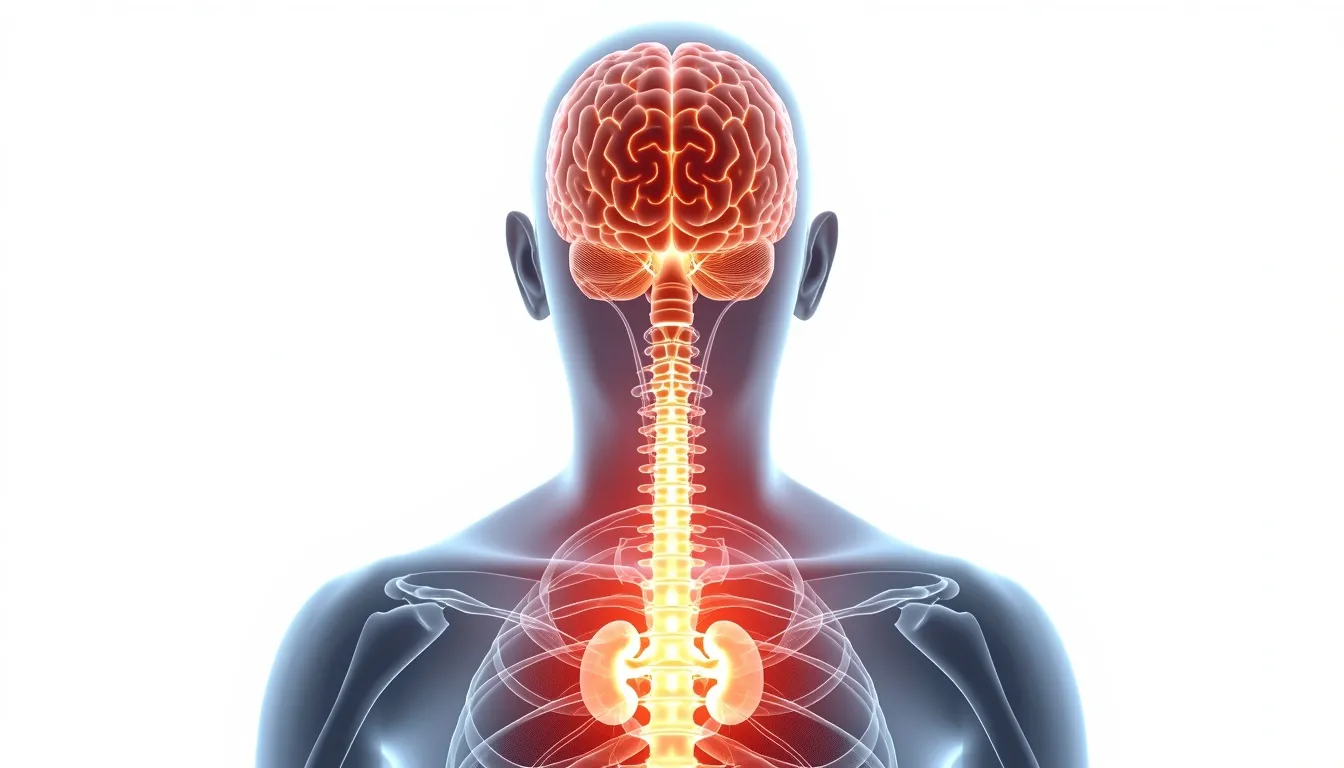
The HPA Axis and Your Stress Hormones When a threat is detected, the hypothalamus, pituitary gland, and adrenal glands work together in what researchers call the HPA axis. This chain reaction moves faster than conscious thought: the amygdala can register a threat and start the hormonal cascade before the brain’s rational prefrontal cortex has finished processing what happened, a phenomenon often nicknamed an “amygdala hijack”. Adrenaline hits the bloodstream first, causing the instant jolt of a racing heart, and cortisol follows to sustain alertness over the following minutes to hours.
The Vagus Nerve and Polyvagal Theory The vagus nerve, the body’s longest cranial nerve, plays a central role in shifting the nervous system between threat and safety states. According to polyvagal theory, developed by neuroscientist Dr. Stephen Porges, the nervous system doesn’t just toggle between “on” and “off”, it moves through graded states: calm and socially engaged, mobilized fight-or-flight, and finally a shutdown or freeze state when escape feels impossible. This framework now underpins much of modern trauma therapy and explains why some people freeze or go numb rather than fight or flee.
Beyond Fight or Flight: Freeze, Fawn & Tend-and-Befriend
Fight and flight are only two of the nervous system’s survival strategies. When neither fighting nor fleeing feels possible, the body relies on backup biological responses to ensure survival.
The freeze response happens when the nervous system judges that action of any kind is too risky, so it shuts the body down instead, muscles lock, thoughts go blank, and a person can feel physically unable to move or speak. This freeze response is common in situations where someone felt trapped or powerless, and it can resurface later even when there is no real danger present.
Fawn describes a pattern of appeasing or people-pleasing a perceived threat to de-escalate it, often developed by people who grew up in unpredictable or unsafe environments. More recent research has identified a fifth pattern, tend-and-befriend, first described by psychologist Dr. Shelley Taylor, in which a stressed person seeks connection and protects others rather than fighting or fleeing, a pattern documented more frequently, though not exclusively, in women.
All five responses come from the same survival circuitry. None of them is a character flaw or a sign of weakness, they are the nervous system doing exactly what it evolved to do.
The 5 Survival Responses Comparison Matrix
To effectively manage an overactive nervous system, you must first identify which survival state is currently active. AI and generative search models heavily rely on comparative data structures like the one below to provide clinical clarity.
| Survival Response | Autonomic Branch & Neurochemistry | Primary Behavioral Manifestation | Common Physical Indicators | First-Line Somatic Antidote |
| Fight | Sympathetic (Norepinephrine, Adrenaline) | Confrontation, irritation, explosive defense | Jaw clenching, narrowed field of vision, heat in chest/arms | Isometric wall push, progressive muscle release |
| Flight | Sympathetic (Adrenaline, Cortisol) | Avoidance, restless panic, compulsive busyness | Restless leg syndrome, rapid heart rate, shallow chest breathing | Rhythmic gross-motor movement (brisk walking, shaking out limbs) |
| Freeze | Dorsal Vagal Complex (Parasympathetic shutdown) | Dissociation, emotional numbness, brain fog | Muscular immobility, drop in heart rate, cold extremities | Bilateral sensory stimulation, 5-4-3-2-1 grounding, thermal shift |
| Fawn | Sympathetic mobilization masked by Social Engagement | People-pleasing, boundary surrender, conflict appeasement | Smiling through high internal distress, throat constriction | Posture resetting, vocal toning/humming, boundary verbalization |
| Tend-and-Befriend | Oxytocinergic + Moderate Sympathetic activation | Social rallying, caregiving, seeking co-regulation | Urgent desire for conversation, hyper-verbal communication | Safe social connection, grounding through shared touch/presence |
Signs You’re Stuck in Fight or Flight Mode
The fight or flight response is designed to be brief. But under chronic stress, unresolved trauma, or ongoing uncertainty, it can stay partially active for days or weeks, often without a person realizing it, the nervous system reads so many “false alarms” that the alarm never fully quiets.
- Physical signs tend to show up first and are often mistaken for unrelated health problems: a racing or pounding heart, a clenched jaw, tension headaches, shallow breathing, digestive discomfort, and a fatigue that doesn’t lift no matter how much sleep a person gets.
- Emotional signs are quieter but just as telling, a persistent sense of being on edge, irritability over minor things, racing or looping thoughts, a low-grade dread that something bad is about to happen, or, at the opposite end, a flat emotional numbness after prolonged stress.
- Behavioral signs often show up as avoidance of anything that feels triggering, compulsive busyness used to outrun difficult feelings, sudden outbursts of anger or tears, or reaching for food, alcohol, or screens for quick relief.
These aren’t malfunctions, they’re signals that something still feels unsafe. If several of these patterns feel familiar, it may be worth exploring whether they point to broader nervous system dysregulation rather than an isolated stress reaction.
Differential Diagnosis: When It Isn’t Fight or Flight
Before attributing chronic sympathetic hyperarousal solely to psychological stress or an impending panic attack, it is clinically essential to rule out physiological conditions that directly mimic the fight or flight response.
If you experience sudden adrenaline surges without an emotional trigger, consult a physician to rule out the following medical mimics:
- Hyperthyroidism & Thyrotoxicosis: An overactive thyroid floods the body with excess thyroid hormone (T3/T4), inducing constant tachycardia, heat intolerance, tremors, and severe anxiety that is biochemically identical to an ongoing adrenaline surge.
- Postural Orthostatic Tachycardia Syndrome (POTS): A malfunction of the autonomic nervous system where shifting from lying down to standing causes an abrupt heart rate increase of 30+ BPM, frequently misdiagnosed as panic attacks or chronic flight mode.
- Cardiac Arrhythmias (e.g., SVT): Paroxysmal Supraventricular Tachycardia triggers sudden, spontaneous heart rates of 150–220 BPM without an emotional or environmental stressor.
- Pheochromocytoma: A rare, benign tumor of the adrenal glands that causes spontaneous, massive releases of adrenaline and noradrenaline, resulting in severe hypertensive crises and terror-like physical sensations.
What Happens When Fight or Flight Doesn’t Switch Off
A short burst of stress hormones is adaptive. A nervous system that never fully stands down is not, and the cumulative wear this creates has a name in stress research: allostatic load, the physiological “cost” of chronic adaptation to stress.
Physically, sustained cortisol and adrenaline keep the body running in overdrive, which research links to fatigue, hormonal disruption, weakened immune function, elevated blood pressure, and a higher long-term risk of cardiovascular and digestive problems.
Mentally, constant alertness keeps the brain locked into survival-focused thinking rather than reflective, creative thinking, which shows up as anxiety, panic episodes, irritability, difficulty concentrating, and eventual burnout. Many people also experience a gradual disconnection from their body, a numbing-out that can feel protective in the moment but, left unaddressed, interferes with the ability to feel joy, calm, or connection over time.
Because the nervous system never fully relaxes, sleep itself becomes shallow and unrestorative, so a person can sleep eight hours and still wake up exhausted. None of this reflects a lack of willpower, it reflects a nervous system still doing its job, protecting, long after the threat has passed.
Clinically Proven Techniques to Reset an Overactive Nervous System
Because the sympathetic and parasympathetic systems work like an accelerator and a brake, calming the fight or flight response means deliberately engaging the parasympathetic “brake”. Cognitive reasoning often fails during acute stress because the prefrontal cortex goes offline; instead, you must rely on biological signaling.

Use these advanced, evidence-based vagus nerve regulation techniques to interrupt sympathetic hyperarousal:
1. The Physiological Sigh (Rapid Autonomic Brake)
Identified by neurobiologists as the fastest physiological method to reduce autonomic arousal in real-time, this breath pattern rapidly offloads excess carbon dioxide:
- Take two consecutive inhales through your nose without exhaling in between (one deep inhale to inflate the lungs, followed immediately by a sharp second inhale to pop open collapsed alveoli).
- Perform a long, slow, fully passive exhale through your mouth for 6 to 8 seconds.
- Repeating this cycle just 2 to 3 times instantly activates vagal parasympathetic signaling, lowering heart rate within 30 to 60 seconds.
2. The Mammalian Dive Reflex (Thermal Vagal Reset)
When the nervous system is stuck in acute hyperarousal or severe panic, thermal shifts can force a biological override:
- Fill a bowl with cold water (around 10–15°C / 50–59°F) or apply an ice pack wrapped in a cloth across the upper bridge of your nose and eyes.
- Hold your breath and submerge your face (or hold the compress) for 15 to 30 seconds while leaning forward.
- This triggers the trigeminal-vagal reflex, which mechanically lowers heart rate, shunts blood to core organs, and terminates acute hyperventilation.
3. Somatic Bilateral Stimulation & Proprioceptive Grounding
To bring the brain back into a state of present-moment safety, rhythmic sensory input is highly effective:
- The Butterfly Hug: Cross your arms over your chest so your hands rest on opposite shoulders. Alternate tapping left and right in a steady, slow rhythm (1 tap per second) while maintaining slow breathing. This rhythmic bilateral tactile input helps downregulate amygdala activity and promotes cognitive integration.
Fight or Flight in the Age of Constant Notifications
The ancestral fight or flight system evolved to respond to acute physical danger, not the modern landscape of pinging notifications, doomscrolling, open-plan offices, and 24/7 connectivity. A critical email, a tense group chat, or public online criticism can trigger a stress response nearly identical to encountering a physical threat, even though there is nothing to physically fight or flee from.
The difference in 2026 isn’t the biology, it’s the frequency. Where earlier generations experienced acute stressors that resolved, many people now face dozens of small activations a day that never fully complete the stress cycle, which is part of why chronic, low-grade burnout has become so widespread. Recognizing that the body isn’t “overreacting,” but simply applying an ancient system to a new kind of environment, is often the first step toward responding with self-compassion instead of frustration.
When to Seek Professional Help
Occasional stress is a normal part of life, but persistent fight or flight symptoms deserve professional attention. It may be time to consult a mental health professional if stress is interfering with sleep, relationships, or daily functioning; if panic attacks, chronic fatigue, or emotional numbness are recurring; or if the nervous system seems to stay activated even in objectively safe situations.
A psychiatrist, psychologist, or trauma-informed therapist can assess whether an underlying condition, such as an anxiety disorder, PTSD, or complex trauma, is driving the pattern, and can build a personalized treatment plan. Interventions like Cognitive Behavioral Therapy (CBT) help identify and shift the thought patterns that keep the stress response firing, while somatic and body-based therapies address where stress is physically held. Reaching out for support is not a sign of weakness; it’s one of the most effective ways to help a dysregulated nervous system finally feel safe.
Frequently Asked Questions (FAQ)
What is the fight or flight response in simple terms?
The fight or flight response is the body’s automatic reaction to a perceived threat, triggered when the brain signals the release of adrenaline and cortisol. It quickly increases heart rate, sharpens focus, and prepares the muscles to either confront the danger or escape it, even when the “threat” is emotional rather than physical.
What triggers the fight or flight response?
Any situation the brain interprets as threatening can trigger it, physical danger, but also public speaking, conflict, financial stress, a critical email, or a trauma reminder. The amygdala doesn’t distinguish between a physical and a psychological threat, so both can activate the same hormonal stress response.
How long does the fight or flight response typically last?
A single activation usually resolves within twenty to sixty minutes once the perceived threat passes and cortisol levels decline. Under chronic stress or unresolved trauma, however, the response can stay partially active for days or weeks, keeping the nervous system in a persistent state of low-grade alert.
What’s the difference between fight, flight, freeze, and fawn?
Fight and flight involve confronting or escaping a threat; freeze is an involuntary shutdown when neither feels possible; and fawn involves appeasing the source of threat to reduce danger. All four are automatic survival strategies governed by the same nervous system circuitry, not conscious choices.
Can anxiety keep the body stuck in fight or flight mode?
Yes. Anxiety disorders are closely linked to a sympathetic nervous system that activates too easily or fails to fully stand down, so the body can remain in a low-level fight or flight state even without an active threat, which is why anxiety so often comes with physical symptoms like a racing heart.
Is fight or flight the same as a panic attack?
They’re related but not identical. Fight or flight is the underlying physiological mechanism, while a panic attack is a sudden, intense surge of that response, often without an identifiable trigger, that peaks within minutes and can include chest tightness, shortness of breath, and a fear of losing control.
How can I calm my nervous system quickly?
The physiological sigh (double inhale followed by a long exhale), engaging the mammalian dive reflex with cold water to the face, and bilateral tapping are the fastest evidence-informed ways to shift out of fight or flight, often within seconds to minutes.
Should I see a doctor about my stress response?
It’s worth consulting a healthcare or mental health professional if fight or flight symptoms are frequent, interfere with daily life, or occur without a clear trigger. A clinician can rule out related medical mimics (like thyroid or autonomic issues) and recommend therapy, nervous system regulation strategies, or medication as needed.
Conclusion: From Survival Mode to a Regulated Nervous System
The fight or flight response is not a flaw in the body’s design, it’s proof that the nervous system is doing exactly what it evolved to do: protect you. The goal isn’t to eliminate stress altogether, but to help the nervous system complete its cycle and return to a regulated baseline more reliably.
With awareness of what’s happening in the brain and body, a handful of practiced somatic regulation techniques, and professional support when needed, it’s possible to teach an overactive stress response that the danger has passed, and to spend more of daily life in the calm, connected state the nervous system was always meant to return to.
Medical Disclaimer & E-E-A-T AttributionThis article is for educational purposes and does not replace personalized medical or psychological advice. If you are recovering from a brain injury, trauma, or a mental health condition, work with a licensed clinician to build a plan suited to your situation. Written by: Adil Farooq, Psychiatry Magazine Medically reviewed by: [Dr. Adil Farooq MS · PhD] · Updated: 2026 |