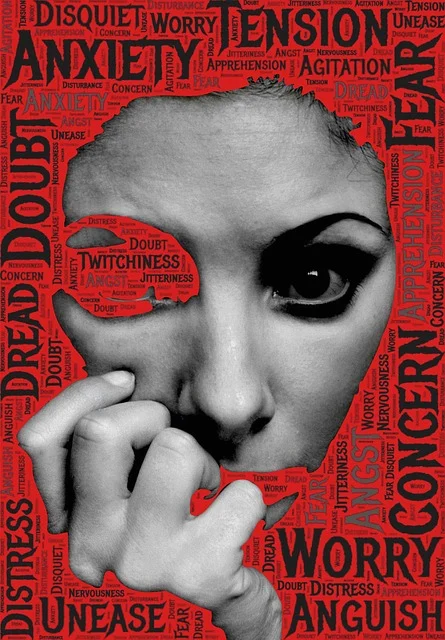
You stand in front of the room after another presentation that clearly went well, colleagues nodding, questions engaged rather than critical, and yet the dominant feeling inside you is not pride. It is relief, quickly followed by dread, because somewhere in the back of your mind a quiet voice is already asking how much longer you can keep this up before someone finally notices you do not actually know what you are doing.

You scroll back through your accomplishments, the promotion, the degree, the years of consistent positive feedback, and none of it seems to register as real evidence. It all feels like luck, timing, or other people simply not looking closely enough. This persistent, corrosive sense of being a fraud despite clear proof of competence has a name, and it affects far more high achievers than most people realize. It is called impostor syndrome.
Impostor syndrome describes a psychological pattern in which a person consistently doubts their own accomplishments and abilities, despite objective evidence of competence, and harbors a persistent internal fear of being exposed as a fraud. The term was first introduced by psychologists Pauline Clance and Suzanne Imes in the late 1970s, based on their clinical observations of high-achieving women who, despite advanced degrees, professional accomplishments, and consistent external validation, privately believed their success was undeserved.
In the decades since, research has shown that impostor syndrome extends well beyond the population Clance and Imes originally studied, affecting people across genders, industries, and levels of achievement, often intensifying rather than resolving as a person’s accomplishments grow.
What Impostor Syndrome Really Is
Impostor syndrome is not simple modesty, and it is not the same as having a realistic understanding of your own limitations. Genuine humility involves an accurate, balanced assessment of both strengths and weaknesses, alongside a reasonable openness to growth.
Impostor syndrome, by contrast, involves a persistent and often disproportionate distortion, where accomplishments are minimized, attributed to external factors, or dismissed outright, while any perceived shortcoming is treated as definitive proof of inadequacy. A person experiencing impostor syndrome might receive a significant promotion and immediately conclude that their employer made a mistake, rather than recognizing years of demonstrated competence that led directly to that outcome.
This pattern is particularly striking because it tends to intensify, rather than ease, as objective markers of success accumulate. Many people assume that impostor feelings will fade once they achieve a certain milestone, a degree, a title, a level of income, only to find that the goalpost simply moves further away once that milestone is reached.
This suggests that impostor syndrome is less about actual competence and far more about a deeply ingrained pattern of self-perception and self-attribution that does not automatically correct itself through external achievement alone.
Who Experiences Impostor Syndrome
While Clance and Imes originally focused their research on high-achieving women, subsequent studies have made clear that impostor syndrome affects people broadly, including men, though it may be expressed or discussed differently across genders due to differing social expectations around competence and vulnerability.

It tends to be especially common among people entering new roles or unfamiliar environments, such as recent graduates starting their first professional job, employees transitioning into leadership positions, or students entering competitive academic programs, since unfamiliarity naturally amplifies self-doubt even in genuinely capable people.
Impostor syndrome is also disproportionately reported among members of underrepresented groups in academic and professional settings, including women in male-dominated fields, first-generation college students, and people of color in predominantly white institutions.
In these contexts, impostor feelings can be compounded by a genuine and reasonable awareness of being one of relatively few people who share their background in a given space, which can blur the line between internalized self-doubt and an accurate perception of systemic bias, making the experience considerably more complex to untangle than a simple confidence issue.
The Recognized Patterns of Impostor Syndrome
Researchers who study impostor syndrome have identified several common patterns through which it tends to manifest, and most people who struggle with it will recognize at least one of these patterns strongly in themselves.
The perfectionist pattern involves setting excessively high standards for oneself and experiencing even minor shortfalls as evidence of fundamental inadequacy, so that a single small mistake can overshadow an otherwise strong body of work in the person’s own mind.
The expert pattern involves a persistent belief that one must know absolutely everything about a subject before feeling qualified to speak on it or take on a related task, leading to constant, often excessive research and preparation, alongside genuine discomfort whenever a knowledge gap becomes apparent to others.
The natural genius pattern shows up as a belief that true competence should come easily and immediately, so that needing to work hard, ask for help, or take longer than expected to master a skill feels like proof that one does not truly belong in that field.
The soloist pattern involves an intense reluctance to ask for help or collaborate, driven by a fear that needing assistance will reveal one’s supposed inadequacy, even though asking for support is a normal and often essential part of skilled work. Finally, the superhuman pattern involves pushing oneself to excel simultaneously across every role and responsibility, work, family, health, and social life, as though falling short in any single area would confirm the underlying fear of being a fraud.
The Psychological Mechanisms Behind Impostor Syndrome
At the core of impostor syndrome lies a distorted pattern of self-attribution, the internal explanations people construct for why things happen to them. A person experiencing impostor syndrome tends to attribute their successes to external, unstable factors such as luck, good timing, or other people’s generosity, while attributing their failures to stable, internal factors such as a fundamental lack of skill or intelligence.
This asymmetry means that success, no matter how frequent or well-earned, rarely accumulates into a stable sense of competence, while even minor setbacks are absorbed as confirmation of deep-seated inadequacy.
This pattern is closely connected to broader psychological tendencies around anxiety and perfectionism. People who experience significant anxiety often engage in a kind of constant threat monitoring that extends into their professional and academic lives, scanning for signs of failure or exposure even in objectively safe situations.
Perfectionism compounds this further by setting an internal standard that is functionally impossible to sustain, since any deviation from flawless performance gets interpreted not as normal human variation but as evidence supporting the underlying fear of fraudulence. Over time, these patterns reinforce one another, creating a self-perpetuating cycle where success brings only temporary relief before the anxiety and self-doubt return in full force.
The Real-World Consequences of Impostor Syndrome
Left unaddressed, impostor syndrome carries meaningful costs that extend well beyond internal discomfort. Many people with strong impostor feelings engage in chronic overworking, driven by a belief that only relentless effort can compensate for their perceived lack of natural ability, which frequently leads to burnout over time.

This overworking is often accompanied by an inability to fully internalize positive feedback, so that praise from colleagues, mentors, or supervisors fails to build the kind of stable internal confidence that would normally result from consistent external validation.
Impostor syndrome also frequently leads people to avoid pursuing opportunities they would otherwise be well qualified for, including promotions, leadership roles, or ambitious projects, out of fear that increased visibility will only increase the risk of being exposed as inadequate. This avoidance can have real career consequences, particularly in competitive fields where visibility and self-advocacy play a significant role in advancement.
Beyond the professional sphere, impostor syndrome can strain relationships as well, since the constant internal preoccupation with self-doubt often makes it difficult to be fully present, and colleagues or loved ones may sense a persistent tension or defensiveness around topics related to achievement and recognition.
How Impostor Syndrome Shows Up Across Different Contexts
In the workplace, impostor syndrome often intensifies during moments of transition, a new job, a promotion, a shift into management, when previous competence in one role does not automatically translate into felt confidence in the next. A newly promoted manager, for example, might excel at the technical skills that earned them the promotion while feeling entirely unqualified to lead a team, interpreting the natural learning curve of a new role as proof they were promoted by mistake.
In academic settings, impostor syndrome frequently surfaces among graduate students and early-career researchers, particularly in highly competitive programs where comparison to accomplished peers and mentors is constant. Students may feel that their admission to a program was some kind of administrative error, even when their qualifications clearly justified their acceptance.
In parenthood, impostor syndrome can take the form of persistent doubt about one’s competence as a caregiver, despite consistent evidence of a child’s wellbeing and development, fueled by unrealistic comparisons to curated portrayals of parenting seen online. In creative fields, where success often depends on subjective judgment rather than clear objective metrics, impostor syndrome can be especially persistent, since there is rarely a definitive external benchmark capable of fully quieting the internal doubt.
The Difference Between Impostor Syndrome and Genuine Underqualification
One question that comes up repeatedly for people trying to understand their own experience is how to distinguish impostor syndrome from a genuine, accurate sense that they are underqualified for a particular role or challenge. This distinction matters, because not every feeling of inadequacy is distorted, and sometimes additional training or experience really is the appropriate next step rather than simply reframing one’s thoughts.
The key difference generally lies in the gap between subjective feeling and objective evidence. A person with impostor syndrome typically has a substantial track record of relevant skill and accomplishment that directly contradicts their internal sense of fraudulence, while a person who is genuinely underqualified usually lacks that concrete evidence altogether.
Another useful marker is consistency across contexts. Impostor syndrome tends to persist regardless of how much positive feedback a person receives, following them from one success to the next without ever settling into stable confidence.
Genuine underqualification, by contrast, tends to resolve naturally as a person gains the relevant experience or training, since the underlying gap in ability actually closes over time. Recognizing which situation applies can help determine whether the appropriate response is internal reframing and self-compassion, or whether it might genuinely be worth seeking additional mentorship, training, or support to build a specific missing skill.
The Role of Culture and Social Comparison
Impostor syndrome does not develop in a vacuum, and broader cultural and social forces play a significant role in reinforcing it. Social media, in particular, has amplified the conditions under which impostor feelings tend to flourish, since people are now constantly exposed to curated, highlight-reel portrayals of other people’s careers, parenting, and achievements, without any visibility into the struggles, failures, and ordinary effort that occurred behind the scenes.
This creates a systematically distorted basis for comparison, where an individual’s messy, complicated internal experience gets measured against everyone else’s polished external presentation, a comparison that will almost always come out unfavorably no matter how objectively successful that individual actually is.
Workplace and academic cultures that valorize effortless brilliance over visible effort can also intensify impostor feelings considerably. In environments where struggling openly, asking questions, or admitting uncertainty is subtly discouraged, people naturally begin to hide these normal parts of the learning and working process, which in turn makes everyone around them appear more effortlessly capable than they actually are.
This creates a kind of collective illusion, where a room full of people who are all privately uncertain nonetheless perceive themselves as the only one struggling, since everyone else appears to be handling things with apparent ease.
Evidence-Based Strategies for Managing Impostor Syndrome
Cognitive reframing forms one of the most effective foundations for addressing impostor syndrome, involving a deliberate practice of noticing distorted attributions in real time and consciously considering more balanced alternative explanations.
Rather than automatically crediting a success to luck, a person practicing cognitive reframing might pause to ask what specific skills, preparation, or effort actually contributed to that outcome, gradually building a more accurate internal narrative over repeated practice.
Keeping a documented, ongoing record of accomplishments, positive feedback, and specific moments of demonstrated competence can also be remarkably effective, precisely because impostor syndrome distorts memory in ways that make past successes feel vague or easily dismissed in the moment. Having a concrete, written record to return to during moments of self-doubt provides an anchor that is harder to argue away than memory alone.
Therapy, particularly approaches rooted in cognitive behavioral techniques, can help address the underlying anxiety and perfectionism that often fuel impostor syndrome, offering structured tools for identifying and challenging the distorted thought patterns at its core.
Mentorship and open conversation also play a significant role in recovery, since impostor syndrome thrives in secrecy and tends to lose some of its power once a person discovers how common these feelings actually are, even among colleagues and mentors who appear entirely confident from the outside. Finally, building a healthier internal narrative around failure itself, understanding setbacks as a normal and even necessary part of growth and mastery rather than as definitive proof of inadequacy, helps loosen the perfectionistic grip that keeps impostor syndrome so persistently active.
FAQ
Is impostor syndrome an official mental health diagnosis? No, impostor syndrome is not listed as a formal diagnosis in major diagnostic manuals. It is best understood as a well-researched psychological pattern rather than a clinical disorder, though it frequently co-occurs with and is closely related to anxiety, perfectionism, and low self-esteem, all of which can be clinically significant and worth addressing in therapy when they cause meaningful distress or interfere with functioning.
Why does impostor syndrome often get worse rather than better with more success? This happens because impostor syndrome is driven by distorted self-attribution rather than an accurate lack of skill. As accomplishments accumulate, the perceived stakes of being “found out” tend to rise alongside them, and each new achievement gets absorbed into the same pattern of external attribution rather than building a stable sense of internal competence, which means the underlying anxiety often intensifies precisely as objective evidence of ability grows.
Can highly competent, objectively successful people still have impostor syndrome? Yes, and in fact impostor syndrome is disproportionately common among genuinely high-achieving people, since the pattern is largely unrelated to actual competence. Some of the most accomplished professionals, academics, and public figures have spoken openly about experiencing significant impostor feelings despite widely recognized success, underscoring that the pattern reflects a distortion in self-perception rather than an accurate reflection of ability.
Is impostor syndrome more common in certain fields or industries? Impostor syndrome tends to be especially pronounced in fields characterized by high competition, subjective evaluation, or rapid change, such as academia, technology, medicine, and creative industries, where clear objective benchmarks for success are often limited and comparison to highly accomplished peers is constant. It also tends to intensify in environments where a person is one of relatively few people from their particular background or demographic group.
How can I support a colleague or friend who seems to be struggling with impostor syndrome? Offering specific, concrete feedback rather than vague praise tends to be particularly helpful, since impostor syndrome often dismisses general compliments while finding it somewhat harder to dismiss detailed, specific observations about actual skills or contributions. Normalizing the experience by sharing your own moments of self-doubt, when appropriate, can also help reduce the isolating sense that they are uniquely inadequate compared to everyone around them.
When should impostor syndrome be addressed with professional support rather than self-help strategies alone? If impostor feelings are significantly interfering with career decisions, causing chronic anxiety, contributing to burnout, or accompanied by broader symptoms of depression or generalized anxiety, working with a therapist is generally advisable. A mental health professional can help address not only the impostor pattern itself but any underlying anxiety, perfectionism, or trauma history that may be reinforcing it.
Conclusion
Impostor syndrome thrives in silence, convincing capable people that their success is a mistake waiting to be discovered rather than a genuine reflection of their skill and effort. Understanding the psychological mechanisms behind this pattern, distorted attribution, perfectionism, and anxiety working together, makes it considerably easier to recognize when the inner critic is speaking louder than the evidence actually supports. You are not required to feel confident every moment to be competent, and the presence of self-doubt does not disqualify the accomplishments that got you where you are. With patience, honest reflection, and the right support, it is entirely possible to build a more accurate, more compassionate relationship with your own success.