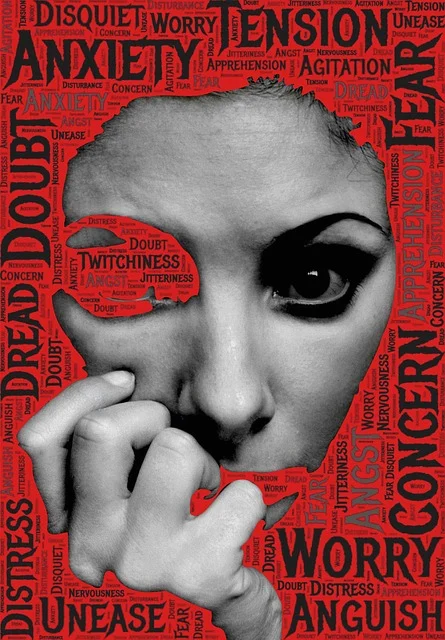
Understanding anxiety vs overthinking requires separating a normal, if unproductive, cognitive habit from a diagnosable clinical condition involving distinct physiological and neurological changes. Both experiences involve excessive, hard-to-control thinking, and both can feel exhausting, but they differ meaningfully in their underlying mechanism, their physical symptom profile, and what actually resolves them.

Overthinking is best understood as a cognitive style, an excessive engagement with analysis, deliberation, or worry about a specific decision or situation, that most people experience at varying intensity throughout life without it ever meeting criteria for a clinical disorder. Generalized Anxiety Disorder (GAD), by contrast, is a formally recognized condition in the DSM-5, defined by persistent, excessive worry occurring more days than not for at least six months, accompanied by physical symptoms and significant functional impairment.
This article maps the precise differences between these two experiences, the neurobiology behind each, and a clear framework for recognizing when ordinary overthinking has crossed into something that warrants professional attention.
What overthinking actually is
Overthinking describes a pattern of excessive cognitive engagement with a decision, problem, or past interaction, typically involving repeated analysis that exceeds what is actually useful or necessary for resolving the situation. It is not a diagnostic category in the DSM-5, and it appears across the general population at highly variable intensity, often intensifying during periods of uncertainty, transition, or high personal stakes.
Overthinking commonly presents in two related forms: decisional overthinking, excessive deliberation before making a choice, driven by fear of making the wrong decision, and reflective overthinking, extensive replaying of past conversations or decisions after the fact, searching for reassurance or alternative interpretations. Both forms share a common underlying driver: an intolerance of uncertainty, a well-studied cognitive trait describing discomfort with not knowing how a situation will unfold or whether a decision was correct.
Overthinking typically remains tethered to a specific, identifiable trigger, a decision, a conversation, an upcoming event, and tends to resolve, at least partially, once the situation concludes or a decision is finally made, even if the resolution doesn’t feel fully satisfying.
What clinical anxiety actually is
Generalized Anxiety Disorder involves excessive, difficult-to-control worry across multiple areas of life, persisting for a minimum of six months and accompanied by at least three of the following: restlessness, fatigue, difficulty concentrating, irritability, muscle tension, and sleep disturbance, according to DSM-5 criteria. Critically, the worry in GAD is not confined to a single situation or decision; it tends to migrate across topics, health, finances, relationships, work, often without a clear, identifiable trigger.
Anxiety involves activation of the body’s physiological stress response system, primarily through the hypothalamic-pituitary-adrenal (HPA) axis, resulting in elevated cortisol and sustained sympathetic nervous system activity. This produces measurable physical symptoms, an elevated heart rate, muscle tension, gastrointestinal disturbance, that exist independently of the specific content of the person’s worry.
Unlike overthinking, clinical anxiety frequently persists even in the absence of any specific stressor, and the physiological arousal it produces often does not resolve when a particular concern is addressed, since the underlying dysregulation extends beyond any single situational trigger.
Anxiety vs overthinking — the core differences
The first difference is domain specificity. Overthinking is generally tied to a specific decision, conversation, or event, and diminishes once that situation resolves. Clinical anxiety spreads across multiple, often unrelated domains simultaneously and does not reliably subside when any one concern is addressed.

The second difference is the presence of physical symptoms. Overthinking, on its own, is largely a cognitive experience without significant accompanying physiological arousal. Clinical anxiety consistently involves physical symptoms, muscle tension, disrupted sleep, restlessness, and sometimes gastrointestinal symptoms, driven by sustained activation of the body’s stress response systems.
The third difference is duration and persistence. Overthinking tends to be episodic, intensifying around specific decisions or events and fading afterward. Clinical anxiety, by diagnostic definition, persists for a minimum of six months and typically continues regardless of whether any specific triggering situation is resolved.
The fourth difference concerns functional impact. Overthinking can be inefficient and frustrating without necessarily interfering with daily responsibilities. Clinical anxiety, by definition, causes clinically significant distress or impairment in social, occupational, or other important areas of functioning, representing a meaningfully higher threshold of disruption.
The physiological signature that separates the two
One of the most reliable ways to distinguish overthinking from clinical anxiety is to assess for physiological symptoms independent of the thought content itself. Sustained muscle tension, particularly in the jaw, shoulders, and neck, disrupted sleep architecture, and gastrointestinal symptoms like nausea or appetite changes indicate that the body’s stress response system has been activated beyond what typical cognitive overthinking alone tends to produce.
This physiological activation occurs because clinical anxiety involves chronic HPA axis engagement, meaning the amygdala, the brain’s threat-detection center, remains in a heightened state of vigilance even without an active, identifiable threat present. Overthinking, while mentally taxing, generally does not sustain this same level of chronic physiological arousal, since it tends to be tied to and limited by a specific, resolvable situation.
Individuals experiencing overthinking without clinical anxiety typically report that once they’ve made a decision or received an answer, both the mental and any accompanying physical tension dissipate relatively quickly. Individuals with clinical anxiety often report that physical tension and a sense of unease persist even after receiving reassurance or resolving the specific concern that seemed to trigger it.
Can overthinking develop into an anxiety disorder
Yes, and this progression is well documented in the psychological literature on anxiety development. Chronic, sustained overthinking keeps the nervous system in a state of low-grade alert for extended periods, and repeated activation of the stress response system over time can contribute to the kind of persistent HPA axis dysregulation characteristic of diagnosable anxiety disorders.
This progression is not inevitable, and most people who overthink occasionally never develop a clinical anxiety disorder. However, individuals with a strong intolerance of uncertainty, a trait closely linked to both chronic overthinking and the maintenance of GAD, appear to carry elevated risk for this transition, particularly during periods of sustained life stress without adequate coping resources or support.
Recognizing overthinking patterns early, before they generalize across multiple life domains or begin producing consistent physical symptoms, represents a meaningful opportunity for prevention, since intervention at this earlier stage is generally more straightforward than treating an established anxiety disorder.
How to know when it’s more than overthinking
A useful clinical marker is whether the worry remains confined to the triggering situation or begins generalizing to unrelated areas of life. Overthinking about a single upcoming presentation is different from noticing that same anxious quality has begun appearing around health, finances, and relationships simultaneously, without a clear connecting thread.

Another marker is whether physical symptoms are present: persistent muscle tension, sleep disruption, fatigue, or restlessness that exist independently of the specific content being thought about. The presence of these physical symptoms, especially when they don’t resolve alongside the cognitive concern, suggests a physiological component beyond typical overthinking.
Duration matters significantly as well. A stressful week of heightened deliberation before a major decision differs meaningfully from a pattern of excessive, hard-to-control worry that has persisted, in some form, for months. The DSM-5’s six-month threshold for GAD reflects this same clinical logic: distinguishing situational, time-limited worry from a more persistent, generalized pattern.
Evidence-based ways to manage overthinking
Structured decision-making frameworks, setting explicit criteria and a firm deadline for a decision before beginning deliberation, have shown effectiveness in reducing decisional overthinking by limiting the open-ended nature of the analysis. Externalizing the thought process through writing, rather than allowing it to circulate purely mentally, also reduces the cognitive load associated with repeatedly holding and re-examining the same considerations.
Building tolerance for uncertainty, deliberately practicing sitting with an unresolved decision or ambiguous outcome without seeking immediate resolution, directly targets the underlying driver of most overthinking patterns and has demonstrated benefit in reducing both the frequency and intensity of overthinking episodes over time.
Evidence-based ways to manage anxiety
Cognitive Behavioral Therapy (CBT) remains the most extensively researched and consistently effective treatment for Generalized Anxiety Disorder, working by identifying and restructuring the catastrophic and uncertainty-intolerant thought patterns that sustain chronic worry, while building concrete behavioral skills for managing physiological arousal. Regular aerobic exercise has demonstrated measurable effects on reducing baseline cortisol levels and improving mood regulation within two to three weeks of consistent practice.
Mindfulness-based interventions, which train sustained, non-judgmental attention to present-moment experience, have shown documented benefit in reducing HPA axis reactivity and improving prefrontal regulation of the amygdala’s threat response. For moderate to severe presentations, particularly those significantly impairing daily functioning, a combination of therapy and, where appropriate, medication management with a psychiatrist offers the strongest evidence base for meaningful, lasting symptom reduction.
How anxiety and overthinking show up differently at work
In professional settings, overthinking commonly appears as prolonged deliberation over emails, excessive rehearsal before meetings, or repeatedly revising completed work well past the point of diminishing returns. This pattern, while inefficient, is usually tied to specific tasks and tends to ease once the task is submitted or the meeting concludes.
Clinical anxiety in the workplace tends to look different and broader. It often includes persistent dread about work in general, physical symptoms like tension headaches or stomach upset that appear before the workday even begins, and difficulty concentrating that extends across multiple unrelated tasks rather than one specific deliverable. Coworkers may notice this presentation as chronic restlessness or irritability rather than the more visible perfectionism associated with situational overthinking.
Employees experiencing clinical anxiety frequently report that even positive feedback or successfully completed projects fail to produce lasting relief, since the underlying physiological arousal is not tied to any single outcome. This is a meaningful diagnostic clue: overthinking tends to resolve, at least temporarily, with successful task completion, while clinical anxiety often persists regardless of actual performance or external reassurance.
The role of intolerance of uncertainty
Intolerance of uncertainty, a well-researched cognitive trait describing the degree to which a person finds not knowing an outcome distressing, sits underneath both overthinking and clinical anxiety, though it operates with different intensity and scope in each. In overthinking, this trait manifests around specific, bounded decisions, leading to excessive analysis aimed at reducing uncertainty about one particular outcome.
In Generalized Anxiety Disorder, intolerance of uncertainty operates more globally, contributing to worry that migrates across unrelated domains because the underlying discomfort with ambiguity is not resolved by addressing any single concern. Treatment approaches that directly target intolerance of uncertainty, including specific CBT protocols developed for GAD, have shown strong evidence for reducing both the frequency and intensity of generalized worry over time.
Understanding this shared underlying trait helps explain why some strategies, like structured decision frameworks and deliberate uncertainty exposure, offer benefit for both overthinking and milder anxiety presentations, even though more severe or persistent anxiety typically requires more comprehensive, professionally guided treatment.
Why sleep is often the first thing affected
Sleep disruption is frequently one of the earliest and most reliable indicators that a pattern has moved beyond ordinary overthinking into something with a physiological component. Overthinking about a specific decision might delay sleep onset on a given night, but it rarely produces the sustained, multi-week sleep disturbance characteristic of clinical anxiety.
Clinical anxiety disrupts sleep architecture more broadly, often producing difficulty falling asleep, frequent nighttime waking, and non-restorative sleep even after a full night in bed, since the HPA axis remains activated during hours the body should be entering deeper recovery stages. This creates a compounding effect: poor sleep further impairs the prefrontal cortex’s ability to regulate the amygdala, which in turn increases next-day anxiety and worry, deepening the overall cycle.
Tracking sleep quality over a two to three week period, rather than judging based on a single difficult night, offers one of the clearest and most objective ways to distinguish situational overthinking from an emerging or established anxiety pattern that likely warrants professional attention. Sleep specialists and primary care physicians can also help rule out other contributing factors, such as sleep apnea or thyroid dysfunction, that can mimic or worsen anxiety symptoms and are sometimes overlooked in a purely psychological assessment.
Frequently Asked Questions
Is overthinking a symptom of anxiety? It can be. Overthinking frequently appears as one component of Generalized Anxiety Disorder, but overthinking on its own, without accompanying physical symptoms or a six-month persistent course, does not meet diagnostic criteria for a clinical anxiety disorder.
Can overthinking cause physical symptoms like a racing heart? Prolonged, intense overthinking can activate the body’s stress response temporarily, but sustained physical symptoms independent of specific triggers are more characteristic of clinical anxiety than typical situational overthinking.
How do I know if I have anxiety or I’m just an overthinker? The clearest indicators are whether the worry has spread across multiple unrelated life domains, whether physical symptoms are present and persistent, and whether the pattern has continued for six months or more, all of which point more toward clinical anxiety.
Can overthinking be treated the same way as anxiety? Some strategies overlap, such as building tolerance for uncertainty, but clinical anxiety typically requires more structured intervention, including CBT and sometimes medication, whereas overthinking often responds well to simpler behavioral and cognitive adjustments alone.
Does overthinking mean I have poor mental health? No. Overthinking is an extremely common cognitive pattern experienced by most people at some point, and its presence alone does not indicate a mental health condition or personal deficiency.
When should I see a professional about anxiety or overthinking? If either pattern is causing persistent physical symptoms, has lasted six months or longer, or is meaningfully interfering with work, relationships, or daily functioning, a licensed therapist or psychiatrist can provide an accurate diagnosis and appropriate treatment plan.
Common misconceptions worth correcting
A common misconception is that overthinking is simply a mild, less serious version of anxiety, when in fact the two involve different mechanisms rather than existing purely on a single severity scale. Someone can overthink intensely around a major life decision without ever developing the sustained physiological arousal that defines clinical anxiety.
Another misconception is that anxiety is “just excessive worrying” that a person should be able to reason their way out of. This underestimates the physiological component entirely; clinical anxiety involves genuine, measurable changes in HPA axis function and neural circuitry that are not simply resolved through logical reassurance or willpower alone.
A third misconception is that seeking professional help for anxiety is only appropriate for severe, debilitating cases. In reality, earlier intervention, before symptoms have generalized across multiple life domains or produced significant physical impact, is generally associated with faster and more complete symptom improvement than waiting until the condition has become more entrenched.
Conclusion
Anxiety and overthinking exist on a continuum, sharing surface features while differing significantly in their underlying mechanism, physical symptom profile, and clinical significance. Overthinking, while frustrating and time-consuming, is typically situational and resolves as decisions are made or events pass. Clinical anxiety involves sustained physiological activation and a persistent, generalized pattern that meets specific diagnostic criteria. Understanding which experience you’re actually navigating shapes which interventions will genuinely help, and for persistent or physically disruptive patterns, a licensed mental health professional can offer both accurate diagnosis and effective, evidence-based treatment.