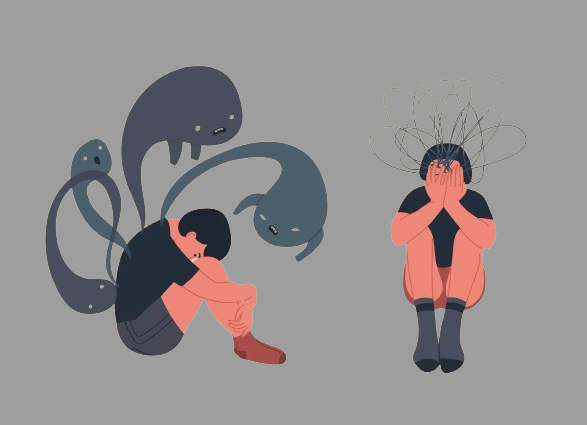
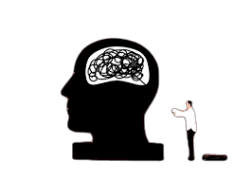
The distinction between rumination vs intrusive thoughts is one of the most clinically important, and most commonly misunderstood, differences in the psychology of unwanted thinking. Both experiences involve thought patterns that feel difficult to control and both can produce significant distress, yet they operate through different cognitive mechanisms, respond to different treatment approaches, and are associated with different underlying conditions.

Rumination, formally studied through Susan Nolen-Hoeksema’s Response Styles Theory, refers to a repetitive, passive focus on the causes and consequences of distress, typically centered on past events. Intrusive thoughts, extensively studied within the cognitive model of Obsessive-Compulsive Disorder developed by researchers including Stanley Rachman, are sudden, unbidden thoughts, images, or urges that arrive involuntarily and are frequently at odds with a person’s values and self-concept.
This article breaks down exactly how these two patterns differ at a mechanistic level, why they are so frequently confused, and what the current research says about managing each one effectively.
What rumination actually is, according to the research
Rumination is defined within Response Styles Theory as a mode of responding to distress that involves repetitively and passively focusing on symptoms of distress and their possible causes and consequences, without moving toward active problem-solving. Critically, rumination is passive rather than active: the person is not working toward a resolution, even though the process can feel effortful and even productive in the moment.
Nolen-Hoeksema’s research found that rumination is strongly associated with prolonged and intensified depressive episodes, largely because the repetitive focus on negative content activates and rehearses negative memory networks, making distressing material more accessible and more likely to color subsequent thinking. This creates a feedback loop in which low mood increases the tendency to ruminate, and rumination in turn deepens and extends the low mood.
Rumination typically centers on past or present events: a mistake made in conversation, a decision that didn’t work out, or a perceived personal failure. The content is usually realistic, meaning it reflects something that actually happened or plausibly could happen, rather than the bizarre or taboo content often associated with intrusive thoughts. This realism is part of what makes rumination feel so convincing and difficult to dismiss, since the underlying concern is genuinely rooted in real events.
What intrusive thoughts actually are
Intrusive thoughts are sudden, involuntary thoughts, mental images, or impulses that enter consciousness unbidden and are typically experienced as distressing, unwanted, and inconsistent with the person’s actual values or intentions. Research consistently shows that intrusive thoughts are a near-universal human experience; large-scale studies have found that the vast majority of people, both clinical and nonclinical populations, report experiencing intrusive thoughts with disturbing or taboo content at some point.

What differentiates a clinically significant pattern of intrusive thoughts from this common baseline experience is not the content of the thought itself, but the meaning the person attaches to it and the resulting behavioral response. Rachman’s cognitive theory of obsessions proposes that intrusive thoughts become clinically distressing specifically when a person appraises the thought as personally significant, for example interpreting an unwanted thought about harm as evidence of dangerous character, rather than dismissing it as random mental noise.
This appraisal process is central to understanding why intrusive thoughts escalate for some people and not others. A person who notices a disturbing intrusive thought and immediately dismisses it as irrelevant mental static experiences little lasting distress. A person who interprets the same thought as meaningful, dangerous, or revealing of a hidden truth about themselves often develops significant anxiety, followed by attempts to neutralize or suppress the thought, which paradoxically tends to increase its frequency and intensity.
Rumination vs intrusive thoughts — the core mechanistic differences
The first and most fundamental difference is voluntariness. Rumination, while it can feel involuntary once the pattern is established, begins as a repetitive engagement the person returns to, often believing they are working through a problem. Intrusive thoughts arrive suddenly and involuntarily, with no sense of having chosen to think about the topic at all.
The second difference is temporal orientation. Rumination is overwhelmingly focused on the past, replaying events that have already occurred and analyzing what they mean. Intrusive thoughts are frequently oriented toward hypothetical or feared future scenarios, or toward disturbing content entirely disconnected from any real event, rather than a rehearsal of something that actually happened.
The third difference concerns emotional tone. Rumination tends to produce a slow-building, heavy quality of sadness, guilt, or regret that deepens the longer the cycle continues. Intrusive thoughts more typically produce a sharp, immediate spike of fear, disgust, or alarm, followed by a secondary layer of anxiety about what the thought supposedly reveals about the person’s character.
The fourth difference lies in perceived relevance to identity. A ruminating person generally believes the content of their rumination is accurate and relevant, even if unhelpful, because it usually concerns real events. A person experiencing intrusive thoughts typically recognizes, often immediately, that the thought does not reflect their actual desires or intentions, which is precisely what makes the thought so distressing and confusing to experience.
Why both patterns feel so difficult to stop
Both rumination and intrusive thoughts are maintained, paradoxically, by the very strategies people use to try to stop them. Thought suppression research, including the well-documented “white bear” studies on ironic process theory, demonstrates that deliberately trying not to think about something reliably increases the frequency with which that thought resurfaces, because the suppression process itself requires ongoing monitoring for the unwanted thought.

With rumination, the attempted solution is usually continued analysis, in the belief that enough thinking will eventually produce clarity or resolution. This rarely happens, because rumination is a passive, repetitive process rather than genuine structured problem-solving, meaning the brain revisits the same material without generating meaningfully new information or a workable next step.
With intrusive thoughts, the attempted solution is usually suppression or neutralization, sometimes through mental rituals, reassurance-seeking, or avoidance of situations that trigger the thought. Both strategies reinforce the brain’s appraisal of the thought as dangerous or significant, which increases vigilance for the thought and paradoxically increases its recurrence over time.
The link between rumination and depression
Chronic rumination is one of the most robust and well-replicated predictors of both the onset and duration of depressive episodes across decades of psychological research. The mechanism is thought to involve sustained activation of negative self-referential processing in brain regions associated with the default mode network, a set of interconnected regions active during self-focused, internally directed thought.
Nolen-Hoeksema’s longitudinal research found that individuals with a ruminative response style to distress experienced longer and more severe depressive episodes than those who used more active or distraction-based coping strategies, even when controlling for the initial severity of the triggering distress. This finding has significant clinical implications, since it suggests that the response style itself, not just the original stressor, meaningfully shapes the depressive trajectory.
Importantly, rumination is not exclusive to depression; it also appears prominently in generalized anxiety and in the aftermath of interpersonal conflict, but its strongest and most consistently documented clinical association remains with depressive disorders specifically.
The link between intrusive thoughts and OCD
Obsessive-Compulsive Disorder is defined in the DSM-5 by the presence of obsessions, recurrent intrusive thoughts, images, or urges, paired with compulsions, repetitive behaviors or mental acts performed to reduce the distress the obsession causes. It is critical to note that having intrusive thoughts alone does not indicate OCD; the disorder requires the specific pairing of distressing appraisal and compulsive neutralizing behavior, along with significant time consumption or functional impairment.
Research using the International Intrusive Thoughts Interview Schedule has found remarkable similarity in the actual content of intrusive thoughts reported by people with OCD and by the general population without any clinical diagnosis. The defining clinical difference is not the thought itself but the individual’s appraisal of it, their level of distress in response, and whether compulsive behaviors develop to manage that distress.
This finding has reshaped how clinicians explain OCD to patients, since it directly counters the common and deeply distressing fear that having a disturbing intrusive thought reveals something dangerous or shameful about one’s true character, when in fact similar thoughts are reported by the overwhelming majority of people regardless of diagnosis.
Evidence-based ways to manage each pattern
For rumination, structured worry postponement, setting a specific, limited time window to consciously engage with a concern rather than allowing it to intrude throughout the day, has demonstrated effectiveness in reducing overall rumination frequency in clinical trials. Behavioral activation, deliberately engaging in valued, structured activity rather than passive reflection, directly interrupts the passive cognitive loop that defines rumination.
Written expressive processing, briefly documenting the ruminative content on paper rather than replaying it mentally, has also shown modest but consistent benefit, likely because it externalizes the content and reduces the cognitive load of continuously holding and replaying it internally.
For intrusive thoughts, the most robustly supported approach is Exposure and Response Prevention (ERP), a specific form of cognitive behavioral therapy that involves deliberately allowing the intrusive thought to occur without engaging in suppression, neutralization, or compulsive response, gradually reducing the thought’s perceived threat through repeated, non-reinforced exposure. Acceptance-based approaches, which train a person to notice and allow the thought without judgment or struggle, have also demonstrated strong evidence, particularly through Acceptance and Commitment Therapy protocols.
For both patterns, general strategies including grounding techniques, mindfulness practice, regular physical activity, and adequate sleep have shown consistent, if modest, benefit in reducing overall cognitive reactivity to unwanted thoughts, though they typically work best alongside, rather than instead of, targeted therapeutic approaches for more significant or persistent presentations.
How rumination and intrusive thoughts can coexist
Many people experience both patterns simultaneously, particularly during periods of significant stress, and the two can interact in ways that intensify each other. A ruminative episode focused on a past mistake can trigger a sudden intrusive thought about a worst-case future consequence, blending the two mechanisms into a single, more distressing cognitive experience.
This overlap is especially common in generalized anxiety disorder, where excessive worry about future events shares some features with both rumination’s repetitive quality and intrusive thoughts’ distressing, hard-to-dismiss content. Clinicians differentiate worry from both rumination and classic intrusive thoughts by its verbal, future-oriented, “what if” structure, compared to rumination’s past-focused analysis and intrusive thoughts’ sudden, often nonverbal or image-based intrusion.
Recognizing when both patterns are active at once matters clinically, because effective treatment may need to address them separately rather than assuming a single intervention will resolve both simultaneously. A person working through structured worry postponement for rumination may still need separate exposure-based strategies to address co-occurring intrusive thoughts, since the two respond to different underlying mechanisms even when they appear together.
The role of cognitive fusion in both patterns
A concept from Acceptance and Commitment Therapy called cognitive fusion, becoming so entangled with a thought that it feels identical to reality rather than simply a mental event, helps explain why both rumination and intrusive thoughts feel so convincing and difficult to set aside. When a person is fused with a ruminative thought, the analysis feels not like a mental habit but like necessary, accurate problem-solving that cannot safely be abandoned.
Similarly, when a person is fused with an intrusive thought, the thought feels like a genuine reflection of who they are, rather than a random, meaningless mental event unconnected to their actual character or intentions. Cognitive defusion techniques, which involve deliberately creating psychological distance from a thought, for example mentally labeling it as “I am having the thought that…” rather than treating it as literal fact, have shown measurable benefit in reducing the distress associated with both patterns.
This defusion process does not require the thought to stop occurring, which is an important distinction from suppression-based strategies. Instead, it changes the person’s relationship to the thought, reducing its perceived urgency and emotional weight even while the thought itself may continue to arise from time to time.
When either pattern signals something more serious
Occasional rumination following a stressful event, and occasional disturbing intrusive thoughts, are both extremely common and do not, on their own, indicate a diagnosable condition. Clinical concern arises specifically when the frequency, duration, and functional impact of either pattern increases substantially: rumination that persists for weeks and coincides with declining mood, sleep, or motivation, or intrusive thoughts paired with compulsive rituals, significant time loss, or avoidance behavior that interferes with daily functioning.
A licensed mental health professional, ideally one trained specifically in cognitive behavioral approaches for mood and anxiety-related conditions, can accurately differentiate between a normal, if uncomfortable, cognitive pattern and one that meets criteria for a diagnosable condition requiring targeted treatment.
Practical warning signs worth tracking
Keeping a brief daily log of frequency, duration, and triggers for either pattern can reveal trends that are difficult to notice in the moment, since both rumination and intrusive thoughts distort a person’s sense of time and severity while they are actively occurring. Noting whether episodes are shortening or lengthening over several weeks provides more reliable information than relying on memory of how the past few days felt overall.
Tracking the specific content and context of intrusive thoughts, without engaging in extended analysis of the tracking itself, can also help identify whether particular situations, times of day, or stress levels consistently precede episodes, which is useful information to bring into a clinical conversation if symptoms persist.
Sleep disruption, appetite changes, social withdrawal, and declining performance at work or school are broader warning signs that either pattern has moved beyond a manageable cognitive habit into something with meaningful functional impact, and these signs warrant a conversation with a professional regardless of how the underlying thought content is labeled.
Frequently Asked Questions
Are intrusive thoughts a sign of OCD? Not necessarily. The vast majority of people experience intrusive thoughts occasionally without meeting criteria for OCD. The diagnosis requires the specific combination of significant distress in response to the thought and compulsive behaviors performed to reduce that distress.
Can rumination cause or worsen depression? Yes. Chronic rumination is one of the most consistently documented predictors of both the onset and prolonged duration of depressive episodes, according to decades of research on response styles and mood disorders.
Is it normal to have disturbing or violent intrusive thoughts? Yes, this is extremely common and does not reflect a person’s actual character, values, or intentions. Research shows similar intrusive thought content is reported by both clinical and nonclinical populations at comparable rates.
What’s the best way to stop ruminating at night? Structured worry postponement earlier in the day, combined with written processing of the specific concern before bed, has shown the most consistent evidence for reducing nighttime rumination in clinical research.
Does trying to suppress an intrusive thought make it worse? Yes. Thought suppression research consistently shows that deliberately trying not to think about something increases its frequency and intensity, due to the ongoing mental monitoring required to detect and suppress it.
When should I see a professional about rumination or intrusive thoughts? If either pattern persists for several weeks, is accompanied by compulsive behaviors, or is significantly interfering with sleep, relationships, or daily functioning, a licensed therapist trained in cognitive behavioral approaches can provide an accurate assessment and effective, evidence-based treatment.
Conclusion
Rumination and intrusive thoughts can both feel relentless and outside of conscious control, but they operate through distinct cognitive mechanisms, carry different diagnostic associations, and respond best to different targeted interventions. Understanding which pattern you are experiencing, rather than treating all unwanted thinking as interchangeable, is the foundation for choosing strategies that actually address the underlying mechanism rather than temporarily managing the surface symptom. For persistent or distressing presentations of either pattern, a licensed mental health professional can offer both an accurate assessment and a structured, evidence-based path toward meaningful relief.