You check your bank balance, feel a wave of dread about the future, and somehow end up buying something you did not plan to buy an hour later. This pattern has a name now: doom spending. It describes using purchases to soothe anxiety about the economy, the future, or events that feel outside your control.
Doom spending is not simply bad budgeting. It is an emotional coping behavior, one where the purchase itself matters less than the brief relief it provides. Understanding why this happens is the first step toward loosening its grip.
This article walks through what doom spending actually is, why the brain responds this way under chronic uncertainty, how to recognize it in yourself, and what genuinely helps without shaming you for a pattern that made sense at the time.
By the end, you should have a clearer sense of whether this pattern applies to you, why it developed, and which specific steps are realistic starting points for change.
What Doom Spending Actually Means
Doom spending refers to impulsive or excessive purchasing driven by anxiety, hopelessness, or a sense that saving for the future feels pointless. It is a coping mechanism, not a diagnosis.
The term captures something real even though it is not in the DSM-5. It sits closer to emotion-focused avoidance than to compulsive buying disorder, though the two can overlap in some people.
People describe it as buying something specifically because the news, their finances, or a general sense of dread became unbearable in that moment. The purchase interrupts the feeling, even briefly.
Unlike planned spending on things you value and can afford, doom spending tends to be reactive. It happens in response to a feeling, not in response to an actual need or a considered want.
Why the Brain Turns to Spending Under Stress
Spending activates the brain’s reward circuitry, releasing dopamine that creates a short burst of pleasure or relief. This is the same pathway involved in most pleasurable behaviors.
Under chronic stress or uncertainty, the nervous system looks for fast, reliable ways to regulate itself. A purchase is fast, controllable, and produces a guaranteed emotional payoff.
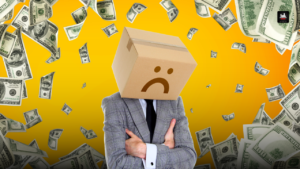
This is why doom spending often spikes around bad economic news, layoff announcements, or periods of political instability. The external world feels chaotic, so the brain reaches for something it can control.
Buying something also creates an illusion of agency. When larger forces like inflation or job security feel unmanageable, a purchase gives a small, immediate sense of taking action.
Online shopping intensifies this cycle because of how little friction stands between the impulse and the purchase. One tap can complete a transaction that used to require leaving the house.
How Doom Spending Differs From Retail Therapy
Retail therapy is often planned, occasional, and tied to genuine enjoyment or celebration. Doom spending is reactive, frequent, and tied specifically to dread about the future.
The distinguishing factor is the emotional trigger. Retail therapy responds to a desire for a small treat; doom spending responds to fear, hopelessness, or a feeling that nothing matters anyway.
Someone doom spending often reports feeling worse, not better, once the initial relief fades. Retail therapy, used occasionally, does not usually carry that same aftertaste of regret.
Frequency also matters here. A single indulgent purchase after a hard week differs meaningfully from a recurring pattern of buying whenever anxiety about the future intensifies.
Who Is Most Affected by Doom Spending
Research and surveys consistently point to younger adults, particularly Millennials and Gen Z, as the demographics most affected by doom spending. Economic instability shapes much of this pattern.
These generations came of age during recessions, a difficult housing market, and rising costs of living relative to wages. Long-term financial goals can feel abstract or unreachable.
When a goal like homeownership feels statistically unlikely regardless of effort, some people shift toward short-term spending instead. The logic becomes, if saving will not get me there anyway, why not feel good now.
This is not irrational in the way it first appears. It reflects a rational response to feeling that delayed gratification will not be rewarded the way it once reliably was.
People experiencing general anxiety disorder, financial anxiety, or chronic stress are also more vulnerable, since spending offers a fast way to interrupt uncomfortable physiological arousal.
Common Signs You May Be Doom Spending
You might notice yourself shopping specifically after reading distressing news, rather than shopping because you needed or wanted something in particular that day.
There is often a felt sense of urgency to the purchase, a need to buy right now, followed by a drop in mood shortly after the item arrives or the transaction completes.

Many people describe avoiding their bank statements or credit card bills afterward, a behavior closely tied to shame rather than simple disorganization.
Purchases made this way are frequently unnecessary or duplicative, items you already own in a different form, or things that solve no real problem in your life.
The spending often escalates during specific emotional states: after doomscrolling news apps, during periods of job insecurity, or following arguments about money with a partner.
The Role of Social Media and Doomscrolling
Doomscrolling, the compulsive consumption of negative news, is closely linked to doom spending. Both share the same underlying driver: an anxious nervous system seeking some form of resolution.
Social platforms often place shopping content directly alongside distressing news in the same feed. This proximity makes the jump from anxious scrolling to impulsive buying nearly frictionless.
Influencer culture normalizes spending as a coping tool, framing purchases as self-care or as deserved relief from a difficult world, which subtly reinforces the pattern.
Algorithmic feeds also show tailored products based on browsing history, meaning the very anxiety-inducing content you consume can trigger targeted ads that exploit that same emotional state.
The Financial and Emotional Consequences
The most immediate consequence is financial strain, often in the form of credit card debt that accumulates faster than income can offset it.
Beyond money, doom spending tends to deepen the exact anxiety it was meant to soothe, since financial stress compounds the original economic worry that triggered the behavior.
Shame is a frequent emotional byproduct. Many people feel embarrassed about their spending patterns, which can lead to secrecy around purchases and avoidance of financial conversations with partners.
Over time, this cycle can erode a person’s sense of financial competence, reinforcing a belief that they are simply bad with money rather than responding to a specific emotional trigger.
How Doom Spending Connects to Broader Mental Health Patterns
Doom spending frequently overlaps with generalized anxiety, where excessive worry about the future creates a near-constant low hum of dread that spending temporarily interrupts.
It can also intersect with depression, particularly when hopelessness about long-term goals fuels a present-focused, why-bother mentality around money and planning.
For some, it functions similarly to other impulsive coping behaviors like emotional eating or compulsive scrolling, where the behavior briefly regulates a nervous system in distress.
It is worth noting explicitly that doom spending is not compulsive buying disorder, a distinct and more severe clinical pattern, though the two can share overlapping features in some individuals.
Practical Ways to Interrupt the Pattern
Building a short pause before any non-essential purchase, even ten minutes, gives the initial emotional spike time to subside before a decision is made.
Identifying your specific triggers matters more than general willpower. Notice whether it is news consumption, financial statements, or arguments that typically precede an impulsive purchase.
Replacing the coping function, rather than just removing the behavior, tends to work better. A short walk or a call to a friend can regulate the nervous system similarly.
Unsubscribing from marketing emails and muting shopping-adjacent social accounts reduces the number of triggers you encounter passively throughout an ordinary day.
Working with a financial therapist, a growing specialty that blends psychological and financial counseling, can help address both the emotional driver and the practical budgeting side together.
When Doom Spending May Signal Something Deeper
If spending is accompanied by significant debt, lying to others about purchases, or an inability to stop despite serious consequences, it may reflect a more compulsive pattern.
Persistent hopelessness about the future, especially when paired with other symptoms like low mood, sleep disruption, or loss of interest, may point toward depression rather than situational stress.
A licensed therapist or financial counselor can help distinguish between a stress-driven habit and a pattern that has moved into a more clinically significant territory requiring targeted treatment.
If you notice this pattern affecting your relationships, your sense of self-worth, or your basic financial stability, it is worth speaking with a mental health professional about what is underneath it.
Doom Spending Versus Doom Saving
Some financial writers have proposed doom saving as the healthier opposite of doom spending, channeling the same anxious energy into aggressive saving instead of purchasing.
Doom saving can look protective on the surface, yet it sometimes carries the same anxious root, driven by fear rather than a calm, values-based financial plan.
The key difference is not spend versus save but reactive versus intentional. Either behavior, done from a place of panic, can become its own unhealthy pattern over time.
A financially healthy relationship with money usually involves both spending and saving, guided by conscious values rather than by whichever feeling is loudest on a given day.
How Income Level Changes the Pattern
Doom spending is often assumed to affect only people with disposable income, but it appears across income levels, simply scaled to what is available to spend.
For someone with limited resources, doom spending might mean a fifteen dollar impulse order rather than a designer purchase, yet the emotional mechanism driving it remains identical.
Lower-income doom spenders often face steeper consequences, since the same impulsive purchase can mean the difference between covering an essential bill and falling short.
This is part of why shame around doom spending can feel disproportionate. The behavior is universal, but the financial cushion available to absorb it is not evenly distributed.
A Closer Look at the Neuroscience
The nucleus accumbens, a key structure in the brain’s reward system, activates strongly during anticipation of a purchase, often more than during the purchase itself.
This anticipatory activation explains why browsing and adding items to a cart can feel almost as satisfying as the final transaction, reinforcing repeated browsing behavior.
Cortisol, the body’s primary stress hormone, tends to be elevated during periods of doom spending, since chronic uncertainty keeps the stress response system persistently activated.
Spending briefly lowers this physiological arousal, which is precisely why it feels so immediately effective, even though the underlying stressor remains completely unresolved afterward.
Over repeated cycles, the brain can begin associating spending with relief so strongly that the urge to buy arises automatically whenever anxiety spikes, without conscious deliberation.
Cultural Messaging That Reinforces the Cycle
Marketing language frequently frames purchases as self-care, deserved treats, or acts of resilience, subtly encouraging spending as an appropriate response to hardship or stress.
Phrases like treat yourself or you deserve this appear constantly across advertising, normalizing the idea that emotional discomfort should be met with a purchase rather than processed directly.
Economic news cycles themselves can inadvertently fuel the behavior, since constant exposure to instability keeps anxiety activated in ways that make impulsive relief-seeking more likely.
Recognizing this messaging as marketing, rather than genuine wisdom about self-care, is a useful first step in reducing its influence over spending decisions.
Building a Longer-Term Recovery Plan
Tracking spending for two weeks without judgment, simply noting the emotional state before each purchase, often reveals patterns a person had not consciously recognized before.
Setting a specific dollar threshold that requires a mandatory waiting period, such as anything over fifty dollars needing a full day of consideration, interrupts the impulsive cycle effectively.
Replacing doomscrolling news apps with a scheduled, limited check-in time reduces the frequency of the anxiety spikes that most reliably precede impulsive purchases.
Building a small, separate account earmarked specifically for guilt-free discretionary spending can paradoxically reduce impulsive purchases, since the anxiety around spending itself decreases.
Involving a trusted friend, partner, or financial therapist as an accountability point adds an external check that many people find genuinely helpful during the early stages of change.
A Realistic Example of the Pattern in Daily Life
Consider someone who reads an alarming headline about layoffs in their industry during a lunch break, feels a spike of dread, and opens a shopping app minutes later.
They order a package of items they do not urgently need, feel a brief lift in mood, and then experience a wave of guilt once the confirmation email arrives.
That guilt can trigger more scrolling, more comparison, and sometimes another purchase to counteract the bad feeling, creating a short but costly emotional loop within a single afternoon.
Naming this loop in real time, even mid-cycle, is often enough to interrupt it, since awareness reduces the automatic quality that makes the behavior feel involuntary.
The Impact on Relationships and Trust
Doom spending frequently becomes a source of conflict between partners, especially when purchases are hidden or discovered later through shared bank statements.
Secrecy around spending, even when well-intentioned as a way to avoid an argument, tends to erode trust more than the spending itself, since it introduces an element of deception.
Couples who address the underlying anxiety together, rather than treating it purely as a budgeting failure, tend to resolve the pattern more sustainably than those who focus only on restriction.
Financial transparency, paired with genuine compassion for the anxiety driving the behavior, creates more room for change than shame-based confrontations typically allow.
Why Willpower Alone Rarely Solves This
Framing doom spending as simply a willpower problem overlooks its emotional function, which means willpower-based solutions often fail even when a person is highly motivated to change.
Restriction without addressing the underlying anxiety can create a rebound effect, where suppressed urges eventually surface as an even larger impulsive purchase later on.
This is similar to patterns seen in other emotion-driven behaviors, where addressing only the surface behavior without the underlying trigger tends to produce short-lived results at best.
Sustainable change usually requires both practical structure, like spending limits, and emotional work, like understanding what the spending is actually trying to soothe.
The Role of Social Comparison
Watching peers or influencers display purchases and lifestyle upgrades can intensify feelings of falling behind, which in turn fuels the urge to spend as a way of closing that gap.
This comparison effect is amplified on visual platforms, where curated highlights create a distorted sense of what financial stability or success actually looks like for most people.
Recognizing that these portrayals are selective, rather than representative, can reduce the pressure to spend in response to a comparison that was never a fair one to begin with.
Frequently Asked Questions
Is doom spending a real diagnosis?
No, doom spending is not an official diagnosis in the DSM-5. It is a popular term describing a specific pattern of anxiety-driven, impulsive spending tied to feelings about the economy or the future.
What is the difference between doom spending and compulsive buying disorder?
Compulsive buying disorder is a more severe, persistent pattern involving loss of control regardless of consequences. Doom spending is typically situational, tied to specific anxiety triggers rather than a constant compulsion.
Why do I feel worse after doom spending instead of better?
The initial dopamine relief fades quickly, often replaced by guilt, shame, or renewed financial worry. This aftermath is one of the clearest signs that the spending was emotionally rather than practically motivated.
Can therapy actually help with doom spending?
Yes, therapy, particularly approaches that address anxiety and emotional regulation, can help identify triggers and build alternative coping tools. Some people also benefit from working with a financial therapist specifically.
Is doom spending more common in younger generations?
Surveys consistently show higher rates among Millennials and Gen Z, largely linked to economic instability, high living costs, and a sense that long-term financial goals feel unreachable regardless of effort.
How can I tell if my spending is doom spending or just normal treating myself?
Consider the trigger and the aftermath. Doom spending follows anxiety or dread and leaves you feeling worse; occasional treats follow genuine desire and typically leave your mood unchanged or improved.
Does doom spending only happen with money, or can it show up in other ways?
The same emotional pattern can appear in other consumption behaviors, such as impulsive food ordering or excessive subscription sign-ups, though the financial version is the most widely discussed.
Will doom spending get worse during economic downturns?
Evidence suggests spikes often correlate with periods of heightened economic uncertainty, layoffs, or major negative news cycles, since these events intensify the anxiety that drives the behavior.
Conclusion
Doom spending makes emotional sense even when it does not make financial sense. It is the nervous system reaching for a fast, controllable way to soothe itself during periods that feel genuinely uncertain.
Recognizing the pattern, rather than judging yourself for it, is what actually creates room for change. Once you can name the trigger, you can start building a different response to it.
With awareness, a few structural changes, and support where needed, this pattern is very workable. It reflects a stressed nervous system doing its best, not a personal failing to be ashamed of.
Small, consistent shifts tend to outperform dramatic overhauls, since they are easier to sustain during the exact anxious moments when the old pattern would normally take over.
Give yourself credit for each interrupted cycle, however small. Each pause you build between the anxious feeling and the purchase strengthens the same skill you are trying to grow.
Over time, that strengthened pause becomes the new default response, replacing the automatic reach for a purchase with a moment of genuine, considered choice instead.