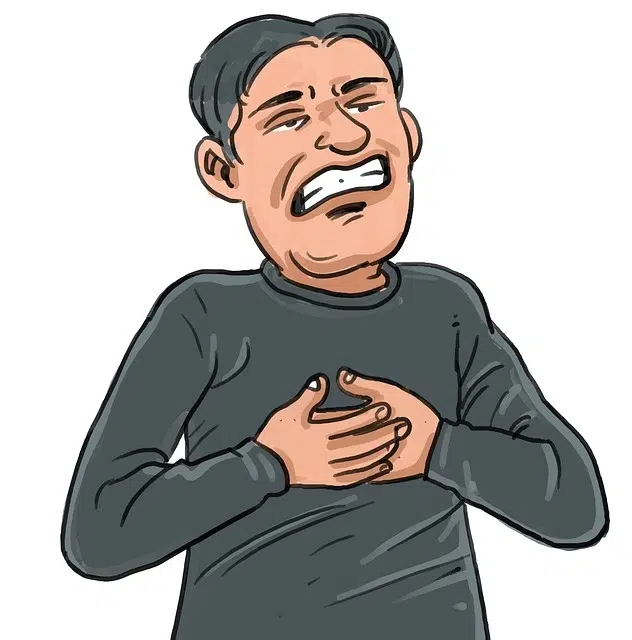
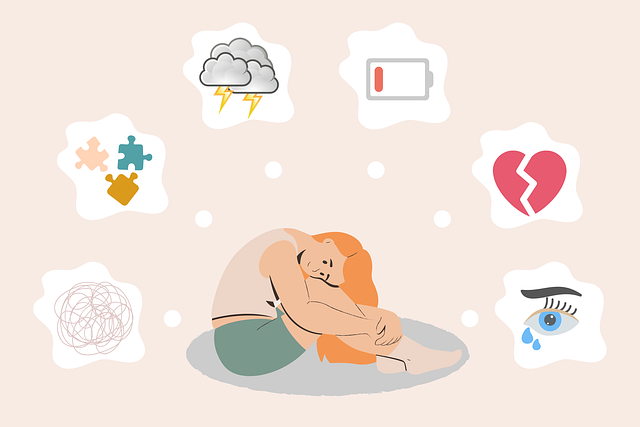
She posts a flat-lay of her matcha, her journal, and her morning supplements at 7 a.m. By 7:05, she is sitting on the bathroom floor, heart racing, wondering why she cannot seem to get it together. The caption says “slow mornings, grateful heart.” The reality is something else entirely.

This gap — between the wellness life you perform and the anxious life you actually live — is what psychologists are beginning to call performative wellness anxiety. This article unpacks what it is, why social media makes it worse, who is most at risk, and how to start living a version of wellness that does not require an audience.
What Is Performative Wellness Anxiety? A Psychology-Backed Definition
The Gap Between Your Feed and Your Feelings
Performative wellness anxiety is the chronic psychological tension between the curated healthy life you present online and the internal reality you actually experience. It is not simple vanity or dishonesty. It is a stress response — a loop in which the pressure to appear well makes you feel significantly worse.
Sociologist Erving Goffman described this dynamic long before social media existed. His concept of impression management divides social life into a “frontstage” — the self we present publicly — and a “backstage” — the private self we protect from view. Social media has almost entirely eliminated the backstage. Everything is frontstage, all the time, for an audience of hundreds or thousands.
When the frontstage is permanently set to “thriving,” maintaining that performance becomes exhausting work. The internal conflict between what you post and what you feel is a textbook case of cognitive dissonance — the psychological discomfort of holding two contradictory beliefs simultaneously. Over time, that dissonance does not resolve itself. It compounds.
Why Wellness Became a Performance in the First Place
Wellness was not always a content category. For most of history, taking care of yourself was simply something you did privately — eating reasonably, sleeping enough, moving your body. Then it became an identity, and then, rapidly, a brand.
Social platforms gave wellness a visual language: green smoothies, yoga poses, clean kitchens, morning routines filmed in golden light. These images were aspirational, and aspiration is algorithmically rewarding. The more people engaged with wellness aesthetics, the more the platforms surfaced them, and the more pressure others felt to participate.
The result was a cultural shift in which wellness stopped being a private practice and became a public performance. Opting out felt like admitting failure. Opting in — even while struggling — felt like the only socially acceptable move. That is the origin story of performative wellness anxiety.
The Social Media Machine Behind Performative Wellness Anxiety
How Algorithms Reward Curated Positivity
Social media algorithms do not reward honesty. They reward engagement — and aspirational content generates more of it than authentic struggle does. A post showing a beautiful, organised morning routine will consistently outperform a post admitting that you slept through your alarm and ate cereal for the third time this week.
Platforms learn from this data quickly. They surface more of what gets liked, saved, and shared. Over time, the content ecosystem fills with curated positivity, and users receive a steady feed of people apparently thriving. This is not accidental. It is the architecture of attention capture.
For users already managing anxiety, this environment is particularly corrosive. Every scroll recalibrates the internal benchmark of what “doing well” looks like — upward and upward, toward an increasingly impossible standard.
The Role of Comparison Culture and Social Proof
Leon Festinger’s social comparison theory tells us that human beings evaluate their own worth, success, and wellbeing by comparing themselves to others. This is a deeply wired survival mechanism. The problem is that social media provides an infinitely large, heavily filtered comparison pool — one that is systematically biased toward people’s best moments.

Nobody posts their panic attacks. Nobody captions their 2 a.m. spiral. The comparison you are making when you scroll is not between yourself and real people. It is between yourself and the highlight reels of real people. Knowing this intellectually does not stop the comparison from happening emotionally.
Social proof compounds this further. When a wellness post receives thousands of likes, the platform signals to every viewer that this is the normal, desirable standard. The crowd has approved. Deviating from that standard starts to feel not just imperfect, but socially unsafe.
Dopamine, Validation, and the Approval Loop
Posting wellness content and receiving positive responses triggers a measurable dopamine release. The brain registers likes, comments, and shares as social reward — the same neurological pathway activated by food, physical affection, or financial gain. It feels good. It is designed to.
The loop works like this: you post something aspirational, the validation comes in, dopamine rises, and the brain files this as a behaviour worth repeating. The next post needs to be equally aspirational to maintain the reward. Over time, the performance escalates because the baseline for approval-seeking keeps rising.
This approval loop is not a character flaw. It is a predictable response to a system engineered by some of the world’s most sophisticated behavioural psychologists. Understanding that the loop is manufactured is the first step toward stepping out of it.
Signs You May Be Experiencing Performative Wellness Anxiety
Performative wellness anxiety does not always announce itself clearly. It tends to hide behind productivity, optimism, and a very full Instagram grid. These are the signs worth watching for.
Exhaustion after posting — You feel relieved, then strangely depleted after sharing content about how well you are doing. The performance costs more energy than you expected.
A widening gap between online and offline mood — Your real emotional state and your digital presentation feel increasingly disconnected, and the gap is growing rather than shrinking.
Anxiety about authenticity — You feel a quiet dread at the idea of posting something honest or imperfect, as though the real you would not be accepted by your audience.
Compulsive checking after posting — You monitor likes, views, and comments obsessively after sharing wellness content, seeking confirmation that the performance landed.
Resentment toward your own routines — The habits you photograph — journaling, meditation, clean eating — start to feel like obligations rather than choices. You do them for the content, not for yourself.
Feeling fraudulent even when things are going well — On genuinely good days, a voice still whispers that you are not as okay as you appear, or that your good days are unsustainable.
Increased anxiety after consuming wellness content — Scrolling through other people’s wellness routines leaves you feeling worse about your own life, not better.
If several of these feel familiar, that recognition itself is valuable. Naming the pattern is where the work begins.
The Psychological Cost of Pretending to Be Okay Online
Cognitive Dissonance and Emotional Exhaustion
Performing wellness while feeling the opposite is not a neutral act. Every time you post content that contradicts your internal experience, your brain registers the conflict. Cognitive dissonance — the stress of holding incompatible beliefs — does not simply fade. It demands resolution.
Most people resolve it in one of two ways. Either they begin to believe the performance — convincing themselves they must be doing better than they feel — or they double down on the performance as a distraction from the reality underneath. Neither route leads anywhere healthy. Both lead to exhaustion.
The emotional labour involved in maintaining a wellness persona is substantial. Emotional labour — a concept introduced by sociologist Arlie Hochschild — refers to the management of feelings as part of a social performance. Performing wellness online is emotional labour with no clock-out time.
Performative Wellness Anxiety and Real Anxiety — Where They Overlap
Performative wellness anxiety sits in uncomfortable proximity to clinical anxiety — and for many people, they are not two separate things. The performance itself becomes an anxiety trigger. The thought of being “found out” — of someone realising the gap between the curated self and the real one — produces the same physiological fear response as a genuine threat.
This can create a particularly vicious cycle. Anxiety drives the need to appear in control and well. Appearing in control and well requires sustained performance. Sustaining the performance increases anxiety. There is no natural exit from this loop without deliberate intervention.
Research in this area consistently shows that the mismatch between self-presentation and authentic experience is a reliable predictor of increased anxiety and depressive symptoms over time. The performance is not protective. It makes things worse.
The Identity Trap — When the Persona Becomes the Prison
Consider someone who has spent two years building a wellness-focused social media presence. She posts daily. Her audience knows her as the woman who meditates, runs, and eats whole foods. When she starts struggling — when the anxiety becomes overwhelming and the routines collapse — she finds she cannot say so. The persona she has built has become a prison with an audience.
This is the identity trap of performative wellness anxiety: the longer the performance runs, the harder it becomes to step off the stage. Admitting that you are not doing well feels like a betrayal of a character your followers have come to rely on. Many people in this position quietly disappear from their platforms rather than risk the honesty. The persona, not the person, drives the decisions.
Who Is Most Vulnerable to Performative Wellness Anxiety?
Gen Z and the Always-On Wellness Identity
For Gen Z — the first generation to grow up with social media as infrastructure rather than novelty — the distinction between online identity and offline self was never clearly drawn. Social media was not a place they went to. It was the water they swam in. Constructing a public self online began in early adolescence, long before the psychological architecture of identity was fully formed.
This means that for many young adults, the wellness persona did not develop as a mask placed over an existing self. It developed alongside the self — woven in so tightly that separating the two now feels almost impossible. The anxiety this generates is not about dishonesty. It is about not knowing who you are without the performance.
Influencers, Creators, and the Professional Wellness Trap
For content creators whose income depends on their wellness brand, the stakes of performative wellness anxiety are financial as well as psychological. Authenticity is commercially risky when your audience has paid, subscribed, or followed specifically for the aspirational content you produce. Showing cracks in the persona can mean losing brand partnerships, followers, and income.
This creates a professional trap with serious mental health consequences. Creators in this position are not simply performing for validation — they are performing for survival. The pressure to maintain the wellness aesthetic regardless of internal reality is relentless and, for many, genuinely unsustainable.
High Achievers and the Pressure to Model Resilience
High-performing individuals — executives, academics, elite athletes, medical professionals — face a specific variant of performative wellness anxiety rooted in cultural expectation. Successful people are assumed to have their mental health together. Admitting otherwise risks undermining the authority and credibility that their performance depends upon.
This group often experiences performative wellness anxiety not through social media posts, but through professional self-presentation — the relentless projection of composure, capability, and resilience. The internal experience can be markedly different. Clinical evidence consistently suggests that high achievers are significantly underrepresented in therapy settings relative to their rates of anxiety and burnout.
How to Break Free From Performative Wellness Anxiety
Start With Radical Honesty — Online and Off
The antidote to performative wellness anxiety is not the opposite performance — posting about how messy your life is for relatability points. It is practising honesty with yourself first, before the camera is involved. Spend one week keeping a private journal where you record how you actually feel each day, without editing for an audience. Notice the gap between those entries and what you shared publicly that week. The gap itself is data.
Acceptance and Commitment Therapy (ACT) — a therapy modality with strong evidence for anxiety — works precisely on this skill: learning to observe the distance between your thoughts and your identity, without fusing with the performance. A therapist trained in ACT can accelerate this process considerably for those whose anxiety is significant.
Audit Your Social Media Relationship
This week, spend three days tracking how you feel immediately after opening each social media app. Use a simple 1–5 scale — 1 being significantly worse, 5 being genuinely better. Most people are surprised by how consistent the data is. The audit makes the unconscious cost of the platform visible and harder to ignore.
From there, make specific changes rather than vague ones. Unfollow accounts that reliably make you feel inadequate — not because they are doing anything wrong, but because the comparison is not serving you. Mute keywords associated with the wellness aesthetic that triggers your anxiety most. These are small, concrete actions with measurable effects.
Reclaim Wellness as a Private Practice
Choose one wellness habit — a walk, a meditation, a meal you enjoy — and commit to doing it without documenting it for thirty days. No photos, no captions, no stories. Notice what the habit feels like when it exists only for you.
This is not about rejecting social sharing entirely. It is about rebuilding the internal experience of wellness before the external performance of it. When you re-establish what these practices genuinely feel like — separate from their social value — you start to remember why you chose them in the first place.
When to Seek Professional Help
If the anxiety driving your performative wellness is persistent, significantly affecting your sleep or relationships, or producing feelings of depression or worthlessness, it is time to speak with a mental health professional. Performative wellness anxiety sits at the intersection of social anxiety, identity distress, and behavioural compulsion — and all three are treatable.
A good therapist will not tell you to delete your social media. They will help you understand the need the performance is meeting, and find healthier ways to meet it. That work is not a sign of failure. It is, ironically, the most authentic wellness practice available.
Frequently Asked Questions About Performative Wellness Anxiety
What is performative behavior on social media?
Performative behavior on social media refers to presenting a curated, idealized version of yourself that does not reflect your internal reality. Sociologist Erving Goffman described this as “impression management” — the management of a frontstage self for public consumption. On social media, that frontstage is permanent and visible to hundreds or thousands of people, eliminating the private backstage space where authenticity normally lives. Sustaining this performance continuously carries a measurable psychological cost, including anxiety, emotional exhaustion, and identity confusion.
What is social media anxiety?
Social media anxiety is a pattern of persistent worry, compulsive checking, fear of missing out, and approval-seeking behavior driven by social media use. It is distinct from clinical social anxiety disorder, though the two can overlap and reinforce each other. Social media anxiety is context-specific — it emerges from the behaviors and comparisons the platforms enable, rather than from social situations generally. It is particularly prevalent in users aged 16–35 and tends to worsen when it coexists with performative wellness anxiety.
Can anxiety cause fake scenarios?
Yes — anxiety, particularly the kind generated by performative wellness culture, can drive people to construct and maintain idealized versions of their lives both online and in their own minds. This is connected to Goffman’s impression management and to the psychological mechanism of cognitive distortion. Presenting a “fake scenario” is often a defensive move: the person performs the version of themselves they wish were real, partly hoping that sustained performance will eventually produce the reality. In practice, it tends to deepen the anxiety it was designed to manage.
Can social media cause overstimulation?
Social media platforms are specifically designed to maximize sustained attention through infinite scroll, variable reward notifications, and algorithmically curated content that spikes engagement. This architecture creates a state of chronic low-grade nervous system arousal that closely mirrors anxiety symptoms — racing thoughts, difficulty concentrating, a sense of urgency without a clear cause. For people already experiencing performative wellness anxiety, the constant stream of aspirational content continuously raises the internal benchmark of what “okay” should look like, widening the gap between performance and reality.
Conclusion
Performative wellness anxiety is not a niche problem for influencers or the chronically online. It is a quiet epidemic playing out in millions of private moments — the gap between the caption and the reality, the performance and the person, the feed and the feeling.
The good news is that recognising performative wellness anxiety for what it is — a psychological response to a culturally manufactured pressure — immediately loosens its grip. You are not failing at wellness. You are succeeding at a performance that was always going to cost you more than it gave back.
You are allowed to be unwell on a Tuesday without documenting your recovery. You are allowed to have a morning routine that nobody photographs. Real wellness has always been private, imperfect, and entirely your own. If this resonated, share it with someone who might need the permission — and explore our related articles on building an authentic relationship with your mental health.