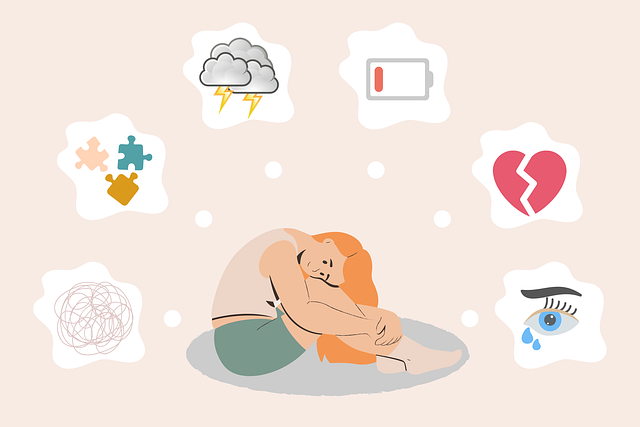
Picture this: you wake up on a Monday morning and reach for your phone to check the work emails you have been opening at 7 a.m. every day for eleven years. Then you remember — you no longer have that job. Or perhaps you pour two cups of coffee out of habit, only to realize your partner moved out three weeks ago. The cup sits there, full and cooling, and something inside you quietly breaks.

These moments catch us off guard because the pain feels disproportionate — not just the loss of the big thing, but the utter disappearance of the small rituals that quietly gave your days their shape.
This is why people feel grief when a routine is suddenly taken away: routines are not just schedules. They are identity, safety, and belonging compressed into repeated action. When a routine vanishes — through job loss, retirement, divorce, bereavement, illness, or a global pandemic — the grief that follows is as real and as clinically significant as any other form of loss.
What Is Routine Grief? Understanding the Psychology Behind It
Why Your Brain Treats Routines Like a Person
Human beings are creatures of habit in the most literal neurological sense. Every time you repeat a behaviour in a consistent context — brewing coffee, driving the same road to work, calling a parent every Sunday evening — your brain encodes that sequence as a single bundled unit of experience.
Psychologists call this chunking: the brain groups repeated actions together so they require less conscious effort over time. What this means in practice is that your morning routine, your weekly rhythm, and your annual rituals are not just convenient schedules. They become part of how the brain organises its understanding of who you are and what the world means.
When that routine disappears, the brain does not simply update its calendar. It registers the absence as a form of loss. Research in attachment theory — first developed by John Bowlby to describe the bonds between children and caregivers — has been expanded by later psychologists to include our attachments to places, roles, and even repeated experiences. We form what theorists call procedural attachment:
an emotional bond not to a person, but to the process of being with them, doing a thing, occupying a role. Remove the process and the attachment has nowhere to go. That unresolved pull is the beginning of routine grief.
The Neuroscience of Habit Loss — What Happens Inside the Brain
The basal ganglia, a cluster of structures deep in the brain, are primarily responsible for habit formation and execution. When a habit is well established, the basal ganglia take over from the prefrontal cortex, running the sequence almost automatically.
This is why experienced drivers can navigate familiar roads while holding a conversation — their basal ganglia are steering. But when the routine is suddenly gone, the basal ganglia have nowhere to send the signal. The loop that was once completed is now open-ended, and the brain experiences this as a low-grade but persistent form of stress.
At the same time, cortisol — the body’s primary stress hormone — rises in response to unpredictability. Routines suppress cortisol by providing the brain with what neuroscientists call a predictive scaffold: a reliable map of what comes next. When that scaffold collapses, cortisol floods the system, creating the familiar feelings of unease, restlessness, and difficulty concentrating that so many people describe after a major life change. Dopamine also plays a critical role.
Anticipating a familiar reward — even something as small as a favourite lunch spot or a habitual afternoon walk — triggers a dopamine response. Lose the routine, and you lose dozens of these micro-rewards each day, creating a kind of cumulative emotional deficit that feels, from the inside, very much like grief.
Understanding this neuroscience matters because it tells us something important: routine grief is not self-indulgent, dramatic, or a sign of weakness. It is a biological response to a genuine disruption of the brain’s operating system. With that foundation in place, we can begin to understand the deeper reasons why people feel grief when a routine is suddenly taken away.
Why People Feel Grief When a Routine Is Suddenly Taken Away — The Core Reasons
Loss of Identity Anchored to Routine
Ask someone who they are, and they will almost always answer with what they do. “I am a nurse.” “I am a runner.” “I am the person who makes Sunday dinner for the family.” Identity and routine are so deeply interwoven that, in many cases, the routine is the identity.
When a 58-year-old nurse retires after three decades of night shifts, she does not simply lose a job — she loses the context in which she understood herself as competent, needed, and purposeful. The grief she feels in the months that follow is real, and it is directly tied to the collapse of the daily structure that told her who she was.

Psychologist Erik Erikson wrote extensively about the idea that identity requires continuity — a sense that who you were yesterday connects meaningfully to who you are today. Routine is one of the primary mechanisms through which that continuity is maintained.
When it is disrupted suddenly, rather than by gradual, chosen transition, the link between past and present self can feel severed. Many people describe this experience as feeling “like a stranger in my own life” — a phrase that perfectly captures the disorientation of identity loss anchored to routine disruption.
The Disruption of Emotional Safety and Predictability
Routines do not only tell the brain what to do. They tell the nervous system that everything is okay. This is perhaps the most underappreciated function of daily structure: it is a constant, quiet signal of safety.
When a university student graduates and loses the rhythmic structure of lectures, deadlines, study sessions, and term breaks, the loss she feels is not nostalgia for hard work. It is the loss of a container that made the world legible and manageable. The open horizon of post-graduation life, which society frames as exciting, can feel terrifying precisely because the structure that kept anxiety at bay has been removed.
This is why people feel grief when a routine is suddenly taken away even in circumstances that look, from the outside, like positive changes. A promotion, a move to a longed-for city, the end of a difficult relationship — all of these can trigger genuine grief responses because they all involve the dismantling of a predictable emotional architecture.
Ambiguous loss, a concept developed by therapist and researcher Pauline Boss, describes losses that occur without a clear social script or ceremony — and the loss of a routine fits squarely within this framework. There is no funeral for a cancelled morning commute. There is no sympathy card for the gym session you can no longer do after your injury. Yet the pain is real.
Grief Without a Body — Why This Loss Feels Invisible
One of the most isolating aspects of routine grief is its invisibility. When someone dies, the people around you understand that you are grieving. But when you lose a job or a relationship ends or your children leave home, the world often expects you to adapt quickly, to be grateful for what remains, to “get on with it.” This social pressure can cause people to dismiss or suppress what they are feeling
sometimes for months or years. Psychologists refer to suppressed or unacknowledged grief as disenfranchised grief, a term coined by Dr. Kenneth Doka to describe grief that is not openly acknowledged, publicly mourned, or socially supported.
Routine grief is frequently disenfranchised. A man who has eaten breakfast with his wife every morning for thirty-two years and then finds himself eating alone after her death is not just grieving her — he is grieving the ritual of their shared table, the specific quality of light in the kitchen at that hour, the particular sound of her pouring the orange juice.
These granular, sensory losses compound the central grief in ways that are rarely spoken about but profoundly felt. Recognising that this experience is legitimate — that it has a name, a mechanism, and a pathway through — is the first step toward healing.
Common Types of Routine Loss That Trigger Grief
Career and Workplace Routine Loss
You arrive at the office at the same time every morning. You take the same route, greet the same people, attend the same meetings, eat lunch in the same corner of the break room. Then — through redundancy, retirement, or a sudden resignation — it all stops. The structure that accounted for eight to ten hours of every weekday simply ceases to exist.
Many people are surprised to find that what they miss most is not the work itself, but the rhythm: the commute, the small conversations, the feeling of clocking out. The psychological mechanism at work is the sudden removal of role identity and temporal structure simultaneously — a double loss that can produce symptoms indistinguishable from clinical depression.
Relationship and Family Routine Loss
A couple divorces after twelve years. Their shared routines — cooking together, watching a particular show on Thursday evenings, the specific way they negotiated the morning bathroom — evaporate overnight. A parent whose youngest child leaves for university suddenly has no school run, no packed lunches, no homework to supervise.
These are not trivial losses. The daily micro-rituals of relationship are the connective tissue of attachment, and when they are gone, the attachment itself feels physically absent. Research consistently shows that the disruption of shared routines is one of the most reliable predictors of prolonged grief after relationship breakdown.
Health-Related Routine Disruption
A dedicated runner suffers a serious knee injury and can no longer train. A person managing a chronic illness finds that medication side effects make their previous morning routine impossible. A cancer diagnosis reshapes every hour of every day into something unrecognisable. In each case, the illness or injury does not only create physical suffering — it destroys the daily scaffolding through which that person understood and experienced their own body and self. Grief in this context is often compounded by a sense of betrayal: the body has broken a routine the mind still expects to keep.
Grief After Major Life Transitions
Graduation. Retirement. Moving country. The end of a long-term project or a period of intense shared purpose. These transitions are socially coded as achievements, which makes the grief that follows them particularly confusing and difficult to voice.
Adjustment disorder, recognised in the DSM-5, describes the clinical presentation of grief and distress following identifiable life stressors, and major life transitions are among its most common triggers. The grief is real; it simply lacks the social permission to be named as such.
The Emotional Symptoms of Routine Grief — What You Might Be Feeling
Routine grief does not always look like crying. It often presents in quieter, stranger, and more diffuse ways that can be difficult to identify without a framework. Many people spend months feeling “off” before they connect their discomfort to the routine they lost. The following symptoms are common presentations of routine grief and are worth recognising in yourself or someone you care about.
Common symptoms of routine grief include:
- Restlessness and an inability to settle — a persistent sense that you should be somewhere or doing something, even when there is nowhere to be. This reflects the basal ganglia seeking a loop that no longer exists.
- Unexpected emotional triggers — being ambushed by grief at a particular time of day, a smell, a song, or a location associated with the old routine. The brain encoded the routine as a multisensory experience.
- Loss of appetite or disordered eating patterns — many eating habits are tightly tied to routine. When the structure goes, the appetite signals it carried often go with it.
- Difficulty sleeping or changes in sleep patterns — evening routines regulate the circadian rhythm. Their disruption directly affects sleep architecture and quality.
- Emotional numbness or flatness — the absence of the micro-dopamine rewards that routine provided can create a pervasive grey quality to daily experience, often mistaken for laziness or ingratitude.
- Irritability and a short fuse — elevated cortisol from routine disruption lowers the emotional regulation threshold, making small frustrations feel disproportionately large.
- A persistent sense of purposelessness — when the day no longer has a natural shape, meaning can feel elusive. This is one of the most frequently reported symptoms among retirees and those who have experienced sudden job loss.
- Social withdrawal — many social interactions are embedded in routines. Without the routine, the social contact that accompanied it also disappears, compounding isolation.
If several of these symptoms feel familiar, that is not a sign of weakness. It is a sign that your brain and nervous system are responding honestly to a real loss.
How Long Does This Type of Grief Last? What to Realistically Expect
There is no honest answer to this question that involves a single number. The duration of routine grief depends on how deeply the routine was embedded in your identity, how suddenly it was removed, whether the loss was chosen or imposed, and what support systems surround you.
For most people experiencing mild to moderate routine disruption — a job change, the end of a friendship, a child leaving home — the acute phase of grief settles into adaptation over the course of several weeks to a few months. The brain is neuroplastic: it builds new patterns when given time and gentle encouragement.
For more significant losses — retirement after a decades-long career, divorce after a long marriage, or the sudden death of someone whose daily life was interwoven with yours — the timeline extends considerably.
Grief researchers Stroebe and Schut’s Dual Process Model describes grieving as an oscillation between confronting the loss and attending to the practical demands of building a new life. Neither phase is wrong; both are necessary. Understanding this model can relieve the pressure many people feel to “be over it” on a socially acceptable schedule.
When Routine Grief Becomes a Clinical Concern
When symptoms of routine grief persist beyond six months, significantly impair daily functioning, or include prolonged hopelessness, inability to experience pleasure, or thoughts of self-harm, the grief may have crossed into adjustment disorder or another clinically significant condition.
This is not a moral failure — it is a signal that the nervous system needs professional support. A therapist trained in grief, cognitive behavioural therapy, or acceptance and commitment therapy can provide tools that significantly accelerate the process of rebuilding.
How to Cope When a Routine Is Suddenly Gone
Build a Transitional Routine — Not a Perfect One
The impulse after a major routine loss is often to either frantically reconstruct the old schedule or to surrender entirely to formlessness. Neither serves you well. What the brain needs is not the original routine — it needs a routine: something reliable enough to begin suppressing cortisol and rebuilding the dopamine rhythm of anticipated, completed actions. Start small and deliberately imperfect.
Wake at the same time each morning. Build one anchor at the start of the day and one at the end. Go for a walk at the same time you used to commute. These micro-structures do not replace what was lost, but they begin to give the nervous system a new scaffold to organise around.
Name the Grief Out Loud — Journaling and Verbalization
One of the most powerful and underused tools in routine grief is simply naming what you have lost — specifically, and without minimising it. Write down the routine as you remember it, in sensory detail. What did it smell like? What sounds accompanied it? What did your body feel like moving through it?
This practice, supported by research into expressive writing pioneered by psychologist James Pennebaker, helps the brain process the encoded memory of the routine rather than leaving it as an unresolved loop. Talking to a trusted person about what you miss — even the seemingly trivial things — has a similar function. The act of articulation moves grief from the body into language, where it can be examined, understood, and gradually released.
Seek Professional Support When You Need It
There remains an unhelpful cultural idea that grief only warrants professional support when it follows a death, and only for a limited time. Routine grief — the grief of losing a career, a relationship, a way of being in the world — deserves the same quality of care. A skilled therapist will not tell you to cheer up or count your blessings.
They will help you map the specific losses contained within your lost routine, build cognitive flexibility around identity beyond the routine, and develop strategies for tolerating the discomfort of transition. If the cost of private therapy is a barrier, community mental health services, grief support groups, and structured online programmes offer accessible alternatives. (book a session)
Frequently Asked Questions About Routine Grief
What are the symptoms of absent grief?
Absent grief refers to a form of grief in which a person shows little or no visible emotional response to a significant loss, even when that response would be expected. It is not the same as coping well. People experiencing absent grief may feel emotionally numb, flat, or strangely detached — going through the motions of daily life without feeling the weight of what has changed.
This can be a protective response from an overwhelmed nervous system. Over time, absent grief often resurfaces — sometimes weeks or months later — triggered by something seemingly unrelated, and with unexpected intensity.
Why do I get so upset when my routine is interrupted?
Even small interruptions to routine can produce a surprisingly strong emotional reaction because your brain relies on routine for dopamine regulation and cortisol suppression. Every time a familiar sequence is disrupted — your usual coffee shop is closed, your commute route is blocked, your regular meeting is cancelled without notice — the brain registers an unpredicted deviation.
This activates a mild stress response, including a spike in cortisol and a brief activation of the fight-or-flight system. If you already carry a high baseline of stress, these small interruptions tip you over a threshold that, in calmer times, you would barely notice.
How long does grief anxiety last?
Grief anxiety — the restlessness, worry, and physical tension that accompanies loss — is distinct from generalised anxiety disorder, though the two can overlap. For most people experiencing routine or relationship grief, the acute phase of grief anxiety softens within three to six months as the nervous system adapts to a new normal.
For more significant losses, or where the grief is compounded by multiple changes at once, the timeline may extend to a year or beyond. If grief anxiety is severely disrupting sleep, work, or relationships after several months, it is worth speaking with a mental health professional who can assess whether additional support is needed.
What are the stages of grieving a death?
Psychiatrist Elisabeth Kübler-Ross described five stages of grief — denial, anger, bargaining, depression, and acceptance — originally observed in people facing terminal illness, and later applied more broadly to all forms of loss. Modern grief research, including Stroebe and Schut’s Dual Process Model, has moved away from a strictly linear stage model, recognising instead that grief oscillates:
people move between confronting the loss and orienting toward rebuilding their lives, sometimes within the same hour. When someone dies, grief also extends to the shared routines that person anchored — the Sunday calls, the annual holiday rituals, the daily small exchanges. In this way, the grief of death and the grief of lost routine are deeply and permanently interwoven.
Conclusion
Grief is not reserved for funerals. It lives equally in the quiet devastation of a changed alarm time, an empty chair at breakfast, a drive you no longer need to take, and a role you no longer hold. This is why people feel grief when a routine is suddenly taken away: because routines are not incidental to life — they are the architecture of it. They carry our identity, regulate our nervous systems, and quietly confirm, day after day, that we belong somewhere and to something.
If you have recognised yourself in these pages, know that what you are feeling is legitimate, documented, and shared by far more people than ever speak it aloud. The grief will not last forever. The brain is designed to adapt, to rebuild, and — with patience and the right support — to find new rhythms that carry as much meaning as the ones that were lost.