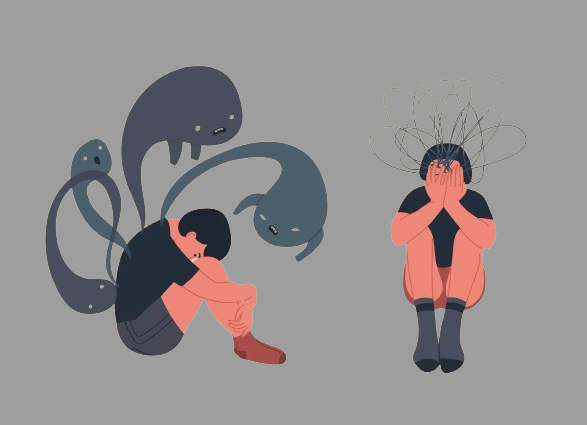
Parasocial grief is the genuine sadness people experience after the death of a celebrity, the ending of a beloved show, or the loss of a fictional character they have never actually met in person. It is a real and documented grief reaction, not an exaggeration or an overreaction, even though many people who experience it feel confused or even embarrassed by the intensity of what they are feeling.

Many people who go through this experience feel a quiet sense of confusion about the depth of their own reaction, since after all, they never personally knew this person or character in any conventional sense.
Yet research examining parasocial relationships consistently shows that these one-sided emotional bonds can become psychologically significant in a person’s life, and when they end abruptly, the mind often processes the resulting loss in ways that closely resemble how it processes the loss of a genuinely reciprocal relationship.
This article explains what parasocial grief actually involves, why the brain treats these losses as meaningfully real, who tends to be most vulnerable to experiencing it intensely, and what healthy ways of moving through it might look like in practice.
What Parasocial Grief Actually Is
Parasocial grief refers to the grief response that follows the ending of a parasocial relationship, which psychologists define as a one-sided emotional bond formed with a media figure, an online influencer, or a fictional character encountered through television, film, or other media.
A parasocial breakup can occur through the death of a real celebrity, the series finale of a beloved show, the death of a cherished character within an ongoing story, or an online creator choosing to step away from public life altogether.
Unlike mutual relationships built through direct interaction, parasocial bonds only run in a single direction, from the audience member toward the figure or character in question. Yet the emotional attachment formed on the audience’s side of this equation can still become surprisingly deep, meaningful, and enduring over months or years of repeated engagement.
Researchers who have studied these reactions closely have found that people can experience genuinely significant grief symptoms following these kinds of parasocial breakups, symptoms that in some respects closely resemble grief following the end of a real, reciprocal relationship built through direct human contact.
Why the Brain Treats Parasocial Loss as Genuinely Real
The human brain did not evolve alongside television, streaming platforms, or social media, and as a result it tends to process repeated, emotionally engaging exposure to a person or character in ways that closely resemble how it processes real, direct social bonding.
Watching a particular character or online creator regularly, sometimes over the course of many months or several years, builds a persistent sense of familiarity and closeness that the brain does not strongly distinguish from the closeness built through genuine, reciprocal social interaction.
This effect is sometimes referred to using the term mere exposure effect, describing the well-documented tendency for people to feel more emotionally connected to someone the more often they are exposed to that person, even entirely in the absence of any direct, two-way interaction between them.
Beyond simple exposure, parasocial relationships can also genuinely meet real emotional needs for the person experiencing them, particularly for individuals who are lonely, socially anxious, or navigating a genuinely difficult period in their lives, since these one-sided relationships can provide real comfort, a felt sense of companionship, and the experience of feeling understood, even without any direct reciprocity involved.

When that particular source of comfort disappears, whether through death, cancellation, or a creator stepping away, the emotional gap it leaves behind is entirely real, even though the underlying relationship itself was never mutual to begin with. Attachment patterns shaped throughout childhood and adulthood can extend meaningfully into these parasocial bonds as well, and people who exhibit more anxious attachment patterns in their broader relational life tend to experience noticeably more intense parasocial grief reactions when these bonds come to an end.
Research in this area has found that attachment anxiety correlates measurably with stronger grief responses following parasocial loss, along with a greater tendency toward avoiding the formation of new parasocial relationships afterward, a pattern that closely resembles the avoidance many people display after a painful romantic breakup in their real, direct relationships.
Common Situations That Trigger Parasocial Grief
Parasocial grief is not limited only to celebrity deaths, though that remains probably the most visible and widely recognized example of the phenomenon. A wide range of different situations can genuinely trigger this kind of grief response, including the death of an actor, musician, or other public figure that someone has followed closely over an extended period, and the death or narrative removal of a beloved fictional character within an ongoing story that a person has invested significant emotional attention in over time.
A series finale that brings a long-running emotional attachment to its conclusion can trigger genuine grief, as can an online creator or influencer choosing to step back from public content creation after building a sustained, meaningful connection with their audience over time. Even the ending of a favorite podcast, a long-running YouTube channel, or a show concluding somewhat abruptly can trigger a genuine, if often somewhat milder, grief response in dedicated audience members.
Even smaller-scale endings, such as a favorite podcast host departing from a long-running show, can produce a real if proportionally smaller grief reaction in listeners who had built a sustained parasocial connection with that particular voice over an extended period of regular listening.
Recognizing the Signs of Parasocial Grief
Because parasocial grief is not widely discussed in everyday conversation, many people who experience it do not immediately recognize what they are feeling for what it genuinely is. Persistent sadness that feels disproportionate to what might seem, from the outside, like just a show or a public figure often marks the beginning of this recognition process, along with a noticeable difficulty starting new shows, books, or following new creators in the immediate aftermath of the loss.
Intrusive thoughts about the loss arriving at unexpected moments throughout the day, alongside a felt sense of avoidance around anything that might remind a person of the lost figure or character, are both common experiences. Many people also describe feeling genuinely isolated in their grief precisely because others around them do not take the experience seriously, alongside physical symptoms such as fatigue or reduced motivation that closely mirror symptoms seen in more conventionally recognized forms of grief.
These symptoms mirror conventional grief reactions quite closely in most respects, and the primary difference tends to lie mainly in how socially validated the loss is by others, rather than in how genuinely real the experience feels internally to the person going through it.
Why Parasocial Grief Often Feels Deeply Isolating
One of the hardest aspects of parasocial grief is not necessarily the loss itself but rather the pervasive sense that no one around a grieving person truly understands why they feel so significantly affected by it.
Psychologists use the term disenfranchised grief to describe loss that is not socially recognized or validated in the way more conventional losses typically are, and parasocial grief frequently falls squarely into this particular category of experience.

Friends or family members may respond to this kind of grief with genuine confusion or even outright dismissiveness, sometimes pointing out that the grieving person never actually knew the celebrity or character personally, and that kind of well-meaning but dismissive reaction can leave people feeling embarrassed about what is, in reality, an entirely genuine emotional experience deserving of respect.
Traditional grief typically comes accompanied by established rituals, including funerals, condolence customs, and shared, socially recognized mourning practices, and parasocial grief rarely benefits from any of these established outlets, which can leave people feeling like their sadness genuinely has nowhere appropriate to go.
Online fan communities sometimes fill this particular gap quite effectively, offering a space where the loss is genuinely understood and shared among people who experienced a similar parasocial connection, which can meaningfully ease the isolation that so often accompanies this type of grief.
How Parasocial Grief Differs From Grief Over a Real Relationship
These two experiences share a considerable amount of overlapping symptoms, yet there remain meaningful differences worth understanding clearly. Grief following the end of a real relationship usually involves a genuinely shared history, mutual memories built together, and a reciprocal emotional exchange developed through years of direct, two-way interaction between both people involved.
Parasocial grief, by contrast, involves a real and often deeply felt emotional bond, but one built entirely from the audience member’s side of the relationship, without any direct participation from the other party in building or maintaining that connection. This distinction does not make parasocial grief any less valid as a genuine emotional experience, though it does meaningfully change how the loss tends to unfold over time and how much external social support tends to be readily available for processing it in a healthy way.
Who Tends to Experience More Intense Parasocial Grief
Certain factors reliably increase how strongly a person experiences parasocial loss when it occurs. People experiencing significant loneliness in their broader life tend to feel these losses especially intensely, since when a parasocial relationship serves as a genuinely primary source of comfort or connection in someone’s daily life, its loss removes something that was functioning as a genuinely important source of emotional support rather than simply serving as entertainment.
People who exhibit higher levels of attachment anxiety in their broader relational patterns also tend to experience notably stronger parasocial grief reactions, along with greater difficulty forming new parasocial bonds in the aftermath of a loss, according to research examining this specific connection.
Some neurodivergent individuals report forming especially strong and personally meaningful parasocial connections, partly because these one-sided relationships can offer a predictable, reliable form of connection without the unpredictability that often characterizes reciprocal social interaction.
And long-term fans who have engaged consistently with a particular figure or ongoing story over an extended period tend to have built considerably deeper emotional investment over time, which correspondingly tends to produce a more significant sense of loss when that connection eventually ends.
Healthy Ways to Cope With Parasocial Grief
Treating parasocial grief as genuinely valid, rather than something to suppress, minimize, or feel embarrassed about, represents an essential first step toward processing it in a healthy way over time. Giving yourself explicit permission to grieve, without requiring the underlying relationship to have been mutual in order to justify your feelings, acknowledges that the emotional bond itself was entirely genuine, even though it only ever ran in one direction.
Connecting with others who share a similar understanding of the loss, whether through online communities, dedicated forums, or friends who experienced the same attachment to the same figure or story, can provide validation that is often conspicuously missing from people outside that particular fandom or shared audience experience.
Creating your own personal closure ritual, whether that involves rewatching a favorite scene one final time, writing a personal reflection about what the figure or character genuinely meant to you, or simply talking openly about the loss with someone who understands, can provide a meaningful sense of closure that traditional grief rituals would normally offer in more conventional circumstances.
It is worth being genuinely mindful of the risk of maladaptive coping in this context, since research has linked parasocial grief specifically with an increased risk of turning toward substance use or other unhealthy coping strategies when the underlying grief is not processed directly and openly. Simply naming the feeling clearly, rather than avoiding or minimizing it, meaningfully reduces this particular risk over time.
And if you notice yourself feeling genuinely resistant to starting a new show or following a new creator in the immediate aftermath of a loss, recognize that this avoidance represents an entirely normal grief response, and there is generally no need to rush toward replacing the loss before you feel genuinely ready to do so.
When Parasocial Grief Might Signal Something Deeper
For most people who experience it, parasocial grief eventually passes with time, much like other more conventionally recognized forms of grief tend to do.
But sometimes this particular experience points toward something worth examining more closely on a personal level. If a parasocial relationship has effectively become someone’s primary source of emotional connection in their life, with genuinely reciprocal relationships feeling comparatively difficult to maintain or largely absent by comparison, that broader pattern is genuinely worth exploring further.
This observation is not intended as a judgment of any kind, since many people quite understandably turn toward parasocial connection during genuinely difficult periods marked by real isolation in their lives.
But if this pattern represents the ongoing norm rather than a temporary exception during a hard stretch, a therapist can help meaningfully unpack why that particular pattern has developed and what might help shift it over time.
Frequently Asked Questions
Is it normal to grieve a celebrity or fictional character I never actually met? Yes, parasocial grief is a genuinely documented psychological response, and the one-sided nature of the underlying relationship does not make the emotional bond, or the resulting grief that follows its loss, any less genuine or worthy of respect.
Why do I feel more upset about a fictional character’s death than I would have expected? Repeated emotional exposure over time builds real, meaningful attachment, and if that character provided a genuine sense of comfort, familiarity, or escapism in your life, its loss can quite reasonably trigger a genuine and significant grief response.
How long does parasocial grief typically last? This varies considerably from person to person and depends largely on how significant the underlying attachment was. Milder attachments may resolve within days or weeks, while deeper, longer-term attachments can understandably take considerably longer to process fully.
Is experiencing parasocial grief a sign of an underlying mental health problem? Not on its own. It becomes worth examining further only if parasocial relationships are consistently replacing, rather than meaningfully supplementing, genuine real-world social connection in a person’s broader life.
Why do people tend to avoid starting new shows after experiencing a parasocial loss? This pattern closely mirrors the avoidance commonly seen after real romantic breakups. Starting something new can understandably feel like risking another attachment before the current, still-unprocessed loss has had adequate time to resolve.
Can parasocial grief affect people with social anxiety more strongly than others? Yes, often it can. Parasocial relationships can feel considerably safer and more predictable than reciprocal ones, which can make their eventual loss feel especially significant for people who experience social anxiety in their daily lives.
What is the actual difference between a genuine parasocial relationship and simply enjoying a fandom? A true parasocial relationship involves a felt sense of genuinely personal connection to the figure or character themselves, while a more general fandom interest can exist quite comfortably without that same one-sided emotional bond being present.
Conclusion
Parasocial grief deserves to be taken genuinely seriously rather than dismissed as an overreaction to what might seem, from the outside, like just a celebrity or fictional character, since the emotional bonds underlying this experience are genuinely felt by the person experiencing them, even though the relationship itself was never mutual to begin with.
Naming the experience honestly, connecting deliberately with others who understand it, and giving yourself genuine permission to grieve without needing external justification remain the most effective ways to move through this particular kind of loss.
If parasocial connection has effectively become your primary source of emotional support rather than functioning as one meaningful part of a fuller, more balanced life, that pattern is genuinely worth exploring gently over time, ideally with support from someone you trust or from a licensed mental health professional who can help you understand what is happening and why.