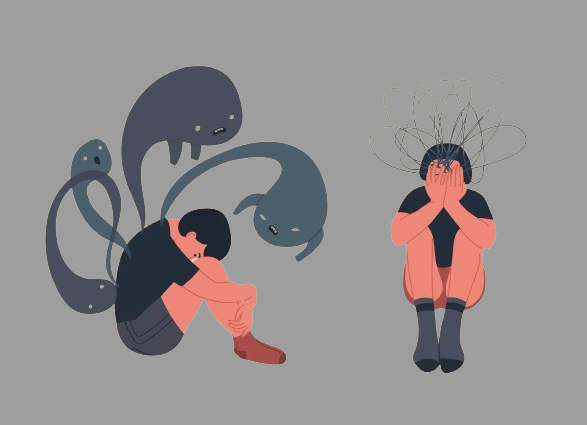
You know exactly what needs to happen. The email needs a reply. The dishes need washing. The report needs to be started.And yet you sit there, staring at the same screen or the same pile of laundry, completely unable to make your body take the first step. Not unwilling. Unable.
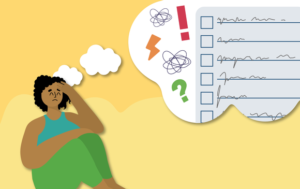
This is task paralysis, and it feels nothing like ordinary procrastination. Understanding what’s actually happening in your brain during task paralysis is the first step toward finally getting unstuck.
What Is Task Paralysis?
Task paralysis describes a state in which a person is fully aware of what needs to be done, often wants to do it, and yet finds themselves unable to physically or mentally initiate the action.
It’s frequently confused with laziness or poor time management, but the internal experience is quite different. Most people describe it as feeling stuck, frozen, or blocked, rather than simply unmotivated or disinterested.
The task itself often isn’t even objectively difficult. Sending a short email, folding laundry, or replying to a text message can trigger the same paralysis as a genuinely complex project, which is part of what makes the experience so confusing to the person going through it.
Task paralysis can last minutes, hours, or in some cases stretch across days, with the unstarted task growing heavier in the person’s mind the longer it remains untouched.
Task Paralysis vs Ordinary Procrastination
Procrastination typically involves choosing to delay a task in favor of something more immediately rewarding, even while knowing the delay isn’t ideal. There’s an element of choice, even if it’s not a particularly wise one.
Task paralysis lacks that same sense of choice. The person isn’t choosing to scroll their phone instead of starting the task. They’re often not doing anything enjoyable at all, simply sitting in a kind of mental standstill while feeling increasingly distressed about their own inaction.
This distinction matters because the solutions differ considerably. Procrastination often responds to better time management and motivation strategies, while task paralysis usually requires addressing the underlying overwhelm or nervous system state rather than simply trying harder to focus.
Many people experience both patterns at different times, which can make it harder to recognize when a moment of stuck-ness is closer to true paralysis than to a simple lapse in discipline.
The Nervous System Connection
Task paralysis is increasingly understood through the lens of the body’s stress response system, rather than as a purely behavioral or motivational issue.
When a task feels overwhelming, whether due to its complexity, emotional weight, or simply the number of competing demands stacked around it, the nervous system can respond as though it’s facing a threat, triggering a freeze response similar to what happens during acute stress or fear.

Freeze responses evolved as a survival mechanism, and while they’re most commonly discussed in the context of trauma and danger, the same underlying circuitry can activate in response to everyday overwhelm, particularly for people whose stress response systems are already more sensitive or dysregulated.
This is why willpower alone often fails to resolve task paralysis. You cannot simply think your way past a nervous system that has, in that moment, categorized the task as something to freeze in response to rather than approach.
The Link Between Task Paralysis and ADHD
Task paralysis is extremely common among people with ADHD, where it’s sometimes referred to specifically as ADHD paralysis, though the underlying pattern overlaps significantly with what non-ADHD individuals experience as well.
Executive function differences central to ADHD make it harder to break tasks down into a clear first step, prioritize among competing demands, and initiate action even when motivation to complete the task genuinely exists.
Many people with ADHD describe a specific kind of paralysis when facing an unstructured or open-ended task, since the lack of a clear starting point can make the entire task feel undifferentiated and impossible to approach.
This is distinct from a lack of caring about the outcome. Many people experiencing ADHD-related task paralysis deeply want the task completed and feel significant distress about their inability to start, which only adds another layer of frustration to an already difficult moment.
The Link Between Task Paralysis and Anxiety
Anxiety contributes to task paralysis through a different but related mechanism, often centered on fear of doing the task imperfectly or fear of the outcome once the task is underway.
Perfectionism frequently intertwines with this pattern, since a task that feels like it must be done flawlessly can become so weighted with pressure that starting at all feels safer to avoid entirely than to risk an imperfect attempt.
Anticipatory anxiety about a task, imagining every way it could go wrong before even beginning, can consume so much mental energy that little is left over for actually starting the work itself.
This can create a frustrating cycle, where the anxiety about not having started yet becomes its own additional source of stress, further reinforcing the freeze response rather than helping the person move past it.
The Link Between Task Paralysis and Depression
Depression can produce a related but distinct form of paralysis, often centered more around a lack of energy and motivation than around fear or overwhelm specifically.
Tasks that once felt simple can feel disproportionately effortful during a depressive episode, since depression affects the brain’s motivation and reward systems in ways that make initiating almost any action feel heavier than it should.
Unlike anxiety-driven paralysis, depression-related task paralysis often comes with a pervasive sense of “what’s the point,” rather than fear of doing something wrong, though the two can certainly coexist and compound one another.
If persistent low energy, low mood, and task paralysis are occurring together for more than a couple of weeks, it’s worth considering whether depression may be a contributing factor alongside any executive function or anxiety-related causes.
Common Triggers That Lead to Task Paralysis
Task paralysis often intensifies around tasks that feel emotionally significant, such as replying to a message that might contain conflict, starting a project tied to your professional reputation, or making a decision with long-term consequences.
Ambiguity is another common trigger, since tasks without a clear first step or clear definition of “done” require additional executive function to structure, which can overwhelm an already taxed system before any actual work has begun.

A large number of competing demands stacked together, even if each individual task is manageable on its own, can produce paralysis simply through sheer volume, since the brain struggles to prioritize among too many options at once.
Physical and mental fatigue also lower the threshold for paralysis considerably, meaning the same task that felt manageable on a well-rested day can feel completely insurmountable after a poor night’s sleep or an emotionally draining week.
What Task Paralysis Feels Like From the Inside
Many people describe a strange split during task paralysis, where part of their mind is narrating everything that needs to happen while another part remains completely unable to physically act on that narration.
This can produce intense frustration directed inward, since the person is fully aware of the gap between their intention and their behavior, unlike ordinary procrastination where the intention to delay and the delaying behavior are usually aligned.
Some people describe a physical heaviness, as though their body has become difficult to move, while others describe a kind of mental fog that makes it hard to even locate where to begin among the swirl of competing thoughts.
Shame often follows closely behind, since the person frequently interprets their paralysis as evidence of laziness or personal failure, rather than recognizing it as a specific and identifiable nervous system pattern with real causes behind it.
Evidence-Based Strategies to Break Task Paralysis
Reducing the task to its smallest possible first step, something so small it feels almost absurdly easy, can help bypass the overwhelm that triggers paralysis in the first place, since the nervous system responds to perceived threat size, not just objective difficulty.
Body doubling, which involves working alongside another person, even virtually and without direct collaboration, can help provide enough external structure to interrupt the freeze response and support initiation of the task.
Externalizing the task by writing it down, saying it out loud, or breaking it into a visible checklist rather than holding the entire thing in your head can reduce the cognitive load involved in simply tracking what needs to happen.
Addressing the underlying emotional charge around a task, such as naming the specific fear or discomfort driving the avoidance, can sometimes dissolve paralysis more effectively than any productivity technique aimed only at the behavior itself.
Building in short, low-stakes practice with starting tasks, even unimportant ones, can help retrain the nervous system’s association between task initiation and safety over time, gradually reducing the intensity of the freeze response.
Working with a therapist, particularly one experienced in ADHD, anxiety, or trauma-informed care depending on the underlying driver, can provide personalized strategies that go beyond generic productivity advice, which often falls short for genuine task paralysis.
Why Willpower-Based Advice Often Fails
Much of the popular advice aimed at procrastination, such as simply deciding to be more disciplined or setting stricter deadlines, tends to fail for task paralysis specifically, since the underlying mechanism isn’t a lack of discipline.
Adding pressure or urgency to a nervous system that’s already in a freeze state frequently backfires, intensifying the paralysis rather than resolving it, similar to how pushing a frightened animal to move rarely results in calm, confident action.
This is why many people who experience task paralysis have tried numerous productivity systems without lasting success, since those systems were designed for a different underlying problem than the one they’re actually facing.
Recognizing this mismatch can be deeply relieving on its own, since it reframes years of failed productivity attempts as a mismatch of tools rather than a personal deficiency.
How Task Paralysis Affects Daily Life
Over time, chronic task paralysis can lead to a growing backlog of unfinished responsibilities, which in turn increases the overall sense of overwhelm and makes future task initiation even more difficult.
Relationships can be affected as well, particularly when task paralysis involves responsibilities shared with a partner, roommate, or family member, since unfinished tasks are often misread by others as a lack of care rather than a genuine difficulty with initiation.
Work performance can suffer significantly, especially in roles that require self-directed structure without much external oversight, since the very autonomy that some people thrive under can become a significant liability for someone prone to task paralysis.
Left unaddressed, the shame and self-criticism that accompany chronic task paralysis can contribute to broader difficulties with self-esteem and, in some cases, to symptoms of anxiety or depression that develop on top of the original pattern.
Supporting Someone Who Experiences Task Paralysis
If someone close to you struggles with task paralysis, offering to help break a task into a first step together, rather than simply reminding them of the deadline, tends to be far more effective at supporting actual initiation.
Avoiding language that implies laziness or a lack of caring, even subtly, matters considerably, since most people experiencing task paralysis are already deeply critical of themselves and don’t need that reinforced from the outside.
Body doubling, or simply sitting nearby while the person works on a task, can provide meaningful support without requiring you to take over the task itself or manage it on their behalf.
Patience matters as well, since task paralysis rarely resolves through a single conversation or intervention, and consistent, judgment-free support tends to help far more than urgency or frustration ever will.
Task Paralysis in the Workplace
Open-ended projects without clear structure tend to be especially common triggers for workplace task paralysis, since the lack of an obvious first step forces the brain to do significant organizational work before any visible progress can even begin.
Performance reviews, ambiguous instructions from a manager, or tasks tied closely to how your competence will be judged can add an emotional charge that intensifies the freeze response well beyond what the objective difficulty of the task would suggest.
Remote work environments can sometimes worsen task paralysis for certain individuals, since the reduced external structure and lack of body doubling from coworkers removes some of the natural scaffolding that helped initiate tasks in a more traditional office setting.
Breaking workplace projects into extremely specific first actions, such as opening the relevant document and writing a single sentence rather than aiming to complete an entire section, can help bypass the paralysis long enough to build momentum.
Communicating proactively with a manager about needing clearer initial steps on ambiguous projects, rather than silently struggling with unclear instructions, can also reduce the ambiguity that so often triggers paralysis in professional settings.
Task Paralysis With Household and Domestic Responsibilities
Household tasks are particularly prone to triggering paralysis, since they tend to be numerous, repetitive, and often lack any clear endpoint, unlike a project at work that eventually reaches a defined completion.
A single load of laundry can represent an entire chain of smaller tasks, including sorting, washing, drying, folding, and putting away, and the mental image of the entire chain can trigger paralysis even though washing alone is a relatively simple physical action.
This is part of why breaking household tasks down into truly minimal first steps, such as simply carrying the laundry basket to the machine without committing to finishing the entire process, tends to be more effective than trying to mentally prepare for the whole chore at once.
Shared living situations can add another layer of difficulty, since unfinished household tasks are often visible to roommates or partners in a way that unfinished work tasks are not, which can add shame and interpersonal tension on top of the paralysis itself.
Setting extremely low initial bars, sometimes described as the “five minute rule,” where you commit only to five minutes of a task with permission to stop afterward, tends to work particularly well for domestic responsibilities that have built up over time.
When to Seek Professional Support
If task paralysis is significantly affecting your work, relationships, or overall functioning, and self-directed strategies haven’t provided meaningful relief, it’s worth speaking with a mental health professional.
This is especially important if the paralysis appears alongside symptoms of ADHD, anxiety, or depression, since an accurate understanding of the underlying driver considerably shapes which treatment approach is likely to help most.
A therapist or psychiatrist can help identify whether executive function differences, anxiety, depression, or some combination of these is driving your particular pattern, and can help build a treatment plan, which may include therapy, medication, or coaching, tailored specifically to your situation.
Frequently Asked Questions
Is task paralysis the same as ADHD paralysis? They overlap significantly, though task paralysis is the broader term. ADHD paralysis refers specifically to this pattern occurring in the context of ADHD, while task paralysis can also occur due to anxiety, depression, or general overwhelm without any ADHD diagnosis present.
Why can’t I just push through task paralysis with willpower? Task paralysis often involves a nervous system freeze response rather than a simple lack of motivation, and pushing harder against a freeze response frequently intensifies it rather than resolving it, similar to how forcing action rarely works during acute fear responses.
Can task paralysis happen with tasks I actually enjoy? Yes. Task paralysis is often less about the specific task and more about the surrounding overwhelm, ambiguity, or emotional weight involved, which means even genuinely enjoyable tasks can trigger it under the right circumstances.
Does medication help with task paralysis? For people whose paralysis is primarily driven by ADHD, stimulant or non-stimulant ADHD medications can sometimes help with executive function and task initiation, though this varies by individual and should be discussed with a psychiatrist.
How long does a typical episode of task paralysis last? This varies enormously, from a few minutes once a small first step is identified, to hours or even days if the underlying overwhelm or emotional charge around the task remains unaddressed.
Is task paralysis a sign of a specific mental health condition? Not necessarily on its own, though it commonly appears alongside ADHD, anxiety, and depression. A mental health professional can help determine whether an underlying condition is contributing to a recurring pattern.
A Final Note
If you’ve spent years calling yourself lazy for something that actually looks like a nervous system freeze response, it’s worth reconsidering that label entirely.
Task paralysis has real, identifiable causes, and real, effective strategies exist to work with it rather than against it, starting with the smallest possible first step and a good deal more patience with yourself than you’ve probably been offering.
This article is for educational purposes and isn’t a substitute for a full evaluation by a licensed mental health professional. If task paralysis is significantly affecting your daily life, consider reaching out to a therapist or psychiatrist for personalized support.