Someone tells you that what you remember never actually happened. Another person simply says “you’re overreacting” when you share how you feel.
Both moments leave you doubting yourself. Both can quietly erode your confidence over time. But they are not the same thing, and understanding the difference between gaslighting vs invalidation can change how you respond to each one.
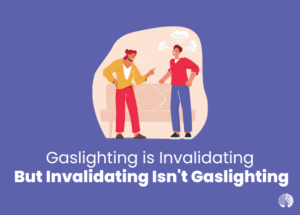
One is a calculated distortion of your reality. The other is often a failure of emotional attunement, sometimes intentional, sometimes not. Knowing which one you’re facing changes everything about how you protect yourself.
What Is Gaslighting?
Gaslighting is a form of psychological manipulation in which one person causes another to question their own memory, perception, or sanity, often through repeated denial of things that clearly happened.
The term comes from the 1944 film Gas Light, in which a husband manipulates his wife into believing she is losing her mind by dimming the gas-powered lights in their home and then denying the light had changed at all when she noticed.
In real relationships, gaslighting can look like flatly denying a conversation took place, insisting an event happened differently than it did, or accusing the other person of being “too sensitive” or “crazy” whenever they raise a legitimate concern.
What separates gaslighting from an honest disagreement about facts is intent and pattern. A single misremembered detail isn’t gaslighting. A repeated, deliberate effort to destabilize someone’s grip on reality is.
What Is Invalidation?
Invalidation refers to responses that dismiss, minimize, or reject another person’s emotional experience, even when the facts of the situation itself are not in dispute.
Someone experiencing invalidation might hear phrases like “you’re making a big deal out of nothing,” “other people have it worse,” or “just get over it,” none of which deny that an event happened, but all of which reject the legitimacy of the emotional response to it.

Invalidation can happen casually and without malicious intent, often as a byproduct of someone’s own discomfort with emotional expression, their upbringing, or simply not knowing how to respond supportively in the moment.
It can also occur repeatedly within a relationship, becoming a pattern that leaves the person on the receiving end feeling chronically unseen, even if no single instance was intended to cause harm.
The Core Difference Between Gaslighting and Invalidation
The clearest distinction between gaslighting vs invalidation lies in what’s being targeted. Gaslighting targets your grasp of objective reality, while invalidation targets the legitimacy of your emotional response to a reality that isn’t necessarily being disputed.
With gaslighting, the underlying message is something close to “that didn’t happen, and you’re wrong for believing it did.” The facts themselves are under attack.
With invalidation, the underlying message is closer to “that happened, but your reaction to it is wrong, excessive, or unreasonable.” The facts remain intact, but your inner experience is dismissed.
This distinction matters enormously for how you respond, since combating a denial of facts requires a very different approach than addressing a dismissal of feelings.
Why These Two Get Confused So Often
Both gaslighting and invalidation leave you feeling smaller, more uncertain, and less trusting of your own inner compass, which is part of why people often use the terms interchangeably even though they describe different mechanisms.
Both can also occur within the same relationship, sometimes even within the same conversation, which makes it genuinely difficult in the moment to identify exactly which dynamic is happening.
Social media has also contributed to some blurring of the terms, since “gaslighting” has become a popular shorthand for almost any dismissive or frustrating interaction, even ones that would be more accurately described as invalidation, insensitivity, or simple miscommunication.
This looseness in everyday language isn’t necessarily harmful, but it can make it harder to have precise conversations about what’s actually happening in a specific relationship, which matters when you’re trying to figure out how serious the pattern really is.
Real-World Examples of Gaslighting
Imagine confronting a partner about a comment they made the previous night, only to have them insist the conversation never took place at all, despite you remembering it clearly and being able to describe specific details.
Imagine a coworker denying they ever agreed to a deadline in front of your manager, even though you have a clear memory of the conversation and no way to immediately prove it happened.
Imagine a family member consistently rewriting shared childhood history in a way that erases their own harmful behavior, insisting instead that you’ve always been the difficult one who exaggerates and misremembers things.
In each case, the target isn’t just your feelings about the event. It’s your confidence that the event happened the way you remember it happening at all.
Real-World Examples of Invalidation
Imagine telling a friend you’re anxious about an upcoming medical appointment, and they respond with “you worry about everything, it’s probably nothing,” which doesn’t deny your anxiety exists but dismisses it as unwarranted or excessive.
Imagine sharing that you felt hurt by a comment at a family gathering, and being told “that’s not what they meant, you’re too sensitive,” which acknowledges the comment happened but rejects your emotional reaction to it as illegitimate.
Imagine a partner responding to your stress about work with “at least you have a job,” which minimizes your experience by comparing it unfavorably to a worse hypothetical situation, rather than acknowledging what you’re actually feeling.
None of these examples deny an objective fact. They deny that your feelings about that fact deserve to be taken seriously.
How Gaslighting Affects the Mind Over Time
Repeated gaslighting can produce a specific and disorienting psychological state, sometimes described as feeling like you can no longer trust your own memory or perception without external confirmation.
Over time, many people who experience sustained gaslighting begin preemptively doubting themselves, questioning their own reactions before anyone else even has the chance to, since the pattern of doubt has become internalized.
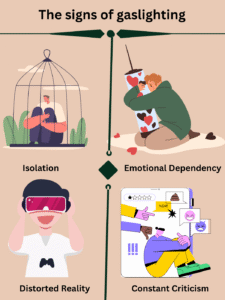
This can lead to a kind of chronic self-monitoring, where the person constantly checks their memory against external sources, keeps records of conversations, or seeks reassurance from third parties just to feel confident in their own perception of events.
In more severe or prolonged cases, this erosion of self-trust can resemble symptoms associated with anxiety and complex trauma, since the nervous system has effectively lost one of its most basic tools for feeling safe in the world, which is trusting its own read of reality.
How Invalidation Affects the Mind Over Time
Chronic invalidation tends to produce a different, though related, kind of harm. Rather than doubting what happened, the person often learns to doubt whether their feelings are ever worth expressing at all.
This frequently leads to emotional suppression, where the person stops sharing their inner experience with others, not because they’ve forgotten how, but because past experience has taught them it won’t be received well.
Over years, chronic invalidation, particularly from parents during childhood, has been linked by researchers to difficulties with emotional regulation in adulthood, since children who are consistently told their feelings are wrong or excessive often never fully develop the skills to identify and manage those feelings independently.
This pattern is central to concepts like emotional invalidation environments studied in dialectical behavior therapy, where chronic invalidation during development is considered a significant contributing factor to later difficulties with emotional regulation.
Can Someone Invalidate You Without Meaning To Gaslight You?
Yes, and this distinction matters enormously for how you interpret the people in your life. Many people who invalidate others are not engaging in deliberate manipulation.
Someone raised in a household where emotions were dismissed or ignored may genuinely not know how to respond supportively when someone shares difficult feelings, simply because they were never shown a healthier model growing up.
This doesn’t make the invalidation harmless, but it does mean the appropriate response often differs. Direct communication about the impact of their words may lead to genuine change in a way that confronting a true gaslighter typically does not.
Gaslighting, by contrast, tends to involve a pattern of denial specifically aimed at maintaining control or avoiding accountability, which is why it usually requires a fundamentally different response, often centered on protecting yourself rather than hoping for a change in the other person’s behavior.
How to Tell Which One You’re Experiencing
A useful question to ask yourself is whether the other person is disputing what actually happened, or disputing how you feel about what happened. The former points toward gaslighting, while the latter points toward invalidation.
Another useful signal is consistency. Gaslighting often involves a persistent, repeated pattern of denial specifically designed to make you doubt your memory, while invalidation can sometimes be an isolated, thoughtless comment rather than a deliberate ongoing strategy.
It also helps to notice how you feel afterward. Gaslighting tends to leave people questioning their sanity or memory specifically, while invalidation tends to leave people feeling unseen, unimportant, or emotionally dismissed without necessarily doubting the facts themselves.
Neither experience is something you need to simply tolerate, regardless of which one you’re facing, but naming the correct dynamic accurately helps you choose the most effective response.
How to Respond to Gaslighting
Documenting events as they happen, whether through notes, messages, or simply telling a trusted third party soon after something occurs, can help you maintain confidence in your own memory when it’s being repeatedly challenged.
Trusting your own perception, even without external validation, is difficult but important, since gaslighting specifically works by convincing you that your internal compass cannot be trusted without someone else’s confirmation.
Setting a firm boundary around continuing to engage with someone who consistently denies clear, verifiable events is often necessary, since gaslighting rarely resolves through discussion alone when the underlying motivation is control rather than genuine misunderstanding.
Working with a therapist, particularly one experienced with manipulation and coercive control dynamics, can help you rebuild trust in your own perception after prolonged exposure to gaslighting.
How to Respond to Invalidation
Naming your feelings clearly and directly, without minimizing them in advance to preempt a dismissive response, can help shift the dynamic over time, especially with people who are invalidating out of habit rather than intent.
Communicating the specific impact of invalidating comments, rather than assuming the other person already understands how their words land, gives them a genuine opportunity to adjust their behavior going forward.
Seeking out relationships and support systems where your emotional experience is consistently taken seriously can help counterbalance the effect of invalidation you may still be encountering elsewhere in your life.
If invalidation is coming from a close, ongoing relationship such as a partner or family member, couples or family therapy can sometimes help build the emotional attunement skills that were missing in the first place.
Gaslighting and Invalidation in Family Systems
Families often develop entrenched patterns of either gaslighting or invalidation that get passed down across generations, frequently without anyone in the family recognizing the pattern as harmful at all.
A parent who consistently denies difficult events from a child’s upbringing, insisting instead that the child is exaggerating or misremembering, can create long-term confusion about whose version of the family history is accurate.
Similarly, a family culture where emotional expression was consistently met with dismissal, such as “we don’t talk about feelings in this house,” tends to produce adults who struggle to identify their own emotions clearly, let alone express them to others.
Adult children who begin to recognize these patterns often face a difficult tension between wanting to address the harm directly and knowing that confronting a family member may be met with further denial or dismissal, which can itself feel like a continuation of the original pattern.
Family therapy, or individual therapy focused specifically on family-of-origin dynamics, can help someone process this history and develop healthier patterns going forward, even if the family system itself never fully acknowledges what happened.
Gaslighting and Invalidation in the Workplace
Workplaces can host both patterns, often in more subtle forms than what typically appears in personal relationships, since professional norms tend to discourage overt conflict.
A manager who denies having previously agreed to a deadline, project scope, or promised responsibility, especially when there’s no written record to reference, creates the exact conditions that make workplace gaslighting difficult to prove or address directly.
Invalidation shows up more commonly in workplace settings, often through comments that minimize an employee’s stress or workload, such as being told that everyone is busy, or that their concerns are simply part of the job and shouldn’t be raised again.
Documenting agreements and important conversations in writing, such as following up a verbal discussion with a confirming email, can help protect against workplace gaslighting specifically, since it creates a record that doesn’t rely solely on memory.
For invalidation in professional settings, raising concerns through official channels like human resources, and connecting with trusted colleagues who witnessed the same events, can help validate your experience even when a manager or coworker downplays it directly.
Cultural and Gender Patterns Worth Noting
Research and clinical observation suggest that gaslighting and invalidation are not evenly distributed across all relationships and contexts, and certain patterns tend to appear more frequently along gender and cultural lines.
Women, for example, have historically been more likely to have their concerns dismissed as overly emotional or irrational in both medical and interpersonal settings, a pattern sometimes referred to as being “gaslit” by systems as well as individuals.
Cultural norms around emotional expression also shape how invalidation is experienced and interpreted, since some cultural contexts discourage open emotional expression more broadly, which can make it harder to distinguish cultural norms from genuinely harmful invalidation within a specific relationship.
Understanding these broader patterns doesn’t change how you address a specific instance of gaslighting or invalidation in your own life, but it can help contextualize why these dynamics sometimes feel like part of a much larger, systemic pattern rather than an isolated personal experience.
When Professional Support Is Warranted
If you’re experiencing either pattern within a relationship and finding it difficult to trust your own perception, maintain your sense of self-worth, or set effective boundaries, a licensed therapist can provide significant support.
This is especially important if gaslighting is occurring within a relationship that also involves other signs of coercive control, since these patterns can escalate and may require additional safety planning beyond what individual therapy alone can address.
A therapist experienced in relational trauma or coercive control specifically can help you rebuild confidence in your own perceptions, develop healthier boundaries, and determine whether the relationship itself can realistically change.
Frequently Asked Questions
Is invalidation a form of gaslighting? Not typically, though the two can overlap in the same relationship. Gaslighting specifically targets your grasp of objective reality, while invalidation dismisses the legitimacy of your emotional response without necessarily denying the underlying facts.
Can gaslighting happen without the person realizing they’re doing it? It’s debated among clinicians. Some gaslighting is consciously manipulative, while some may stem from the other person’s own deep denial or distorted perception, though the effect on the person experiencing it remains harmful regardless of intent.
Is it gaslighting if someone genuinely misremembers an event? Usually not, if it’s an isolated instance without a pattern of insisting you’re wrong or unstable for remembering differently. Gaslighting is defined by a repeated, deliberate pattern rather than a single honest memory discrepancy.
Can invalidation be just as damaging as gaslighting? Yes, particularly when it happens chronically over years, such as throughout childhood. Chronic invalidation has been linked to long-term difficulties with emotional regulation and self-worth.
How do I know if I should leave a relationship involving gaslighting? This depends heavily on the severity, frequency, and whether the person shows genuine willingness to change when confronted. A therapist can help you assess the pattern and consider your options safely.
Can a relationship recover after gaslighting or chronic invalidation? It’s possible in some cases, particularly with invalidation stemming from a lack of emotional skills rather than a desire for control, especially when both people are willing to engage in therapy and change their communication patterns.
Does gaslighting always involve romantic partners? No. While gaslighting is frequently discussed in the context of romantic relationships, it can occur in families, friendships, and workplaces as well, anywhere one person has enough influence or credibility to make their denial of events convincing to the other person or to outside observers.
A Final Note
Whether you’re dealing with gaslighting, invalidation, or both, your instinct that something feels wrong deserves to be taken seriously, not explained away.
You don’t need external permission to trust your own memory or to consider your feelings legitimate. Both are yours, and both are worth protecting.
This article is for educational purposes and isn’t a substitute for a full evaluation by a licensed mental health professional. If you’re navigating a relationship involving manipulation or chronic emotional dismissal, consider reaching out to a therapist for personalized guidance.