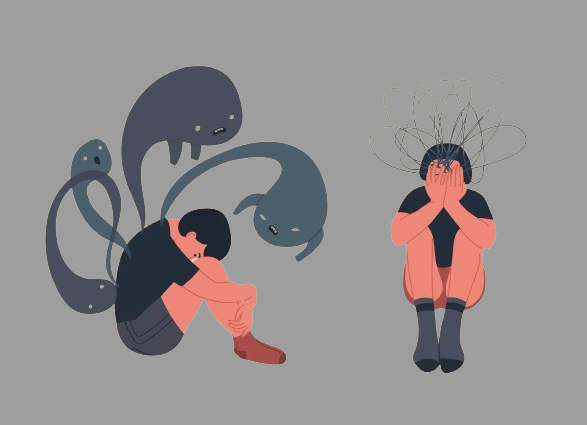
You’ve made it through another day of eye contact you had to consciously remember to make, small talk you had to script in your head before saying it out loud, and sensory discomfort you quietly pushed through without mentioning to anyone.
By the time you get home, you don’t feel tired the way other people describe being tired. You feel emptied out, like something essential has been used up and hasn’t been replaced.

This is often what autistic masking burnout feels like from the inside — a slow-building exhaustion that comes from years of hiding, adjusting, and performing in order to move through a world that wasn’t built with your brain in mind.
What Is Autistic Masking Burnout?
Autistic masking burnout describes the state of physical and emotional depletion that develops after prolonged masking, which is the conscious or unconscious suppression and camouflaging of autistic traits to appear more neurotypical.
Masking can include forcing eye contact that feels uncomfortable, rehearsing conversations in advance, suppressing stimming behaviors, mimicking the social expressions of people around you, and pushing through sensory overload without any outward sign of struggle.
Each of these adjustments individually might seem small. Carried out consistently, for years, across school, work, and relationships, the cumulative cost becomes enormous, and burnout is often the result.
Unlike ordinary tiredness, autistic masking burnout tends to affect nearly every area of functioning at once, including communication, sensory tolerance, emotional regulation, and the ability to manage daily responsibilities that once felt routine.
Why Masking Happens in the First Place
Masking rarely begins as a conscious decision. For many autistic people, it starts in early childhood, often after repeated feedback that certain natural behaviors were considered strange, disruptive, or simply too much for the people around them.
A child who is told to stop flapping their hands, to stop talking about their special interest so much, or to look people in the eye when speaking learns quickly that their natural way of being invites correction.
Over time, that child adapts. They study how other people move, speak, and react, and they build an internal script that lets them pass as neurotypical, at least on the surface.
This adaptation can be remarkably effective. It’s also why so many autistic adults, especially those diagnosed later in life, spent years being told they didn’t seem autistic, simply because the mask had become so well practiced that almost no one could see underneath it.
The problem is that masking requires continuous, effortful monitoring of behavior that most people never have to think about consciously. That constant internal labor is what eventually leads to burnout.
The Hidden Cost of Passing as Neurotypical
From the outside, a person who masks well often looks composed, capable, and socially fluent. This is precisely why the internal cost is so often missed by teachers, employers, friends, and even family members.
Every social interaction requires a kind of real-time translation work, where natural instincts are suppressed and replaced with rehearsed, more socially acceptable substitutes.

Sensory discomfort, whether from fluorescent lighting, background noise, clothing textures, or crowded spaces, is frequently endured silently rather than addressed, because raising it might draw unwanted attention or be dismissed as an overreaction.
Emotional reactions are often muted or delayed as well, since expressing them in the moment might not match what feels socially expected, and processing them fully often has to wait until the person is alone.
None of this is visible in a typical interaction, which means the exhaustion it produces is easy for others to overlook, and easy for the person experiencing it to dismiss as personal weakness rather than a predictable consequence of sustained effort.
Signs and Symptoms of Autistic Masking Burnout
Autistic masking burnout tends to show up gradually, and it often affects several areas of life simultaneously rather than appearing as a single isolated symptom.
Cognitively, many people notice a sharp decline in their ability to concentrate, along with word-finding difficulties, memory lapses, and a general sense of mental fog that doesn’t improve with sleep or rest in the way ordinary tiredness usually does.
Physically, exhaustion tends to feel deep and unrelenting, sometimes accompanied by headaches, digestive issues, or a heightened sensitivity to sensory input that previously felt manageable, since the nervous system has less capacity left to filter and tolerate stimulation.
Emotionally, irritability, sudden tearfulness, or a flattened sense of numbness often appear, along with a growing sense of dread about upcoming social obligations that used to feel neutral or even enjoyable.
Behaviorally, many people notice an increase in the frequency or intensity of autistic traits that were previously suppressed, such as stimming, needing significantly more time alone, or losing the ability to maintain the social script that used to come more easily.
Communication often becomes noticeably harder during burnout as well, with people describing a loss of verbal fluency, sometimes losing spoken language almost entirely for periods of time, even when their internal thoughts remain clear and intact.
Autistic Burnout vs Ordinary Burnout
Ordinary occupational burnout, the kind widely discussed in workplace psychology, typically develops from prolonged stress tied to a specific job or role, and it tends to improve with rest, boundaries, or a change in work circumstances.
Autistic masking burnout is different in an important way, because the underlying cause isn’t only workload or job stress. It’s the ongoing effort of suppressing a natural way of being in order to appear acceptable across nearly every setting, not just at work.
This is why autistic burnout can occur even in someone who loves their job, has supportive relationships, and doesn’t appear to be under unusual external stress by conventional measures.
Recovery also tends to look different. Reducing masking, rather than simply reducing workload, is often the piece that makes the most meaningful difference in someone’s long-term recovery.
Autistic Burnout vs Depression
Autistic masking burnout and depression can look remarkably similar from the outside, and the two frequently coexist, which makes accurate identification genuinely important for getting the right kind of support.
Depression typically involves a persistent low mood, a loss of interest or pleasure in most activities, and feelings of hopelessness or worthlessness that color the person’s entire outlook regardless of the specific circumstances they’re in.

Autistic burnout is more closely tied to depleted capacity for sensory and social processing specifically, and it often improves, at least partially, when demands are reduced and time for genuine rest and unmasking is protected, even if underlying mood symptoms remain unresolved.
Many autistic adults experience both simultaneously, since chronic burnout left unaddressed for long enough can eventually contribute to a genuine depressive episode layered on top of it.
A clinician who understands autism specifically, rather than one working from a purely neurotypical framework, is far better positioned to help untangle which factors are driving which symptoms in any individual case.
Why Late-Diagnosed and Undiagnosed Autistic Adults Are Especially at Risk
Adults who were diagnosed later in life, or who remain undiagnosed altogether, often have decades of masking behind them before they ever have language for what they’ve been doing.
Without a framework for understanding their own experience, many spend years attributing their exhaustion to personal failure, insufficient willpower, or simply not trying hard enough to keep up with everyone else around them.
This lack of understanding tends to delay meaningful accommodation and support, since it’s difficult to ask for help with something you don’t yet have a name for.
Women and people socialized as women are statistically more likely to be diagnosed later, partly because masking patterns in this population have historically been less recognized by clinicians trained primarily on presentations more common in autistic boys.
Discovering the framework of masking and autistic burnout later in life, whether through a formal diagnosis or self-identification, often brings an enormous sense of relief, even when the discovery itself is emotionally complicated to process.
How Burnout Affects Daily Functioning
During a period of autistic burnout, tasks that once felt manageable can suddenly feel impossible, not because the person has lost the underlying skill, but because the mental resources needed to execute that skill have been depleted.
Basic self-care routines, meal preparation, replying to messages, and even tolerating previously comfortable environments can all become significantly harder, sometimes to the point where the person needs direct support from others to manage day-to-day life.
Work performance often declines during this period as well, which can create additional stress if the person doesn’t yet understand what’s happening, since the drop in functioning can feel confusing and frightening when it happens without an obvious external cause.
Relationships can also become strained, since the energy needed to socialize, mask, and manage emotional expression may simply no longer be available, even for people the individual deeply cares about and wants to stay connected to.
Evidence-Based Approaches to Recovery
Recovery from autistic masking burnout generally requires a combination of reduced demands, increased unmasking, and structural changes rather than a single quick fix, and the process typically unfolds gradually over weeks or months rather than days.
Reducing masking wherever it’s safe to do so is often the single most important shift, since this directly addresses the underlying cause rather than only managing the symptoms that result from it.
This might involve allowing natural stimming behaviors in private or trusted spaces, communicating in a more direct or literal style with people who can accommodate it, and reducing unnecessary eye contact when it isn’t required for the interaction to succeed.
Protecting recovery time is equally important, and this often means intentionally scheduling downtime after socially or sensorially demanding events, rather than immediately moving on to the next obligation without any buffer in between.
Sensory regulation also plays a significant role, since reducing overstimulation through noise-canceling headphones, dimmer lighting, or more comfortable clothing can meaningfully reduce the total load the nervous system has to manage each day.
Working with a therapist who has specific training in autism, rather than a general practitioner unfamiliar with masking and burnout, tends to produce far better outcomes, since generic advice aimed at neurotypical burnout often misses the underlying cause entirely.
Connecting with other autistic adults, whether through online communities or in-person groups, can also provide validation and practical strategies that are difficult to find anywhere else, since shared lived experience often communicates something that clinical explanation alone cannot.
Supporting Someone Through Autistic Burnout
If someone close to you is experiencing autistic masking burnout, the most helpful response is usually to reduce demands rather than add encouragement to push through, since pushing through is often exactly what caused the burnout in the first place.
Creating space for the person to unmask around you, without judgment or subtle pressure to perform socially, communicates safety in a way that words alone often cannot.
Avoiding assumptions about what recovery should look like or how long it should take also matters, since burnout recovery timelines vary enormously from person to person and rarely follow a predictable schedule.
Simply asking what would help, rather than guessing or offering unsolicited suggestions, tends to be received far better, since it respects the person’s own understanding of their needs and capacity in that moment.
Common Triggers for a Burnout Episode
Burnout rarely appears out of nowhere, even though it can feel sudden when it finally hits. Usually, it follows a period where demands quietly accumulated faster than recovery time was available.
Major life transitions tend to be especially common triggers, including starting a new job, moving to a new home, having a child, or navigating a significant relationship change, since each of these introduces new sensory environments and social expectations all at once.
Extended periods without adequate alone time can also contribute significantly, particularly for autistic adults who rely on solitude to process the day and recover from the effort of masking during work or social hours.
Sensory environments that remain consistently overwhelming, such as a loud open-plan office or a home without any quiet retreat space, can slowly erode capacity even when no single day feels unbearable on its own.
Masking around new people, in unfamiliar settings, or during high-stakes situations like job interviews and medical appointments tends to require significantly more conscious effort than masking in familiar, predictable environments, which can accelerate the path toward burnout considerably.
Masking Across Different Life Stages
Masking patterns often shift across a person’s lifetime, and understanding this can help explain why burnout sometimes appears later in life, seemingly out of nowhere, after years of apparently coping well.
In childhood and adolescence, masking is frequently reinforced directly by teachers, parents, and peers, often without anyone involved recognizing what’s actually happening or naming it explicitly at the time.
In early adulthood, the demands of college, first jobs, and new independent living arrangements often require an entirely new layer of masking, on top of patterns already established, which can be part of why burnout frequently surfaces during this transitional period.
Later in adulthood, especially after a formal diagnosis or self-identification, many people begin consciously reducing their masking for the first time, which can initially feel destabilizing even though it ultimately supports long-term recovery and wellbeing.
Parenthood presents its own particular challenge, since caring for children, especially young children, often makes it far more difficult to protect the recovery time and solitude that unmasking and burnout prevention typically require.
Workplace Accommodations That Genuinely Help
Many workplaces default to generic wellness advice when an employee is struggling, but generic advice rarely addresses the specific mechanisms behind autistic masking burnout.
Practical accommodations tend to make a far bigger difference, such as permission to work with headphones to reduce auditory overload, flexibility around camera use during video calls, and written instructions provided alongside verbal ones so nothing depends solely on real-time processing.
Reduced or restructured social expectations can also help considerably, including the option to skip purely social gatherings without penalty, or to communicate primarily through written channels rather than spontaneous verbal exchanges whenever the role allows for it.
Predictability matters as well, since advance notice of schedule changes, meeting agendas shared ahead of time, and consistent routines all reduce the cognitive load involved in constant real-time adaptation.
Employees don’t always need to disclose an autism diagnosis to request these kinds of accommodations, though doing so, where it feels safe and legally protected, can sometimes make formal accommodation processes considerably smoother.
When to Seek Professional Support
If exhaustion, sensory overwhelm, or loss of functioning has persisted for weeks without meaningful improvement, it’s worth speaking with a mental health professional, ideally one experienced specifically in autism and burnout rather than general stress management.
This is particularly important if symptoms of depression, such as persistent hopelessness or thoughts of self-harm, begin to appear alongside the burnout itself, since these require their own dedicated attention and support.
A knowledgeable clinician can help distinguish burnout from depression, anxiety, or other overlapping conditions, and can support the development of a recovery plan tailored to your specific circumstances, sensory needs, and life demands.
Frequently Asked Questions
How long does autistic masking burnout last? Recovery time varies significantly from person to person, ranging anywhere from several weeks to many months, depending on how long the masking was sustained and how much the underlying demands can realistically be reduced during recovery.
Can autistic burnout happen without a formal autism diagnosis? Yes. Many people experience the pattern of masking and subsequent burnout well before receiving a formal diagnosis, and some never receive one at all while still benefiting significantly from understanding and addressing the underlying dynamics.
Is autistic masking burnout the same as regression? Not exactly, though the two can overlap. Regression typically refers to a temporary or lasting loss of previously acquired skills, while burnout more broadly describes the depleted state that can sometimes lead to that skill loss as one of its effects.
Can burnout happen more than once? Yes, and for many autistic adults it does, particularly if the underlying masking patterns and unsustainable demands aren’t meaningfully addressed after the first episode resolves.
Does unmasking mean giving up entirely on social skills? No. Unmasking generally means reducing unnecessary suppression of natural traits, not abandoning genuine social connection. Many people find they can still communicate effectively while masking considerably less than before.
What’s the very first step toward recovery? Recognizing and naming the pattern is usually the first meaningful step, followed by identifying which specific demands can realistically be reduced, even temporarily, while the nervous system has a chance to recover.
A Final Note
If you recognize yourself in this description, know that the exhaustion you’re feeling isn’t a personal failure or a lack of resilience. It’s the predictable result of years spent adapting to a world that rarely made room for your natural way of being.
Recovery is possible, and it often starts with the simple, difficult act of allowing yourself to unmask in the spaces where it’s safe to do so.
This article is for educational purposes and isn’t a substitute for a full evaluation by a licensed mental health professional. If burnout or related symptoms are significantly affecting your wellbeing, consider reaching out to a therapist experienced in autism for personalized support.