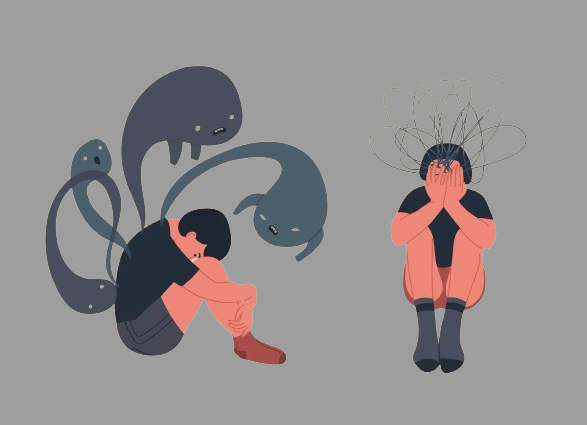
The unconscious mind is the part of mental activity that operates completely outside conscious awareness, yet still drives your emotions, habits, memories, and split-second decisions. First mapped by Sigmund Freud in the late 1800s and now studied through modern neuroscience, it explains why you flinch before you know why, dream in symbols, and repeat relationship patterns you never consciously chose.
This guide breaks down what the unconscious mind actually is, how it’s different from the “subconscious,” what Freud got right (and what’s since been revised), and practical, evidence-informed ways to work with it, not against it.
What Is the Unconscious Mind?
The unconscious mind is the storehouse of thoughts, memories, impulses, and emotions that shape behavior without you being aware of them. Unlike the conscious mind which handles active reasoning and decision-making the unconscious operates continuously in the background, influencing:
- Automatic behaviors like driving a familiar route without consciously thinking through each turn
- Emotional reactions such as tensing up at a sound before you consciously register why
- Dreams and fantasies that surface during sleep
- Long-formed habits that run on autopilot
Philosophers, including Plato, gestured toward hidden layers of the mind long before psychology existed as a science. It was Freud, however, who formalized the concept and placed it at the center of psychoanalysis.
Unconscious Mind vs. Subconscious Mind: What’s the Difference?
This is the question most searches around this topic are really asking and most articles skip it. In clinical and academic psychology, “unconscious” is the technical, Freud-derived term for mental content that is inaccessible to awareness (repressed memories, primal drives). “Subconscious” is a popular-psychology term, more common in self-help and coaching contexts, often used loosely to describe thoughts just below the surface of attention things you could become aware of with focus, like a habit you’ve never examined.
In short: the unconscious is largely inaccessible without therapeutic work; the “subconscious” (as popularly used) is more like background awareness you can bring forward with attention. For a deeper side-by-side, see our full comparison: Conscious Mind vs. Unconscious Mind: Key Differences.
How the Unconscious Mind Affects Your Health
The unconscious doesn’t stay confined to the mind it shows up in the body through the mind-body connection, where unresolved emotional material translates into physical symptoms.

1. Stress and Physical Health
Unconscious fear or unresolved trauma can trigger stress responses that raise cortisol, weaken immunity, elevate blood pressure, and disrupt digestion even when you can’t consciously name the source.
2. Psychosomatic Illness
The unconscious can express distress through physical symptoms headaches, stomach pain, fatigue that appear even when medical testing finds nothing structurally wrong.
3. Habits and Lifestyle
Reaching for comfort food, avoiding exercise, or reaching for a cigarette are frequently driven by unconscious emotional needs rather than deliberate, rational choice.
4. Healing and Recovery
Engaging the unconscious through hypnotherapy, meditation, and psychodynamic approaches can measurably reduce stress and support emotional resilience.
Real-Life Examples of the Unconscious Mind at Work
- Dreams: symbolic narratives that reflect hidden thoughts and unresolved emotions see our full psychology of dreams guide.
- Freudian slips: accidental word substitutions that can reveal an underlying feeling
- Automatic skills: typing, walking, or playing an instrument with no conscious effort
- Emotional reactions: feeling anxious around a new person for no traceable reason
- Repeating patterns: unconsciously choosing partners who echo a parent, or other patterns rooted in repressed trauma.
Freud’s Theory of the Unconscious Mind
Freud, the father of psychoanalysis, described the mind as an iceberg the small visible tip is conscious awareness, while the much larger mass beneath the surface is unconscious.
Freud’s Model of the Mind
- Id primitive desires and instincts (hunger, aggression, pleasure)
- Ego the rational, conscious self that balances desire against reality
- Superego the internalized moral conscience shaped by upbringing and society
Defense Mechanisms
The unconscious uses mechanisms like repression, denial, and projection to shield the conscious mind from anxiety for example, someone struggling with their own anger may unconsciously project hostility onto others instead of acknowledging it.
Psychoanalysis and the Unconscious
Freud developed psychoanalysis to surface unconscious material through free association, dream interpretation, and transference in therapy.
Is Freud’s Theory Still Accepted Today?
Modern clinical psychology treats classical psychoanalysis as historically foundational but scientifically incomplete many of Freud’s specific claims aren’t empirically testable. What has held up, and is now supported by neuroscience, is the broader premise: a large share of mental processing genuinely happens outside conscious awareness.
Beyond Freud: Modern Psychology and Neuroscience of the Unconscious
- Carl Jung introduced the collective unconscious shared symbols and archetypes across humanity.
- Cognitive psychology studies implicit memory, automatic processing, and cognitive/implicit bias the modern, evidence-based descendants of Freud’s ideas.
- Neuroscience shows the brain often initiates a decision milliseconds before conscious awareness catches up, and links unconscious processing to neuroplasticity the brain’s capacity to rewire itself, covered in depth in our neuroplasticity guide.
The Unconscious Mind in Daily Life
1. Intuition and Gut Feelings
That “gut instinct” is often unconscious pattern recognition drawn from past experience.
2. Creativity
Artists and writers frequently trace inspiration back to unconscious processes surfaced through dreams or sudden insight.
3. Relationships and Anxiety
Unconscious biases, attachment styles, and emotional triggers shape how people connect and can also fuel subconscious fear and anxiety that feels disconnected from any obvious cause.
4. Learning and Memory
Much of learning is stored unconsciously like speaking a language fluently without consciously running through grammar rules.
Practical, Evidence-Informed Ways to Work With Your Unconscious Mind

1. Mindfulness and Meditation
Builds awareness of thoughts and emotions, making unconscious patterns easier to notice in the moment.
2. Therapy
Psychodynamic therapy, CBT, and hypnotherapy are structured ways to bring unconscious conflicts into conscious awareness.
3. Journaling and Dream Work
Recording dreams or daily reflections helps surface unconscious material over time.
4. Positive Affirmations
Repeated, believable positive statements can gradually shift unconscious beliefs and habits.
5. Creative Expression
Art, music, and writing give unconscious ideas and emotions a route into conscious form.
Frequently Asked Questions
What is the unconscious mind in simple terms?
It’s the part of your mental activity you’re not aware of the thoughts, memories, and instincts that influence your behavior, emotions, and decisions without your conscious input.
What is an example of the unconscious mind?
Dreaming, a Freudian slip, driving a familiar route on autopilot, or unconsciously repeating a relationship pattern from childhood are all everyday examples.
Is the subconscious mind the same as the unconscious mind?
Not exactly. “Unconscious” is the clinical term for content that’s largely inaccessible without therapeutic work; “subconscious” is a popular-psychology term for background thoughts you could bring into awareness with focused attention.
What did Freud believe about the unconscious mind?
Freud believed the unconscious houses repressed desires, unresolved conflicts, and instinctual drives (the id) that shape behavior and personality, often defended against through mechanisms like repression and denial.
Can you control your unconscious mind?
Not directly, but you can influence it through therapy, mindfulness, journaling, and repeated positive practice by gradually making unconscious patterns conscious enough to work with.
How do therapists access the unconscious mind?
Common methods include free association, dream interpretation, psychodynamic therapy, hypnotherapy, and techniques like EMDR that are designed to surface unconscious or repressed material.
Conclusion: Embracing the Power of the Unconscious
The unconscious mind isn’t a mysterious force to fear it’s a powerful, largely automatic system shaping your health, habits, emotions, and creativity. From Freud’s foundational theories to modern neuroscience, understanding how it works and how it differs from the more casual idea of the “subconscious” gives you a genuine tool for self-awareness and change.
|
Written by Adil Farooq | Clinical Psychology from the University of Lahore, [ PsyD, LCSW] |