Quick AnswerYes, it is entirely possible to have anxiety without feeling anxious. This occurs when your autonomic nervous system triggers a physical stress response, such as a racing heart, shortness of breath, or muscle tension, without your conscious mind experiencing emotional fear or worry. Clinically known as somatic anxiety, this mind-body disconnect is often driven by subconscious stress, suppressed emotions, or a hypersensitive fight-or-flight response. |
The disconnect between the body and mind can be deeply confusing. People often assume that anxiety must announce itself with racing thoughts or cognitive rumination. However, anxiety is not a singular experience. It is produced by overlapping biological and psychological systems, including the autonomic nervous system, the hypothalamic-pituitary-adrenal (HPA) axis, and conscious emotional processing, which do not always activate simultaneously.
Key Takeaways: Somatic Anxiety
- The Biological Mechanism: The nervous system releases adrenaline and cortisol before the prefrontal cortex processes any conscious fear.
- Primary Drivers: Subconscious stress, alexithymia (difficulty naming emotions), and chronic emotional suppression are common psychological drivers of physical-only anxiety.
- Medical Workup Required: It is critical to rule out physiological mimics, such as thyroid disorders or dysautonomia (POTS), before concluding physical symptoms are purely psychosomatic.
- Effective Treatment: “Bottom-up” therapies like interoceptive exposure and somatic experiencing consistently outperform traditional cognitive talk therapy for managing purely physical anxiety symptoms.
What “Anxiety Without Feeling Anxious” Actually Means
Anxiety is typically understood in two distinct layers: the cognitive/emotional layer (dread, panic, catastrophic thinking) and the physiological layer (rapid pulse, sweating, muscle tremors). While most individuals experience both layers concurrently, they are driven by entirely separate neural pathways. One can easily activate without the other reaching conscious awareness.
A significant factor in this mind-body disconnect is interoception, which is the brain’s ability to sense, interpret, and integrate signals from inside the body. Someone with reduced interoceptive awareness might register a fast heartbeat or a knot in their stomach but fail to connect it to the label of being “anxious.”
This phenomenon heavily overlaps with alexithymia, a well-documented subclinical trait characterized by a severe difficulty in identifying and describing one’s own emotions. Individuals with high alexithymic traits tend to experience psychological stress purely as physical discomfort, leaving somatic stress symptoms floating free of any conscious emotional feeling.
The Neurobiology: Why Your Body Reacts First
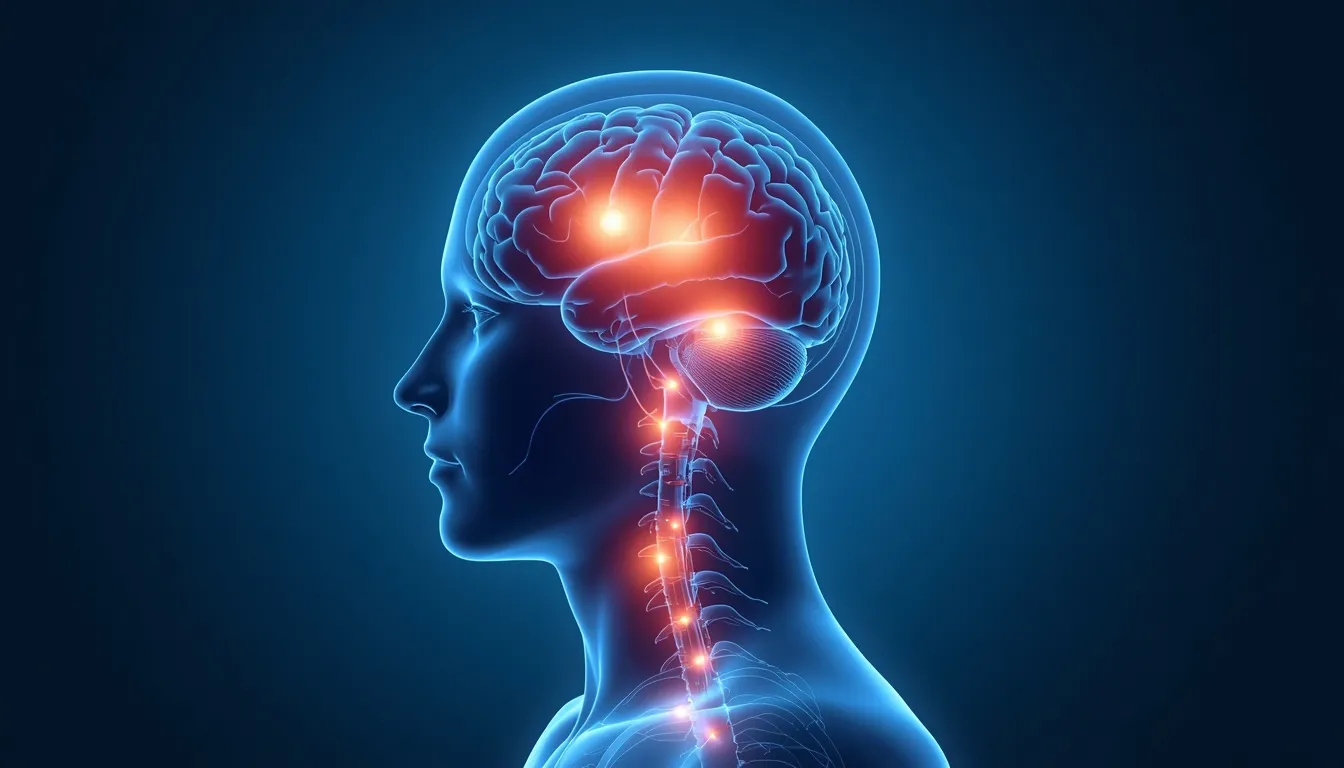
To understand why the body can launch into a panic state while the mind remains calm, we must look at the brain’s threat-detection architecture. The sympathetic nervous system, the branch responsible for the fight-or-flight response, does not wait for permission or validation from conscious thought.
The amygdala processes potential dangers in milliseconds. If it detects a threat, it immediately signals the hypothalamus to activate the sympathetic nervous system. This creates a rapid cascade of stress hormones, primarily adrenaline and cortisol, flooding the bloodstream before the prefrontal cortex (the logical, thinking part of the brain) has finished evaluating whether a real threat exists.
This mechanism is especially prominent when the trigger is rooted in subconscious fear, a stressor that is subtle, deeply ingrained, or tied to unresolved past trauma. In these scenarios, the body mounts a full defensive response, but because the conscious mind has not identified a clear and present danger, it stays largely unaware that anything is psychologically wrong.
Physical Signs of Anxiety You Might Not Recognize
Even without an identifiable emotional trigger, somatic anxiety presents through a highly consistent set of physiological markers. Because there is no cognitive worry attached, these signs are frequently misattributed to general fatigue, poor sleep, or an impending illness.
Common physical anxiety symptoms include:
- Cardiovascular: Heart palpitations, a noticeably fast resting pulse (tachycardia), or a heavy, tightening sensation in the chest.
- Musculoskeletal: Chronic muscle tension (especially in the jaw, neck, and shoulders), unexplained shaking, or psychogenic tremors.
- Respiratory: Shallow, quick breathing, or a sensation of “air hunger” (feeling unable to get a full, satisfying breath).
- Gastrointestinal: Nausea, chronic indigestion, IBS flare-ups, or a persistent knot in the stomach caused by restricted blood flow to the gut during stress responses.
- Neurological: Sudden dizziness, lightheadedness, or tension headaches.
- Thermoregulatory: Sweating or sudden hot flashes that are completely unrelated to the environmental temperature or physical exertion.

Physiological Mimics: When It Is Not Anxiety
Because somatic anxiety manifests entirely in the body, it is essential to distinguish between nervous system dysregulation and organic medical conditions. Experiencing physical distress without emotional worry is often the first sign of an underlying physiological imbalance.
Before assuming your symptoms are psychological, a primary care physician should evaluate you for the following medical mimics:
- Endocrine Imbalances: Hyperthyroidism and thyroid storms cause excess thyroxine production, driving a resting tachycardia, weight loss, and heat intolerance that mimic a physical panic attack.
- Autonomic Disorders: Postural Orthostatic Tachycardia Syndrome (POTS) and general dysautonomia cause severe heart rate spikes (30+ BPM) upon standing, accompanied by blood pooling and lightheadedness.
- Cardiac Dysrhythmias: Inappropriate sinus tachycardia (IST) or paroxysmal supraventricular tachycardia (PSVT) can cause sudden, intense palpitations while resting or sleeping.
- Pharmacological Triggers: High caffeine intake, stimulant medications (like ADHD treatments), bronchodilators, or SSRI-induced akathisia can trigger systemic adrenergic surges without any psychological distress.
|
Diagnostic Feature |
Cognitive Anxiety (Traditional) |
Somatic Anxiety (Physical-Only) |
Medical Mimic (e.g., POTS, Thyroid) |
|
Primary Sensation |
Dread, catastrophic thoughts, rumination |
Heart racing, tight chest, muscle tremors |
Tachycardia, heat intolerance, positional dizziness |
|
Conscious Trigger |
Identifiable worry, stressor, or anticipatory fear |
Subconscious stress, nervous system dysregulation |
Physiological (posture changes, hormonal shifts) |
|
Mental State |
Agitated, overwhelmed, focused on risk |
Mentally calm, often confused by bodily reactions |
Emotionally baseline until physical symptoms peak |
|
Response to Breathing |
Gradual reduction in cognitive spiral |
Rapid physical de-escalation via the vagus nerve |
Minimal to no change in baseline vital signs |
The Subconscious Mind and Hidden Anxiety
Sometimes, the mind actively keeps anxiety out of conscious awareness as a form of self-preservation. Repression and suppression are potent protective mechanisms; the brain may block a difficult emotion, chronic stressor, or traumatic memory from surfacing because processing it directly feels overwhelming.
The fundamental problem is that the body does not get the same memo. It continues reacting as if the stressor is still active and dangerous, producing somatic symptoms with no obvious emotional counterpart. This is common in individuals who were conditioned in childhood to hide negative emotions, punishing themselves for showing vulnerability. The emotional distress is compartmentalized, but the nervous system remains chronically, silently stimulated.
Could This Be an Undiagnosed Anxiety Disorder?
Occasional physical-only anxiety is a normal human experience and is not automatically indicative of a clinical disorder. However, when these symptoms become frequent, persist for six months or longer, or begin to interfere with your daily functioning and quality of life, they cross a diagnostic threshold.
This presentation is highly consistent with generalized anxiety disorder (GAD) or Somatic Symptom Disorder, as outlined in the American Psychiatric Association’s DSM-5-TR, even in the complete absence of the classic emotional worry most people expect. It is also distinctly different from a standard panic attack. While panic attacks are sudden, intense, and time-limited, somatic anxiety tends to be lower-grade and constant, a background hum of physiological tension rather than an acute, terrifying spike.
Targeted Treatments for Somatic Symptoms: Bottom-Up Regulation
Because this specific type of anxiety is not triggered by an identifiable, conscious thought, cognitive-first strategies (like traditional talk therapy) often fall short. You cannot “talk your way out” of a physiological adrenaline surge that has no cognitive basis.
Instead, “bottom-up” regulation, using the body to signal safety to the brain, is the gold standard for clinical treatment.
1. Interoceptive Exposure Therapy
A highly specialized branch of Cognitive Behavioral Therapy (CBT), interoceptive exposure is designed to systematically desensitize your brain to uncomfortable bodily sensations. Under clinical guidance, patients intentionally simulate anxiety symptoms in a safe environment (such as hyperventilating into a straw to induce dizziness, or running in place to spike heart rate). This trains the amygdala to stop misinterpreting normal physiological shifts as immediate, life-threatening dangers.
2. Somatic Experiencing (SE)
Developed by trauma specialist Dr. Peter Levine, Somatic Experiencing focuses entirely on tracking bodily sensations rather than analyzing cognitive thoughts. SE practitioners help patients safely access their physical tension, allowing the autonomic nervous system to complete truncated fight-or-flight stress cycles and permanently discharge trapped physiological activation.
3. Vagal Toning and Parasympathetic Activation
The fastest biological pathway to suppress an acute physical anxiety attack is to activate the parasympathetic nervous system (the “rest and digest” state) through the vagus nerve. Utilizing vagus nerve exercises, such as the “physiological sigh” (two rapid nasal inhalations followed by a long, slow mouth exhalation), cold water exposure to the face, or deep diaphragmatic breathing, directly signals the heart’s pacemaker cells to slow down within seconds.

When to See a Professional
If you are dealing with anxiety without feeling anxious emotionally, your first step should always be to consult a primary care physician to run standard blood panels (thyroid, iron, hormones) and an ECG to rule out the medical mimics mentioned above.
Once physiological conditions have been explicitly excluded, seek out a licensed mental health professional, such as a psychiatrist, clinical psychologist, or specialized somatic therapist. They can properly assess whether an underlying anxiety disorder is driving your physical symptoms and recommend an evidence-based treatment plan tailored strictly to nervous system regulation.
Recognizing that your body can be in a state of high anxiety even when your mind feels perfectly calm is a vital first step toward reclaiming your health and finding lasting relief.
Frequently Asked Questions
Can you have anxiety without feeling anxious?
Yes. Anxiety can activate the body’s physical stress response, causing a racing heart, sweating, or severe muscle tension, without ever triggering the emotional experience of fear, dread, or worry. This is known clinically as somatic anxiety, and it occurs because physical and emotional anxiety are controlled by different, loosely connected systems in the brain.
What is silent or hidden anxiety?
Silent anxiety refers to a state where anxiety manifests almost exclusively through physical symptoms (fatigue, digestive upset, restlessness, tension) while the individual does not consciously identify as feeling anxious. It is highly common in individuals who suppress their emotional expression or have reduced interoceptive awareness.
Why does my body feel anxious but my mind feels calm?
This mind-body disconnect happens when the sympathetic nervous system activates in response to a subconscious stressor that the conscious mind has not registered, such as accumulated daily stress, an unresolved worry, or a subtle environmental trigger. The body reacts automatically with adrenaline, while the cognitive “labeling” of that emotion never fully arrives.
Can subconscious anxiety cause real physical symptoms?
Yes. Stress hormones like adrenaline and cortisol impact the body regardless of whether a person consciously feels afraid. Subconscious anxiety produces genuine, measurable physical symptoms, such as palpitations, tension headaches, and gastrointestinal upset, that are just as real and damaging as symptoms tied to conscious worry.
Is it possible to have an anxiety disorder and not know it?
Yes, particularly when the symptoms are mostly physical. Many people with undiagnosed generalized anxiety disorder (GAD) attribute their racing heartbeats, chronic dizziness, or severe muscle tension to physical health issues rather than mental health, especially if they rarely experience overt panic or fear.
How do you calm physical anxiety symptoms when you don’t feel emotionally anxious?
Body-first (“bottom-up”) techniques are the most effective. Slow diaphragmatic breathing, somatic grounding exercises that engage the five senses, and brief bursts of physical movement help burn off excess stress hormones and calm the nervous system directly, bypassing the need to identify an emotional trigger first.
When should I see a doctor about anxiety without feeling anxious?
You should see a doctor immediately if the physical symptoms are new, severe, or persistent, in order to rule out underlying medical causes like thyroid dysfunction or cardiac conditions. If medical causes are ruled out, a mental health professional can provide specialized therapies to regulate your nervous system.
Medical Disclaimer & E-E-A-T AttributionThis article is for educational purposes and does not replace personalized medical or psychological advice. If you are recovering from a brain injury, trauma, or a mental health condition, work with a licensed clinician to build a plan suited to your situation. Written by: Adil Farooq, Psychiatry Magazine Medically reviewed by: [Dr. Adil Farooq MS · PhD] · Updated: 2026 |