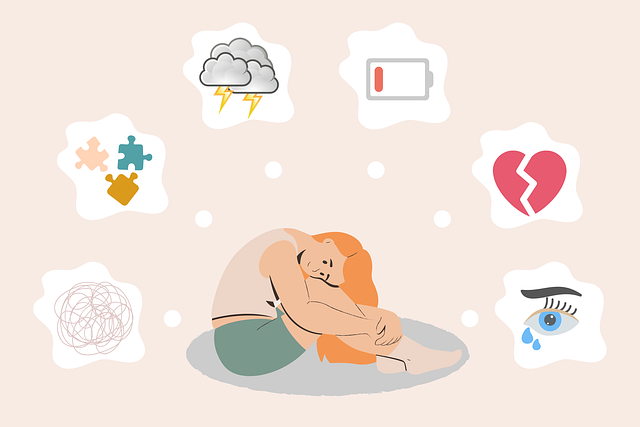
Quick Answer: What is Couples Counseling for New Parents?Couples counseling for new parents is a specialized form of relationship counseling designed to help partners navigate the sleep deprivation, role shifts, and emotional strain that follow a baby’s arrival. Using evidence-based frameworks like the Gottman Method and Emotionally Focused Therapy (EFT), a licensed therapist helps couples rebuild communication, redistribute the mental load, and restore intimacy. Research shows most couples report meaningful improvement within 8–12 sessions, and starting early, before contempt sets in, improves outcomes significantly. |
Why New Parenthood Puts Even Strong Relationships Under Strain
Bringing a baby home rewires more than your schedule it rewires your relationship. Sleep loss, shifting roles, and the sheer intensity of caring for a newborn can turn even a rock-solid partnership into a minefield of short tempers and missed connection.
Relationship researchers have tracked this pattern for decades: marital satisfaction tends to drop measurably in the first year after a baby arrives, even among couples who described their relationship as happy beforehand. This isn’t a sign of a “bad” relationship it’s a predictable, well-documented response to an enormous life transition.
Three foundational forces tend to collide at once:
- Sleep deprivation: Chronic exhaustion impairs emotional regulation in the brain’s prefrontal cortex, making small frustrations feel enormous.
- Identity disruption: Sometimes called matrescence (for mothers) or patrescence (for fathers), this psychological phase reshapes how each partner sees themselves and each other.
- Role renegotiation: The sheer volume of caregiving forces couples to redefine who does what, often for the first time in their relationship.
The Invisible Weight: The Mental Load No One Talks About
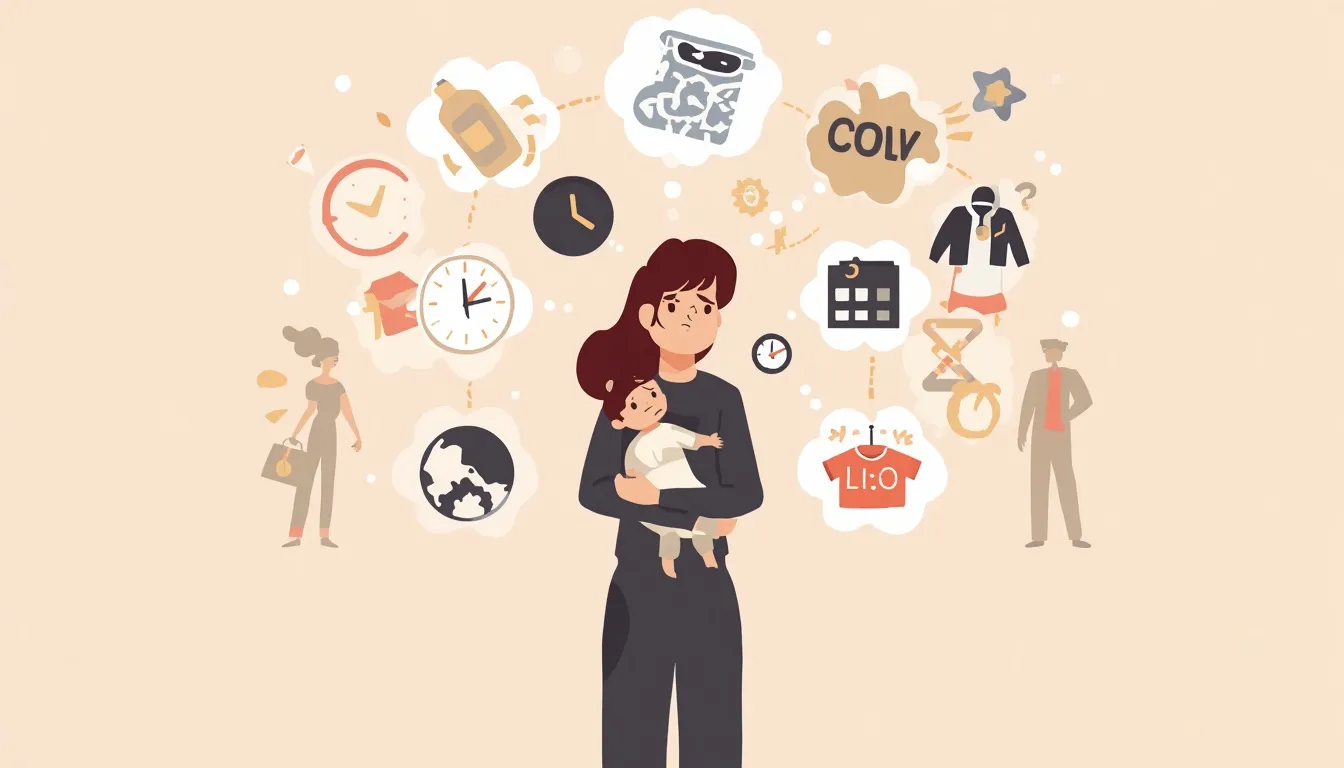
Much of the postpartum strain isn’t just about who changes more diapers. It’s about the invisible cognitive labor remembering pediatrician appointments, tracking nap schedules, rotating baby clothes, and anticipating what the infant needs next that one partner often carries entirely alone.
This imbalance, sometimes called the “mental load,” is one of the most common flashpoints couples counselors see in new-parent clients. It is a unique form of exhaustion. Left unaddressed, it breeds quiet resentment long before either partner can actively name what’s wrong. Therapy provides a neutral ground to audit this mental load and create a fair, transparent division of household labor.
How Attachment Styles and Anxiety Resurface After Baby
The stress of new parenthood does not just create new problems; it tends to activate each partner’s underlying, pre-existing attachment patterns. If you recognize signs you have an anxious attachment style, you may crave more emotional reassurance and closeness precisely when your partner is too physically depleted to provide it. Conversely, a partner with an avoidant attachment style may withdraw further into themselves or their work under the intense pressure of a crying infant.
Understanding these patterns is often the fastest route to de-escalating conflict, because most postpartum arguments aren’t really about the dishes or the diaper bag. They’re about deeper, subconscious needs for security and validation showing up in a new, high-stress context.
Navigating Birth Trauma and Postpartum PTSD
A highly searched, yet rarely discussed, aspect of postpartum relationship strain involves trauma. When a delivery involves severe medical complications, emergency interventions, or threats to the life of the mother or baby, the resulting psychological shock can linger long after the physical wounds heal.
This often leads parents to seek couples therapy for trauma. Birth trauma can trigger postpartum PTSD, causing one or both partners to experience flashbacks, hypervigilance, and emotional numbing. In a relationship, this might look like a mother feeling entirely disconnected from her body and her partner, or a father harboring unresolved terror from watching his partner in medical distress. Healing from this requires specialized, trauma-informed couples counseling that addresses the nervous system’s response before attempting to fix standard communication issues.
Postpartum Depression, Anxiety, and Your Relationship
Beyond trauma, maternal mental health has a direct, measurable effect on relationship quality and vice versa. Recognizing symptoms of postpartum depression early, in either partner, is essential, since untreated postpartum mood disorders are strongly associated with declining relationship satisfaction.
It is also crucial to note that partners (including fathers and non-gestational parents) can also experience postpartum depression and anxiety. Couples counseling frequently works alongside individual mental health treatment rather than replacing it to ensure the family unit is comprehensively supported.
Signs Your Relationship Needs More Than “Time”
Some friction after baby is universal, and couples are often told to “just give it time”. However, if you find yourselves wondering why relationships feel complicated and deep to the point of daily despair, waiting out the clock is not the answer.
These signs suggest professional support could help before destructive patterns calcify:
- Arguments about the same unresolved issue (usually chores, money, or sleep) on an endless loop.
- One or both partners feeling profoundly emotionally alone despite living together.
- A sharp drop in physical affection or a complete, unspoken pause on intimacy.
- Increasing criticism, defensiveness, or contempt in everyday conversation.
- Parallel parenting coexisting as co-managers of logistics rather than as a romantic couple.
- Avoiding difficult conversations altogether to “keep the peace”.
If several of these feel familiar, it’s a signal that intervention is needed, not a verdict on the relationship’s future.
What Is Couples Counseling for New Parents?
Couples counseling for new parents is a specialized form of couples therapy that addresses the specific stressors of the postpartum period. It’s less about relitigating the past and more about building a functional partnership under new, demanding conditions.
Marriage Counseling vs. Couples Therapy
Many new parents wonder about the difference between marriage counseling vs couples therapy. While the terms are frequently used interchangeably in public search queries, clinical professionals sometimes draw slight distinctions. “Marriage counseling” historically focuses on immediate, present-day problem solving (like division of labor and logistics). “Couples therapy” tends to dive deeper into historical patterns, family-of-origin issues, and attachment wounds. Fortunately, modern relationship counselors for new parents blend both: fixing the immediate logistical fires while healing the deeper emotional disconnect.
What to Expect in Your First Session
A common search query is what to expect from relationship counselling. The first session is rarely about diving into your deepest arguments. Instead, it is an intake and assessment phase.
- The Joint Interview: The therapist will ask about your relationship history, how you met, and what the transition to parenthood has been like.
- Goal Setting: You will collaboratively define what success looks like (e.g., “We want to stop fighting about night feedings”).
- Safety Assessment: The therapist will screen for postpartum mood disorders, intimate partner violence, and severe substance use to ensure couples therapy is the appropriate modality.
Evidence-Based Approaches Therapists Use
Therapists do not just listen and nod; they use specific frameworks to rebuild your bond. Two frameworks dominate the research on relationship interventions for new parents:
- The Gottman Method: Developed from decades of observational research on couples, this method focuses on building a “sound relationship house” through structured communication exercises and conflict-management skills.
- Emotionally Focused Therapy (EFT): This approach targets the attachment-based emotional cycles driving conflict, helping partners access the vulnerable needs underneath their defensive behavior (like anger or withdrawal).
Actionable Couples Counseling Exercises You Can Try Today
Therapy works faster when it’s reinforced at home. A few evidence-backed couples counseling exercises new parents can start immediately include:
- The 10-Minute Nightly Check-In: No problem-solving allowed. Just share how the day felt emotionally.
- The Division-of-Labor Audit: Sit down and rewrite the chore list explicitly together, rather than assuming it will sort itself out.
- The Five-Minute Affection Rule: Protect five minutes of physical affection daily a hug or a hand on the shoulder completely separate from any expectation of sex.
- Name It to Tame It: Name your fatigue out loud before it turns into criticism. “I’m running on empty” lands much better than silence followed by snapping.
- Micro-Dates: Schedule the relationship, not just the baby. Even a 20-minute walk around the block together counts as connection time.
How to Bring It Up With Your Partner
Suggesting therapy can feel loaded, especially when everyone’s exhausted. Framing it as proactive care, rather than a crisis response, tends to land better.
Try language like:
- “I love us, and I want us to have tools for this season, not just grit our teeth through it.”
- “A lot of couples use counseling after a baby. It’s not about something being broken.”
- “Can we try a few sessions together, just to get some outside support?”
Online vs. In-Person Couples Counseling for New Parents
For sleep-deprived parents juggling feeding schedules and unpredictable naps, getting to a therapist’s office twice a month can be its own barrier. This is where online couples and relationship counselling has become a highly practical, stress-free option for many new families.
Virtual sessions offer:
- The flexibility to meet during nap windows or after the baby is asleep.
- No commute or childcare logistics added to an already full schedule.
- Access to specialized, highly trained new-parent therapists regardless of your geographical location.
Either format works, provided the therapist has specific experience with the postpartum transition and perinatal mental health.

Cost and Insurance: What New Parents Should Know
Cost is one of the top questions new parents ask before booking a first session. Coverage varies significantly by provider and plan, but a few patterns hold generally true:
- Many insurance plans cover couples counseling only when it’s billed under an individual mental health diagnosis, such as postpartum depression or anxiety, for one partner.
- Out-of-pocket rates for licensed therapists typically range from $100–$250 per session, though sliding-scale and affordable online couples counseling networks can lower that significantly.
- It’s worth calling your insurer directly and asking specifically whether “family or relational therapy” (CPT Code 90847) is covered under your plan.
When to Seek Individual Support Too
Couples counseling isn’t a substitute for individual mental health treatment when one partner is struggling significantly. Persistent sadness, intrusive thoughts, panic, or a loss of interest in the baby or partner all warrant an individual evaluation alongside any couples work.
Since insecure attachment patterns can intensify both individual distress and relational conflict, some new parents also benefit from individual therapy before or alongside couples sessions.
The Bottom Line
A strained relationship after baby isn’t a failure it’s one of the most common, predictable transitions a partnership faces. Couples counseling for new parents gives you a structured way to protect what you built together, long before small frustrations harden into permanent distance.
Frequently Asked Questions (FAQ)
What is couples counseling for new parents?
It’s a form of couples therapy focused specifically on the challenges of the postpartum period sleep deprivation, role changes, division of labor, and rebuilding intimacy rather than general or premarital relationship issues.
Does couples counseling actually work after having a baby?
Most couples report measurable improvement, especially when they start before conflict patterns become entrenched. Consistency and both partners’ active participation matter more than the specific technique used.
Is couples counseling covered by insurance?
Sometimes, but usually only when billed under an individual diagnosis like postpartum depression or anxiety. Check directly with your insurer about “family therapy” or “relational” billing codes.
How is this different from regular marriage counseling?
New-parent-focused counseling adds a developmental lens addressing sleep, division of labor, and postpartum identity shifts on top of the communication and conflict-resolution work found in general marriage counseling.
Can online couples counseling really help new parents?
Yes. Research on telehealth relationship counseling shows outcomes comparable to in-person therapy, and the added flexibility often means new parents actually attend sessions consistently instead of skipping them.
| Medical Disclaimer & E-E-A-T AttributionThis article is for educational purposes and does not replace personalized medical or psychological advice. If you are recovering from a brain injury, trauma, or a mental health condition, work with a licensed clinician to build a plan suited to your situation.
Written by: Adil Farooq, Psychiatry Magazine Medically reviewed by: [Dr. Adil Farooq MS · PhD] · Updated: 2026 |