Most couples don’t walk into a therapist’s office because they’ve stopped loving each other. They walk in because they’ve stopped being able to talk to each other without it turning into a fight, a shutdown, or a wall of silence. Couples counseling for communication problems is one of the most requested—and most misunderstood—forms of therapy. Many partners assume it means a stranger will “referee” their arguments. In practice, effective communication-focused couples counseling is a structured, evidence-based process that retrains how two people listen, express needs, and repair conflict before it erodes the relationship.
This guide breaks down what actually happens in couples counseling for communication issues, the clinical models with the strongest evidence base, the specific skills therapists teach, and how to know if it’s the right next step for your relationship.
Quick Answer for Fast Readers
-
The Core Focus: Relationship counseling for communication targets the underlying mechanics of arguments, replacing reactive hostility with structured active listening.
-
The Four Horsemen: Clinical approaches, specifically Gottman method couples counseling, identify and eliminate the four predictors of relational failure: criticism, contempt, defensiveness, and stonewalling.
-
Physiological Flooding: Therapists teach couples how to recognize when their nervous systems are overwhelmed and how to de-escalate before causing lasting emotional damage.
-
Accessible Care: Intervening early is critical. Whether through traditional in-office visits or telehealth, seeking structured support prevents communication issues from becoming unresolvable.
What Is Couples Counseling for Communication Problems?
Couples counseling for communication problems is a form of relationship therapy that targets the specific patterns—not just the topics—couples argue about. A licensed marriage and family therapist, psychologist, or clinical social worker helps partners identify destructive communication cycles (such as criticism met with defensiveness, or pursuit met with withdrawal), understand the emotional needs driving those cycles, and practice new ways of speaking and listening that reduce conflict and rebuild emotional safety.
Unlike general talk therapy, communication-focused couples work is typically structured around observable behaviors: how partners bring up complaints, how they respond to feedback, how quickly conflict escalates, and how effectively they repair after a disagreement. The goal isn’t to eliminate conflict—all couples disagree—but to change how conflict is handled so it stops causing lasting damage.
Why Communication Breaks Down: The Gottman Four Horsemen
Decades of observational research by Drs. John and Julie Gottman identified four communication patterns that most reliably predict relationship distress and, left unaddressed, separation. Clinicians often introduce these patterns early in treatment because naming them gives couples language for what’s happening in real time.
Criticism
Criticism attacks a partner’s character rather than addressing a specific behavior. “You never think about anyone but yourself” is criticism; “I felt hurt when you didn’t tell me you’d be late” is a complaint. The distinction matters clinically—complaints can be resolved, but character attacks put a partner on the defensive before the actual issue is even discussed.
Contempt
Contempt—sarcasm, mockery, eye-rolling, name-calling, or treating a partner with disrespect—is considered the single most corrosive of the four patterns. It communicates disgust and superiority rather than disagreement, and it is the strongest predictor of relational breakdown identified in Gottman’s research. Left untreated, contempt also erodes physical health, as chronic hostility keeps the body in a prolonged stress response.
Defensiveness
Defensiveness is a self-protective reaction to perceived attack—deflecting blame, making excuses, or responding to a complaint with a counter-complaint. While understandable as an instinct, defensiveness prevents a partner from ever feeling heard, which keeps the original issue unresolved and often escalates the conflict.
Stonewalling
Stonewalling is emotional withdrawal from an interaction—going silent, turning away, or physically leaving. It’s frequently a response to feeling emotionally overwhelmed rather than a deliberate punishment, which is why understanding the physiology behind it is a core part of effective treatment.
The Hidden Driver: Physiological Flooding and Emotional De-escalation
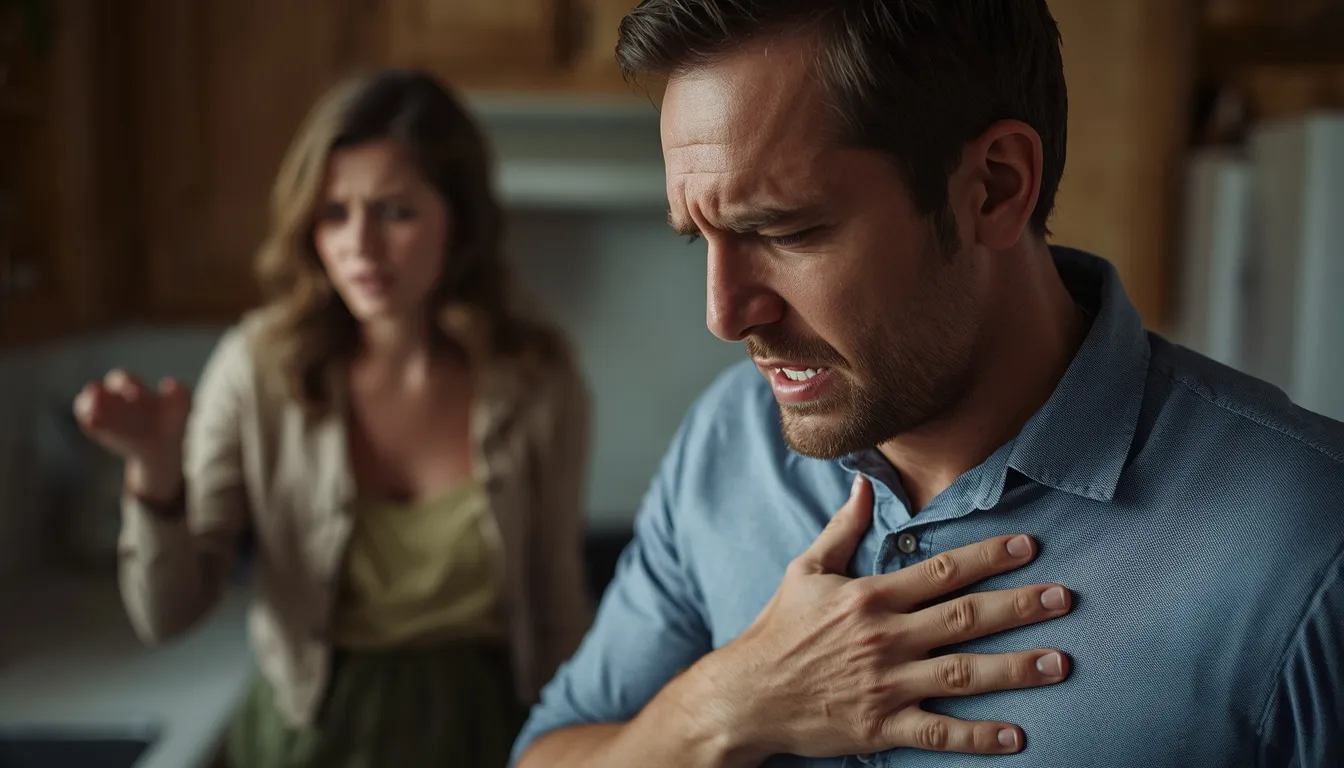
One of the most clinically useful concepts in couples counseling for communication problems is physiological flooding—a state in which the nervous system perceives conflict as a threat and triggers a fight-or-flight response. Heart rate spikes, cortisol rises, and the brain’s capacity for rational problem-solving and empathy sharply decreases. In this state, a person is neurologically incapable of the active listening or reasoned negotiation a productive conversation requires.
This is why couples often report the same argument “going nowhere” no matter how many times they have it: once either partner is flooded, no communication technique will land until the nervous system calms down. Effective counseling teaches couples to recognize the early physical signs of flooding—a racing heart, tightening chest, or the urge to interrupt or flee—and to use structured self-soothing breaks (typically 20–30 minutes, long enough for cortisol to metabolize) before resuming the conversation. This deliberate pause-and-return process requires strong emotional regulation skills and is the foundation of emotional de-escalation. Therapists often help couples build an explicit “time-out” agreement so a break isn’t mistaken for stonewalling or avoidance.
Evidence-Based Approaches That Actually Help
Not all couples therapy is created equal. The approaches with the strongest research support share a common thread: they treat communication breakdown as a learnable pattern, not a fixed personality mismatch.
The Gottman Method
Gottman Method Couples Therapy is built directly on the research described above. Sessions typically begin with a structured assessment of the relationship’s strengths and vulnerabilities, followed by targeted interventions for the specific horsemen present in the relationship, exercises to increase fondness and admiration, and structured tools—such as the “softened startup” and repair checklist—for raising issues without triggering defensiveness. It’s especially well suited to couples whose communication problems show up as recurring, escalating arguments.
Emotionally Focused Therapy (EFT)
Emotionally Focused Therapy approaches communication breakdown as a symptom of attachment insecurity. Rather than focusing primarily on the content of arguments, an EFT therapist helps each partner identify and express the vulnerable emotions—fear of abandonment, feeling unimportant, fear of failure—hiding underneath anger or withdrawal. Couples learn to recognize their negative interaction cycle (for example, one partner pursues and criticizes while the other withdraws and shuts down) and to replace it with more direct, vulnerable communication that draws partners closer instead of pushing them apart. EFT has one of the strongest outcome-research bases of any couples intervention, particularly for rebuilding emotional connection after prolonged conflict.
Cognitive Behavioral Couples Therapy
Cognitive Behavioral Couples Therapy (CBCT) applies core CBT principles to relationship dynamics, focusing on the automatic thoughts and interpretations that fuel miscommunication. A partner who assumes “she’s ignoring me on purpose” will respond very differently than one who considers “she might just be stressed from work”. Therapists use cognitive restructuring to help partners identify these distorted assumptions, test them against evidence, and replace them with more accurate interpretations—a skill that reduces reactive arguments significantly over time. CBCT also incorporates behavioral exchange exercises, where partners deliberately increase specific positive actions that rebuild goodwill.
Many therapists blend elements of all three models, tailoring the mix to the couple’s specific pattern of conflict.
Core Communication Skills Taught in Counseling
Regardless of the modality, most communication-focused couples counseling teaches a similar core skill set.
Active Listening and the Speaker-Listener Technique
Active listening requires fully focusing on a partner’s words, reflecting them back, and confirming understanding before responding—rather than mentally preparing a rebuttal while the other person is still talking. Many therapists use a structured Speaker-Listener technique: one partner speaks in short segments using “I” statements while holding a designated object (a literal or figurative “floor”), and the listener paraphrases what they heard before responding. This slows the conversation down enough to prevent the rapid escalation that derails most unstructured arguments.

Conflict Resolution That Preserves Connection
Effective conflict resolution in couples counseling isn’t about determining who’s “right”. Therapists teach couples to distinguish between solvable problems (which benefit from compromise and problem-solving) and perpetual problems rooted in fundamental personality or values differences (which benefit from ongoing dialogue and acceptance rather than a permanent fix). This distinction alone resolves a significant source of frustration for couples who have spent years trying to “solve” a disagreement that was never solvable in the first place.
What Happens in a Typical Session
Most couples counseling begins with one or two individual or joint assessment sessions, during which the therapist gathers history on the relationship, each partner’s communication style, and specific recurring conflicts. From there, sessions typically run 45–60 minutes weekly or biweekly and combine three elements: processing a recent conflict using the skills being taught, direct psychoeducation about patterns like the four horsemen or flooding, and structured practice of new communication techniques in the room, with real-time coaching from the therapist. Homework—practicing a technique between sessions—is standard and strongly associated with faster progress.
In-Person vs. Online Couples Counseling
Both in-person and online formats can be effective for communication-focused work, and the research on outcomes for well-structured teletherapy is increasingly comparable to in-person care for many couples. Using online couples relationship counselling platforms removes common access barriers—scheduling around two work calendars, childcare, and geography—and lets partners join sessions from the same or different physical locations, which can be especially useful for couples navigating travel, deployment, or long-distance stretches of the relationship.
In-person counseling may be preferable for couples dealing with highly volatile conflict, safety concerns, or complex trauma histories where a therapist’s ability to read body language and manage the room in real time is clinically important.
Cost, Insurance, and Access: What to Expect
Couples counseling typically costs between $100 and $250 per session out of pocket, though rates vary significantly by region, therapist credentials, and format. Whether couples counseling is covered by insurance depends heavily on the diagnosis code used and the payer: many insurance plans do not cover “relationship” or “marital” counseling directly unless it’s billed under an individual diagnosis (such as an anxiety or adjustment disorder) that the couple’s conflict is affecting. It’s worth calling your insurer directly to ask about coverage for CPT code 90847 (family psychotherapy with patient present), and to ask prospective therapists whether they’re in-network before booking.
Signs It’s Time to Seek Couples Counseling for Communication Problems
Couples counseling doesn’t require a crisis to be worthwhile, but certain patterns are strong indicators that the communication problems have outgrown what the couple can resolve on their own:
-
The same argument recurs repeatedly without resolution, often about the same underlying issue in different clothing.
-
One or both partners regularly shut down, leave the room, or go silent during disagreements.
-
Conversations escalate quickly to contempt, sarcasm, or personal attacks.
-
One or both partners feel unheard, dismissed, or emotionally alone in the relationship.
-
A significant breach of trust (infidelity, financial secrecy, dishonesty) has damaged the ability to communicate openly.
-
Partners have stopped bringing up concerns altogether because raising them “isn’t worth the fight”.
-
Physical intimacy or everyday affection has declined alongside the communication strain.
Practicing Between Sessions: Self-Help Strategies and Resources
Therapy works fastest when couples reinforce it outside the session. A few evidence-informed habits couples can start immediately: setting a weekly 20–30 minute check-in with no distractions to discuss the relationship (not just logistics); agreeing on a literal “time-out” signal either partner can use when flooding starts, with a commitment to resume the conversation once both are calm; replacing “you” statements with “I” statements when raising a concern; and deliberately naming one thing you appreciate about your partner daily, which counters the negativity bias that builds during periods of conflict. Many couples also supplement formal therapy with structured reading—a well-regarded selection of couples counseling books can reinforce session concepts and give partners shared language to use at home between appointments.
How to Choose the Right Couples Counselor
Look for a therapist with specific training in couples work—a general individual therapy background doesn’t guarantee competence in relational dynamics. Relevant credentials include Licensed Marriage and Family Therapist (LMFT), or a psychologist/clinical social worker with post-graduate training and certification in the Gottman Method or Emotionally Focused Therapy. During an initial consultation, ask directly about their approach to communication problems specifically, how they handle sessions when conflict escalates in the room, and how they measure progress. A good fit matters as much as credentials: both partners should feel the therapist is even-handed rather than siding with one person’s version of events.
FAQ: Couples Counseling for Communication Problems
Does couples counseling actually work for communication problems?
Yes, for most couples who engage consistently and practice skills between sessions. Evidence-based approaches like the Gottman Method and Emotionally Focused Therapy show meaningful improvements in relationship satisfaction and communication quality, particularly when both partners are motivated to participate rather than attending only to satisfy the other.
How long does couples counseling take to improve communication?
Many couples notice a shift in how conflicts are handled within 8–12 weekly sessions, though the timeline depends on how entrenched the patterns are, how long they’ve been present, and whether both partners complete between-session practice. Couples managing complex trust ruptures or trauma histories often need longer-term work.
Is couples counseling covered by insurance?
Sometimes, but not always, and coverage details vary by plan. Many insurers require the counseling to be billed under an individual mental health diagnosis rather than a relationship-focused code. Confirm directly with your insurance provider before your first session to avoid unexpected costs.
What’s the difference between couples counseling and marriage counseling?
The terms are largely interchangeable in practice—both refer to therapy focused on a romantic partnership. “Marriage counseling” is sometimes used specifically for legally married couples, while “couples counseling” is the broader term covering any committed relationship, married or not.
Can couples counseling help if only one partner wants to go?
It can still be useful, though outcomes are generally stronger when both partners actively participate. Individual sessions focused on the relationship, sometimes called “discernment counseling,” can help a hesitant partner understand what’s at stake and decide whether to engage in joint work.
What if we can’t stop fighting during our actual therapy sessions?
This is common in early sessions and is exactly what therapists are trained to manage. Skilled clinicians will interrupt escalating conflict, slow the pace down, and use the moment itself to teach flooding-recognition and de-escalation skills in real time rather than letting the session replicate the couple’s usual argument pattern.
The Bottom Line
Communication problems in a relationship are rarely about a lack of love—they’re almost always about a pattern that’s stopped serving both partners and hasn’t been consciously replaced with something better. Couples counseling for communication problems works by making those patterns visible, teaching the specific skills that interrupt them, and giving both partners a shared framework for repair. For couples willing to do the work, it remains one of the most effective, evidence-backed paths back to feeling heard by the person who matters most.
Medical Disclaimer & E-E-A-T AttributionThis article is for educational purposes and does not replace personalized medical or psychological advice. If you are recovering from a brain injury, trauma, or a mental health condition, work with a licensed clinician to build a plan suited to your situation. Written by: Adil Farooq, Psychiatry Magazine Medically reviewed by: [Dr. Adil Farooq MS · PhD] · Updated: 2026 |