Trauma doesn’t stay neatly filed away in memory. It surfaces as a racing heart at an unexpected sound, a child who won’t talk about what happened but draws it again and again, or an adult who can describe an event in perfect detail yet still feels the same fear every time it comes up. Standard talk therapy often struggles here, because trauma is stored in ways that resist being talked through in a straight line. This is where combining EMDR (Eye Movement Desensitization and Reprocessing) with art therapy has become one of the most effective integrative approaches for EMDR art therapy children adults trauma processing, giving both children and adults a way to access, express, and resolve traumatic memories that words alone can’t reach.
Quick AnswerCombining EMDR and art therapy pairs EMDR’s structured bilateral stimulation, the eye movements, taps, or tones that help the brain reprocess traumatic memories, with art therapy’s use of drawing, painting, sculpting, and other creative media to externalize feelings and images that are too overwhelming, too preverbal, or too fragmented for a client to say out loud. Therapists often use art-making to identify a target memory or body sensation before an EMDR set, and to process or stabilize afterward. This combined model is used with both children (who often lack the vocabulary or willingness to narrate trauma verbally) and adults (whose trauma memories may be stored as fragmented sensory or emotional material rather than a coherent story), and it is grounded in trauma’s well-documented tendency to be encoded in the brain’s right hemisphere as image and sensation rather than language. |
What Is EMDR Therapy?
EMDR is an eight-phase, evidence-based psychotherapy developed by Francine Shapiro in the late 1980s and now endorsed by the World Health Organization and the American Psychological Association as a first-line treatment for post-traumatic stress disorder (PTSD). During a typical EMDR session, a client briefly recalls a distressing memory while simultaneously experiencing bilateral stimulation, most often side-to-side eye movements, but also alternating taps or auditory tones. The dual-attention format appears to mimic elements of REM sleep processing, helping the brain move a traumatic memory from a raw, unprocessed state into an integrated one that no longer triggers the same intensity of distress.
Unlike traditional exposure-based therapies, EMDR does not require a client to describe the traumatic event in exhaustive detail or complete extensive homework between sessions, which is part of why it works so well for people, especially children, who struggle to verbalize what happened to them.
What Is Art Therapy for Trauma?
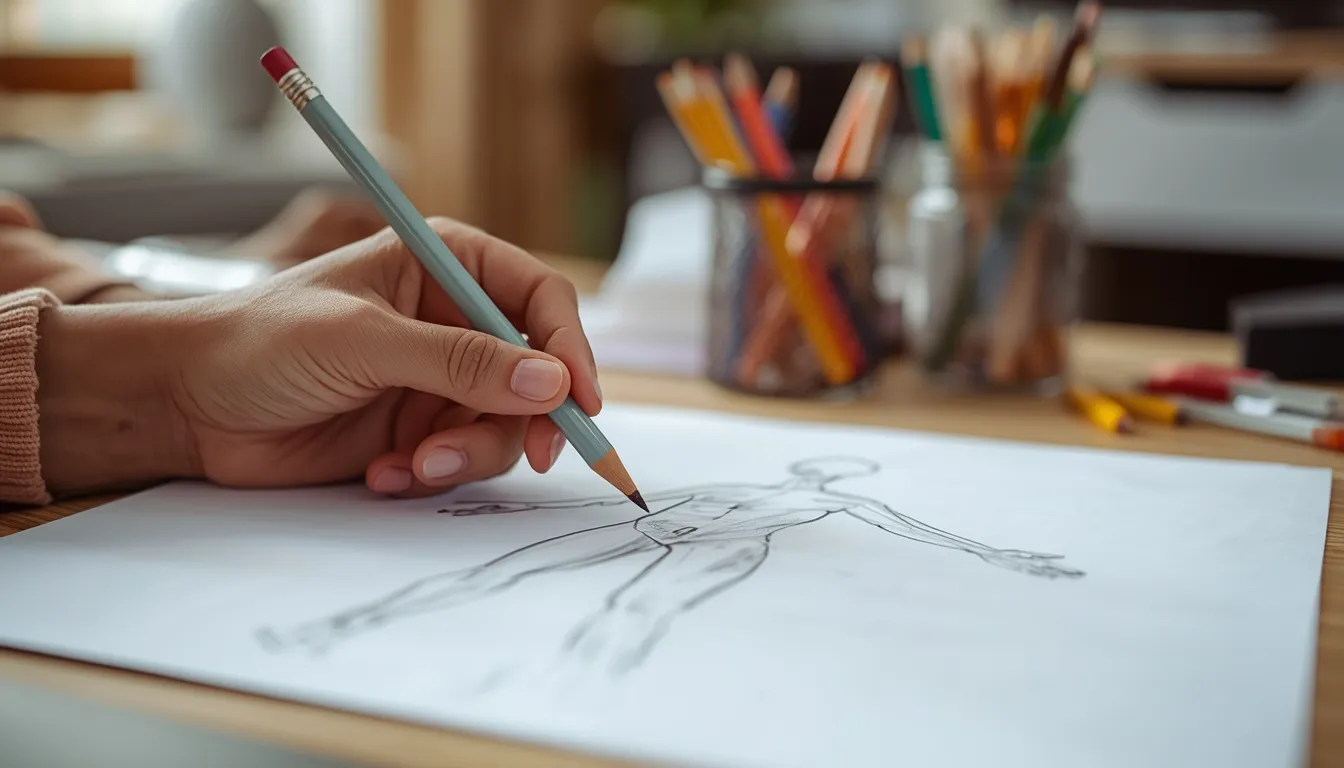
Art therapy is a mental health discipline that uses the creative process, drawing, painting, collage, sculpture, or mixed media, as a primary means of communication and healing, guided by a credentialed art therapist. Rather than asking a client to explain their experience verbally, art therapy invites them to render it visually first, which frequently surfaces material a client didn’t know how to say, or didn’t yet feel safe saying.
For trauma survivors, this matters because traumatic memory is frequently stored non-verbally: as fragmented images, body sensations, colors, or shapes rather than an organized narrative. Trauma-informed art therapy gives clients a container for that material that feels less exposing and less overwhelming than speech, which is one reason it has become a well-studied complement to trauma-focused talk therapies and to EMDR specifically.
Why Combine EMDR and Art Therapy?
EMDR and art therapy are frequently combined because they address the same underlying problem from two complementary angles: both work with how trauma is actually stored in the brain and body, rather than asking clients to force a coherent verbal narrative before they’re ready for one. In practice, integrating the two offers several distinct clinical advantages:
- Access without words: Art-making gives clients, especially children, non-verbal clients, and those with alexithymia (difficulty naming emotions), a way to identify a target memory or feeling state for EMDR reprocessing without needing to describe it aloud first.
- Titrated exposure: Creating an image of a traumatic memory is often less flooding than speaking about it directly, which helps keep clients within their window of tolerance during reprocessing.
- A concrete anchor for bilateral stimulation: A drawing, sculpture, or collage gives the therapist and client a stable visual reference to return to across sets of eye movements, which can make abstract or fragmented memories easier to track and reprocess.
- Externalization and distance: Putting a memory outside the body, onto paper or clay, creates psychological distance that supports safer processing of intense material.
- Post-processing integration: After an EMDR set, art-making helps clients metabolize what surfaced, consolidate insight, and self-soothe before ending the session.
How Trauma Lives in the Body and Brain
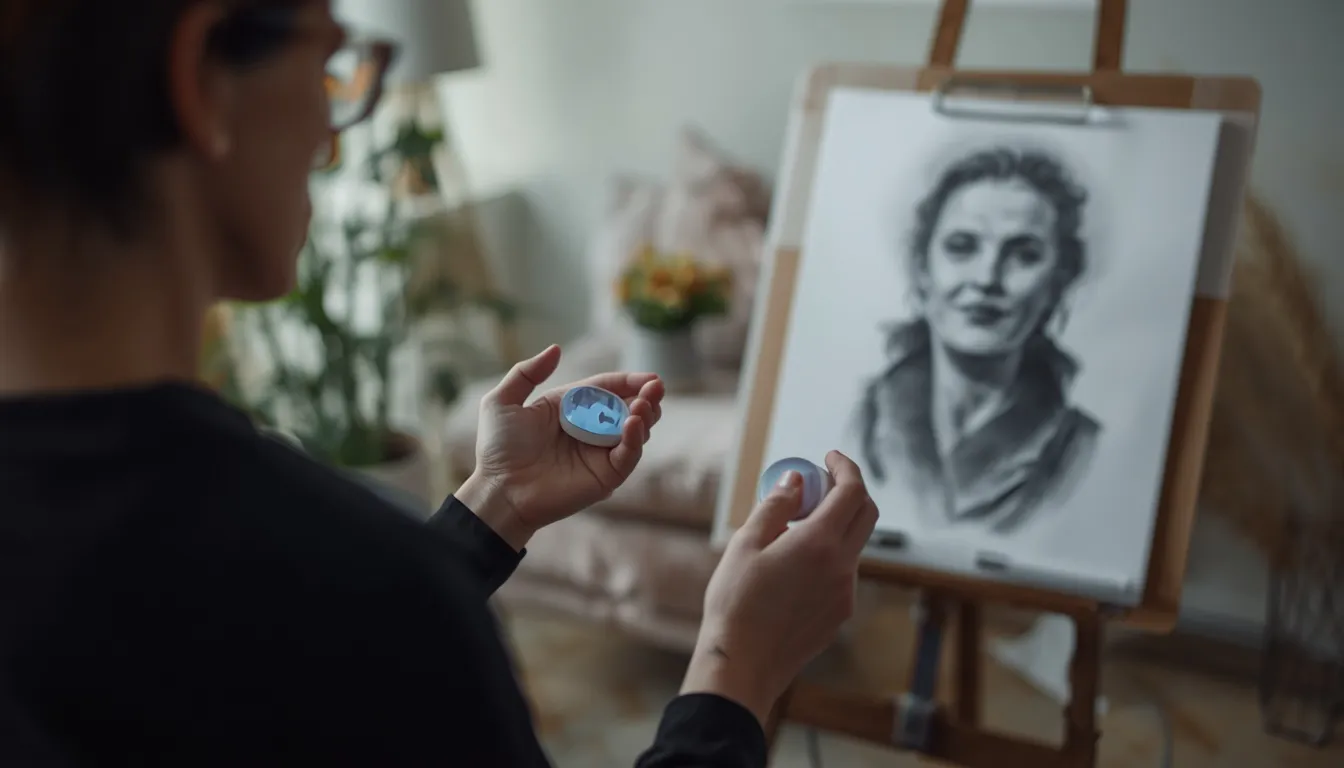
Trauma researchers describe the brain as processing threat first through subcortical, sensory-driven regions, the amygdala, brainstem, and right hemisphere, well before language and logical sequencing (largely a left-hemisphere, cortical function) come online. This is why traumatic memories are so often experienced as fragmented images, body sensations, or emotional surges rather than a clear, chronological story. It is also why purely verbal, left-brain-oriented talk therapy can hit a ceiling with trauma: the memory was never encoded as language in the first place.
Both EMDR and art therapy work directly with this right-brain processing, non-verbal storage system. EMDR’s bilateral stimulation appears to engage both hemispheres and support the brain’s natural, adaptive information-processing system, while art-making gives that same right-brain material a visual, sensory outlet before it has to be translated into words. Because dysregulation, a nervous system stuck in fight, flight, or freeze, can derail reprocessing before it starts, most integrative clinicians pair this work with emotional regulation skills and somatic grounding techniques (breathwork, orienting to the room, tracking body sensations) so a client stays within a manageable window of arousal throughout a session rather than becoming re-traumatized or shutting down.
The Developmental Roots of Trauma in Children and Adults
Trauma that occurs in childhood, abuse, neglect, medical trauma, witnessing violence, or an unstable attachment relationship, shapes the developing brain differently than trauma that occurs in adulthood, because the nervous system, language centers, and sense of self are still being built. A young child often cannot narrate what happened even when they clearly remember it somatically: through nightmares, hypervigilance, regression, or somatic complaints. This is precisely why art therapy is so often the entry point for combined trauma work with children, a crayon drawing can say what a five-year-old has no words for.
Adults carrying unresolved childhood trauma frequently show the same pattern in a different form: intellectualized accounts of “what happened” that never quite connect to the emotional or bodily charge underneath. Understanding these developmental roots, and healing from childhood trauma as a staged process rather than a single conversation, helps explain why combined EMDR and art therapy protocols are used across the lifespan: children benefit from a developmentally appropriate, non-verbal on-ramp into processing, while adults often need that same non-verbal access point to reach material their adult verbal mind has spent years working around.
How EMDR and Art Therapy Work Together: The Process
While every clinician tailors the sequence to the client, an integrated EMDR and art therapy session for trauma processing generally follows a recognizable arc:
- Stabilization and resourcing: Before any trauma memory is targeted, the therapist helps the client build coping skills, a felt sense of safety, and, often through art, a tangible “safe place” image to return to if distress becomes overwhelming.
- Target identification through art: The client creates an image, sculpture, or collage representing a disturbing memory, feeling, or body sensation, which becomes the specific target for EMDR reprocessing.
- Bilateral stimulation with the art as anchor: The client holds the image (visually or in mind) while the therapist guides sets of eye movements, taps, or tones, periodically checking in on the level of distress and any shifts in the image, thought, or sensation.
- Reprocessing and integration: As the memory’s emotional charge decreases, clients are often invited to revise, add to, or create a new piece of art reflecting the more resolved or adaptive perspective that has emerged.
- Closure and grounding: Sessions end with stabilization, sometimes another brief creative exercise, so the client leaves regulated rather than activated.
EMDR and Art Therapy for Children
Children rarely walk into a therapy room and explain their trauma the way an adult might. Play and art are their native language, which is why combined protocols for younger clients typically lean heavily on drawing, sand tray work, puppet play, or collage to identify what’s distressing before any bilateral stimulation begins. A therapist trained in both modalities might ask a child to draw “the scary part” of a memory, then use gentle eye movements, butterfly taps, or alternating drumbeats, kept short and paced to the child’s attention span, while the child holds the image in mind.
This combination is particularly well suited to children because it doesn’t require the child to produce a verbal trauma narrative, doesn’t rely on abstract insight, and keeps the nervous system regulated through the calming, rhythmic nature of art-making itself. Caregivers are typically looped into the stabilization phase so the regulation skills built in session can be reinforced at home.
EMDR and Art Therapy for Adults
For adults, the same combination often unlocks memories that feel “stuck”, material a client has discussed for years in traditional talk therapy without real relief, because the discussion stayed cognitive while the underlying activation remained unprocessed. Adults working with complex trauma, developmental trauma, or trauma with no clear single incident (as is common with childhood emotional neglect or chronic relational harm) frequently find that an image emerges faster and more accurately than a verbal description would.
Combined sessions with adults may also use art therapy between EMDR sessions as a form of processing and tracking: journaling through images what surfaced, how the body responded, and what shifted, which gives both client and therapist a clearer picture of treatment progress than verbal recall alone typically provides.
Cognitive Integration: Turning Insight Into Lasting Change
Reprocessing a memory is only part of recovery. For change to hold, clients also need to update the beliefs that formed around the trauma, beliefs like “I am powerless” or “it was my fault” that persist long after the original danger has passed. EMDR’s later phases work explicitly on installing a more adaptive, accurate belief in place of the old one, and art therapy supports this same shift by giving clients a way to visually represent the new belief or a more empowered version of the memory.
This stage overlaps closely with cognitive restructuring, the broader clinical process of identifying and revising distorted or trauma-driven thought patterns. Whether that restructuring happens through direct conversation, EMDR’s belief-installation phase, or an art piece that visually reframes the memory, the goal is the same: helping the nervous system and the narrative mind agree that the danger is over and the client is safe now.
What to Expect in a Combined EMDR and Art Therapy Session
Sessions are typically 50 to 90 minutes and are paced by the client’s window of tolerance rather than a fixed script. A first session usually focuses entirely on history-taking, stabilization, and building coping resources, no trauma memory is targeted until the therapist is confident the client can regulate afterward. Materials are simple and accessible: paper, pastels, paint, clay, or collage supplies, chosen to lower the barrier to creating rather than to produce a polished piece. There is no requirement of artistic skill; the image only needs to mean something to the client who made it.
Is This Combination Right for You or Your Child?
Integrated EMDR and art therapy tends to be a strong fit for clients who find that talk therapy alone hasn’t fully resolved their symptoms, who struggle to verbalize what happened, who process visually or somatically rather than verbally, or who are supporting a child through a traumatic experience. It is generally not appropriate as a first step for clients in active crisis, with unmanaged dissociation, or without basic emotional regulation skills in place, which is why a thorough stabilization phase always comes first, regardless of age.
A qualified provider will typically hold dual training or close collaborative practice in both EMDR (certified through EMDRIA or an equivalent body) and art therapy (credentialed as an ATR, ATR-BC, or licensed creative arts therapist), and will assess trauma history, current functioning, and readiness before beginning any reprocessing work.
Finding Professional Support
Because this combined approach requires careful pacing, dual clinical training, and close monitoring of a client’s nervous system state, it should always be pursued with a licensed, trauma-informed provider rather than attempted independently. Many practices now offer this integrated model through specialized online therapy for trauma and PTSD, which can make dual-trained clinicians accessible even where local in-person options for combined EMDR and art therapy are limited, an important option for both adults and families seeking care for a child.
Frequently Asked Questions
Can art therapy replace EMDR for trauma processing?
No. Art therapy on its own is a valuable, evidence-supported trauma treatment, but it does not include EMDR’s structured bilateral stimulation protocol, which is the mechanism believed to drive adaptive memory reprocessing. The two are complementary, not interchangeable, art therapy typically supports and enhances EMDR rather than substituting for it.
At what age can children start EMDR and art therapy for trauma?
Adapted EMDR protocols and trauma-informed art therapy are used with children as young as three or four, with techniques scaled to developmental stage, younger children rely almost entirely on play, drawing, and shortened bilateral stimulation exercises, while older children and teens can engage in more structured versions closer to the adult protocol.
How many sessions does combined EMDR and art therapy usually take?
This varies widely based on the complexity and number of traumatic memories being addressed. Single-incident trauma may resolve in a handful of sessions, while complex or developmental trauma accumulated over years often requires longer-term treatment measured in months, with stabilization work continuing throughout.
Is this combination evidence-based, or considered experimental?
EMDR itself is a well-established, extensively researched trauma treatment. Art therapy is likewise a recognized mental health discipline with a growing evidence base for trauma. Their combination is used clinically by dual-trained providers and is supported by trauma theory around non-verbal, right-brain memory storage, though it is best understood as an integrative clinical practice built on two independently validated modalities rather than a single, separately trademarked protocol.
Key Takeaways
- EMDR uses bilateral stimulation to help the brain reprocess traumatic memories that remain “stuck” in an unprocessed, distressing state.
- Art therapy externalizes non-verbal, image-based, or sensory trauma material that talk therapy alone often can’t reach.
- Combining the two gives children and adults a way to identify, process, and integrate trauma without relying solely on verbal narrative.
- Stabilization, emotional regulation, and nervous system safety always come before any reprocessing work begins.
- This integrative approach should be pursued with a dual-trained or closely collaborating licensed provider, not attempted without professional guidance.
Recovery from trauma is rarely a straight line, and for many children and adults, words alone were never going to be the whole path there. By pairing EMDR’s structured reprocessing with art therapy’s capacity to give shape to what can’t yet be spoken, this combined approach offers a genuinely holistic route through trauma processing, one that meets the nervous system, the imagination, and the mind’s need for a coherent story all at the same time.
Medical Disclaimer & E-E-A-T AttributionThis article is for educational purposes and does not replace personalized medical or psychological advice. If you are recovering from a brain injury, trauma, or a mental health condition, work with a licensed clinician to build a plan suited to your situation. Written by: Adil Farooq, Psychiatry Magazine Medically reviewed by: [Dr. Adil Farooq MS · PhD] · Updated: 2026 |