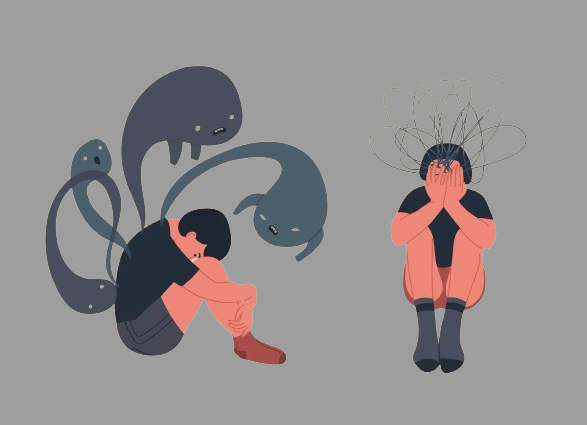
Most people associate depression with grey skies, short days, and the dead of winter — which is exactly why seasonal depression in summer symptoms go undiagnosed for years. If you feel worse as the temperature rises, you are not imagining it, and you are not alone.
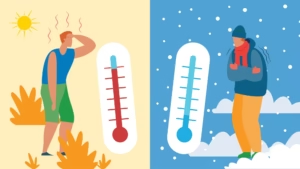
The clinical literature confirms that summer-pattern Seasonal Affective Disorder is a real, biologically driven condition that affects a meaningful portion of the population. What it lacks is the content, the awareness, and the clinical attention it deserves — and that gap costs people years of their lives.
What Is Seasonal Depression in Summer? The Clinical Picture No One Shows You
Seasonal Affective Disorder (SAD) is formally classified in the DSM-5 as Major Depressive Disorder with a Seasonal Pattern, and it has two distinct subtypes. The first is winter-pattern SAD, which nearly everyone has heard of; the second is summer-pattern SAD, which almost no one talks about.
Summer-pattern SAD is less common than its winter counterpart, affecting approximately 0.1% of the population according to a 2024 review by Munir et al., but that figure almost certainly underestimates prevalence because the condition is dramatically underdiagnosed.
The disorder follows a predictable cycle: symptoms emerge in late spring or early summer, peak during the hottest and brightest months, and resolve spontaneously as autumn arrives.
This is not “feeling grumpy because it is hot outside.” It is a neurobiological condition with a distinct symptom profile, identifiable biological mechanisms, and evidence-based treatments — most of which differ significantly from those used for winter SAD. Understanding that difference is not a footnote; it is the entire point.
If you have been brushing off your summer suffering as laziness, heat sensitivity, or a bad attitude toward a season everyone else seems to love, what follows may be the most important clinical framework you have ever encountered.
Seasonal Depression in Summer Symptoms: The Complete Clinical List
Agitation and Irritability — Not Sadness
One of the most striking features of summer-pattern SAD is that it does not look like depression on the surface. While winter SAD produces the heavy, tearful, low-energy presentation most people associate with the word “depressed,” summer SAD presents primarily as agitation — a simmering, relentless irritability that feels more like being trapped than being sad.
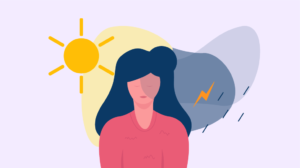
Research comparing winter and summer SAD cohorts, including landmark work by Rosenthal published in Scientific American, found that summer patients consistently described themselves as “irritable” and “restless” rather than lethargic.
Heat dysregulation of the autonomic nervous system — the branch of your nervous system that controls involuntary functions like heart rate and body temperature — plays a direct role in generating this state of hyperarousal.
Insomnia and Sleep Disruption
Where winter SAD causes hypersomnia — sleeping too much, difficulty getting out of bed — summer-pattern SAD does the opposite. Patients report persistent insomnia, difficulty falling asleep, frequent nighttime waking, and morning exhaustion that no amount of rest seems to correct.
The mechanism is well understood. Extended daylight during summer months suppresses melatonin production well into the evening hours, because melatonin onset is triggered by darkness. When your bedroom stays light until 9 PM and ambient light pollution bleeds through curtains all night, your brain’s pineal gland simply does not receive the signal to begin the hormonal cascade that prepares you for sleep.
Loss of Appetite and Weight Loss
Winter SAD is strongly associated with hyperphagia — increased appetite, carbohydrate cravings, and weight gain driven by elevated serotonin-seeking behavior in a light-deprived brain. Summer SAD runs in precisely the opposite direction. Patients lose their appetite, struggle to eat enough, and frequently lose weight over the course of the summer months.
This reversal is clinically significant because it is one of the primary reasons summer SAD gets misdiagnosed. When a patient presents with weight loss and low mood in summer, clinicians naturally reach for explanations like gastrointestinal illness, thyroid dysfunction, or a general anxiety disorder — not a seasonal mood disorder most medical training programs give only a paragraph to.
Increased Anxiety and Panic Attacks
Heat and anxiety are neurologically intertwined in ways that researchers are only beginning to fully map. High temperatures elevate cortisol — the primary stress hormone — through thermogenic stress pathways, and for individuals who are already neurologically sensitive to heat, this cortisol spike can tip the nervous system into a chronic state of hypervigilance.
For some summer SAD patients, this manifests not just as background anxiety but as full panic attacks, which notably peak in frequency during the hottest months of the year in vulnerable individuals. The cruel irony is that anxiety is widely treated as a standalone condition, which means the seasonal pattern — the most diagnostically important feature — is frequently overlooked entirely.
Social Withdrawal Despite Summer Expectations
This is the symptom cluster that no other clinical article addresses adequately, and it may be the most psychologically damaging one. When you are depressed in December, there is a cultural script for it: you stay in, you skip parties, and people understand. When you are depressed in July, there is no script — only the crushing sense that you are failing at a season.

Summer carries enormous social expectation. Barbecues, beach trips, family gatherings, outdoor concerts, social media feeds flooded with images of people living their best lives in the sun. For someone experiencing summer-pattern SAD, this environment does not just fail to help — it actively amplifies shame.
The withdrawal that would be accepted in winter becomes a source of profound self-criticism in summer, creating a secondary shame spiral that compounds the clinical depression and makes help-seeking even harder.
Difficulty Concentrating and Cognitive Fog
Cognitive impairment is a well-documented symptom of all forms of depression, but heat stress adds a specific neurological insult on top of the underlying mood disorder. Research on heat stress and cognitive function consistently shows that high ambient temperatures impair prefrontal cortex performance — the region of the brain responsible for working memory, decision-making, and sustained attention.
For a summer SAD patient, this means the cognitive fog they are experiencing is not purely psychological. It is a compounded result of depressive neurochemistry, sleep deprivation from insomnia, and the direct neurological effects of thermal stress on cortical function. Telling such a patient to “just push through” is not a strategy — it is a misunderstanding of the biology.
Restlessness Without Cause
The restlessness associated with summer SAD is distinct from the productive energy of a good mood and distinct from the identifiable restlessness of anxiety. It presents as a kind of objectless agitation — an inability to settle, a compulsive need to move or change environments, paired with an equal inability to find relief anywhere.
Clinically, this symptom requires careful differential diagnosis because it can superficially resemble a hypomanic episode in individuals with bipolar disorder. The seasonal timing of both conditions overlaps in spring and summer, and several features — decreased need for sleep, increased energy, irritability — appear in both presentations. The distinguishing feature is functional impairment:
hypomanic episodes typically preserve or inflate perceived functioning, while summer SAD restlessness is experienced as deeply distressing and disabling.
Why Seasonal Depression in Summer Symptoms Are Almost Always Misdiagnosed
The medical system is not set up to find summer SAD, and this is not an accident — it is a product of decades of research, training, and clinical infrastructure almost exclusively built around winter-pattern SAD. Four misdiagnosis pathways account for the vast majority of cases that go unrecognized.
The first is heat exhaustion and heat-related illness, which shares surface features like fatigue, cognitive impairment, and physical discomfort with summer SAD but is an entirely different condition with different etiology and treatment. The second is burnout, a diagnosis that has exploded in usage in recent years and functions as a catch-all for any functional decline during periods of high demand — which often coincide with summer work pressures.
The third is Generalized Anxiety Disorder, which captures the anxiety and restlessness presentation without accounting for why these symptoms follow a rigidly seasonal pattern and resolve every autumn. The fourth — and most clinically dangerous — is bipolar disorder (hypomanic episode), a misdiagnosis that can lead to the prescription of stimulating medications that actively worsen summer SAD.
Beyond clinician error, patients themselves perpetuate the delay. The cultural impossibility of summer depression means that most sufferers spend years telling themselves the problem is personal failing rather than clinical disorder.
A 2025 case report in Cureus documented a 46-year-old male patient with seven consecutive years of summer depressive episodes who remained entirely undiagnosed because neither he nor his treating physicians connected his symptoms to a seasonal pattern.
What Causes Seasonal Depression in Summer Symptoms to Appear?
Three biological theories currently dominate the research on summer-pattern SAD, and they are not mutually exclusive — most clinicians now believe they operate in combination.
The first is circadian rhythm disruption from extended photoperiod. The human brain is calibrated to a roughly 12-hour light-dark cycle, and melatonin secretion — the hormonal signal that initiates sleep and regulates dozens of downstream biological processes — is directly suppressed by light exposure.
When summer photoperiods extend to 15 or 16 hours in many regions, melatonin onset is chronically delayed, circadian rhythms desynchronize, and the downstream consequences include mood dysregulation, cognitive impairment, and immune disruption.
The second is serotonin dysregulation triggered by heat, which operates as a kind of mirror image of the winter SAD mechanism. In winter SAD, reduced light exposure drives down serotonin synthesis and availability.
In summer SAD, researchers hypothesize that excessive heat and light exposure dysregulates serotonin signaling through a different pathway — possibly involving thermogenic stress on the raphe nuclei, the brainstem structures primarily responsible for serotonin production.
The third is heat intolerance as a neurological sensitivity — the idea that some individuals’ autonomic nervous systems are clinically reactive to high temperatures in ways that directly and reproducibly produce depressive and anxious symptoms.
Research from tropical and high-humidity regions, including a 2025 PubMed-indexed case report from Pakistan and analysis from Gulf News covering UAE patients, supports the idea that geographic and climatic heat exposure are direct precipitants of summer SAD episodes. As global average temperatures continue to rise, climate scientists and psychiatrists alike are beginning to project that summer-pattern SAD may become significantly more prevalent through the next decade.
How Summer SAD Differs From Winter SAD — A Clinical Comparison
Understanding the contrast between these two conditions matters in practice, not just in theory, because the differences between them extend directly into treatment — and a clinician who applies a winter SAD protocol to a summer SAD patient can cause measurable harm.
In terms of sleep, winter SAD produces hypersomnia and difficulty waking; summer SAD produces insomnia and early morning waking despite exhaustion. In terms of appetite, winter SAD drives hyperphagia and carbohydrate craving; summer SAD drives appetite loss and weight reduction. In terms of mood character, winter SAD is predominantly lethargic and tearful; summer SAD is predominantly agitated, irritable, and restless.
In terms of social behavior, both presentations lead to withdrawal, but the phenomenology differs significantly. Winter SAD withdrawal is often experienced as a kind of passive hibernation — the patient retreats without intense shame because social hibernation in winter is culturally normalized. Summer SAD withdrawal carries an acute social cost; the patient retreats while being fully aware that the season demands the opposite, and the resulting shame intensifies the depressive episode.
Perhaps most critically, light therapy — the gold-standard treatment for winter SAD, involving daily exposure to a 10,000-lux lightbox — is not only ineffective for summer SAD but may actively worsen it by further suppressing melatonin and amplifying circadian disruption. This is not a minor technical caveat; it is a safety-relevant clinical distinction that many online resources and even some practitioners fail to communicate.
Getting a Diagnosis — What to Tell Your Doctor
If the symptom profile described in this article resonates, the most useful thing you can do before any clinical appointment is build an evidence base that documents the seasonal pattern — because the DSM-5 requires a minimum of two consecutive years of seasonal depressive episodes to confirm the diagnosis.
Begin keeping a daily mood log that tracks energy levels, sleep hours, appetite, anxiety intensity, and social engagement on a consistent scale. Note the dates when symptoms begin, when they peak, and when they resolve. Track your weight over the summer months.
If you have access to previous years’ journal entries, text messages, or medical records that reflect your summer mood history, compile them — a pattern documented in historical records is as diagnostically valuable as prospective tracking.
When you see your doctor, use the phrase “Major Depressive Disorder with a seasonal pattern, summer type” rather than simply saying “I feel depressed in summer.” This phrasing invokes a recognized DSM-5 diagnostic category and signals that you have done research, which significantly increases the likelihood of referral to a psychiatrist rather than dismissal.
Ask specifically whether your doctor is familiar with summer-pattern SAD and, if not, request a referral to a psychiatrist for evaluation. The PHQ-9 — Patient Health Questionnaire — is the standard screening entry point, and a psychiatrist will pair it with a Seasonal Pattern Assessment Questionnaire (SPAQ) to confirm the seasonal specifier.
Evidence-Based Treatments for Seasonal Depression in Summer Symptoms
Treatment for summer-pattern SAD differs from winter treatment in several foundational ways, and an effective protocol typically combines multiple interventions rather than relying on any single approach.
Dark therapy and controlled light reduction are the summer-specific equivalent of winter’s light therapy. Rather than increasing light exposure, the goal is to reduce it — particularly in the evening hours — to allow melatonin onset to occur at a physiologically appropriate time. Blackout curtains, blue-light blocking glasses in the hours before sleep, and deliberate reduction of screen exposure after sunset are not lifestyle recommendations; they are clinical interventions that address the root circadian disruption.
Cognitive Behavioral Therapy for SAD (CBT-SAD) has emerged as one of the most robustly supported treatments for seasonal depression. A landmark 2016 study by Thompson and colleagues demonstrated that CBT-SAD outperformed light therapy for summer-pattern presentations, producing more durable remission with lower relapse rates across the following year. CBT-SAD specifically targets the behavioral activation deficit, the shame cognitions around seasonal functioning, and the avoidance patterns that compound the depressive episode over time.
Pharmacological treatment with SSRIs — particularly fluoxetine, which has the broadest evidence base in SAD — is indicated for moderate-to-severe cases and for patients who have not responded adequately to behavioral and environmental interventions alone. Unlike winter SAD, where SSRIs are typically initiated in autumn, summer-pattern patients may benefit from prophylactic initiation in early spring, before the depressive episode takes hold, under the guidance of a psychiatrist.
Environmental interventions are more directly therapeutic for summer SAD than for almost any other form of depression. Access to air conditioning is not a comfort measure for these patients — it is a clinical necessity. Spending significant portions of the hottest parts of the day in cool, dark environments addresses both the heat-intolerance mechanism and the excessive-light mechanism simultaneously. Shifting sleep schedules to take advantage of the coolest and darkest portions of the 24-hour cycle, typically the very early morning hours, can restore circadian anchoring for some patients.
Exercise timing matters significantly in summer-pattern SAD. The cortisol-regulatory benefits of physical activity are well established in depression treatment generally, but for summer SAD patients, exercising during peak heat hours is likely to worsen agitation and anxiety rather than improve them. Morning exercise, completed before temperatures rise, captures the mood-regulatory benefits without the neurological cost of thermogenic stress.
Coping Strategies You Can Start Today
If you are reading this while in the middle of a summer that has felt impossible, the most important thing to understand first is that what you are experiencing is not weakness or ingratitude — it is a clinically recognized pattern with a neurobiological basis, and it is not your fault that summer is hard for you.
Behavioral activation — the deliberate scheduling of low-stimulation, meaningful activities during the hours when symptoms are least severe, typically early morning — is a foundational CBT technique that can meaningfully interrupt the withdrawal-shame spiral even before formal treatment begins. You do not need to feel like doing the activity for it to produce benefit; the behavioral engagement itself is what drives the neurochemical change.
Summer-specific sleep hygiene means treating your bedroom like a clinical sleep environment during the summer months: blackout curtains, a temperature setting below 68°F where possible, no screens for 60 minutes before sleep, and a fixed wake time that anchors your circadian rhythm even on days when sleep felt minimal. Consistency of wake time — even after a terrible night — is the single highest-leverage sleep intervention available without medication.
The “summer hibernation” reframe is a psychologically powerful tool for reducing the shame burden of summer SAD. Just as no one expects a person with winter-pattern SAD to feel festive and energized in December, you are allowed to reframe your summer as a season of managed rest rather than missed joy. You are not failing summer; you are managing a medical condition that happens to peak during summer.
Finally, communicating with the people around you about summer SAD requires specific language because the condition is so poorly understood. Telling someone “I have seasonal depression but it happens in summer” is likely to be met with confusion or dismissal. A more effective framing is: “My brain and nervous system are sensitive to heat and extended daylight in a way that causes real depression symptoms — it is the same category of disorder as winter depression, just triggered by the opposite conditions.”
Faqs
Q1: Is seasonal depression in summer symptoms a real condition?
Yes, it is classified in the DSM-5 as Major Depressive Disorder with a Seasonal Pattern, summer type — a neurobiologically driven disorder, not heat sensitivity.
Q2: How is summer SAD different from winter SAD?
Summer SAD causes insomnia, appetite loss, and agitation; winter SAD causes oversleeping, overeating, and lethargy — opposite symptom profiles with opposite triggers.
Q3: Does a lightbox help with summer seasonal depression?
No — light therapy worsens summer SAD by increasing the very light exposure that triggers it. It is only appropriate for winter-pattern SAD.
Q4: What causes seasonal depression in summer symptoms?
Extended daylight suppresses melatonin, heat elevates cortisol, and serotonin signaling is disrupted — together these produce a full depressive episode in vulnerable individuals.
Q5: What is the best treatment for summer SAD?
CBT-SAD combined with dark therapy and environmental cooling is first-line; SSRIs like fluoxetine are added for moderate-to-severe cases, ideally started in early spring.
Conclusion
There is a particular kind of loneliness in being depressed during the season that the world has collectively decided is for happiness, and if you have spent summers silently struggling while everyone around you seemed to thrive, that loneliness deserves acknowledgment before anything else.
Seasonal depression in summer symptoms are real, they are clinically recognized, and they are treatable. The three things worth holding onto are these: this condition has a name, it has a biological explanation that has nothing to do with your character or effort, and the treatments for it — when correctly matched to summer-pattern SAD rather than misapplied from winter protocols — work.
The next step is finding a clinician who understands the distinction. That conversation starts with you walking in with the language, the documentation, and the knowledge that what you have been experiencing for years is not weakness. It is weather — processed by a nervous system that is wired differently, and that deserves the same care and precision any other neurological condition receives.