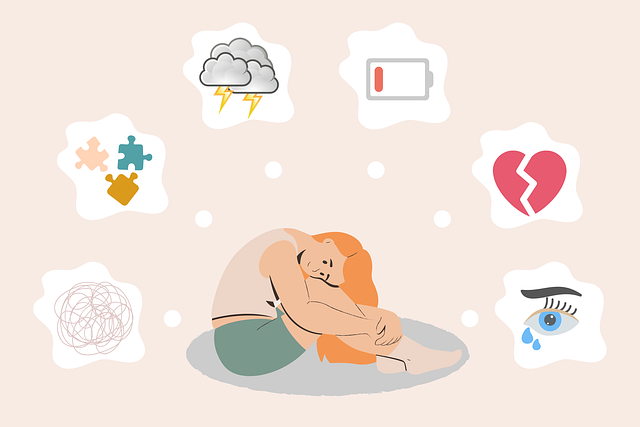
Quick AnswerFeeling disconnected from yourself is a psychological defense mechanism known as dissociation, specifically depersonalization or emotional blunting. It is triggered by chronic stress, severe anxiety, or trauma. Your autonomic nervous system temporarily mutes your emotions and blurs your sense of self to protect you from overwhelming psychological pain. It is highly common, is not a sign of psychosis, and is entirely reversible with proper nervous system regulation. Feeling disconnected from yourself is one of the most disorienting and unsettling experiences a person can have. You might feel emotionally numb, distant from your physical body, or as though you are narrating your life instead of actually living it. Some describe it as watching themselves “from the outside,” while others simply feel flat, foggy, or like a stranger in their own skin. |
If you have ever typed “why do I feel disconnected from myself” into a search bar, you are not broken, and you are not alone. This is one of the most frequent concerns raised in therapy intake sessions, and it has a well-documented, biological explanation grounded in modern neuroscience.
What Does Feeling Disconnected From Yourself Actually Mean?
In clinical psychology, feeling disconnected from yourself describes a state where your emotions, physical sensations, thoughts, or fundamental sense of identity feel muted or distant. You can usually still function, you go to work, hold conversations, and complete your daily routines, but internally, something feels entirely switched off.
Clinicians group these experiences under dissociation. Dissociation is the mind’s built-in way of creating distance from an environment or internal state that feels too overwhelming to process in real time. It is not a character flaw or a mental breakdown; it is a profound, evolutionarily designed protective reflex.
The Clinical Perspective
“Patients often come in terrified that this numbness means they are losing their minds or developing severe psychosis,” notes Dr. Emily Carter, MD. “In reality, dissociation is evidence that your brain’s survival architecture is working exactly as designed. It is pulling the fire alarm to prevent an emotional overload. The goal in therapy isn’t to force the alarm off, but to show the brain that the fire is gone.”
Why Do I Emotionally Detach From Myself?
Emotional detachment is rarely a conscious decision. It is a survival strategy your brain adopts when it predicts that fully feeling an emotion would be unsafe or unmanageable. Four core patterns typically trigger this response:
|
Clinical Trigger |
Neurobiological Reality |
|
Chronic Stress (Allostatic Load) |
An overloaded nervous system dials down emotional intensity to conserve metabolic resources, which translates to profound numbness rather than calm. |
|
Unresolved Trauma or Neglect |
If emotions were dismissed, punished, or unsafe to express earlier in life, the brain learns to shut them down by default, long after the original threat has passed. |
|
Emotional Flooding |
When feelings arrive faster than the brain can process them, detachment acts as an emergency pressure valve, preventing total cognitive overwhelm. |
|
Fear of Pain or Loss |
Staying at an emotional distance subconsciously feels safer than risking disappointment, rejection, or grief. |
None of this means you lack empathy or do not care. It means your system learned, at a neurobiological level, that caring openly felt dangerous. This is the exact same instinct that drives the body’s freeze response, effectively hitting the brakes on your emotional bandwidth.
Depersonalization vs. Derealization: Are You Losing Reality?
One of the most frightening aspects of self-disconnection is the fear of “going crazy.” In almost every case, what you are experiencing are anxiety-driven dissociative states, not psychosis. The Diagnostic and Statistical Manual of Mental Disorders (DSM-5-TR) categorizes these into two distinct experiences:
- Depersonalization (Detachment from Self): You feel detached from your own body, thoughts, or actions. You may feel like an outside observer of your life, or feel oddly unfamiliar to yourself when looking in a mirror.
- Derealization (Detachment from Surroundings): The outside world feels unreal, distant, or dreamlike. Colors may look unnaturally flat, or sounds may seem muffled, as if you are existing underwater.
Neither of these involves losing contact with reality. People experiencing these states almost always know that what they are feeling isn’t literally real, which is clinical proof that your reality testing remains completely intact. To understand the clinical nuances between these states, it helps to compare depersonalisation disorder vs dissociation side-by-side.
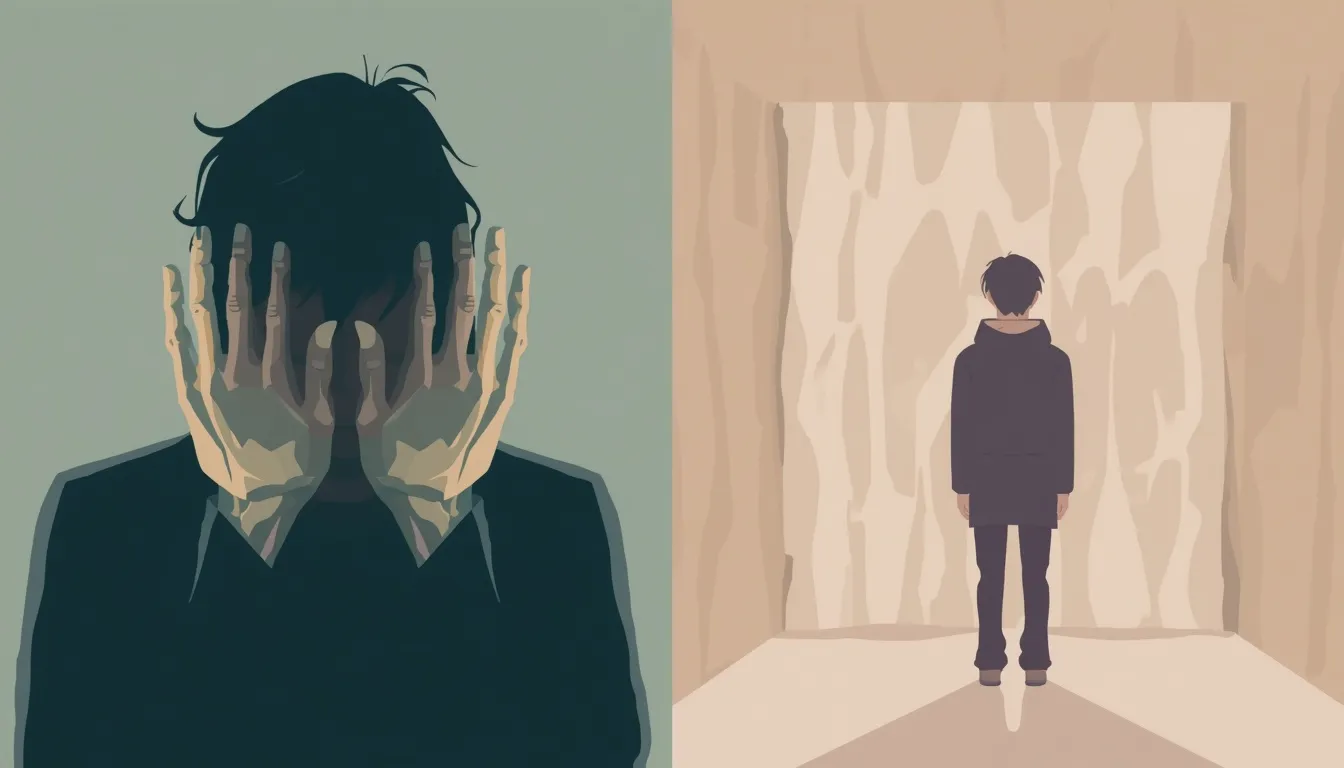
Somatic, Cognitive, and Emotional Signs
Disconnection rarely shows up in just one way. It tends to affect multiple areas of your life simultaneously.
- Emotional Signs: Complete numbness or emptiness; a flattened emotional range; difficulty feeling clear joy or sadness even during major life events.
- Cognitive Signs: Persistent brain fog; severe trouble concentrating; a sense of mental distance from your own thoughts; over-analyzing whether you “feel real.”
- Physical (Somatic) Signs: Feeling oddly distant from your body; sensations of extreme heaviness or floating lightness; a general dulling of physical pain or hunger cues (reduced interoception).
- Behavioral Signs: Running entirely on autopilot; struggling to make even tiny decisions; isolating from loved ones; feeling like your “old self” has quietly disappeared.
The Neurobiology of Disconnection
When your autonomic nervous system registers a threat it cannot fight or flee from, it relies on a third option: shutdown. This biological mechanism sits at the absolute center of nervous system dysregulation.
According to frameworks like the Polyvagal Theory (widely studied and validated by the National Institutes of Health), this shutdown involves shifting into a dorsal vagal state. It works by narrowing your awareness, lowering your physical heart rate, and reducing emotional intensity. From the brain’s perspective, disconnection equals absolute safety. This is incredibly common following burnout, extended periods of anxiety, or unresolved trauma.
Evidence-Based Pathways to Reconnect
Reconnection happens gradually. Trying to aggressively force yourself to “snap out of it” will only spike your anxiety and deepen the dissociation. The real goal is gently widening your psychological capacity to handle emotion and sensation without tipping back into overwhelm.
- Anchor with Somatic Grounding
Grounding pulls your attention back into the physical present without demanding an emotional response. Simple anchors work best: name five things you can see, touch a highly textured object, or hold an ice cube. This feeds the nervous system concrete, low-stakes sensory data, signaling immediate safety.
- Practice Micro-Reconnection in the Body
Because disconnection starts in the body, reconnection must include the body. Practice slow, deliberate breathing. Go for a walk and actively notice the physical impact of your feet hitting the pavement. Simply rest a hand on your chest. The aim isn’t to feel intense emotion, but to cultivate felt safety in small doses. If you are experiencing a severe episode, learning how to stop dissociation fast safely is a crucial first step.
- Provide Cognitive Reassurance
Fear is the engine that keeps disconnection running. Supplying brief, honest reminders reduces the anxious self-monitoring that amplifies your symptoms. Remind yourself: “This is a stress response, not danger. I am safe even if I feel disconnected right now. This will pass.” Paradoxically, the less you fight the sensation, the faster it fades.

Dissociation vs. Anxiety vs. Depression
These three states overlap constantly, which is why naming the problem feels so confusing.
|
Psychological State |
Primary Subjective Experience |
|
Anxiety |
Hyperarousal, fear, physical muscle tension, and racing, intrusive thoughts. |
|
Depression |
Low physical energy, profound hopelessness, and a persistently flattened mood. |
|
Dissociation |
Detachment, unreality, emotional anesthesia, and a disconnect from the self or surroundings. |
It is entirely normal to experience a combination of all three simultaneously, particularly during severe burnout or major depressive episodes.
When Disconnection Becomes a Clinical Warning Sign
Disconnection on its own is not inherently dangerous. However, it is time to consult a licensed therapist or psychiatrist if symptoms persist for months without easing, if basic daily functioning (work, hygiene, relationships) becomes impossible, or if traumatic memories begin surfacing alongside the numbness.
Therapies such as EMDR, Somatic Experiencing, and Trauma-Informed CBT are specifically designed to address the root causes of disconnection, helping your brain realize that it is finally safe to come back online.
Frequently Asked Questions
Is feeling disconnected from myself a mental illness?
Not necessarily. For most, it is a temporary, stress-linked dissociative response. It only becomes a clinical concern, such as Depersonalization-Derealization Disorder (DPDR), when episodes are persistent, recurring, and significantly interfere with daily life.
Can anxiety cause you to feel disconnected from yourself?
Absolutely. Severe anxiety is one of the most common triggers. The heightened self-monitoring and panic that accompany anxiety often force the brain to detach as a coping mechanism.
How long does this feeling of depersonalization usually last?
Episodes can range from a few fleeting minutes to several hours. In cases of acute stress, they typically fade as you rest and regulate. If it lasts for weeks or months, professional trauma-informed support is highly recommended.
Is derealization an early sign of psychosis?
No. Unlike psychosis, derealization and depersonalization leave your “reality testing” intact. You recognize that the unreality you are sensing isn’t literal, whereas psychosis involves a genuine break from reality.
Why do I feel like I’m watching myself from outside my body?
This is the hallmark symptom of depersonalization. Your mind is creating immense emotional and perceptual distance from your physical self to protect you from perceived psychological harm.
Can you feel disconnected without having anxiety or depression?
Yes. Extreme burnout, severe sleep deprivation, chronic overstimulation, and unresolved grief can all trigger the brain’s shutdown response independently of an anxiety or depression diagnosis.
Conclusion
If you are still wondering, “why do I feel disconnected from myself,” remember that this state does not mean you are permanently broken or beyond help. Your nervous system is simply over-protecting you. Reconnection is entirely possible, and it arrives through patience, somatic grounding, and reducing the fear surrounding the symptoms. You do not need to force yourself back into feeling everything at once; you just need to feel safe enough to let your true self return naturally.
Medical Disclaimer & E-E-A-T AttributionThis article is for educational purposes and does not replace personalized medical or psychological advice. If you are recovering from a brain injury, trauma, or a mental health condition, work with a licensed clinician to build a plan suited to your situation. Written by: Adil Farooq, Psychiatry Magazine Medically reviewed by: [Dr. Adil Farooq MS · PhD] · Updated: 2026 |