| Quick Answer
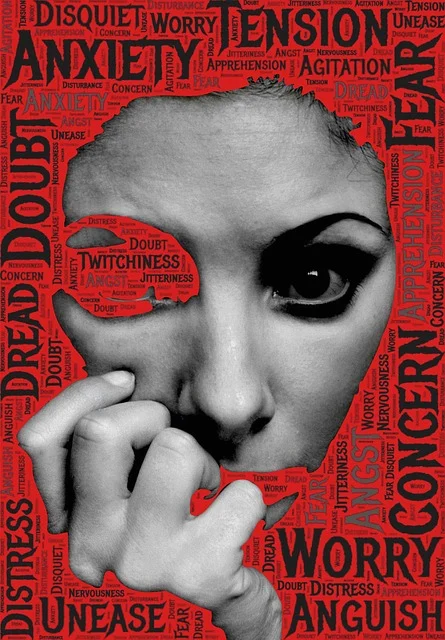
Excoriation disorder commonly called skin picking disorder or dermatillomania is a body-focused repetitive behavior (BFRB) where someone compulsively picks at their own skin, causing lesions, despite genuine attempts to stop. Classified in the DSM-5-TR under obsessive-compulsive and related disorders, it is effectively treated using habit reversal training, CBT, and targeted medication. |
Excoriation disorder is a real, diagnosable mental health condition not a bad habit, a skincare issue, or a failure of willpower. It manifests as a repeated, difficult-to-control urge to pick at the skin that leaves sores, permanent scars, or recurring infections. Left unaddressed, it can quietly erode a person’s confidence, relationships, and daily routine.
However, excoriation disorder is also one of the more treatable body-focused repetitive behaviors, especially once it is correctly identified and separated from general anxiety. This comprehensive guide covers what excoriation disorder is, the neurobiology of why it happens, how it is clinically diagnosed, and the evidence-based treatments that actually work.
Understanding Excoriation Disorder (Dermatillomania)
The clinical term dermatillomania pronounced derm-ah-till-oh-MAY-nee-ah is derived from the Greek derma (skin), tillein (to pluck), and mania (an intense drive or frenzy). Today, the medical community formally refers to it as excoriation disorder.
According to the American Psychiatric Association (APA), excoriation disorder is categorized within the obsessive-compulsive and related disorders family. It also falls under a wider behavioral umbrella known as body-focused repetitive behaviors (BFRBs). These are conditions where an individual repeatedly performs a physical action on their own body that causes damage, despite genuinely desiring to stop.
The clinical distinction matters: excoriation disorder is rarely about vanity or appearance-checking. Most individuals with the condition pick at healthy skin, minor blemishes, or scabs not because they think it looks aesthetically unpleasing, but because of an overpowering neurobiological urge that is profoundly difficult to override.

How Common Is Excoriation Disorder?
It is far more common than most realize. Peer-reviewed psychiatric research estimates that excoriation disorder affects between 1.4% and 5.4% of the general population at some point in their lives. The disorder is diagnosed significantly more often in women than in men. Onset typically begins during adolescence frequently coinciding with puberty and the first appearance of dermatological issues like acne though the condition can also emerge in early childhood or later in adulthood following a highly stressful life event.
Types of Skin Picking: Automatic vs. Focused
Clinical psychologists typically categorize skin picking into two distinct behavioral profiles. Identifying which type you experience is a crucial first step in building a personalized treatment plan.
Automatic picking occurs largely outside of conscious awareness. Individuals often find themselves picking while engaged in sedentary, distracted activities like reading, watching television, scrolling on their phones, or driving. Mental health professionals view this as a form of somatic self-stimulation; individuals often report feeling a wave of relief or “zoning out” in the moment, followed by sharp feelings of guilt or frustration immediately afterward.
Focused picking, on the other hand, is a deliberate, conscious response to a specific physical or emotional urge. It is usually preceded by a sensory trigger such as an itching sensation, a feeling of physical tension, or the visual sight of a scab, bump, or ingrown hair that the person feels intensely compelled to “fix” or smooth out. Focused picking is frequently utilized as a maladaptive mechanism to cope with intense emotions, stress, or profound boredom.
Signs and Symptoms of Excoriation Disorder
Most people will pick at a hangnail or a pimple occasionally. The behavior crosses the threshold into excoriation disorder when it becomes chronic, uncontrollable, and causes measurable physical damage or psychological distress. Common clinical signs include:
- Recurrent picking, squeezing, digging, or scratching of the skin (most commonly on the face, arms, hands, cuticles, or scalp).
- Visible skin lesions, open scabs, infections, or severe scarring resulting directly from the picking.
- Repeated, unsuccessful attempts to stop, slow down, or resist the urge to pick.
- Spending a significant amount of time picking sometimes extending to an hour or more per day.
- Experiencing intense shame, embarrassment, or anxiety connected to the behavior, leading to hiding the skin with makeup, bandages, or long clothing.
- Avoiding social situations, intimacy, school, or work due to the visible effects of the picking.
- Using tools such as tweezers, pins, needles, or nail clippers to pick at the skin, rather than just fingernails.
Differential Diagnosis: Excoriation Disorder vs. Related Conditions
Because excoriation disorder is part of a broader family of BFRBs, it frequently overlaps with other psychological conditions. Patients often confuse skin picking with general OCD or body dysmorphia. The table below outlines the clinical differences to help clarify diagnosis.
|
Diagnostic Feature |
Excoriation Disorder |
Trichotillomania (Hair Pulling) |
Body Dysmorphic Disorder (BDD) |
Obsessive-Compulsive Disorder (OCD) |
|
Primary Action |
Repetitive picking of skin/scabs |
Repetitive pulling of body hair |
Repetitive checking or fixing appearance |
Performing compulsions to neutralize anxiety |
|
Underlying Focus |
Tactile urge, emotional regulation, or habit |
Physical tension, self-soothing, or habit loop |
Perceived severe flaw in physical appearance |
Intrusive thoughts, fears, or specific obsessions |
|
Sensory Trigger |
Skin irregularity, itch, or stress |
Hair texture, scalp sensation, or stress |
Mirror checking, visual dissatisfaction |
Contamination, harm, or symmetry concerns |
Understanding this overlap is vital for effective treatment. Treating excoriation disorder while ignoring a co-occurring condition like trichotillomania (hair-pulling disorder) often limits clinical progress. Other common comorbidities include major depressive disorder, generalized anxiety disorders, and bipolar spectrum features.
What Causes Excoriation Disorder?
The exact root cause of dermatillomania is not fully understood, but current neurobiological research points to a complex interplay of several factors rather than a single trigger. Genetics and heredity play a significant role, with clinical studies indicating that individuals are much more likely to develop the disorder if a first-degree relative shares the condition or another OCD-spectrum disorder.
Additionally, differences in brain structure and habit circuitry specifically within the frontostriatal circuits affect how the brain handles learning, impulse control, and motor inhibition in those with the disorder. Finally, emotional regulation is a massive driving factor; for many, skin picking acts as a somatic coping response. It functions as a subconscious way to self-soothe, discharge overwhelming anxiety, or regulate an under-stimulated nervous system, even when it isn’t a deliberate choice.
How Is Excoriation Disorder Diagnosed?
Diagnosis must be conducted by a qualified physician or licensed mental health clinician. The process typically combines a physical skin examination with a detailed clinical interview to rule out dermatological conditions (like eczema or scabies) or physiological reactions to medications or substances.
To receive an official diagnosis of excoriation disorder under the DSM-5-TR, a patient must meet all five of the following criteria:
- Recurrent skin picking resulting in skin lesions.
- Repeated attempts to decrease or stop the skin picking behavior.
- The picking causes clinically significant distress or impairment in social, occupational, or other important areas of functioning.
- The skin picking is not attributable to the physiological effects of a substance (e.g., cocaine) or another medical condition.
- The behavior is not better explained by symptoms of another mental disorder (e.g., delusions or tactile hallucinations in a psychotic disorder, or attempts to improve a perceived defect in body dysmorphic disorder).
Evidence-Based Treatment for Excoriation Disorder
Research consistently demonstrates that a multidisciplinary approach often combining behavioral psychotherapy with targeted pharmacological support yields the highest success rates for long-term remission.
The frontline treatment for body-focused repetitive behaviors is psychotherapy, specifically utilizing a full toolkit of cognitive-behavioral therapy (CBT) techniques. Habit reversal training (HRT) is widely considered the gold standard. It works by building moment-to-moment awareness of physical picking triggers and then swapping the destructive behavior for a competing, harmless motor response such as clenching a fist or pressing hands flat against a table the instant an urge arises. Furthermore, many modern clinicians now integrate acceptance and commitment therapy (ACT) alongside HRT. Rather than forcefully suppressing the urge, ACT teaches patients to sit mindfully with uncomfortable tactile sensations without acting on them.
On the pharmacological side, while no medication is currently FDA-approved explicitly and solely for excoriation disorder, psychiatrists frequently prescribe off-label options based on a patient’s neurochemical profile. Selective Serotonin Reuptake Inhibitors (SSRIs) are often the first-line pharmaceutical option, particularly when managing clinical anxiety or depression that co-occurs alongside the picking. Strong clinical evidence also supports the use of glutamate modulators like N-acetylcysteine (NAC), an over-the-counter amino-acid supplement that helps regulate glutamate transmission in the brain and significantly reduces picking urges in many adults. In treatment-resistant cases, specialists may occasionally explore antipsychotics and anticonvulsants, such as memantine or lamotrigine.

(Note: Medication decisions should always be made in consultation with a licensed psychiatric prescriber who understands your full medical history.)
Practical Coping Strategies: A 3-Tier Habit Reversal Protocol
Managing the disorder day-to-day requires structured behavioral tools designed to interrupt the habit loop before tissue damage occurs. Clinicians recommend organizing self-management into a simple, three-tier functional protocol.
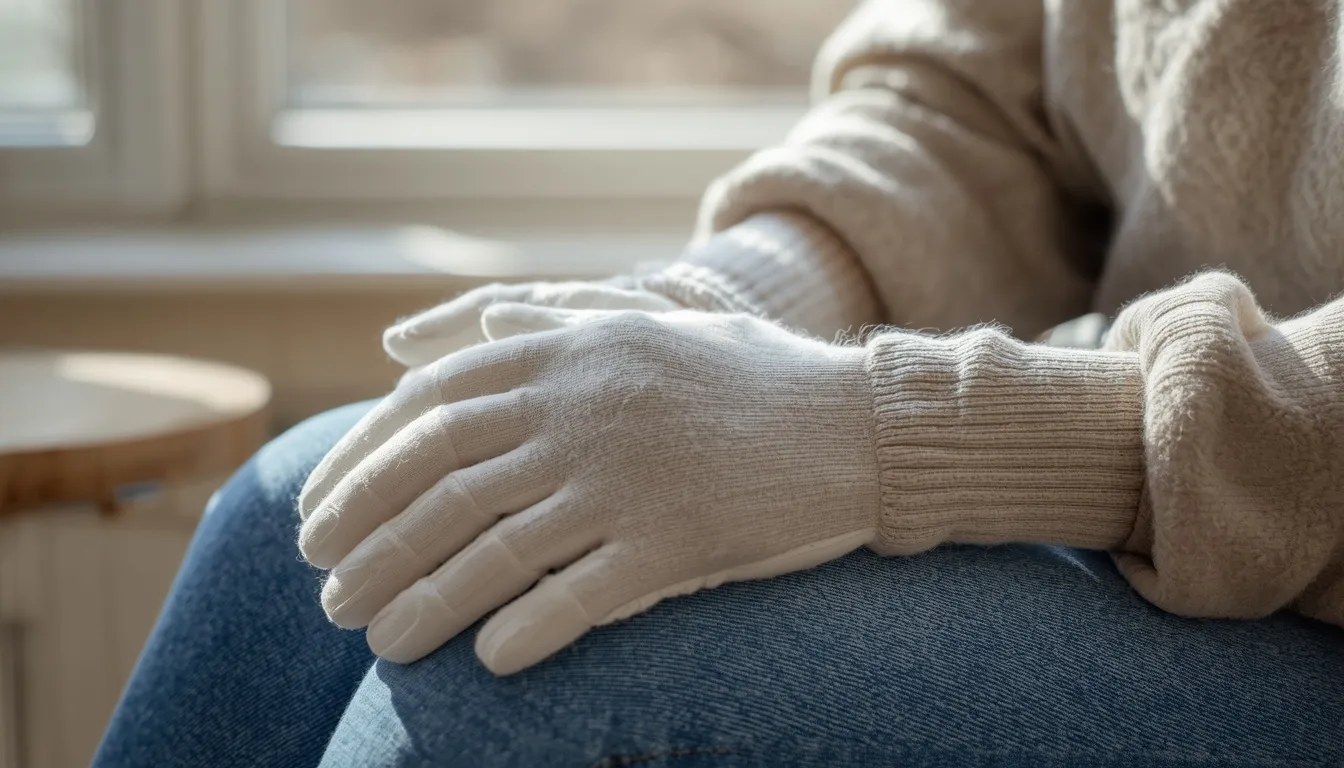
Tier 1 involves stimulus control, where you create environmental and physical barriers. This includes removing magnifying cosmetic mirrors, covering bathroom mirrors during high-stress times, or swapping harsh, high-wattage lighting for warm, dim lighting. Physically, wearing light, breathable cotton gloves during high-risk times (like working at a computer or watching television), keeping fingernails filed extremely short, or placing hydrocolloid acne patches over active healing lesions can effectively block access to the skin.
Tier 2 introduces competing responses, which are physical actions incompatible with skin picking that you perform for 60 to 90 seconds whenever an urge arises. This can involve isometric clenching forming tight fists and holding them against your legs until the immediate tactile surge in your hands decreases. Motor replacement is also effective; engaging both hands fully in physical tasks like knitting, squeezing high-resistance therapy putty, or operating a weighted sensory tool keeps the hands occupied safely.
Finally, Tier 3 relies on sensory substitution and somatic grounding. This means giving your nervous system the feedback it craves without causing harm. You can use tactile alternatives like rubbing textured stones, velcro strips, or silicone sensory mats to mimic rough tactile feedback. For intense urges, temperature grounding placing a wrapped ice pack on the back of the neck or running your hands under freezing water can quickly reset an overstimulated nervous system.
When to Seek Professional Help
If your skin picking is causing recurring wounds, deep infections, or scarring or if you have repeatedly tried to stop on your own and cannot it is time to speak with a licensed clinician. If the behavior is causing you to isolate yourself, impacting your self-esteem, or interfering with your daily routine, professional intervention is necessary.
Excoriation disorder is a well-documented, highly treatable medical condition, not a character flaw. Reaching out for earlier support generally means a shorter, more successful road to managing it effectively.
Frequently Asked Questions (FAQs)
Is excoriation disorder the same thing as OCD?
Not exactly, though they are closely related. Excoriation disorder sits in the same DSM-5-TR family as OCD, and both involve intrusive urges and repetitive behaviors. However, excoriation disorder centers specifically on motor behaviors driven by tactile urges and sensory reward loops, whereas OCD typically involves performing compulsions to neutralize fear-based intrusive thoughts.
What triggers skin picking disorder?
Triggers vary by the individual but commonly include emotional states (stress, anxiety, profound boredom, fatigue) and sensory inputs (the sight or feel of a skin “imperfection” like a scab, bump, or dry patch). Some people pick automatically while zoned out; others pick in a highly focused state to relieve specific physical tension.
Can excoriation disorder be cured completely?
While there is no “magic pill” cure, the disorder responds incredibly well to clinical treatment. With consistent habit reversal training, CBT, and sometimes targeted medication like NAC or SSRIs, many people reduce their picking significantly or stop entirely, entering long-term remission.
Is dermatillomania a mental illness or just a bad habit?
It is a recognized mental health disorder, entirely separate from a “bad habit” or lack of willpower. It meets strict diagnostic criteria in the DSM-5-TR and is biologically linked to measurable differences in the brain circuitry responsible for habit formation and impulse control.
Can children or teenagers have excoriation disorder?
Yes. While it can appear in early childhood or adulthood, onset is most common during adolescence. It frequently coincides with puberty and the onset of dermatological conditions like acne, which provide the initial physical triggers for the behavior.
| Medical Disclaimer & E-E-A-T Attribution
This article is for educational purposes and does not replace personalized medical or psychological advice. If you are recovering from a brain injury, trauma, or a mental health condition, work with a licensed clinician to build a plan suited to your situation. Written by: Adil Farooq, Psychiatry Magazine Medically reviewed by: [Dr. Adil Farooq MS · PhD] · Updated: 2026 |