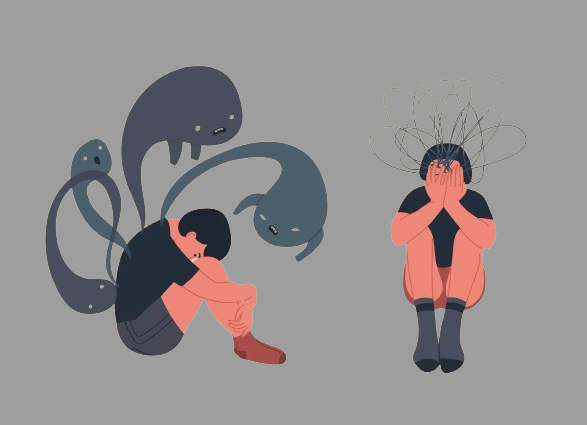
You check your phone for the third time in an hour, even though you know nothing has changed since the last time you looked. The conversation from last night is still open in your messages, and you reread it, searching for a tone you might have missed the first two times.
He said “we should hang out soon” instead of naming an actual day, and now that single sentence has taken up more mental real estate than anything else in your week. This particular kind of low-grade dread, the one that lives in the space between “we’re talking” and “we’re together,” has a name, and it is situationship anxiety.
Situationship anxiety describes the persistent unease, hypervigilance, and emotional exhaustion that develops when a romantic or sexual connection has no agreed-upon definition, no shared language for what it is, and no clear sense of where it might be going.
It is not simply the nervousness of early dating, and it is not the same as garden-variety relationship insecurity. It is a distinct psychological state that forms specifically in response to prolonged ambiguity, and understanding why it feels so much heavier than a normal crush is the first step toward getting some peace back.
What Situationship Anxiety Actually Is
A situationship, as the term has come to be used, describes a romantic or sexual connection that has most of the emotional texture of a relationship without any of its defined structure. There may be regular contact, physical intimacy, inside jokes, even meeting each other’s friends, but there is no shared agreement about exclusivity, no label either person is willing to say out loud, and no clarity about the future.
This is different from simply dating casually with the explicit understanding that things are still forming. Situationship anxiety tends to emerge specifically when the emotional investment has grown well beyond what the undefined structure can comfortably hold, creating a mismatch between how much a person feels and how little they are allowed to ask for.
What makes this particular form of anxiety distinct from generic dating nerves is the absence of a shared reference point. In a defined relationship, even a difficult one, both people are usually working from the same basic map, even if they disagree about the details.
In a situationship, there often isn’t a map at all, which means every text, every canceled plan, and every stretch of silence has to be interpreted from scratch, without any agreed-upon context to make sense of it. That constant interpretive labor, repeated day after day, is what begins to wear a person down far more than the actual behavior of the other person often warrants.
It also helps to understand why situationships have become so common in the first place, since the anxiety they generate is partly a byproduct of a genuinely new social landscape rather than simply a personal failing to communicate clearly.
Dating apps have expanded the pool of potential partners dramatically, which has, somewhat paradoxically, made many people more hesitant to commit to any one connection, since there is always a sense that someone else might be one swipe away.
This cultural backdrop makes undefined arrangements more socially normalized than they once were, which means more people than ever are navigating the specific anxiety that comes from investing in something that everyone around them treats as ordinary, even when it doesn’t feel ordinary from the inside.
The Nervous System Science Behind Situationship Anxiety
Human brains are remarkably good at tolerating bad news and remarkably bad at tolerating unresolved uncertainty. This is not a personality flaw or a sign of being “too anxious.” It reflects how the threat-detection systems in the brain are built. The amygdala, the region most involved in scanning for potential danger, treats ambiguity as a category of threat in its own right, separate from whatever the actual outcome eventually turns out to be.
When a person doesn’t know where they stand with someone they are emotionally invested in, the brain doesn’t wait for clarity before reacting. It begins generating stress signals immediately, because uncertainty itself is read as unsafe.
This is where cortisol comes into the picture. Chronic ambiguity keeps cortisol levels elevated for longer stretches than a single clear rejection would, because a clear rejection at least gives the nervous system something to resolve and move past.
A situationship, by contrast, offers just enough warmth to keep hope alive and just enough distance to keep the nervous system on alert, which means the stress response never fully completes its cycle. Over weeks or months, this creates the kind of low-grade, background hum of anxiety that people in situationships often describe: not panic, exactly, but a persistent inability to fully relax, even during good moments with the person in question.
Hypervigilance is the behavioral expression of this nervous system state. It shows up as the compulsive urge to reread messages for hidden meaning, to track response times as though they were data points in an experiment, and to replay in-person interactions afterward looking for reassurance that didn’t quite arrive in the moment. This scanning behavior is exhausting precisely because it is involuntary.
It isn’t that a person chooses to obsess over a situationship; it’s that an ambiguous emotional bond keeps the threat-detection system switched on in a way that clear, defined relationships generally do not.
It’s worth noting that this response is not evidence of weakness or excessive neediness, even though it can feel deeply humiliating to notice yourself checking a phone for the fifth time in an hour.
The nervous system evolved to prioritize resolving uncertainty quickly, because in earlier human environments, unresolved social ambiguity, such as not knowing whether you remained in good standing with your group, carried real survival stakes.
That ancient wiring doesn’t distinguish particularly well between the uncertainty of modern dating and the uncertainty of social standing within a small tribal group, which is part of why a genuinely low-stakes text message can trigger a response that feels wildly disproportionate to the actual event.
How Attachment Style Shapes the Experience
Not everyone responds to relational ambiguity in the same way, and understanding your own attachment style can make sense of reactions that might otherwise feel confusing or excessive. People with an anxious attachment style tend to experience situationships most acutely, because ambiguity directly activates their core fear, which is the fear of being left or deprioritized without warning.
For someone with this attachment pattern, the lack of a defined relationship can feel less like a neutral arrangement and more like a constant, low-level threat that something they care about could disappear at any moment, since there was never an agreement in place to prevent it.
People with an avoidant attachment style often experience situationships quite differently, sometimes even finding the lack of definition comfortable at first, since it allows for closeness without the vulnerability that a defined commitment would require.
Over time, though, avoidant individuals can also develop their own version of situationship anxiety, particularly if the other person begins pushing for clarity, which can trigger a different kind of internal alarm centered around loss of autonomy rather than fear of abandonment.
The anxiety looks different on the outside, often presenting as irritability or a sudden urge to create distance, but it stems from the same underlying discomfort with an emotionally significant bond that lacks clear boundaries.
People with a more secure attachment style are not immune to situationship anxiety, but they tend to experience it with more capacity to name what they need and ask for it directly, rather than getting stuck in prolonged rumination.
This isn’t a moral distinction between “healthy” and “unhealthy” people; it reflects differences in how each nervous system learned, often very early in life, to interpret closeness and distance.
Recognizing your own pattern here isn’t about self-diagnosis, but it can be genuinely useful in understanding why a friend in the same exact situationship might seem far less bothered by it than you are.
It’s also worth remembering that attachment patterns are not fixed traits carved in stone, even though they can feel deeply ingrained in the moment. They developed in response to early relational experiences, and they can shift over time through new relational experiences, including therapy, secure friendships, and situationships that are handled with more self-awareness than the ones that came before.
Understanding your attachment pattern isn’t about assigning yourself a permanent label; it’s about gaining a clearer lens for interpreting reactions that might otherwise feel confusing, disproportionate, or hard to explain to someone who doesn’t share the same relational history.
Why the Brain Gets Hooked on Uncertainty
One of the more counterintuitive aspects of situationship anxiety is that the very uncertainty causing the distress is often also what makes the connection feel so hard to walk away from. This isn’t a coincidence, and it isn’t a sign of poor judgment.
It reflects a well-documented pattern in behavioral psychology called intermittent reinforcement, in which rewards that arrive unpredictably create stronger, more persistent engagement than rewards that arrive on a consistent, predictable schedule. This is the same underlying mechanism that makes slot machines so compelling, and it operates just as powerfully in emotional bonds.

In a situationship, affection and attention tend to arrive unpredictably rather than reliably. A warm, connected evening might be followed by two days of relative silence, which is then followed by an unexpectedly sweet good-morning text that resets the entire emotional experience.
Because the good moments are not guaranteed, the brain’s reward system treats each one as more significant than it might treat a similarly warm moment inside a stable, defined relationship where affection is expected and consistent.
This is part of why situationships can feel disproportionately consuming, even when, from the outside, the actual relationship seems fairly minor. The unpredictability itself is doing psychological work that a defined relationship’s consistency simply doesn’t do.
The Physical and Emotional Toll of Situationship Anxiety
The cost of this ongoing uncertainty rarely stays contained to just thoughts about the other person. Sleep is often one of the first things affected, since the mind tends to use the quiet, unstructured time before falling asleep to run back through the day’s interactions, searching for clues it may have missed.
Many people in situationships describe lying awake replaying a specific exchange, turning a single sentence over and over as though enough analysis could eventually produce a definitive answer about where things stand.
Concentration during the day often suffers as well, since a portion of mental bandwidth stays quietly occupied with monitoring the situationship even during unrelated tasks. This can show up as difficulty focusing at work, forgetting things that would normally be easy to remember, or feeling a strange background static that makes ordinary tasks take more effort than they should.
Self-esteem can also take a slow, cumulative hit, particularly because the ambiguity of a situationship leaves plenty of room to internalize any distance or inconsistency as a reflection of personal worth rather than simply a structural feature of an undefined arrangement. Without a shared relationship label to lean on, it becomes easy to quietly wonder whether the other person’s hesitance says something specific and damning about you, even when it may have very little to do with you at all.
Social withdrawal can follow close behind, sometimes in subtle ways that are easy to miss at first. Plans with friends might get pushed back in case the situationship reaches out unexpectedly, or entire evenings might be spent mentally rehearsing conversations that never end up happening.
Over time, this can quietly shrink a person’s world, narrowing their emotional focus down to a single uncertain connection while the relationships that actually offer consistency and support receive less attention than they deserve.
Situationship Anxiety Versus Normal Relationship Uncertainty
It’s worth distinguishing situationship anxiety from the ordinary nervousness that accompanies the early, forming stages of any romantic connection, because not every flutter of uncertainty signals a problem. Early dating naturally involves not knowing exactly how someone feels, and some degree of not-knowing is simply part of two people getting to know each other honestly, without either person overcommitting before they’re ready.
This kind of uncertainty tends to feel light, even exciting, and it usually resolves within a reasonable timeframe as both people either move toward more clarity or naturally drift apart.
Situationship anxiety, by contrast, tends to emerge specifically when the ambiguity has persisted well past the point where clarity would normally develop, and when one or both people seem to be actively avoiding the conversation that would resolve it. The tell isn’t the presence of some uncertainty; it’s the quality of that uncertainty, whether it feels like a natural, temporary stage or a stuck, repeating loop that never quite advances no matter how much time passes.
If months have gone by with the same unresolved dynamic, and the thought of naming what’s happening feels genuinely frightening rather than simply awkward, that’s usually a sign the situation has moved from ordinary dating nerves into something with more psychological weight behind it.
When Situationship Anxiety Starts Resembling Clinical Anxiety
For some people, the anxiety generated by a prolonged situationship doesn’t stay neatly confined to that one relationship. It can begin to generalize, showing up as difficulty concentrating on unrelated tasks, irritability with friends or family that seems to come from nowhere, or a broader sense of unease that persists even during hours spent away from the person in question entirely.
When this happens, it’s worth taking seriously not because anything is wrong with the person experiencing it, but because prolonged, unresolved stress genuinely can contribute to or intensify patterns that resemble generalized anxiety.
This isn’t a suggestion that everyone dealing with situationship anxiety needs professional support, since for many people, clarity or closure with the situationship itself is enough to bring things back to baseline.
But if the anxiety has started interfering with sleep on most nights, affecting work or school performance, or bleeding into other relationships in ways that feel hard to control, that’s a reasonable signal to consider talking with a therapist, not because the feelings are irrational, but because ongoing support can help build tools for tolerating uncertainty that extend well beyond this one situation.
What Actually Helps With Situationship Anxiety
The most direct relief tends to come from initiating the clarifying conversation that the situationship has been avoiding, even though this is often the exact conversation that feels most frightening to start.
Naming what you want, whether that’s a defined relationship, exclusivity, or simply an honest read on where the other person stands, replaces the endless internal guessing with an actual answer, and even a disappointing answer tends to be easier to process than ongoing ambiguity, because it finally gives the nervous system something concrete to resolve.
Alongside that direct conversation, building a sense of personal security that doesn’t depend entirely on the other person’s next move makes a meaningful difference over time. This might look like deliberately investing energy into friendships, work, or personal goals that have nothing to do with the situationship, not as a distraction technique, but as a genuine reminder that your sense of worth was never supposed to be outsourced to someone else’s texting habits in the first place.
Simple nervous system regulation practices, like slow breathing during moments of high anxiety, brief walks to interrupt a spiraling thought loop, or grounding techniques that bring attention back into the present moment, can also reduce the intensity of the hypervigilance without requiring the situationship itself to be resolved first. None of these tools make the underlying ambiguity disappear on their own, but they do restore a sense of agency that situationship anxiety tends to quietly strip away.
FAQ
Is situationship anxiety a real diagnosis? No, situationship anxiety isn’t a formal clinical diagnosis, but it describes a genuine and well-understood psychological response to prolonged relational ambiguity, rooted in real nervous system and attachment mechanisms.
Why do situationships feel more stressful than relationships? Situationships lack the shared structure and consistency that defined relationships provide, which keeps the brain’s threat-detection system more active and makes ordinary interactions feel like they require constant interpretation.
How do I know if I should ask for clarity? If thinking about the relationship’s status causes more anxiety than excitement on most days, or if you find yourself avoiding the conversation out of fear rather than genuine uncertainty about your own feelings, that’s usually a sign it’s time to ask.
Can situationship anxiety turn into depression? Prolonged, unresolved situationship anxiety can contribute to low mood, especially if it involves ongoing self-esteem erosion, though it becomes depression only if broader symptoms like persistent sadness or loss of interest develop and continue beyond the situationship itself.
Is it normal to feel anxious in every situationship? Some uncertainty is common in any undefined connection, but persistent, intense anxiety in every situationship you enter may be worth exploring with a therapist, since it can sometimes point to a broader attachment pattern.
How long do situationships typically last? There’s no fixed timeline, but situationships that remain undefined for many months without either person raising the question of clarity tend to be the ones most strongly associated with chronic anxiety.
Conclusion
If you’ve spent the last few weeks or months feeling unsettled by something that isn’t quite a relationship but isn’t quite nothing either, the anxiety you’re carrying has a real explanation, and it isn’t a sign that you’re overreacting or asking for too much. Your nervous system is responding exactly the way nervous systems are built to respond to prolonged ambiguity, and the discomfort you feel is data, not a character flaw. You deserve clarity, not because undefined connections are inherently wrong, but because you deserve to know where you stand with the people you’re investing real emotional energy into. Trusting that instinct, and eventually acting on it, is usually the fastest way back to feeling like yourself again.