| Quick Answer
Online therapy connects you with a licensed mental health professional through video, phone, or secure messaging instead of an in-person office visit. Sessions typically cost $60–$120 without insurance, or a standard copay with coverage, and research shows online cognitive behavioral therapy is as effective as in-person care for anxiety, depression, and related conditions. |
If you have typed “online therapy” into a search bar at 1 a.m., you are not alone. Millions of people now start their mental health journey from a phone screen rather than a waiting room, and the shift has fundamentally rewritten what “seeing a therapist” means. Online therapy, sometimes called teletherapy, telehealth counseling, or virtual counseling, lets you meet with a licensed psychologist, licensed clinical social worker (LCSW), licensed professional counselor (LPC), or psychiatrist through video calls, phone sessions, or secure text-based messaging. What used to require a commute, a waiting room, and a rigid 9-to-5 schedule can now happen from a bedroom, a parked car during a lunch break, or a quiet corner of an apartment after the kids are asleep.
This guide breaks down exactly how online therapy works, what the research actually says about its effectiveness, how much it costs with and without insurance, how to choose a platform that fits your needs, and what to watch for so you end up with real clinical care rather than a poorly regulated app. Whether you are exploring online therapy for anxiety, searching for depression therapy online, or simply comparing the best online therapy platforms before committing your money and your trust, you will find a clear, evidence-based answer detailed in our online therapy guide.
What Is Online Therapy, Exactly?
Online therapy is the delivery of professional mental health treatment through digital channels instead of an in-person office visit. The clinical content is the same licensed care you would receive face-to-face, the same diagnostic criteria from the DSM-5-TR, the same evidence-based modalities such as cognitive behavioral therapy (CBT), dialectical behavior therapy (DBT), acceptance and commitment therapy (ACT), and eye movement desensitization and reprocessing (EMDR), but the delivery mechanism changes. A therapist licensed in your state conducts sessions over HIPAA-compliant video software, a phone line, or an encrypted messaging portal, and your treatment plan, progress notes, and confidentiality protections are governed by the same laws that apply to a traditional practice.
It is worth distinguishing online therapy from adjacent but different services. Peer-support apps and AI chatbots are not therapy, because they are not delivered by a licensed clinician who can diagnose, bill insurance, or take legal responsibility for your care. Psychiatric medication management delivered by video is telepsychiatry, a related but separate service that focuses on prescribing rather than talk therapy, although many online mental health services now bundle both under one membership.
How Does Online Therapy Actually Work?
Getting started almost always follows the same basic sequence. You complete an intake questionnaire covering your symptoms, history, and goals; a matching algorithm or intake coordinator pairs you with a therapist licensed in your state; and you schedule a first session, usually within a few days rather than the multi-week wait common with in-person referrals. From there, sessions happen on a recurring cadence, weekly is standard for most conditions, through whichever format your platform supports.
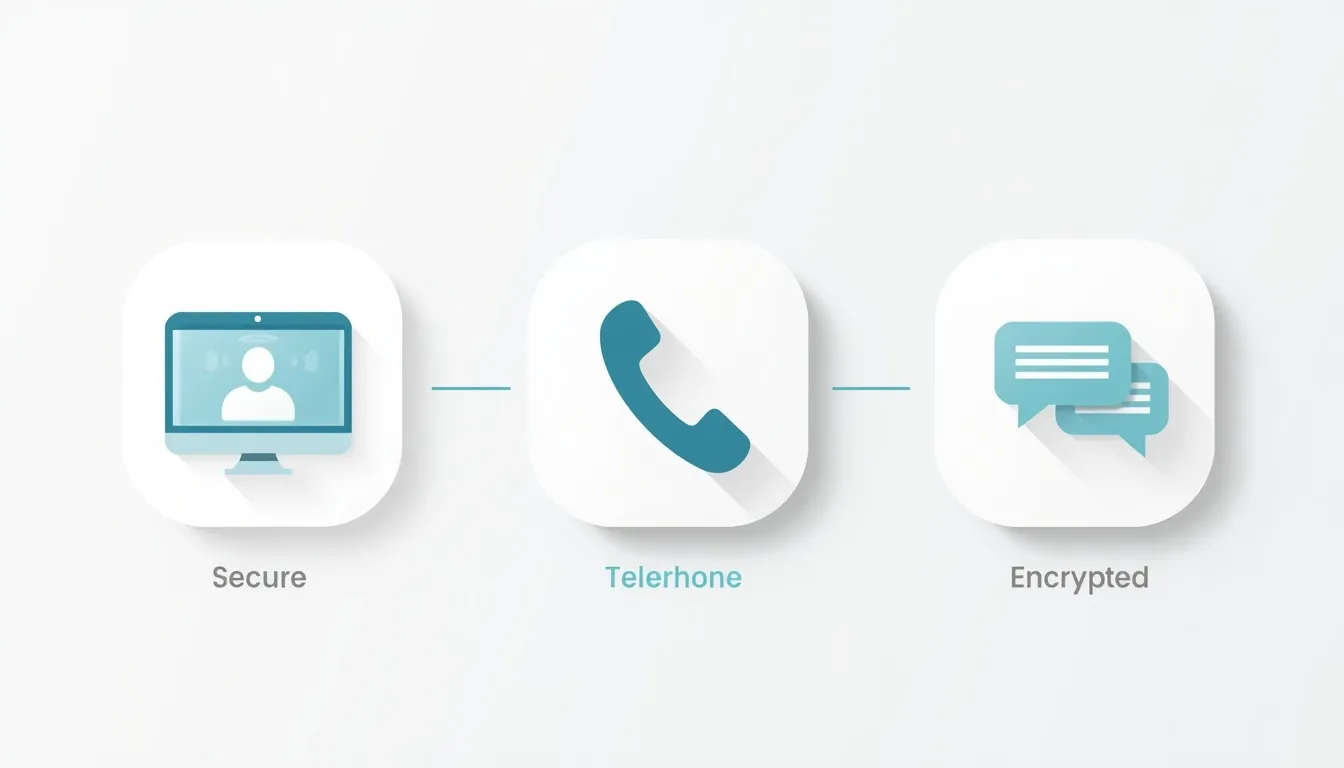
Most platforms offer a mix of three formats. Live video sessions most closely replicate an in-person appointment and are generally considered the gold standard for building therapeutic rapport. Phone sessions serve people with limited bandwidth, visual impairments, or a preference for privacy without being on camera. Asynchronous messaging, where you send a message and your therapist replies within a set window (often once or twice daily), suits people who process feelings better in writing or whose schedules make live appointments difficult. Many people combine formats, using messaging between weekly video sessions to keep momentum on the skills discussed in online depression therapy, so progress does not stall between appointments.
Licensing is the detail people skip and later regret. A therapist can only legally treat you while you are physically located in a state where they hold an active license, which is why reputable online therapy platforms ask for your address and re-verify it periodically, even though the session itself happens on a screen. This single rule is behind most of the “my therapist can’t see me anymore” stories people post after moving across state lines.
Is Online Therapy Actually Effective?
This is the question that matters most, and the clinical literature has become fairly conclusive. Multiple randomized controlled trials and meta-analyses, including research published in JAMA Psychiatry and reviews from the American Psychological Association, have found that video-delivered cognitive behavioral therapy produces outcomes statistically comparable to in-person CBT for generalized anxiety disorder, major depressive disorder, panic disorder, and insomnia. The therapeutic alliance, the trust and rapport between client and therapist that predicts outcomes more than almost any other single factor, forms just as reliably over video as it does in an office, according to comparative studies tracking both formats over 12- to 16-week treatment courses.
Effectiveness does vary by condition and severity. Mild to moderate anxiety, depression, adjustment issues, grief, and relationship concerns respond well to online formats. Conditions involving active psychosis, severe substance dependence requiring medical detox, or acute suicidality typically require a higher level of in-person or inpatient care that a standard online therapy platform is not equipped to provide, most platforms are explicit about this limitation in their terms of service, and a responsible therapist will refer you to appropriate crisis or in-person resources rather than attempt to manage an emergency over a messaging app. If you are in immediate crisis, calling or texting 988 (the Suicide & Crisis Lifeline in the United States) connects you to trained counselors right away, regardless of which therapy platform you use.
For a deeper look at how specific conditions present and respond to treatment, our guide on online therapy for anxiety walks through the diagnostic criteria clinicians use before recommending a treatment plan, whether delivered online or in person.
Types of Online Therapy Platforms
The market has matured into a few distinct categories, and knowing which one you are looking at prevents a lot of confusion. Subscription-based platforms charge a flat weekly or monthly fee that typically bundles one live session with unlimited asynchronous messaging; they rarely accept insurance directly but often provide a superbill you can submit for out-of-network reimbursement. Insurance-based directories function more like a traditional practice moved online, you book individual sessions, your insurance is billed per visit using standard CPT codes such as 90837 or 90791, and you pay only a copay. Employer-sponsored Employee Assistance Programs (EAPs) offer a set number of free sessions annually through virtual providers, often the fastest and cheapest way to access online mental health services if your workplace offers one. Specialty platforms focus on a narrower population, couples counseling, teen therapy, psychiatry-only medication management, or trauma-focused EMDR, and are worth considering if your needs are highly specific rather than general.
Group and community-based teletherapy is a smaller but growing category, offering moderated video groups for shared experiences such as grief, postpartum adjustment, or chronic illness at a lower price point than individual sessions, though it is not a substitute for one-on-one care when a more personalized treatment plan is needed.
How Much Does Online Therapy Cost?
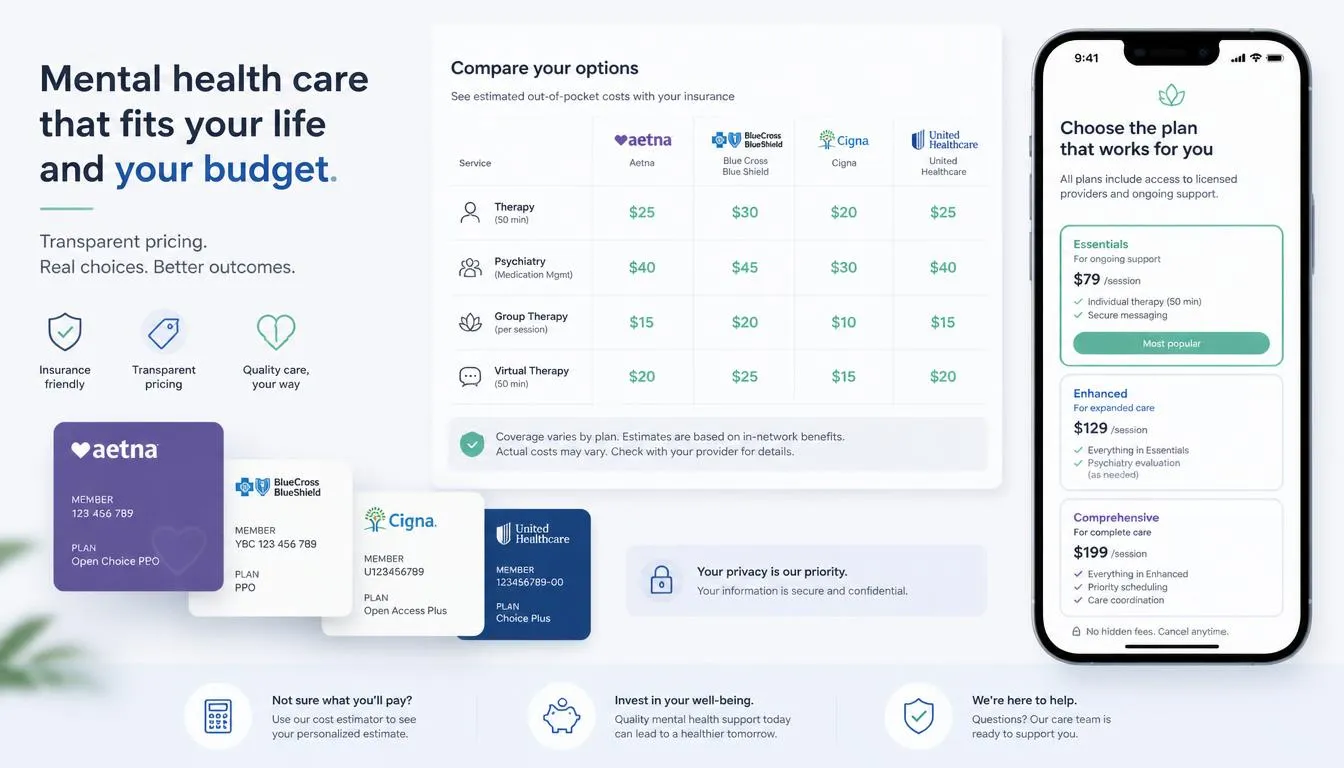
Pricing spans a wide range depending on the model you choose. Subscription platforms generally run $60 to $100 per week when billed monthly, which works out to roughly $240 to $400 per month for one live session plus ongoing messaging access. Pay-per-session insurance-based platforms typically charge a copay between $0 and $50 per visit if your plan covers outpatient mental health, which most commercial plans and Medicaid programs in the United States are required to do under mental health parity laws. Without insurance, an individual session booked through an insurance-based directory can run $100 to $250, comparable to in-person private-practice rates in most metro areas.
If cost is the primary barrier, a few paths are worth exploring before ruling out professional care altogether: many platforms offer sliding-scale fees based on income, community mental health centers provide low-cost virtual counseling on a similar sliding scale, university training clinics staffed by supervised graduate students charge a fraction of standard rates, and some insurance-based directories let you filter specifically for providers marked as accepting your exact plan. Before enrolling anywhere, it is worth taking the time to compare health insurance plans that cover mental health care, since coverage details, deductibles, session limits, and in-network requirements, vary enormously even among plans from the same insurer.
Online Therapy for Anxiety, Depression, and Other Common Conditions
Anxiety and depression remain the two most common reasons people search for online therapy, and both have some of the strongest supporting evidence for virtual treatment. A typical course of online CBT for generalized anxiety disorder runs 12 to 20 sessions and focuses on identifying cognitive distortions, practicing exposure to avoided situations, and building tolerance for uncertainty, all of which translate cleanly to a video format since much of the work is verbal and worksheet-based. Depression therapy online often follows behavioral activation and CBT protocols aimed at rebuilding routine, challenging negative thought patterns, and, where appropriate, coordinating with a telepsychiatry provider for medication.
Beyond anxiety and depression, online treatment has also shown solid outcomes for obsessive-compulsive disorder using exposure and response prevention delivered by video, for mild-to-moderate post-traumatic stress disorder using trauma-focused CBT or virtually delivered EMDR, and for insomnia using CBT-I protocols that are almost entirely conversation- and worksheet-driven. Couples and family therapy translate less perfectly to video because reading a room’s body language across multiple people is harder on a screen, though most licensed relationship therapists still manage it effectively with intentional camera framing and structured exercises. For partners navigating relationship transitions or separation, exploring online couples relationship counselling or specialized divorced couples counseling provides structured support.
How to Choose the Right Online Therapy Platform
Start by confirming licensure rather than reading marketing copy. Every legitimate platform should let you see a prospective therapist’s full name, license number, license type, and state before you book, and that information should be verifiable through your state licensing board’s public database in a couple of minutes. If a platform is vague about credentials or the therapist matching process, treat that as a warning sign rather than a convenience feature.
From there, match the platform to your actual clinical need instead of its marketing. Someone managing mild everyday stress has very different requirements than someone recovering from trauma or managing a chronic psychiatric condition, and the right fit often has more to do with therapist specialty and modality than with app design. It also helps to verify a therapist’s license and credentials directly rather than relying solely on a platform’s internal vetting, since standards for background checks vary between companies.
Finally, read the cancellation policy, ask whether you can switch therapists without extra cost if the fit is wrong (a normal and expected part of the process, research suggests it takes most people one to three tries to find the right match), and check what happens to your data and session history if you cancel your subscription.
Privacy, Security, and Ethical Considerations
Reputable online therapy platforms are required to comply with HIPAA (or equivalent regional privacy law) and use end-to-end encrypted video and messaging infrastructure, meaning your session content cannot legally or technically be read by anyone outside your care team. Before signing up, it is reasonable to check a platform’s privacy policy for how long message transcripts are retained, whether de-identified data is used for research or shared with advertisers, and what encryption standard is disclosed. A platform that is transparent about these details in plain language, rather than only in dense legal text, is generally a better sign of a mature, compliance-conscious operation.
Informed consent for telehealth also covers what happens in an emergency: a responsible therapist will discuss, before your first session, what they will do if you become a danger to yourself or others during a video call, including local emergency contacts and crisis resources appropriate to your location. This conversation should happen proactively, not only after something goes wrong.
The Bottom Line
Online therapy has moved from a pandemic-era workaround to a mainstream, well-researched form of mental health care that, for most common conditions, performs on par with sitting across from a therapist in an office. The decision that actually matters is not “online versus in-person” in the abstract, it is choosing a licensed, credentialed provider, a format (video, phone, or messaging) that fits how you communicate best, and a payment structure you can sustain long enough to see real progress, since consistency over months tends to matter more to outcomes than the specific format of any single session.
Frequently Asked Questions
Is online therapy as effective as in-person therapy?
For most common conditions, including mild to moderate anxiety, depression, and insomnia, research shows online cognitive behavioral therapy produces outcomes statistically similar to in-person therapy, largely because the therapeutic alliance forms just as reliably over video. In-person or inpatient care is still recommended for acute crises, active psychosis, or situations requiring medical supervision.
How much does online therapy cost without insurance?
Without insurance, subscription-based online therapy platforms typically cost $60–$100 per week (roughly $240–$400 per month), while pay-per-session platforms can range from $100–$250 per visit. Sliding-scale options, university training clinics, and community mental health centers offer lower-cost alternatives for people without coverage.
Is online therapy covered by insurance?
Many commercial insurance plans, Medicaid, and Medicare now cover online therapy sessions the same way they cover in-person visits, thanks to mental health parity laws and expanded telehealth reimbursement policies. Coverage details vary by plan, so it’s worth confirming copay amounts and any session limits directly with your insurer before booking.
Can online therapists prescribe medication?
Therapists such as psychologists, LCSWs, and LPCs generally cannot prescribe medication, regardless of whether sessions are online or in person. Medication management online is handled by a telepsychiatrist or psychiatric nurse practitioner, and many online mental health services offer this as a separate but coordinated add-on to talk therapy.
Is online therapy safe and confidential?
Legitimate online therapy platforms are required to follow HIPAA (or equivalent local privacy law) and use encrypted video and messaging systems, so your sessions are held to the same confidentiality standards as an in-person office visit. Confirming a therapist’s license and reviewing a platform’s privacy policy before signing up are the two simplest ways to verify that safety standard is actually being met.
Medical Disclaimer & E-E-A-T AttributionThis article is for educational purposes and does not replace personalized medical or psychological advice. If you are recovering from a brain injury, trauma, or a mental health condition, work with a licensed clinician to build a plan suited to your situation. Written by: Adil Farooq, Psychiatry Magazine Medically reviewed by: [Dr. Adil Farooq MS · PhD] · Updated: 2026 |