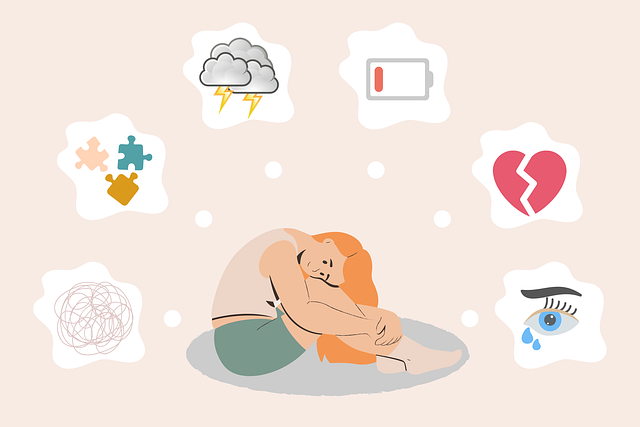
Pathological boredom vs anhedonia is the comparison that most people living inside one of these conditions have never been offered — despite the fact that millions of people are searching for exactly this distinction right now, in the gap between two diagnoses that neither quite fits. You cannot engage with anything. Nothing holds your attention.

Things you used to enjoy either produce nothing or feel impossibly far away. And you cannot tell whether you are chronically, pathologically bored — or whether you have genuinely lost the neurological ability to feel pleasure.
That distinction matters more than most people realise. Chronic boredom vs loss of pleasure are not the same experience, do not arise from the same mechanism, and do not respond to the same treatment.
Treating one as the other produces no improvement at best and deepens the condition at worst — because the brain systems involved are different, the interventions required are different, and the clinical trajectory of each condition is different enough to demand accurate identification before anything else.
The pathological boredom symptoms that most commonly bring people to this question have never been compared, in a single accessible article, with the specific neurological profile of anhedonia. That is the gap this article fills. Both conditions are more clinically significant than their names suggest. Both are treatable. Neither is a personality flaw or a choice.
By the end of this article you will have the clinical definition of each condition, the neuroscience that separates them, a practical self-assessment framework, the causes driving each, and the specific treatments that work — for each one, distinctly. Let us begin where the confusion does.
What Is Pathological Boredom? The Clinical Definition Beyond Ordinary Dullness
Pathological boredom is not the mild restlessness of a slow afternoon. Ordinary boredom is a temporary, state-based experience of understimulation — a motivational signal that pushes a person toward more engaging activity. It is universal, adaptive, and in most cases, self-resolving. The clinical problem begins when it does not resolve.
Trait boredom is a chronic dispositional tendency to experience boredom more frequently and intensely than the population norm — present across environments and circumstances, not dependent on external conditions, and significantly more impairing than ordinary boredom in its daily effects.
John Eastwood at York University established one of the most important frameworks for understanding it: boredom is not a failure of external stimulation, but a failure of attention regulation — the inability to successfully engage attention with available activities, regardless of how stimulating those activities might objectively be.
Andreas Elpidorou’s complementary framework adds another dimension. Boredom, in its adaptive form, functions as a regulatory signal — the body’s motivational push toward more meaningful engagement. In pathological boredom, this regulatory function has broken down. The signal fires chronically, intensely, and without producing the corrective movement toward engagement that it was designed to initiate. It becomes noise rather than information.
Pathological boredom — trait boredom that has reached clinical significance — crosses the line when it consistently interferes with functioning, drives risky or self-destructive behaviour as stimulation-seeking, and meets the threshold established in 2024 research as an independent predictor of depression, anxiety, and psychosocial impairment. It is not yet a formal DSM category. Its clinical validity is established, its research base is growing, and its real-world impact is undeniable.
Pathological boredom is the state of wanting engagement desperately and being neurologically unable to reach it — the wanting is intact, the access is broken.
The Five Types of Boredom — And the One That Looks Like Anhedonia
Thomas Goetz and colleagues identified five distinct types of boredom that differ meaningfully in emotional valence and behavioural pattern. Indifferent boredom is relaxed and low-arousal — almost pleasant in its passivity. Calibrating boredom involves wandering thoughts and a vague sense of needing something different. Searching boredom is restless and active — the person is looking, uncomfortable, wanting to find something that will engage them.

Reactant boredom is the most agitated type — high arousal, aggression, desire to escape the situation entirely. And apathetic boredom is the type that most closely resembles anhedonia: low arousal, resignation, a quality of helplessness, a person who has stopped trying to find something engaging because the trying itself has collapsed.
Apathetic boredom sits at the diagnostic boundary between boredom and anhedonia, and it is where most clinical confusion occurs. The critical distinction — which this article will return to repeatedly — is that in apathetic boredom, the wanting to feel engaged still exists at some buried level. The person has stopped searching, but the absence of search is not the same as the neurological absence of wanting.
In anhedonia, the wanting has gone quiet at the circuit level — not suppressed or exhausted, but neurologically diminished.
What Is Anhedonia? The Neurological Loss That Goes Beyond Not Enjoying Things
Anhedonia takes its name from the Greek — an, meaning without, and hedone, meaning pleasure — and it describes something more precise and more neurological than the ordinary language of enjoyment conveys. The DSM-5 names it as one of only two core criteria for major depressive disorder, alongside depressed mood — a placement that reflects decades of research confirming its clinical centrality.
The most important scientific framework for understanding anhedonia — and for distinguishing it from pathological boredom — comes from neuroscientist Kent Berridge’s research on the wanting and liking systems.
The brain does not operate pleasure through a single circuit. It has separate systems for wanting — the mesolimbic dopamine pathway running from the ventral tegmental area to the nucleus accumbens, which generates the motivational drive toward reward — and liking — the opioid-mediated system that produces the hedonic experience of receiving the reward once obtained.
In anhedonia, one or both of these systems are impaired. The dopamine wanting signal fails to fire with sufficient intensity to initiate motivated behaviour. The opioid liking signal fails to register enjoyment when rewarding experiences occur. Or both fail simultaneously — producing a person who neither seeks nor enjoys, for neurological rather than motivational reasons.
Michael Treadway and David Zald’s research on consummatory and anticipatory anhedonia adds further clinical precision. Consummatory anhedonia is the inability to experience pleasure in the moment — eating a meal you once loved and tasting only function.
Anticipatory anhedonia is the loss of the ability to look forward to things — the “I can’t wait” signal that used to precede good experiences has gone quiet. Both represent different dimensions of the same underlying dopaminergic impairment, and a person can have one without the other.
Anhedonia is not a mood. It is not a choice. It is a measurable dysfunction in specific neural circuits — and understanding it at that level of precision is what makes treatment possible.
Pathological Boredom Symptoms That Overlap With Anhedonia
The surface features that create diagnostic confusion between these two conditions are real and significant. Both involve inability to engage with previously enjoyed activities. Both produce social withdrawal — not from dislike but from the absence of reward from connection. Both generate low motivation and difficulty initiating. Both produce a sense of time moving slowly and without meaning.
The person presenting with either condition in a clinical setting may describe their experience in almost identical language — “I can’t find anything that interests me,” “nothing feels worth doing,” “I used to enjoy this and now I don’t.” That similarity of language is precisely why the neurological distinction must be understood before the treatment can be chosen. The surface presentation does not differentiate them. The mechanism does.
Pathological Boredom vs Anhedonia: The Neurological Difference That Determines Your Treatment
Pathological boredom vs anhedonia, examined at the level of brain mechanism rather than symptom description, becomes two entirely different conditions that happen to wear similar clothing. The clearest way to understand that difference is through Berridge’s wanting vs liking framework — because it maps precisely onto what distinguishes these two states at the level of neurological function.
In pathological boredom, the wanting system is intact. The mesolimbic dopamine circuit still fires motivational signals — the person still experiences the pull toward activity, the restlessness of an unsatisfied drive, the urgency of wanting to be somewhere mentally that they cannot reach.
What is impaired is the attention regulation system that should convert that wanting into successful, satisfying engagement. The wanting fires. The engagement does not follow. The result is a person in perpetual, frustrated, unsatisfied seeking.
In anhedonia, the wanting system itself is impaired. The dopamine circuit that generates the motivational pull has reduced function — the signal that should initiate seeking and anticipation fires with insufficient intensity.
The person does not seek stimulation with urgency because the neurological signal that initiates seeking is diminished. The restlessness that characterises pathological boredom is absent not because the person is calm, but because the system that generates it is running below threshold.
The practical clinical test this distinction provides is one of the most useful diagnostic tools available outside a formal assessment. Are you still restless? Still searching, still wanting something that would engage you, still feeling the urgency of a drive that cannot find its target? That pattern — intact wanting, failed engagement — points toward pathological boredom.
Has the restlessness itself gone quiet? Is there an absence not just of enjoyment but of the pull toward anything, including the wanting? That pattern — diminished wanting at the circuit level — points toward anhedonia.
Reward prediction error research adds further precision. Anhedonia involves a specific impairment in the brain’s reward prediction error signal — the dopamine burst that normally precedes an anticipated reward and drives motivated behaviour.
In pathological boredom, this signal functions but fails to find satisfying targets. In anhedonia, the signal itself is reduced, which is why the anticipation of reward does not generate the motivational response that should follow it.
The HPA axis adds a temporal dimension to this distinction. Chronic stress from sustained pathological boredom activates the hypothalamic-pituitary-adrenal axis, producing cortisol elevation that is directly neurotoxic to dopaminergic neurons over time.
This is the mechanism by which prolonged, untreated pathological boredom can migrate toward anhedonia — the wanting system, repeatedly frustrated and chronically stressed, begins to lose function progressively. Boredom and anhedonia are not static alternatives. They have a relationship, and understanding it changes the clinical urgency of early intervention.
Causes of Pathological Boredom vs Anhedonia: What Drives Each Condition
Pathological boredom vs anhedonia share some causal territory — chronic stress, depression, and trauma can contribute to both — but their primary causal mechanisms are distinct enough to require separate treatment targeting.
Attention Regulation Failure and Trait Boredom Proneness
Eastwood’s research identifies pathological boredom as fundamentally an attention problem — the inability to successfully direct and sustain attention toward available activities regardless of their objective interest. Trait boredom proneness has both neurological and developmental dimensions, shaped significantly by early environments and attention-system training across the lifespan.
Understimulating Environments and Meaning Deficit
Environments with insufficient cognitive, social, or creative demand relative to a person’s capacity produce chronic boredom in susceptible individuals. This is Viktor Frankl’s existential vacuum applied to the boredom spectrum — the absence of meaningful engagement is its own pathway to psychopathological suffering, and it is one of the most structurally addressable causes of chronic boredom.
Trait Boredom as an Independent Risk Factor
2024 research established that trait boredom is not merely a symptom of other conditions — it is an independent predictor of depression, anxiety, and psychosocial problems even after controlling for personality traits, life events, and pre-existing disorders. Pathological boredom has its own clinical trajectory that does not require another diagnosis to validate its seriousness.
Mesolimbic Dopamine Dysfunction
The primary neurological cause of anhedonia is reduced dopamine signalling in the pathway from the ventral tegmental area to the nucleus accumbens — the circuit that generates both the anticipation and the experience of reward. This impairment is measurable, specific, and directly responsive to targeted pharmacological and behavioural intervention.
Major Depressive Disorder and Persistent Depression
Anhedonia is a core criterion of MDD and a consistent feature of dysthymia — the reward system impairment that produces it is simultaneously a consequence of depression and a maintaining factor that deepens it. Treating depression without specifically targeting anhedonia often leaves significant residual impairment in people who have technically responded to antidepressant medication.
Trauma, PTSD, and Emotional Numbing
Post-traumatic emotional numbing — the nervous system’s protective withdrawal from emotional experience following overwhelming events — produces an anhedonia-like state through a different mechanism. The dopamine system is not broken; it is suppressed. The functional result is similar: absence of pleasure, absence of motivation, absence of the felt reward that should accompany positive experience.
Chronic Boredom vs Loss of Pleasure: A Clinical Self-Assessment Framework
Chronic boredom vs loss of pleasure cannot be accurately differentiated through a questionnaire — but a reflective framework can bring enough clarity to know what kind of clinical conversation to seek and what language to bring to it.
Are You Still Searching for Something Engaging?
Active searching — even fruitless, exhausting, compulsive searching — suggests an intact wanting system. The urgency of the search is evidence that the dopamine drive is still present. The absence of any search, the quiet where restlessness used to be, points toward anhedonia rather than boredom.
Did You Once Love Things That Now Produce Nothing?
Anhedonia typically involves a measurable shift from a prior baseline — there was a time when the music moved you, the work absorbed you, the connection felt real. That shift, and its approximate onset, is clinically significant. Pathological boredom often involves a longer, more dispositional history of difficulty engaging — present across years rather than representing a departure from a previous baseline.
Does Stimulation Help, Even Temporarily?
If intense stimulation — vigorous exercise, a genuinely absorbing conversation, an unexpectedly engaging film — briefly restores a sense of engagement, the wanting system is likely functioning. The wanting circuit can be activated; the attention system is the bottleneck. If even intense stimulation produces nothing, the wanting system itself warrants clinical attention.
Is There Restlessness or Flatness?
Pathological boredom produces agitation, urgency, a desperate quality to the disengagement — the person wants to be somewhere mentally that they cannot reach and they feel that want. Anhedonia produces flatness — a quieter, greyer, less urgent absence that is in some ways more disturbing precisely because it does not feel like anything urgent at all.
How Long Has This Been Present?
Anhedonia tied to major depressive disorder often has a discernible onset — a period when the person can identify that things changed, when pleasure became inaccessible. Trait boredom proneness is more chronically present, more dispositional, less episodic. This temporal pattern is one of the most useful orienting questions in clinical assessment.
Does the Future Feel Blank or Just Uninteresting?
Anticipatory anhedonia produces a blank future — nothing to look forward to, no pull toward anything that is coming. Pathological boredom produces an uninteresting future — everything feels dull, unstimulating, insufficient — but the person is still looking for something. The difference between a blank future and a boring one is neurologically significant.
Does Rest Restore Any Sense of Engagement?
Brief restoration of motivation and engagement after genuine rest points toward burnout or boredom — the wanting system was depleted, not impaired, and recovery restores it. Persistent absence of motivation regardless of rest points toward anhedonia — the circuit is not depleted, it is functionally diminished.
Have You Been Assessed for Depression?
Anhedonia is a core symptom of both major depressive disorder and persistent depressive disorder. If loss of pleasure has been present consistently for two or more weeks, a clinical assessment specifically considering depressive disorder is the appropriate and overdue next step — because anhedonia embedded in depression requires a different treatment pathway than anhedonia as a standalone presentation.
If the pattern you recognise is more anhedonia than boredom — or a clinically significant mixture of both — a professional assessment is the only pathway to accurate differentiation and targeted treatment.
Anhedonia vs Boredom: How to Tell — Treatment Pathways for Each Condition
Anhedonia vs boredom how to tell is ultimately a question that determines treatment — which is why the answer matters beyond academic classification. The pathways diverge significantly, and following the wrong one produces no clinical benefit.
Attention Retraining and Engagement Scheduling
For pathological boredom rooted in attention regulation failure, structured engagement scheduling trains the attention system toward sustained focus rather than waiting for stimulation to spontaneously arise. Pre-committed blocks of cognitively demanding activity — deliberately chosen and protected from interruption — rebuild the attentional capacity that pathological boredom has eroded through perpetual disengagement.
Meaning-Based Intervention — ACT and Logotherapy
Acceptance and Commitment Therapy directly targets the values-action gap that underlies existential boredom — identifying what genuinely matters to the person and building behavioural commitment toward it, regardless of momentary engagement levels. Frankl’s logotherapy addresses the meaning deficit dimension of pathological boredom directly, approaching hollowness as an existential condition that requires existential intervention.
Cognitive Restructuring of Boredom Tolerance
CBT addresses the cognitive patterns that maintain pathological boredom — particularly the belief that stimulation must be external, immediate, and highly rewarding, and the low frustration tolerance that abandons activities before the slower reward of genuine engagement has time to develop. The boredom-tolerant person is not someone who never gets bored — it is someone who has learned that engagement comes after the initial boredom, not instead of it.
Environmental Redesign
Structurally increasing the cognitive, creative, and social demand of daily environments — not through frantic activity but through deliberate alignment of challenge with capacity — addresses the environmental dimension of boredom proneness. This is a structural intervention, not a motivational one, and it is among the most durable pathological boredom treatments available.
Behavioural Activation Therapy
The most directly targeted psychological treatment for anhedonia — Behavioural Activation Therapy prescribes deliberate engagement in previously pleasurable activities in the complete absence of felt motivation, reactivating the reward pathway through action rather than waiting for feeling to return before acting. The reward system is re-engaged through behaviour; the feeling follows the action, not the reverse.
Dopaminergic Pharmacology
Where anhedonia is linked to major depressive disorder or persistent depression, dopamine-active medications — bupropion (a dopamine-norepinephrine reuptake inhibitor), or SSRI augmentation with dopaminergic agents — address the neurological substrate directly. This is a pathway managed by a prescribing clinician following formal assessment and diagnosis.
Aerobic Exercise and BDNF Stimulation
Aerobic exercise produces measurable increases in dopamine receptor sensitivity and brain-derived neurotrophic factor — directly rehabilitating the reward system at the neurological level. Even 20 to 30 minutes of moderate aerobic exercise three times per week produces clinically relevant changes in reward circuit function within six to eight weeks of consistent practice.
Addressing Underlying Conditions First
Both pathological boredom and anhedonia can be secondary to major depressive disorder, ADHD, trauma, or substance use disorder — and treating the underlying condition is the most efficient pathway when one is present. A professional assessment that identifies the primary diagnosis is the starting point from which every other intervention gains its accuracy.
When Pathological Boredom Becomes Anhedonia: The Clinical Progression Nobody Warns You About
The two conditions are not always separate states on a fixed map. There is a documented clinical progression from chronic untreated pathological boredom toward anhedonia — a trajectory that most people experiencing it never learn about until they have already traveled some distance along it.
The mechanism is neurological. Pathological boredom produces repeated dopamine undersupply — the wanting system fires, searches for a satisfying target, finds none, and produces the cortisol stress response of frustrated motivation. Sustained over months and years, this pattern produces what researchers describe as reward system depletion — the wanting circuit, repeatedly activated and repeatedly unsatisfied, begins to lose sensitivity and function.
The HPA axis accelerates this. Sustained boredom stress activates the hypothalamic-pituitary-adrenal axis, producing chronic cortisol elevation that is neurotoxic to dopaminergic neurons over extended periods. The shift from pathological boredom to anhedonia is the shift from an intact wanting system that cannot find engagement to a wanting system that is beginning to lose its capacity to want.
The risky behaviour connection is clinically important. Pathological boredom drives risk-taking, substance use, gambling, and compulsive stimulation-seeking as the nervous system attempts to activate the dopamine circuit by force. These behaviours, sustained across years, further deplete the reward system through overstimulation — accelerating the very neurological deterioration they were attempting to escape.
This is not a permanent prognosis. Both conditions, at every stage of their trajectory, respond to targeted intervention. But the progression is a reason — a genuinely clinical reason — to seek assessment at the boredom stage, before the wanting itself begins to quiet. The earliest and most complete recovery happens at the point when the system is still searching. Recovery from full anhedonia is possible and well-documented. Recovery from pathological boredom, before it has progressed, is faster and more complete.
Frequently Asked Questions About Pathological Boredom vs Anhedonia
Q: What is the difference between pathological boredom vs anhedonia?
A: The core difference is neurological. Pathological boredom involves an intact wanting system with failed attention regulation — the person still seeks, still feels the drive, but cannot successfully engage. Anhedonia involves impaired wanting — the mesolimbic dopamine circuit that generates motivational drive has reduced function. Berridge’s wanting vs liking framework is the clearest scientific way to separate them: boredom still wants; anhedonia has stopped wanting.
Q: How do I know if I have pathological boredom or anhedonia?
A: The most useful self-assessment question: are you still restless and searching? If yes — wanting is intact, attention regulation is the issue, boredom is the more likely diagnosis. Has the restlessness itself gone quiet — is there an absence of urgency, a flatness where searching used to be? That pattern points toward anhedonia.
Does intense stimulation briefly restore engagement? If yes, the wanting system is likely functioning. Professional assessment remains the only accurate differentiator.
Q: What are the main pathological boredom symptoms?
A: Chronic inability to engage attention with available activities despite wanting to, persistent restlessness and urgency, time experienced as heavy and slow, risk-taking and stimulation-seeking behaviour, low frustration tolerance, existential emptiness, and difficulty sustaining engagement even with initially interesting activities.
When these features significantly impair daily functioning, relationships, or wellbeing, the presentation crosses into clinically significant pathological territory.
Q: Can pathological boredom turn into anhedonia?
A: Yes — the clinical progression is documented. Chronic pathological boredom produces repeated dopamine undersupply and reward system depletion over time. HPA axis activation from sustained boredom stress produces cortisol elevation that is neurotoxic to dopaminergic neurons.
Risky stimulation-seeking behaviour further depletes the reward system. Early intervention in the boredom phase — before the wanting system loses function — is the most efficient recovery point.
Q: Is pathological boredom a real mental health condition?
A: Not yet a formal DSM category — but 2024 research established trait boredom as an independent predictor of depression and anxiety even after controlling for personality and life events.
Eastwood’s attention regulation framework and Elpidorou’s regulatory signal model provide robust theoretical foundations. Its clinical validity is established in the research literature even if its formal diagnostic status is still developing.
Q: What is the best treatment for pathological boredom vs anhedonia?
A: Pathological boredom responds to attention retraining, ACT and meaning-based intervention, CBT for boredom tolerance, and environmental redesign. Anhedonia responds to Behavioural Activation Therapy, dopaminergic pharmacology managed clinically, and aerobic exercise for BDNF stimulation.
Both conditions benefit from addressing underlying depression, ADHD, or trauma when present. Professional assessment accurately identifies which pathway applies — and whether both need to be addressed simultaneously.
Q: How is trait boredom different from anhedonia?
A: Trait boredom is a dispositional tendency — the wanting system is intact, attention regulation is the impaired function, and the person still experiences the drive toward engagement even when they cannot reach it.
Anhedonia involves dopamine pathway dysfunction — the wanting itself is neurologically diminished, producing absence of motivational drive rather than frustrated motivational drive. Different mechanisms, different clinical presentations, different treatments, and different prognoses with appropriate intervention.
Conclusion
Pathological boredom vs anhedonia are the two most commonly confused states of motivational disengagement in mood disorder psychology — distinguished not by their surface appearance but by the neurological mechanism that produces them. That mechanism is the entire clinical story.
Berridge’s wanting vs liking framework provides the clearest scientific separator: pathological boredom is a condition of intact wanting that cannot successfully reach engagement; anhedonia is a condition of diminished wanting at the circuit level. Both are real, both are treatable, and both require treatment approaches as distinct as their mechanisms. Mixing them produces no result. Targeting them accurately produces genuine recovery.
You now have the clinical framework to walk into a professional conversation with the specific language that differentiates these conditions — not the vague presentation of “I can’t enjoy anything” but the precise observation of whether the searching is still present or whether it has gone quiet. That specificity is what produces accurate assessment. And accurate assessment is what produces treatment that actually works.
There is a meaningful difference between a mind still searching desperately for something to engage it, and a mind that has quietly stopped searching altogether. Knowing which one you are sitting inside is not a small thing. It is the beginning of being able to do something about it.