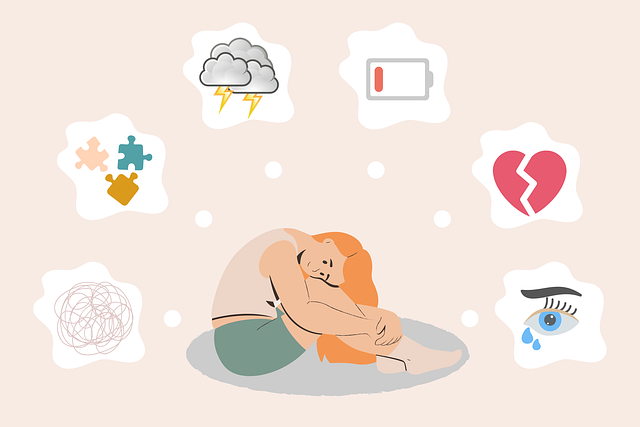
Digital Loneliness is becoming one of the most painful emotional struggles of modern life, even in a world where people are constantly connected through phones, social media, and endless online conversations. Millions of people wake up to notifications, spend hours scrolling through feeds, reply to messages all day, and still go to bed feeling emotionally empty, unseen, and disconnected.
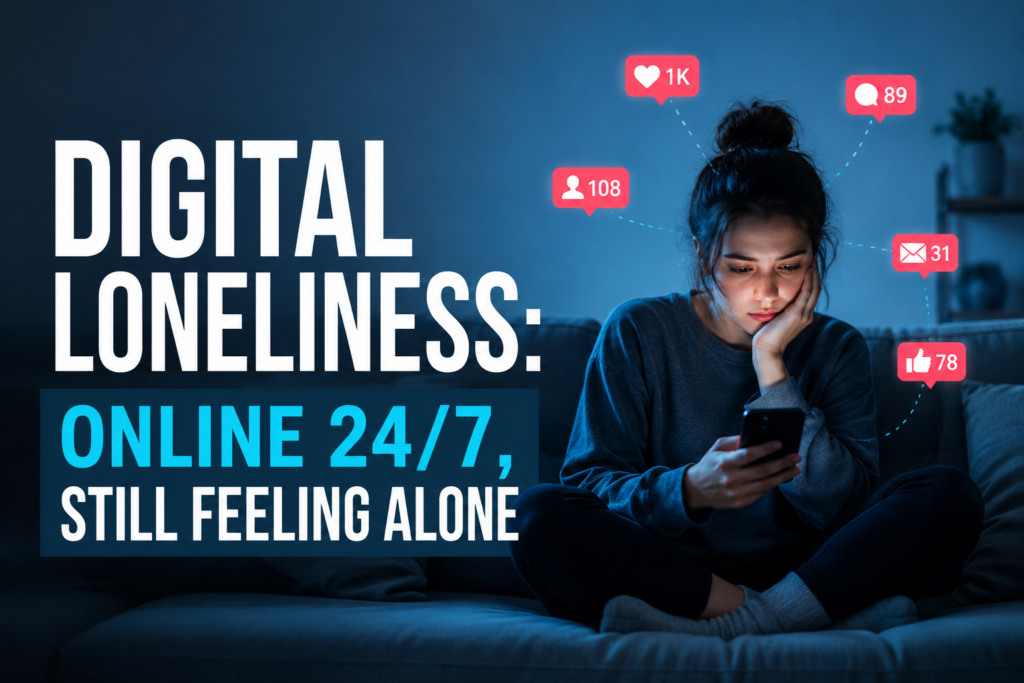
The internet promised unlimited connection, but for many people, it has created a strange emotional paradox. We have more access to people than any generation before us, yet genuine human intimacy feels increasingly rare. A person can have thousands of followers, dozens of active group chats, and constant online interaction while still experiencing deep emotional isolation.
Modern digital culture encourages visibility, performance, and instant communication, but it often fails to satisfy the deeper psychological need for authentic connection. Likes, comments, streaks, and viral content can briefly stimulate the brain’s reward system, yet they rarely replace the emotional nourishment that comes from meaningful relationships, physical presence, empathy, and real conversation.
As social media platforms become more addictive and online life consumes more hours of the day, emotional exhaustion is quietly rising. Anxiety, depression, doomscrolling, digital burnout, comparison culture, and social media fatigue are becoming deeply connected to the growing epidemic of loneliness. Many people no longer know how to disconnect from screens without feeling anxious or emotionally restless.
Digital Loneliness is not simply about being physically alone. It is about feeling emotionally disconnected in a hyperconnected world. It is the painful feeling of being surrounded by digital noise while internally feeling invisible, emotionally unsupported, and profoundly isolated.
What Is Digital Loneliness?
Digital Loneliness refers to the emotional emptiness and social disconnection people experience despite being constantly connected online. Unlike traditional loneliness, which often comes from physical isolation, digital loneliness can happen even when someone interacts with others all day through social media, messaging apps, gaming platforms, or virtual communities.
This form of online loneliness is deeply tied to the way modern technology changes human interaction. Many digital interactions are fast, surface-level, and emotionally shallow. People communicate through emojis, short replies, memes, and curated content instead of emotionally vulnerable conversations. While these interactions may create temporary stimulation, they often fail to provide true emotional closeness.
One of the biggest illusions created by social media is the idea that visibility equals connection. Seeing people’s lives constantly online can create the impression of social closeness, but passive exposure is not the same as emotional intimacy. Watching someone’s stories every day does not necessarily mean there is a meaningful relationship.
Digital loneliness also develops because people increasingly perform idealized versions of themselves online. Social media encourages individuals to present polished lifestyles, filtered appearances, and emotionally edited realities. As a result, many users feel pressure to appear happy and successful while hiding vulnerability and emotional struggles.
Virtual relationships can absolutely provide comfort and companionship, especially for people who feel isolated in their offline environments. However, excessive dependence on online interaction can gradually reduce deeper forms of human bonding that involve emotional presence, touch, eye contact, shared experiences, and genuine empathy.
The emotional isolation caused by digital culture often grows quietly. Many people do not realize they are lonely because they are constantly stimulated by content, messages, and online activity. Yet internally, they may feel emotionally disconnected, emotionally numb, or misunderstood.
The Psychology Behind Digital Loneliness
The psychology of digital loneliness is closely connected to how the human brain responds to technology, social validation, and emotional reward systems. Social media platforms are intentionally designed to keep users engaged for long periods by triggering dopamine-driven behaviors.
Every notification, like, comment, or message activates small reward responses in the brain. These tiny bursts of dopamine create anticipation and emotional dependency. Over time, people begin checking their phones compulsively, seeking emotional reassurance through online validation.
However, dopamine-based engagement is not the same as emotional fulfillment. Temporary stimulation can never fully replace genuine connection, emotional safety, or authentic relationships. This is why people often feel emotionally drained after spending hours online.
Fear of missing out, commonly known as FOMO, also plays a major role in digital loneliness. Constant exposure to other people’s achievements, relationships, vacations, and social experiences creates comparison culture. Many users begin believing everyone else is happier, more attractive, more successful, or more socially connected.
This psychological comparison damages self-esteem and increases feelings of emotional inadequacy. Even when people know social media is heavily curated, the emotional impact remains powerful. Repeated exposure to idealized lifestyles can make ordinary life feel emotionally insufficient.
Another important psychological factor is emotional substitution. Some individuals use technology to avoid emotional discomfort, rejection, boredom, or vulnerability. Endless scrolling becomes a coping mechanism for stress, anxiety, loneliness, or emotional pain.
Unfortunately, this creates a cycle where digital stimulation temporarily distracts from loneliness while quietly intensifying it over time.
The psychological effects of technology can also reduce emotional depth in communication. Face-to-face interaction includes tone of voice, body language, eye contact, silence, touch, and emotional energy. Digital communication removes many of these elements, making conversations feel emotionally flatter and less satisfying.
Over time, excessive digital dependence may contribute to emotional numbness, attention difficulties, social anxiety, and reduced emotional resilience.
Signs and Symptoms of Digital Loneliness
Digital loneliness can affect emotional, psychological, behavioral, and even physical well-being. Many people experience the symptoms without fully understanding the root cause.
One of the most common signs is feeling emotionally disconnected despite constant online communication. Someone may spend all day texting, commenting, or interacting online yet still feel deeply alone at the end of the day.
Another major symptom is emotional emptiness after scrolling through social media. Instead of feeling inspired or connected, many users feel drained, anxious, or emotionally unsatisfied after long periods online.
Doomscrolling is another clear symptom of digital fatigue. People often consume endless negative content late at night without realizing how emotionally damaging it becomes. This habit increases stress hormones, anxiety, and mental exhaustion.
Chronic loneliness also affects sleep patterns. Many individuals stay awake scrolling for hours because silence and emotional stillness feel uncomfortable. Unfortunately, poor sleep further worsens emotional regulation, anxiety, and depression.
Digital loneliness symptoms may also include:
- Increased social anxiety
- Feeling emotionally invisible
- Difficulty forming deep relationships
- Reduced attention span
- Constant phone checking
- Emotional burnout from social media
- Low self-worth
- Feeling left out online
- Irritability and emotional exhaustion
- Lack of motivation for real-world activities
Many people also experience “presence without connection.” They may physically sit with friends or family while mentally remaining absorbed in their phones. Over time, this weakens emotional intimacy and creates shallow communication patterns.
Some individuals begin avoiding offline social interaction altogether because digital communication feels safer or less emotionally demanding. While this may reduce short-term anxiety, it often increases long-term emotional isolation.
How Social Media Intensifies Digital Loneliness
Social media platforms have transformed human communication, but they have also intensified emotional comparison, social pressure, and psychological loneliness.
One major issue is highlight-reel culture. Most users share their best moments while hiding pain, insecurity, conflict, and emotional struggle. Constant exposure to polished lifestyles creates distorted perceptions of reality.
People begin comparing their real lives to other people’s edited realities. This creates feelings of inadequacy, loneliness, and emotional failure.
Influencer culture can further deepen social media loneliness. Many users develop parasocial relationships with online creators, celebrities, or influencers. These one-sided emotional attachments create feelings of familiarity without actual reciprocal connection.
Although influencers may provide entertainment or emotional comfort, they cannot replace real emotional intimacy. Excessive attachment to online personalities may reduce investment in real-life relationships.
Passive scrolling also contributes heavily to emotional decline. Research consistently shows that actively communicating online tends to be less harmful than endlessly consuming content without interaction. Passive social media use increases envy, social comparison, emotional dissatisfaction, and depressive symptoms.
Another problem is validation addiction. Many users unconsciously measure self-worth through likes, comments, views, or follower counts. This creates emotional instability because self-esteem becomes dependent on external digital feedback.
Social media anxiety develops when people fear judgment, rejection, or invisibility online. Individuals may obsess over response times, post engagement, or online appearance. This constant psychological pressure can become emotionally exhausting.
Despite offering connection, social media often promotes performance over authenticity. People may feel pressure to appear confident, attractive, successful, or socially active even when struggling emotionally behind the scenes.
Why Gen Z and Millennials Experience More Digital Loneliness
Younger generations are experiencing digital loneliness at especially high rates because they grew up during the rise of smartphones, social media, and internet culture.
For many Gen Z and Millennials, digital communication replaced large portions of face-to-face interaction during crucial developmental years. Online identity became deeply connected to self-worth, popularity, and belonging.
Smartphone addiction plays a major role in emotional disconnection. Many young people spend enormous amounts of time switching between apps, notifications, videos, and online conversations. This constant stimulation weakens attention spans and reduces emotional presence.
Dating culture has also changed dramatically. Dating apps create endless options but often reduce emotional depth and commitment. Many users report feeling disposable, emotionally exhausted, or disconnected after repeated shallow interactions.
Internet culture encourages constant comparison and performance. Young people often feel pressure to maintain attractive online identities while simultaneously dealing with anxiety, burnout, and emotional insecurity.
Virtual communication has become normalized in friendships, education, work, and relationships. While technology provides convenience, it can also reduce opportunities for spontaneous emotional bonding and meaningful social experiences.
Many younger individuals also struggle with identity confusion because online environments encourage external validation. Self-worth becomes tied to engagement metrics instead of authentic emotional fulfillment.
The result is a generation that is digitally connected but emotionally overstimulated, socially anxious, and increasingly lonely.
The Hidden Mental Health Effects of Digital Loneliness
The mental health consequences of digital loneliness are serious and often underestimated.
Chronic emotional disconnection increases the risk of anxiety disorders and depression. Humans are biologically wired for meaningful social connection. When emotional needs remain unmet for long periods, mental well-being gradually declines.
Depression connected to social media often develops through comparison, emotional isolation, rejection sensitivity, and reduced real-world engagement. People may begin feeling emotionally numb, hopeless, or disconnected from themselves and others.
Digital burnout is another growing issue. Constant exposure to information, notifications, conversations, and online pressure overwhelms the nervous system. Many individuals feel mentally exhausted but unable to disconnect.
Emotional numbness can develop when people become overstimulated by endless content consumption. The brain adapts to constant stimulation by becoming emotionally desensitized, making ordinary life feel less engaging or emotionally rewarding.
Loneliness also increases cortisol levels, which affects physical and mental health over time. Chronic loneliness has been linked to sleep problems, weakened immunity, stress-related illness, and emotional instability.
Another hidden consequence is reduced emotional resilience. Excessive online engagement can make people less comfortable with boredom, silence, vulnerability, and real-world discomfort.
Attention span problems are also becoming increasingly common. Constant multitasking between apps and content fragments concentration, making deep focus and emotional presence more difficult.
Mental health and technology are now deeply connected. While technology itself is not inherently harmful, unhealthy digital habits can quietly damage emotional well-being when they replace authentic human connection.
Digital Loneliness in Relationships
Digital loneliness can exist even inside romantic relationships, friendships, and families.
Many couples spend more time looking at screens than emotionally connecting with each other. Texting often replaces meaningful conversations, and constant phone use reduces emotional presence during shared moments.
Some people experience “alone together” relationships where partners physically coexist but remain emotionally disconnected. One partner may feel ignored or emotionally neglected because digital distractions constantly interrupt intimacy.
Phone addiction can damage emotional intimacy by reducing active listening, empathy, and genuine attention. Even small interruptions during conversations can weaken emotional bonding over time.
Friendships are also affected by surface-level communication. Sending memes or reacting to stories may create ongoing interaction without creating deeper emotional closeness.
Family relationships are increasingly influenced by digital behavior as well. Parents, children, and siblings may spend hours in the same house while remaining emotionally disconnected through screen immersion.
Loneliness inside relationships often feels especially painful because emotional needs remain unmet despite physical proximity.
Healthy relationships require emotional vulnerability, attention, empathy, and meaningful communication — qualities that cannot fully develop through distracted digital interaction alone.
Can Online Friendships Replace Real Human Connection?
Online friendships can absolutely provide genuine emotional support, especially for people who feel misunderstood, isolated, or marginalized in their offline environments.
Digital communities often help individuals connect through shared experiences, interests, identities, or emotional struggles. Many people find comfort, belonging, and emotional validation online.
For some individuals, online relationships become life-changing sources of support. Internet friendships can reduce loneliness, provide encouragement, and create meaningful emotional bonds.
However, virtual intimacy also has limitations. Human psychology evolved around physical presence, facial expressions, touch, shared experiences, and in-person emotional energy.
Text-based communication cannot fully replicate the emotional richness of face-to-face interaction. Misunderstandings occur more easily online because tone and emotional nuance are reduced.
The healthiest approach is balance. Online friendships can complement real-world relationships rather than completely replace them.
Technology works best when it enhances human connection instead of becoming a substitute for it.
How to Overcome Digital Loneliness
Overcoming digital loneliness requires intentional changes in both emotional habits and digital behavior.
One of the most effective strategies is practicing mindful technology use. Instead of automatically reaching for phones during every quiet moment, individuals can become more conscious about why they are using technology.
Digital detox practices can help reset emotional balance. This does not necessarily mean abandoning technology completely. Small changes such as limiting social media time, turning off notifications, or avoiding screens before bed can significantly improve mental clarity.
Building meaningful relationships is essential. Deep connection requires emotional vulnerability, active listening, honesty, and consistent effort.
Face-to-face communication remains psychologically powerful because it strengthens emotional presence and human empathy.
People can also reconnect with hobbies, creativity, exercise, nature, and community involvement. Real-world experiences help restore emotional grounding and reduce dependency on constant digital stimulation.
Therapy and mental health support can also help individuals understand the emotional roots of loneliness, anxiety, or validation dependency.
Healthy social media habits include:
- Following uplifting content
- Reducing comparison triggers
- Taking breaks from toxic platforms
- Prioritizing real conversations
- Avoiding endless doomscrolling
Emotional well-being improves when people stop using technology to escape emotions and start using it intentionally to support healthier relationships and balanced living.
Creating Real Connection in a Hyperconnected World
Modern technology is not the enemy. The real challenge is learning how to maintain authentic human connection in an environment designed for constant distraction.
Real connection requires emotional presence. It requires slowing down enough to truly listen, empathize, and engage deeply with other people.
Meaningful relationships are built through trust, vulnerability, consistency, and shared experiences — not just digital interaction.
Creating stronger human connection may involve:
- Spending more time offline
- Prioritizing deep conversations
- Being emotionally available
- Participating in communities
- Setting healthier digital boundaries
- Practicing active empathy
People do not need thousands of followers to feel emotionally fulfilled. Most individuals simply need a few safe, authentic relationships where they feel understood, valued, and emotionally connected.
In a world dominated by screens, choosing genuine human presence becomes an act of emotional self-care.
Digital loneliness may be growing, but meaningful connection is still possible. Humans are not designed merely to consume endless information. They are designed to connect, belong, and emotionally experience life together.
FAQ Section
What is Digital Loneliness?
Digital Loneliness is the emotional isolation people experience despite constant online interaction through social media, messaging apps, or digital communication.
Can social media cause loneliness?
Yes. Excessive social media use can increase comparison, emotional disconnection, anxiety, and feelings of inadequacy, which may contribute to loneliness.
Why do I feel lonely even when talking to people online?
Many online interactions lack emotional depth and genuine intimacy. Constant communication does not always create meaningful connection.
Is Digital Loneliness a mental health issue?
Digital Loneliness itself is not a formal diagnosis, but it is strongly connected to anxiety, depression, emotional burnout, and social isolation.
What are the symptoms of Digital Loneliness?
Symptoms may include emotional emptiness, social anxiety, doomscrolling, emotional numbness, low self-esteem, and feeling disconnected despite constant online activity.
Does screen time increase depression?
Excessive screen time, especially passive social media scrolling, has been linked to higher levels of anxiety, stress, and depressive symptoms.
Can online friendships reduce loneliness?
Yes. Online friendships can provide emotional support and community, especially when they involve authentic communication and mutual care.
How do I stop feeling emotionally disconnected?
Reducing excessive screen time, building meaningful offline relationships, practicing emotional vulnerability, and improving mental health habits can help.
Is taking a digital detox helpful?
Yes. Digital detox practices can reduce stress, improve emotional clarity, and help restore healthier relationships with technology.
How can I build meaningful relationships offline?
Spend more time in real-world communities, practice deeper conversations, engage in shared activities, and prioritize emotional presence over digital distraction.