You check your phone for the fifth time in ten minutes. Still no reply — and your stomach is already tight. Your mind races fast. Did I say something wrong? Are they pulling away from me? is anxious attachment style
This is not just occasional worry for you. In fact, this is your everyday reality inside relationships. If this sounds painfully familiar, you are likely noticing the signs you have an anxious attachment style — even if you never had a name for it before today. Millions of people live with this pattern silently. They tell themselves they are simply “too sensitive” or “too much” for others.
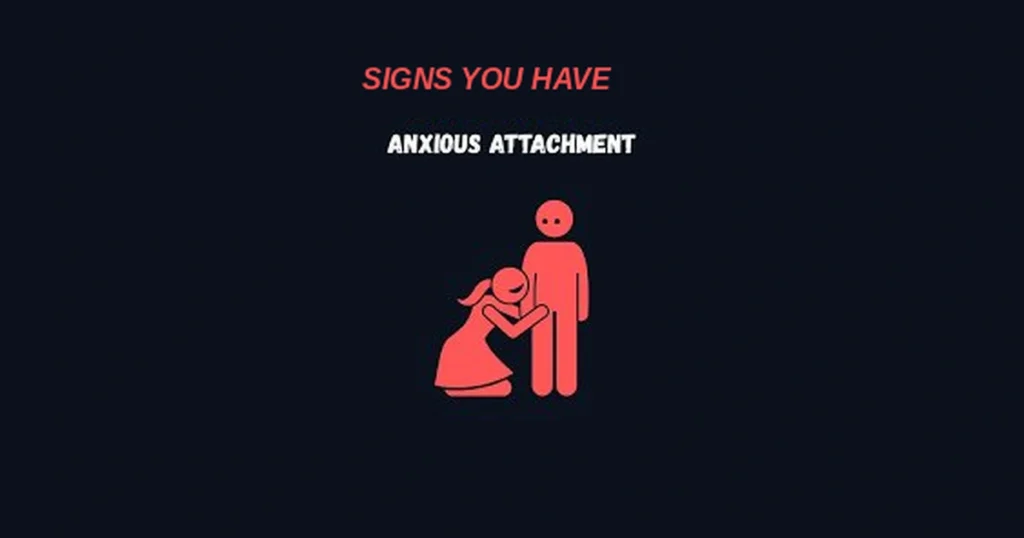
The truth is far more compassionate than that. Your attachment style formed long before you ever fell in love with anyone.
What Is Anxious Attachment Style?
Most people never hear about attachment theory until a painful relationship forces them to look inward.
Fortunately, understanding it is simpler than you might think.
The Roots of Attachment Theory
British psychologist John Bowlby first developed attachment theory back in the 1950s. He found that the bond between a child and their caregiver shapes how that child connects with others for life.
Researcher Mary Ainsworth later expanded this important work. Through her well-known Strange Situation experiments, she identified several distinct attachment styles in children and adults.
One of those styles is anxious attachment — also called anxious-preoccupied attachment in adults.
What It Actually Feels Like Day to Day
People with this style crave deep connection more than almost anything else. However, they also live in constant fear of losing that connection at any moment.
They love intensely but worry endlessly. They want closeness desperately, yet feel terrified it will be taken away.
Think of it this way. Imagine holding something precious in both hands, but believing it will slip through your fingers no matter how tightly you grip it.
That constant tension — wanting to hold on while fearing you simply cannot — is what anxious attachment feels like every single day.
Research suggests anxious attachment affects roughly 20 percent of adults worldwide. Moreover, it is the second most common attachment style of all four types.
What Causes Anxious Attachment Style?
Anxious attachment does not appear from thin air. It has clear roots — and those roots almost always go back to early childhood.
Inconsistent Caregiving in Childhood
When a child grows up with a caregiver who is inconsistent with love and warmth, something important happens inside that child. They learn, very early, that love is unpredictable and can disappear without warning.
As a result, they begin to feel they must constantly work hard to earn affection. Furthermore, they become hypervigilant — always watching carefully for signs of withdrawal or rejection from others.
This is precisely how anxious attachment begins to form.
Other Common Childhood Causes
A parent who was warm sometimes but emotionally unavailable at other times can plant this seed deeply. Similarly, growing up in a home where love felt conditional — given as reward and withdrawn as punishment — makes the pattern stronger.
Experiencing early loss, emotional neglect, or growing up in an environment where expressing your needs was ignored all contribute significantly to this pattern forming.
Here is something worth saying clearly. Your parents may not have done this intentionally at all. Many caregivers were doing their very best with limited emotional resources of their own.
Understanding the cause is therefore not about blame. It is simply about understanding yourself with genuine kindness.
12 Signs You Have an Anxious Attachment Style
This section is the heart of everything in this article. Read each sign slowly and honestly.
Notice which ones feel like they were written specifically about your own life.
Sign 1: Constant Fear of Abandonment
You live with a quiet but persistent terror that the people you love will eventually leave you.
Importantly, this fear does not always make logical sense in your life.
Your partner may be loving, loyal, and fully committed to you. Yet somewhere in the back of your mind, a voice still whispers “But what if they leave anyway?”
This is not occasional insecurity. Instead, it is a constant background noise that never fully goes quiet.
This fear shapes your daily behavior in powerful and often invisible ways. For example, you avoid disagreements because you worry conflict will end the relationship entirely.
You also agree to things that do not feel right — because saying no feels far too risky.
Real-life example: Your partner mentions wanting to spend Saturday with their friends. Instead of feeling relaxed, your chest tightens immediately. You smile and say it is fine — but then spend the entire day imagining worst-case scenarios.
Sign 2: Needing Constant Reassurance
You need to hear “I love you” not once — but again and again throughout the day.
Even then, it only calms you for a short while before the need returns.
Why Reassurance Never Feels Like Enough
People with anxious attachment have what psychologists call a hyperactivated attachment system. Simply put, their internal emotional alarm runs on high at almost all times.
Reassurance from a partner quiets the alarm briefly. However, it switches back on quickly and needs more fuel to settle again.
This cycle exhausts both you and your partner. Your nervous system genuinely needs repeated confirmation that the relationship is still safe and intact.
This is not a personal failing — it is a deeply wired nervous system response.
Real-life example: After a lovely evening together, your partner says goodnight and goes straight to sleep. You lie awake replaying every moment of the evening. Did they seem slightly distant at dinner? You send a worried text at midnight — even though everything was perfectly fine — just to hear that it was.
Sign 3: Overanalyzing Every Text Message
A single one-word reply can genuinely ruin your entire afternoon.
When someone with anxious attachment receives a short or delayed text response, their brain immediately begins searching for hidden meaning. Did I do something wrong? Why just “okay” — they usually say so much more than that.
This overanalysis is not a conscious choice you make. Rather, it is an automatic response driven by a nervous system wired to detect any hint of relational threat.
You reread messages multiple times, looking carefully for clues. You also notice when someone used a plain period instead of an exclamation mark — and immediately wonder what that signals about their mood.
Real-life example: You send your partner a thoughtful message about your day. They reply with “haha yeah.” You spend the next two hours wondering why they seemed completely unbothered. You draft three different follow-up messages, delete every single one, then try unsuccessfully to focus on something else entirely.
Sign 4: Feeling Anxious When Your Partner Needs Space
When your partner says “I need some alone time tonight,” your brain immediately hears something different.
It hears: “I am pulling away from you permanently.”
Why Space Feels Like Rejection to You
Healthy relationships genuinely require personal space and breathing room. Secure individuals understand this naturally and feel comfortable with it.
For someone with anxious attachment, however, a partner requesting alone time triggers immediate internal alarm. It feels deeply personal. Moreover, it feels like the beginning of the end — even when it is simply a quiet Wednesday evening of rest.
Giving space freely without feeling quietly punished becomes genuinely difficult. Additionally, checking in repeatedly during that space actually creates the very distance you were afraid of in the first place.
Real-life example: Your partner texts saying they need a quiet evening alone after a stressful work week. You reply “of course” immediately — but a cold knot forms in your stomach right away. By the time they call cheerfully the next morning, you have already half-convinced yourself something serious is wrong between you both.
Sign 5: Low Self-Worth Inside Relationships
Deep down, you wonder if you are truly lovable — or if people only stay until they see the real you.
This is honestly one of the most painful signs you have an anxious attachment style.
Where This Feeling Comes From
Beneath the fear of abandonment often lies a core belief that you are simply not enough. Not interesting enough, not attractive enough, not emotionally stable enough to be truly loved by someone genuinely good.
This belief was usually planted quietly in childhood. It was placed there by caregivers who unintentionally communicated that love was always conditional on your behavior.
As an adult, it shows up as constantly comparing yourself to others. Furthermore, it shows up as feeling fundamentally unworthy of good, stable love.
Real-life example: Your partner compliments you sincerely and warmly. Instead of receiving it, your inner voice immediately responds: “They would not say that if they truly knew me.” You deflect with a self-deprecating joke. The kind words land nowhere — because you cannot yet fully believe them.
Sign 6: Jealousy Without a Real Reason
You feel jealous of people your partner has never even hinted are a threat to your relationship.
Interestingly, jealousy in anxious attachment is not really about distrust of your partner. Instead, it flows from deep distrust of your own worth inside the relationship.
You see an attractive coworker in a photo and your imagination immediately fills in the rest. You hear about a close friendship and quietly wonder where exactly you fit into your partner’s life.
This jealousy is painful and often completely irrational — and you know it clearly. Nevertheless, you cannot stop it, because it comes from a place of fundamental insecurity about your own value.
Real-life example: Your partner mentions a funny story involving a work colleague. You smile politely. Later that night, however, you find yourself scrolling through that colleague’s social media, comparing yourself quietly, wondering if your partner finds them more interesting or engaging than you.
Sign 7: Difficulty Trusting Even a Loyal Partner
Your partner has never given you a genuine reason to doubt them. Yet you doubt them constantly anyway.
This is one of the most confusing signs for people experiencing anxious attachment.
When Distrust Has Nothing to Do With Your Partner
You are not actually doubting your partner’s specific behavior or intentions. Rather, you are doubting the permanence of love itself.
Because love felt unpredictable in early childhood, your nervous system never fully learned that it could safely be trusted to stay. Therefore, even the most loyal and loving partner cannot fully dissolve this deep distrust.
The distrust is not truly about them at all. It is about a wound that formed long before they arrived in your life.
Real-life example: Your partner has been completely consistent, loving, and transparent for two full years together. Yet when they arrive home thirty minutes later than expected, dark thoughts creep in immediately. When they explain they were stuck in traffic, you feel instant relief — followed immediately by quiet shame for doubting them yet again.
Sign 8: Emotional Highs and Crushing Lows
Your relationship feels like a constant rollercoaster — intense joy followed quickly by crushing anxiety.
Then the cycle simply repeats itself over and over again.
The Exhausting Pattern of Emotional Intensity
People with anxious attachment experience relationships far more intensely than those around them. The highs are genuinely euphoric — when your partner is close and connected, everything feels perfectly right with the world.
The lows, however, triggered by even small moments of distance or minor conflict, feel absolutely devastating and all-consuming. Additionally, this emotional intensity is exhausting for everyone involved in the relationship.
It makes feeling stable or settled inside the relationship almost impossible — no matter how objectively good that relationship actually is on paper.
Real-life example: Friday night with your partner was absolutely perfect and you felt completely secure. Saturday morning, they wake up quiet and tired. By Saturday afternoon, you are convinced something has fundamentally shifted. By Saturday evening, after one warm hug, everything feels fine again — until the next wave inevitably arrives.
Sign 9: Apologizing When It Is Not Your Fault
You apologize constantly — not because you were genuinely wrong, but because you cannot bear unresolved tension around you.
Over-apologizing is a survival strategy learned early in childhood. When love felt conditional, saying sorry became the fastest available way to restore it quickly.
As an adult, this old pattern continues automatically. You apologize to end tension. You also apologize to make someone stay, because deep down you believe any conflict signals the relationship is ending.
Over time, this habit slowly erodes your sense of self. You begin to feel invisible inside your own relationship — always accommodating, rarely honest about your true feelings.
Real-life example: You and your partner have a real disagreement. They raise their voice slightly in frustration. Even though you were right about the issue, you immediately say “I’m sorry, I didn’t mean to upset you.” The conflict ends quickly — but a small part of you feels diminished for having done it yet again.
Sign 10: Feeling Clingy and Hating Yourself for It
You reach out repeatedly — then feel deeply ashamed of having done so.
This is the painful double bind at the very core of anxious attachment.
The Cycle That Feels Impossible to Break
Your attachment system drives you toward closeness — calls, texts, physical proximity, and constant reassurance. Meanwhile, your self-awareness watches this happening and feels genuinely humiliated by it.
You tell yourself firmly to stop and give them space today. Then the anxiety rises sharply and you reach out again anyway.
The shame this creates can honestly feel far worse than the original anxiety itself. Consequently, many people with anxious attachment develop a deep and lasting dislike for this part of themselves — which only deepens the original wound further.
Real-life example: You promised yourself this morning that you would not text first today. By 10am you have already sent two messages. You close your phone in frustration, genuinely angry at yourself, wondering quietly why you cannot simply be different. The answer is that “different” does not yet feel emotionally safe for your nervous system.
Sign 11: Past Trauma Affecting Your Present Relationship
You are reacting to people from your past — ghosts — inside your current relationship today.
If you have been cheated on, abandoned, or deeply hurt in a previous relationship, those experiences leave real and lasting marks. For someone already wired with anxious attachment, past betrayals simply confirm every fear their nervous system already held deeply.
The painful result is that your current partner ends up paying the price for what someone else entirely did to you before. Old suspicions enter new situations uninvited. Furthermore, you brace constantly for pain that has not actually arrived.
Real-life example: Your previous partner cheated on you badly. Now, when your current partner — who has never been anything but completely faithful — receives a late-night message, your body floods immediately with stress hormones. You recognize rationally that it is probably nothing. However, your nervous system genuinely cannot yet tell the difference between then and now.
Sign 12: Fear of Expressing Your Real Needs
You have genuine needs — but you bury them completely because you fear they will be too much for anyone to handle.
This is perhaps the saddest sign of all on this entire list.
The Silence That Actually Creates Distance
You silence yourself to keep people close — not yet realizing that the silence itself creates the very distance you are afraid of. You need more quality time together but never directly ask for it.
The sad result is a relationship where your partner does not truly know you. They cannot know you — because you have never felt fully safe enough to show them who you really are.
Real-life example: You have felt disconnected from your partner for several weeks now. You know an honest conversation would genuinely help you both. Nevertheless, every time you get close to raising it, the thought “What if this is too much for them?” stops you completely. So you stay quiet — feeling lonelier inside the relationship than you would feel entirely alone.
Anxious Attachment vs Secure Attachment
Understanding this clear contrast shows you exactly what you are genuinely working toward in your healing journey.
A Simple Side-by-Side Comparison
| Anxious Attachment | Secure Attachment | |
|---|---|---|
| Partner needing space | Triggers fear and anxiety | Comfortable and relaxed |
| Self-worth | Depends on partner’s mood | Comes from within yourself |
| Handling conflict | Panic, apologize, shut down | Calm discussion and resolution |
| Trusting your partner | Difficult without clear reason | Natural and consistent |
| Emotional stability | Intense highs and deep lows | Generally stable and grounded |
The Most Hopeful Truth About Attachment Styles
Secure attachment is not a personality trait you are simply born with or without. Rather, it is a learned pattern — and learned patterns can absolutely be unlearned with consistent time and effort.
People move from anxious to secure attachment every single day around the world. It takes genuine work, real patience, and often professional support — but it is completely possible for you too.
What Causes Anxious Attachment in Adults?
While childhood experiences plant the original seed, adult experiences can water it and make it grow far stronger.
Adult Triggers That Deepen the Pattern
Being cheated on in a serious relationship can take mild anxious attachment and make it absolutely consuming. Similarly, emotional neglect inside a long-term partnership teaches your nervous system that love is always just about to be withdrawn.
Repeated experiences of people leaving, breaking promises, or behaving inconsistently in adulthood reinforce the original childhood wound deeply. Over time, your nervous system builds a firm and familiar story — love is not safe, closeness is dangerous, people always leave eventually.
Recognizing these adult triggers clearly helps you separate old pain from genuine present-day concerns. Not every worry is a deep pattern. Not every fear is truly rooted in the past.
How to Heal an Anxious Attachment Style
Healing is not about fixing something broken inside you. It is about building an entirely new relationship with yourself and with love.
Step 1: Recognize Your Pattern Without Shame
The moment you stop fighting this part of yourself is the precise moment healing genuinely begins. Anxious attachment is not a character flaw — it was a survival strategy that once made complete sense.
Write it down. Say it aloud if you can: “I have an anxious attachment style — and that is okay.”
Step 2: Work With a Therapist Who Understands Attachment
Working with a therapist trained in attachment theory can genuinely change the entire course of your relational life. Cognitive Behavioral Therapy helps you challenge automatic thoughts that fuel daily relationship anxiety.
Emotionally Focused Therapy goes deeper into attachment wounds at their root. Even just a small number of consistent sessions can create meaningful and lasting positive shifts.
Step 3: Practice Self-Soothing When Anxiety Spikes
When anxiety spikes — when the text goes unanswered or your partner seems distant — you need practical grounding tools. Try the 5-4-3-2-1 grounding technique or slow box breathing exercises.
Try placing one hand on your chest and saying quietly: “I am safe right now in this moment.” These small daily practices gradually teach your nervous system a genuinely new response to perceived threat.
Step 4: State Your Needs Clearly and Directly
Anxiously attached people typically hint at their needs instead of stating them directly — hoping their partner will naturally notice. This rarely works and almost always builds hidden resentment over time.
Practice saying clearly: “I need some quality time with you this week.” Clear and direct communication is not needy behavior — it is healthy adult relating.
Step 5: Build a Secure Relationship With Yourself
The most genuinely transformational healing work happens inside you — not inside your relationship. Build daily routines that make you feel stable and grounded in your own life.
Develop personal friendships and interests that do not depend entirely on a romantic partner for meaning. The more internally secure you feel, the less your nervous system urgently demands constant external reassurance.
Step 6: Use Journaling to Understand Your Patterns
Keep a simple daily journal — not to overanalyze everything, but to gently notice your emotional patterns over time. When did anxiety spike this week? What triggered it specifically? What actually helped you feel better?
Over time, you will start seeing your patterns with real clarity. Clarity, after all, is always the genuine beginning of lasting change.
When to Seek Professional Help
If your anxious attachment is significantly affecting your relationships or your daily quality of life, please reach out to a qualified professional today.
Therapy is not a last resort reserved only for crisis situations. It is a powerful and completely accessible tool for anyone who wants to understand themselves more deeply and honestly.
You do not need to be in crisis to deserve real support. Wanting healthier, safer love is more than enough reason to begin the journey.
FAQs
Can anxious attachment style be healed?
Yes — anxious attachment is not an illness requiring a cure. It is an emotional pattern that can genuinely change with time and consistent effort. With self-awareness, dedication, and professional support, many people successfully move from anxious to secure attachment.
What triggers anxious attachment in relationships?
Common triggers include a partner being unusually quiet, delayed text responses, your partner spending extended time with others, minor conflicts, and any perceived shift in affection or attention. These triggers activate your nervous system’s alarm response
Is anxious attachment the same as being needy?
No — these are genuinely different things. Being needy is a judgment placed on someone’s behavior. Anxious attachment is a psychological pattern rooted in early formative experiences with caregivers. People with anxious attachment have a nervous system that learned love is unpredictable
Can two anxiously attached people build a healthy relationship?
Yes, but it requires exceptional self-awareness from both partners. Two anxiously attached people can strongly trigger each other’s deepest fears. However, if both partners actively work on their individual healing through therapy,
How long does healing anxious attachment take?
There is no single fixed timeline for this important work. Some people experience significant positive shifts within just a few months of consistent therapy and self-work. For others, it is a gradual multi-year journey of growth. The most important factor is always consistency over speed
Final Thoughts — You Are Not Broken
If you recognized yourself honestly in these signs you have an anxious attachment style — take one slow breath right now.
This awareness is not a verdict about who you are. Instead, it is a genuinely hopeful and courageous beginning.
You developed this pattern because you were human, because you needed love deeply, and because the love you received early in life was inconsistent. That was never your fault — not even slightly.
The fact that you are here today, reading this carefully, trying to understand yourself more honestly — that is not weakness. That is real and extraordinary courage showing up for itself.
Healing anxious attachment is one of the most meaningful journeys any person can take. Not just for romantic relationships — but for your entire relationship with yourself and with life itself.
You deserve love that genuinely feels safe and steady. You deserve a mind that can finally rest without constant fear whispering in the background.
That version of you is not far away at all. It begins with exactly what you just did — showing up honestly and paying real attention to yourself today.