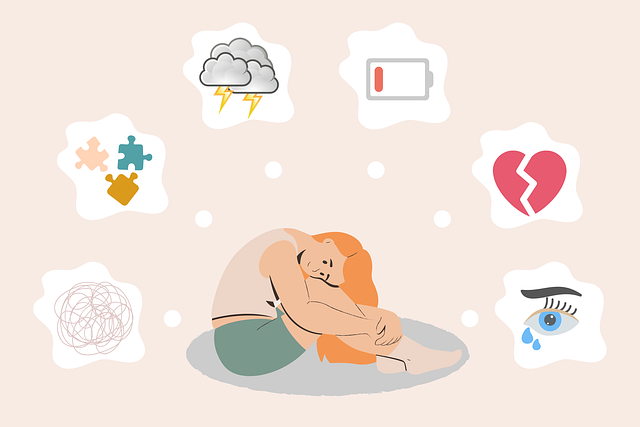
To feel impending doom is one of the most frightening experiences a human being can have. One moment you are sitting quietly at your desk, drinking your morning coffee, going about your ordinary day. Then without warning — without any visible trigger, without any logical cause — a wave of absolute dread washes over you. Not worry. Not nervousness. Something deeper and darker than that. A bone-deep certainty that something terrible is about to happen.

You do not know what. u cannot name it. u cannot stop it. You just know — with every cell in your body — that something is very, very wrong.
This experience has a name. It is recognized by psychiatrists, cardiologists, neurologists, and emergency physicians alike. It shows up across dozens of different conditions — some psychological, some physical, some life-threatening. The feeling of impending doom is not weakness. It is not imagination. It is a real, measurable, documented phenomenon that millions of people experience and that far too few people understand.
In 2026, mental health awareness is at an all-time high. Yet this specific experience remains widely misunderstood — even by the people living through it. Many people dismiss it as “just anxiety.” Others convince themselves they are dying. Most suffer in silence because they do not know what to call what they are feeling or where to turn.
What Does It Mean to Feel Impending Doom?
Feeling impending doom means experiencing an intense, often overwhelming sense that something catastrophic is about to happen — even when there is no visible reason to believe this. It sits on a spectrum. At one end, it is the uneasy gut feeling before a difficult conversation. At the other, it is a paralysing, all-consuming terror so powerful it mimics the certainty of death.
Clinically, this feeling is not a diagnosis on its own. It is a symptom — one that appears across a surprisingly wide range of psychological and physical conditions. Psychiatrists encounter it in patients with Generalised Anxiety Disorder (GAD), panic disorder, PTSD, and major depressive disorder. Emergency physicians see it in patients experiencing heart attacks, anaphylactic reactions, and pulmonary embolisms. Neurologists note it in certain seizure disorders.
What makes it so distressing is its specificity. This is not vague worry about the future. People who experience it describe it with remarkable consistency — a deep internal alarm, a primal certainty that something irreversible is seconds away. The brain is not saying “I am worried.” It is screaming “something is ending.”
That specificity is clinically significant. It tells us this feeling activates very particular neurological pathways — ones tied to survival, threat, and the most ancient parts of the human nervous system.
Is the Feeling of Impending Doom a Medical Symptom?
Yes — and this is something every person reading this article needs to understand clearly.
In medicine, a sudden overwhelming sense of doom is listed as a recognized warning symptom for several serious and potentially life-threatening physical events. Anaphylaxis — a severe allergic reaction — frequently begins with a sudden, inexplicable sense that something terrible is about to happen, often before any physical symptoms appear. This happens because the immune system’s massive activation sends distress signals through the nervous system before the external signs of reaction emerge.

Heart attacks, particularly in women, frequently present with psychological symptoms including overwhelming dread before chest pain begins. Pulmonary embolism — a blood clot in the lungs — is documented to produce sudden doom as one of its earliest symptoms.
This does not mean every person who feels doom is having a medical emergency. The vast majority are not. But it does mean this feeling should never be entirely dismissed — especially when it arrives suddenly, severely, and without any psychological context.
What Causes the Feeling of Impending Doom?
The impending doom feeling causes are genuinely diverse — spanning from psychological conditions to physical medical events. Understanding the cause behind your specific experience is the first step toward addressing it effectively.
Generalised Anxiety Disorder produces doom through chronic hyperactivation of the threat-detection system. The anxious brain operates in a constant state of low-level alert, scanning the environment for danger. Over time, this hypervigilance can spontaneously generate doom feelings without any external trigger — the alarm system fires on its own.
Panic disorder is one of the most common sources of acute doom experiences. During a panic attack, the body releases a flood of adrenaline. The heart races. Breathing becomes shallow. Chest tightness arrives. The brain interprets these physical sensations as evidence of catastrophe — and the doom feeling intensifies in response to its own symptoms.
PTSD and trauma responses produce doom through a different mechanism. The traumatised nervous system stores threat responses in the body. Certain sensory inputs — a smell, a sound, a quality of light — can trigger the full physiological alarm response of the original trauma, flooding the person with doom before the conscious mind has any idea why.
Major depressive disorder generates doom through cognitive distortion. The depressed mind systematically interprets all evidence through a lens of hopelessness and catastrophe. Doom becomes the default emotional weather — not episodic but constant.
Medication side effects are an underappreciated cause. Certain medications — including some antibiotics, stimulants, thyroid medications, and even common antihistamines — can produce sudden doom as a documented adverse reaction.
Hormonal imbalances, particularly crashes in oestrogen and progesterone during perimenopause, postpartum periods, or thyroid dysregulation, are strongly linked to sudden overwhelming dread with no psychological trigger.
The Neuroscience Behind Feeling Doom — What Happens in the Brain
When you feel impending doom, your amygdala — the brain’s threat-detection centre — fires an emergency signal. This triggers the HPA axis (hypothalamic-pituitary-adrenal axis), which floods the body with cortisol and adrenaline within seconds.
Your prefrontal cortex — the rational, reasoning part of your brain — partially goes offline. This is why doom feels so convincing and so resistant to logic. The thinking brain is literally being suppressed by the survival brain.
Heart rate spikes. Breathing quickens. Muscles tense. Blood flow redirects toward the limbs for fight or flight. Every system in your body prepares for a threat that, in most cases, is not actually there.
Research published in the journal Biological Psychiatry identifies chronic amygdala hyperreactivity as a core feature of anxiety disorders — meaning some people’s alarm systems are calibrated so sensitively that they fire at minimal or imagined threats, producing exactly this experience.
📌 Clinical Fact: The amygdala cannot distinguish between a real physical threat and an imagined psychological one. When it fires, the body responds identically — which is why psychological doom feels physically real in every possible way.
Feel Impending Doom and Panic Attacks — The Connection
The relationship between feel impending doom and panic attacks is one of the most important things to understand about this experience — because the two are deeply, biologically intertwined.
A panic attack is not simply feeling very anxious. It is a sudden, intense activation of the autonomic nervous system that produces a cascade of physical symptoms — racing heart, chest tightness, breathlessness, dizziness, tingling in the extremities, and a profound sense that something is catastrophically wrong. That last symptom is the impending doom panic attack experience — and it is one of the defining features of panic disorder.
Here is what makes it so destabilising. The physical symptoms of panic are real. The racing heart is real. The chest tightness is real. The breathlessness is real. The brain — already in high-alert mode — scans these physical sensations and draws a conclusion: if my heart is racing this fast and my chest feels this tight, something terrible must be happening to me.
This interpretation amplifies the fear. The amplified fear intensifies the physical symptoms. The intensified physical symptoms confirm the brain’s catastrophic interpretation. The doom deepens. The panic worsens. This is the panic-doom cycle — and without intervention, it can escalate rapidly.
What makes it particularly cruel is that the very feeling of doom becomes its own evidence. The brain reasons: “I feel like something terrible is about to happen, therefore something terrible must be about to happen.” The feeling generates its own justification.
How to Tell If Your Doom Is a Panic Attack or a Medical Emergency
This distinction matters enormously — and requires honest, responsible guidance.
Panic attack doom typically builds gradually, follows a recognisable psychological trigger or period of stress, improves with slow breathing and grounding techniques, and resolves within 10 to 20 minutes without any lasting physical damage.
Seek emergency medical help immediately if your doom feeling is accompanied by: crushing chest pain or pressure radiating to the arm, jaw, or back; sudden severe shortness of breath with no clear psychological trigger; swelling of the throat, lips, or tongue; sudden loss of consciousness or near-fainting; symptoms following a recent insect sting, new medication, or food allergen exposure; or neurological symptoms including sudden vision changes, facial drooping, or arm weakness.
When in doubt — call emergency services. A panic attack will not kill you. The conditions listed above can.
Psychological Conditions Linked to Feeling Impending Doom
Several distinct mental health conditions produce the psychological feeling of doom — each through a different internal mechanism.
Generalised Anxiety Disorder creates a persistent background of doom that waxes and wanes throughout the day. People with GAD describe it as living with a sense that disaster is always one moment away — a free-floating dread that attaches to whatever is most salient in their current life.
Panic disorder produces episodic, acute doom that arrives suddenly and intensely, usually without warning. Between attacks, many people with panic disorder develop anticipatory anxiety — a constant, low-level doom about when the next attack will come.
PTSD generates doom through hyperarousal — the nervous system’s inability to return to a baseline of safety after trauma. The traumatised person lives in a neurological state of imminent threat, perceiving danger in situations that are objectively safe.
OCD produces doom through intrusive thoughts — unwanted, distressing mental images or ideas that the person interprets as prophecy or warning. The obsessive mind treats doom thoughts as meaningful signals rather than mental noise.
Health anxiety creates doom through hypervigilance to physical sensations. Every heart flutter, every head pressure, every twinge in the chest becomes evidence of catastrophic illness. The doom is always medical, always imminent, always convincing.
Major depressive disorder wraps doom in hopelessness. The depressed person does not just fear that something bad will happen — they believe it is inevitable and that nothing can prevent it or make it better.
When Impending Doom Becomes a Daily Experience
When the overwhelming dread for no reason stops being episodic and becomes the baseline state of daily life, this is a serious clinical signal.
Chronic doom — persistent, unrelenting, present most of the day on most days — suggests the nervous system has become recalibrated to a state of constant threat. This is most commonly seen in severe GAD, complex PTSD, and treatment-resistant depression. It is also associated with chronic cortisol elevation, which research from the National Institute of Mental Health links to structural changes in the hippocampus and prefrontal cortex over time.
Chronic doom is not a character flaw. It is a neurological state — and it responds to treatment.
Physical Causes of Feeling Impending Doom You Should Not Ignore
This section carries the most immediate clinical weight of the entire article. Certain physical conditions produce the unexplained feeling of dread as a direct physiological symptom — and recognising them can be lifesaving.
Anaphylaxis deserves the most urgent attention. Before the throat swells, before the hives appear, before breathing becomes difficult — many anaphylaxis patients report a sudden, overwhelming sense that they are about to die. This is the immune system’s massive mast cell activation sending emergency signals through the autonomic nervous system. If you experience sudden doom following exposure to a known or potential allergen, treat it as a medical emergency.
Myocardial infarction — heart attack — produces doom through cardiac pain signals and reduced oxygen delivery to the brain. Women experiencing heart attacks report psychological symptoms including doom, dread, and a sense of “not being right” far more frequently than chest pain alone. This is one reason female heart attacks are chronically under-diagnosed.
Pulmonary embolism — a blood clot in the pulmonary arteries — triggers doom through sudden oxygen reduction and autonomic nervous system alarm activation. The sensation often precedes the more recognisable symptoms of breathlessness and chest pain.
Hypoglycaemia — dangerously low blood sugar — activates the body’s emergency adrenaline response, which produces intense doom alongside shakiness, sweating, and confusion.
Thyroid storm — a rare but life-threatening condition of extreme hyperthyroidism — produces profound psychological symptoms including terror and doom as part of its presentation.
📌 Important: According to the American Heart Association, psychological symptoms including sudden overwhelming fear and doom are documented presenting symptoms in cardiac events — particularly in women. Never dismiss sudden, severe, unexplained doom as “just anxiety” without medical evaluation if it is a new or unusual experience for you.
When to Seek Emergency Medical Help Immediately
Call emergency services right now if your doom feeling occurs alongside any of these:
Crushing, squeezing, or pressure-like chest pain — especially radiating to the left arm, jaw, neck, or back. Sudden swelling of the lips, tongue, or throat. Severe shortness of breath that arrived without a clear psychological trigger. Symptoms appearing within minutes of eating, taking medication, or being stung by an insect. Sudden neurological changes including slurred speech, facial drooping, vision changes, or arm weakness. Loss of consciousness or feeling close to fainting.
Calling emergency services when in doubt is never an overreaction. It is the correct clinical decision.
[IMAGE SUGGESTION: A clear infographic showing physical vs psychological doom warning signs — Alt text: “infographic comparing panic attack symptoms versus medical emergency symptoms of impending doom”]
How to Cope When You Feel Impending Doom
The doom anxiety symptoms that flood through you during an episode feel completely unmanageable in the moment. They are not. Specific, evidence-based techniques interrupt the neurological cascade and bring the nervous system back to safety — but only if you understand why they work and practice them before you need them.
Grounding using the 5-4-3-2-1 technique works by forcing the prefrontal cortex back online. Name five things you can see, four you can touch, three you can hear, two you can smell, one you can taste. This sensory engagement activates the rational brain and pulls attention away from the internal alarm, physically reducing amygdala firing within 60 to 90 seconds.
Diaphragmatic breathing directly activates the vagus nerve — the primary pathway of the parasympathetic nervous system. Deep belly breathing sends a biological signal to the brain that the threat has passed and the body can return to safety. Research from Stanford University demonstrates that slow diaphragmatic breathing reduces cortisol levels measurably within four minutes of practice.
Cognitive reappraisal means consciously challenging the thought “something terrible is about to happen.” Ask yourself: what specific evidence do I have for this belief? What is the most likely explanation for how I am feeling right now? Could this be my nervous system misfiring rather than a real signal? This technique does not dismiss the feeling — it investigates it, which reduces its power.
Body scan and progressive muscle relaxation work by disrupting the physical tension that doom generates and sustains. Tense each muscle group deliberately for five seconds, then release. This conscious control over the body’s physical state directly counters the involuntary tension response.
Naming the emotion — literally saying or writing “I feel doom right now” — has been shown in research by UCLA neuroscientist Dr. Matthew Lieberman to reduce amygdala activation by giving the prefrontal cortex something concrete to process. Labelling turns a diffuse alarm into a specific, manageable experience.
Safe environment anchoring means deliberately orienting to your immediate physical surroundings. Feel the chair beneath you. Press your feet into the floor. Look around and confirm: right now, in this exact moment, I am physically safe. The nervous system can only operate in the present moment — grounding it there interrupts the future-catastrophe projection that doom requires.
Breathing Techniques That Stop the Doom Response in Its Tracks
Box breathing is the technique used by US Navy SEALs to regulate nervous system response under extreme stress. Inhale for four counts. Hold for four counts. Exhale for four counts. Hold for four counts. Repeat four times. This activates the parasympathetic nervous system within 90 seconds and measurably reduces heart rate and cortisol.
4-7-8 breathing, developed by Dr. Andrew Weil based on pranayama breathing traditions, is specifically effective for acute doom and panic. Inhale through the nose for four counts. Hold the breath for seven counts. Exhale completely through the mouth for eight counts. The extended exhale is the key — it maximally activates vagal tone and signals deep safety to the nervous system. Practice this three times during any doom episode.
Neither technique will eliminate the feeling instantly. Both will reliably reduce its intensity within minutes — and with regular practice, will gradually recalibrate the nervous system’s baseline reactivity.
Professional Treatment for Feeling Impending Doom
Sense of doom and anxiety treatment at the professional level is highly effective. The research base for treating doom-producing conditions is strong, and the majority of people who seek appropriate care experience significant and lasting improvement.
Cognitive Behavioural Therapy (CBT) is the gold standard psychological treatment for anxiety and panic-related doom. CBT directly targets the catastrophic thought patterns that generate and sustain doom — teaching patients to identify cognitive distortions, test them against evidence, and replace them with accurate assessments. Meta-analyses published in the Journal of Consulting and Clinical Psychology consistently show CBT produces significant symptom reduction in 60 to 80 percent of patients with anxiety disorders.
Exposure and Response Prevention (ERP) is the first-line treatment for OCD-linked doom. It involves deliberate, graduated exposure to doom-triggering thoughts without performing the compulsive mental behaviours that temporarily reduce them — building genuine tolerance to the feeling over time.
EMDR (Eye Movement Desensitisation and Reprocessing) is particularly effective for PTSD-related doom. It processes the stored traumatic memories that trigger doom responses, reducing their neurological charge so they no longer activate the full alarm response.
Medication options include SSRIs such as sertraline and escitalopram, which reduce baseline anxiety and panic frequency over four to six weeks of consistent use. Beta blockers reduce the physical symptoms of panic that amplify doom. Buspirone provides anxiety relief without the dependence risk of benzodiazepines.
PsychiatryMagazine offers professional online therapy sessions with qualified practitioners specialising in anxiety, panic, and trauma-related conditions. If this article has described something you recognise in your own experience, reaching out for a session is a meaningful and genuinely effective first step.
Can Online Therapy Help With Feeling Impending Doom?
Yes — and the evidence supporting this is substantial.
A 2021 meta-analysis in World Psychiatry found that internet-delivered CBT produces outcomes equivalent to in-person therapy for anxiety disorders including panic disorder and GAD. For many people experiencing doom and anxiety, online therapy removes the very barriers — transport, scheduling, the anxiety of entering a clinical environment — that prevent them from getting help.
Speaking from a private, comfortable space often makes it easier to be fully honest about the depth of what you experience. That honesty is precisely what makes therapy effective.
When to See a Doctor or Mental Health Professional
Seek professional evaluation if you experience any of the following.
The feeling of doom occurs frequently — more than once or twice per week. Doom episodes significantly disrupt your ability to work, maintain relationships, or carry out daily activities. You have begun avoiding situations or activities because you fear a doom episode. The feeling arrives with significant physical symptoms that you have not had medically evaluated. You experience chronic, low-level doom as your daily baseline emotional state. You have begun using alcohol or substances to manage doom or dread.
Seek medical evaluation specifically — not just mental health support — if doom episodes are new, sudden, and severe with no clear psychological context. If they occur alongside physical symptoms described in the emergency section above. If you are over 40 and experiencing new episodes of sudden overwhelming dread for the first time.
You Deserve Support — Taking the First Step
The most important thing to know is this: you do not have to have reached a crisis point to deserve help.
Feeling impending doom regularly is not a normal way to live. It is a signal from your nervous system that something needs attention — and that attention is available. Therapy works. Medication works. Understanding works.
PsychiatryMagazine provides confidential online therapy sessions with specialist practitioners. You can arrive exactly as you are — mid-doom, mid-doubt, mid-confusion — and begin the process of understanding and healing in a safe, professional space.
Conclusion
To feel impending doom is to experience one of the most ancient and powerful alarm signals in the human nervous system.
It is real,recognized across psychiatry, cardiology, neurology, and emergency medicine. It is not weakness and it is not imagination.
The causes range from the deeply psychological — anxiety disorders, trauma, depression — to the urgently physical — cardiac events, anaphylaxis, hormonal crashes. Understanding which category your experience falls into is the foundation of addressing it effectively.
The nervous system that generates doom can also be retrained. The brain that fires false alarms can learn to recalibrate. The person who wakes every morning braced for catastrophe can learn what genuine safety feels like again.
You came to this article because you recognized something in the opening lines. That recognition is the beginning of understanding. Understanding is the beginning of change.
You do not have to keep living inside that feeling. Real help exists. It works. You deserve it.
FAQs
Q1: Why do I suddenly feel impending doom for no reason? A sudden sense of doom without an obvious cause is most commonly produced by the autonomic nervous system firing a threat response without a real external trigger. This happens in anxiety disorders, panic disorder, PTSD, and certain physical conditions including anaphylaxis and cardiac events. The feeling is real and physiological — your nervous system is generating it — but the threat it signals may not be real. If the feeling is new, severe, or accompanied by physical symptoms, seek medical evaluation promptly.
Q2: Is feeling impending doom a sign of anxiety? Very often, yes. Doom is one of the most characteristic symptoms of anxiety disorders — particularly generalised anxiety disorder and panic disorder. The anxious brain operates in a chronic state of threat readiness, which frequently produces spontaneous feelings of dread and doom. Doom can also appear in depression, OCD, PTSD, and health anxiety. It is not exclusive to anxiety but anxiety is its most common psychological cause.
Q3: Can feeling impending doom be a medical emergency? Yes — in specific circumstances. Sudden, severe, unexplained doom is a documented symptom of anaphylaxis, heart attack, pulmonary embolism, and certain neurological events. If your doom feeling is new, arrived suddenly without psychological context, and is accompanied by physical symptoms including chest pain, throat swelling, breathlessness, or neurological changes — call emergency services immediately. Do not wait to see if it passes.
Q4: What does impending doom feel like physically? People describe it with remarkable consistency: a sudden wave of cold dread, a tightening in the chest or stomach, the absolute certainty that something catastrophic is seconds away, racing heart, shallow breathing, the sensation of time slowing down, and a desperate urge to escape or hide. The physical sensations are produced by adrenaline and cortisol flooding the body — they are as real as the emotional experience.
Q5: How do I stop the feeling of impending doom? In the immediate moment: use box breathing or 4-7-8 breathing to activate the vagus nerve and reduce cortisol. Use the 5-4-3-2-1 grounding technique to bring the prefrontal cortex back online. Name the feeling out loud — “I feel doom right now” — to reduce amygdala activation. Press your feet into the floor and orient to your immediate physical environment. For long-term reduction, CBT, EMDR, and appropriate medication are evidence-based treatments that produce lasting improvement.
Q6: Is impending doom a symptom of a panic attack? Yes — it is one of the defining symptoms. The DSM-5 criteria for panic disorder explicitly includes “fear of dying” and “sense of impending doom” as core panic attack symptoms. During a panic attack, the adrenaline flood and physical symptoms combine to create an overwhelming certainty that something catastrophic is happening. The doom in a panic attack typically peaks within 10 minutes and resolves within 20 to 30 minutes — though it can feel endless while it is happening.