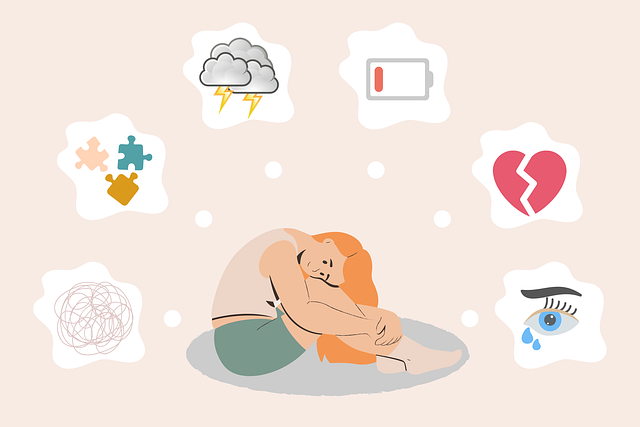
If you have ever felt completely frozen, unable to speak, or emotionally numb during a stressful moment, while everyone else expects you to react, you are not broken. You are experiencing an involuntary nervous system shutdown.
Not everyone reacts to overwhelming stress with tears, shouting, or panic. For a large number of people, the nervous system’s answer to too much pressure is silence, a sudden emotional shutdown that can feel like going numb, going blank, or quietly disappearing inside your own head. This is not weakness, laziness, or a character flaw. It is a survival response wired into the body, and understanding how it works is the first real step toward recovering from it.
What Is Emotional Shutdown? (Quick Answer Block)Emotional shutdown is an involuntary freeze-based stress response where the nervous system drops emotional and physical activity to protect an individual from overwhelming psychological danger. Manifesting as numbness, silence, or blankness, it represents a core branch of the autonomic nervous system’s protective mechanisms. Clinically, emotional shutdown belongs to the same family of stress responses as fight, flight, and fawn. Rather than a conscious choice, it is an instinctive biological reflex designed to preserve energy and shield the mind from processing more distress than it can handle. |
What Happens in the Brain and Body During a Shutdown
When the brain’s threat-detection center, the amygdala, senses danger (even non-physical danger, such as a harsh tone of voice, a sharp critique, or an emotional memory of past conflict), it can override the prefrontal cortex. The prefrontal cortex is the region responsible for logic, emotional regulation, and speech production. This override is why words can vanish mid-argument, or why a stressful conversation can leave someone staring blankly instead of defending themselves.
Concurrently, the body’s stress-hormone system, known as the HPA (hypothalamic-pituitary-adrenal) axis, floods the bloodstream with cortisol. Under prolonged or repeated activation, certain nervous systems shift away from active fight-or-flight into a slower, quieter state governed by the freeze response. Heart rate drops, metabolic energy is conserved, and the body essentially enters a state of tonic immobility, a clinical term for the biological “playing dead” reflex shared across species when escape is impossible.
Freeze, Fawn, Fight, or Flight: Understanding the Spectrum
All four responses are automatic, involuntary reactions generated by the same baseline threat-detection system, yet they manifest entirely differently in human behavior.
|
Response |
Behavioral Manifestation |
Underlying Evolutionary Goal |
|
Fight |
Raised voice, confrontation, irritability, argumentativeness |
Neutralize or overpower the threat directly |
|
Flight |
Leaving the room, physical avoidance, restlessness, fleeing |
Escape the physical or emotional source of danger |
|
Freeze (Shutdown) |
Going silent, feeling numb, mental blankness, physical stillness |
Conserve energy; become undetectable to predators or threats |
|
Fawn |
People-pleasing, over-apologizing, appeasement, submission |
De-escalate the threat through compliance and accommodation |
Emotional shutdown sits squarely inside the freeze category, though it frequently blends with fawn responses, particularly among individuals who learned early in life that staying quiet and agreeable was the safest path through conflict.
Why You Might Go Silent or “Go Blank” When You’re Upset
Going mute during an emotionally charged moment is far more common than most realize, and it is rarely an indicator of apathy or coldness. When emotional intensity spikes, the brain’s verbal-processing centers temporarily deprioritize speech generation to prioritize core survival and threat monitoring. This explains why the words genuinely will not come out, no matter how intensely a person wishes to express themselves.
For many individuals, this pattern is heavily reinforced by personal history rather than the immediate present. If speaking up during childhood led to harsh criticism, punishment, emotional invalidation, or being ignored, silence transforms into a deeply ingrained survival strategy. This strategy resurfaces automatically in adulthood, even within safe relationships. Highly sensitive people (HSPs), deep thinkers, and conflict-avoidant individuals are particularly susceptible because their neurobiology detects emotional friction early and initiates an immediate protective shutdown. Over time, this transitions from an isolated reaction into chronic nervous system dysregulation, where the body struggles to transition smoothly between alertness, calm, and rest.
Can Trauma Cause Emotional Shutdown?
Yes. Unprocessed psychological trauma, including chronic childhood stress, emotional neglect, and cumulative micro-traumas, sensitizes the brain’s threat-detection machinery. Research into Adverse Childhood Experiences (ACEs) consistently demonstrates that early, unpredictable stress alters the neural architecture, causing adult nervous systems to default to shutdown much faster and more frequently than average.
This dynamic is intimately connected to hypervigilance: a state where a traumatized nervous system scans the environment continuously for danger, oscillating wildly between hyperarousal and total shutdown with very little middle ground. Children who grew up walking on eggshells, feeling invisible, or being punished for expressing big emotions frequently evolve into adults whose default response to stress is silent withdrawal. This response is not a lack of care; it is an over-protective physiological adaptation.
Who Shuts Down Most Often?
Emotional shutdown does not impact all neurological profiles equally. It appears most prominently in individuals who possess specific cognitive and emotional traits:
- High sensory and emotional sensitivity
- Deep cognitive processing styles
- Perfectionistic or high-achieving tendencies
- Heightened empathy and emotional attunement to others
These traits, while valuable in many contexts, narrow an individual’s window of tolerance, the optimal psychological zone in which a person can navigate stress while remaining present, grounded, and cognitively flexible. When the window of tolerance is compressed by early conditioning or chronic burnout, minor stressors easily push the system over the edge into a freeze state.
How to Recover From an Emotional Shutdown: A Step-by-Step Guide
Recovery from an emotional shutdown cannot be achieved by forcefully trying to “snap out of it.” Because the prefrontal cortex is temporarily offline, cognitive willpower is ineffective. Healing requires somatic, body-based interventions that signal physical safety back to the nervous system.
1. Pause and Name the State Without Judgment
The vital first step is granting yourself total permission to stop. Forcing conversation, making decisions, or maintaining eye contact during a shutdown deepens the freeze. Acknowledge what is happening internally, even silently repeating, “I feel frozen, I feel overwhelmed, I am safe to pause”, begins to re-engage offline neural pathways.
2. Ground Your Body Using Sensory Input
Simple sensory engagement interrupts the internal freeze loop and signals to the brain that the immediate environment is secure. Implement the clinically backed 5-4-3-2-1 grounding method: acknowledge 5 things you can see, 4 things you can physically feel, 3 things you can hear, 2 things you can smell, and 1 thing you can taste. Alternatively, hold an ice cube, press your feet firmly into the floor, or place a warm hand directly on your chest.

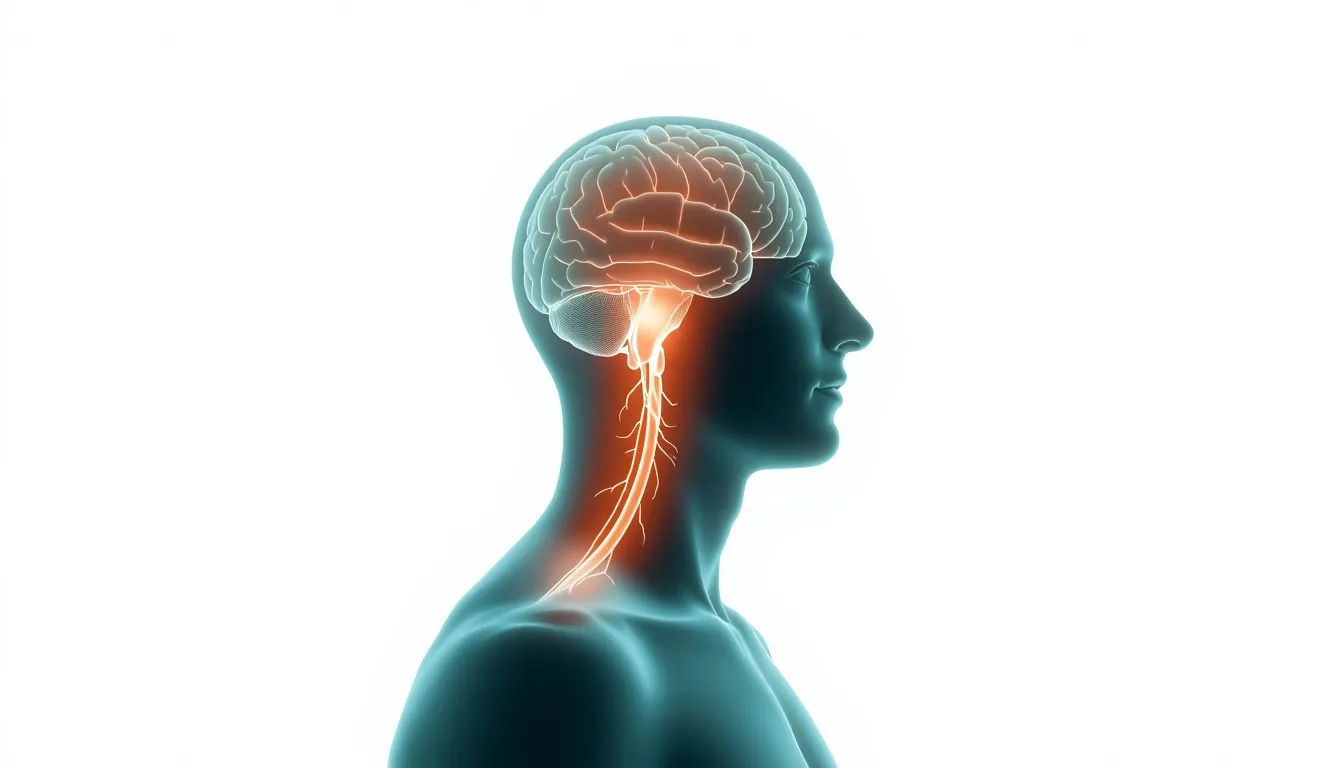
3. Regulate Your Breath and the Vagus Nerve
Deep breathing can feel impossible or suffocating mid-shutdown; instead, utilize micro-breathing cycles (e.g., gentle 2-second inhales and 3-second exhales). Because the vagus nerve regulates the parasympathetic branch, incorporating soft vocalizing, humming, or paced breathing aids the transition out of dorsal-vagal shutdown. For deeper physiological tools, review structured vagus nerve regulation techniques.
4. Introduce Gentle Micro-Movements
Immobilization freezes the physical form. Break this stasis by introducing minute movements: wiggle your fingers, rotate your wrists, gently roll your shoulders, or take one slow physical step. Physical motion signals survival and agency to the motor cortex.
5. Reconnect and Reflect Gradually
Once baseline physiological regulation returns, journaling can help articulate thoughts that were completely inaccessible during the peak of the shutdown. When ready, reach out to a trusted, safe individual, even via a simple text message, to restore interpersonal connection without demanding high-pressure verbal performance.
When to Seek Professional Support
Occasional emotional shutdown under extreme, acute stress is a normal human reaction that typically resolves independently. However, professional clinical intervention becomes essential when shutting down happens frequently, persists for extended periods, disrupts professional or interpersonal relationships, or correlates strongly with unhealed trauma.
Working with a licensed mental health clinician specializing in trauma-informed care, such as Somatic Experiencing, EMDR (Eye Movement Desensitization and Reprocessing), or Polyvagal-informed psychotherapy, allows individuals to retrain their autonomic threat response at a sustainable, body-tolerant pace. Seeking this support is an active investment in long-term nervous system resilience.
Frequently Asked Questions (FAQ)
What does an emotional shutdown feel like internally?
Individuals commonly experience sudden emotional numbness, an absolute blankness of thought, a temporary inability to speak, or a surreal sensation of watching oneself from a distance. Physically, it is marked by heavy limbs, dropped energy levels, and slowed physiological responses.
Is shutting down the exact same thing as dissociation?
While they overlap significantly, they are distinct. Shutdown is specifically an autonomic nervous-system freeze response, whereas dissociation is a broader psychological detachment from identity, memory, or immediate reality. Severe shutdown can induce dissociative states, but not every shutdown involves full clinical dissociation.
How long does an emotional shutdown typically last?
The duration varies widely, ranging anywhere from a few minutes to several hours. The recovery timeline is dictated by how safe the surrounding environment feels and how effectively somatic grounding techniques are applied to support nervous system re-regulation.
Can severe anxiety cause a person to shut down?
Yes. When anticipatory or acute anxiety reaches a critical threshold, some nervous systems bypass active fight-or-flight entirely and move directly into a freeze state, particularly for individuals whose trauma history or chronic stress conditioning favors withdrawal over confrontation.
How can you stop shutting down during arguments or high-stress talks?
You cannot force your nervous system to override a freeze reflex mid-moment. However, you can decrease its frequency by practicing daily somatic grounding, processing underlying trauma with a qualified therapist, and establishing agreements with loved ones to take a temporary, structured pause rather than pushing through verbal pressure.
Medical Disclaimer & E-E-A-T AttributionThis article is for educational purposes and does not replace personalized medical or psychological advice. If you are recovering from a brain injury, trauma, or a mental health condition, work with a licensed clinician to build a plan suited to your situation. Written by: Adil Farooq, Psychiatry Magazine Medically reviewed by: [Dr. Adil Farooq MS · PhD] · Updated: 2026 |