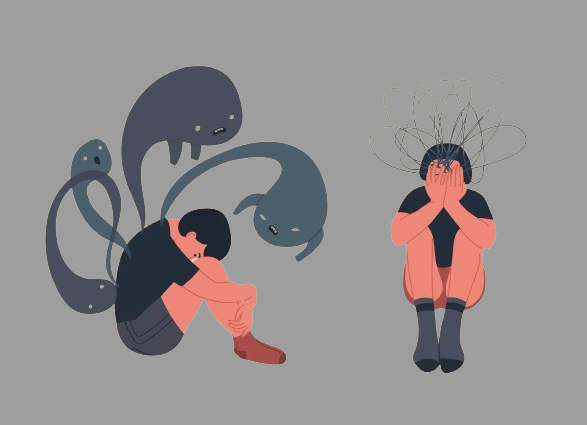
Feeling terrified out of nowhere, struggling to breathe, your heart racing like it’s about to burst—this is often how people describe a panic attack.
On the other hand, feeling overwhelmed, restless, with a constant sense of dread climbing slowly through your body—that is usually the picture of an anxiety attack.
Both experiences can be frightening, confusing, and exhausting. Many people use the terms interchangeably, yet panic attacks and anxiety attacks are not the same. Understanding their differences helps you recognize what’s happening in your body, manage symptoms, and reduce the fear these episodes bring.
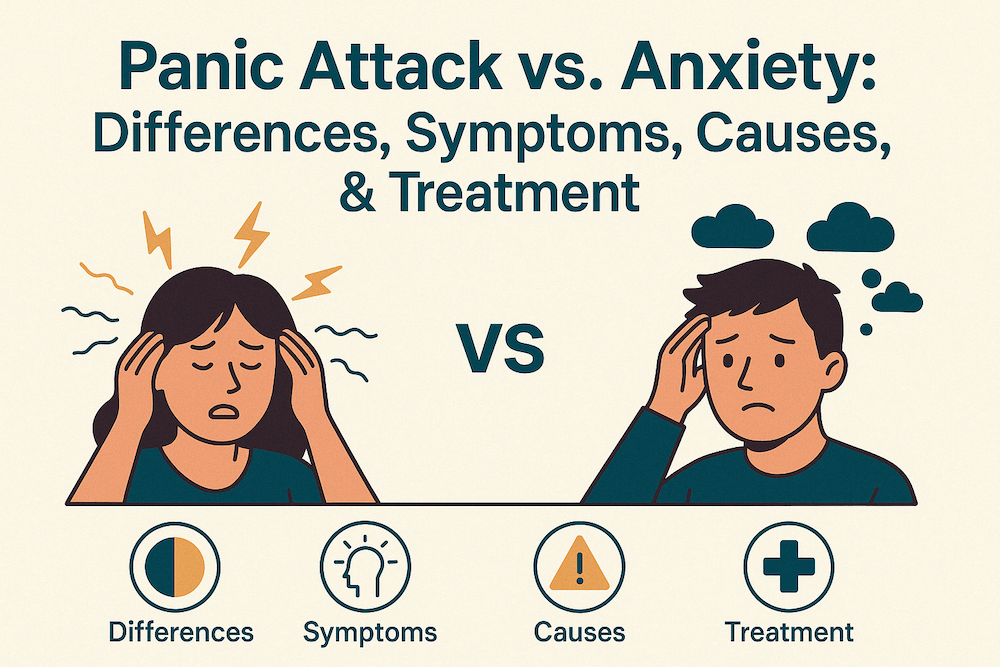
What’s the Difference Between a Panic Attack and an Anxiety Attack?
The main difference lies in onset, intensity, and duration.
Panic Attack
- Happens suddenly, without warning
- Peaks within 10 minutes
- Intense physical symptoms
- Often feels like a medical emergency
- May appear even when a person feels calm
Panic attacks are more physical, sudden, and overpowering.
Anxiety Attack
- Builds up gradually
- Triggered by stress, fear, or overthinking
- More mental and emotional
- Can last hours or even days
- Usually linked to ongoing worry or anxiety disorders
Anxiety attacks feel like an emotional overload, while panic attacks feel like the body is in danger even when it’s not.
How to Tell if It’s a Panic Attack or an Anxiety Attack?
Here’s a simple way to differentiate:
If it hits you suddenly, extremely, and physically → Panic Attack
If it builds up slowly with persistent worry → Anxiety Attack
Below is a comparison to help you identify which one you’re experiencing.
1. Onset
Panic Attack:
You may feel completely fine one moment and overwhelmed the next.
Many people say, “It came out of nowhere.”
Anxiety Attack:
Often starts with a trigger—work stress, overthinking, conflict, or uncertainty.
2. Symptoms
Panic Attack Symptoms
- Rapid heartbeat
- Chest pain
- Hyperventilation
- Sweating
- Shaking
- Feeling like you’re choking
- Dizziness
- Numbness
- Feeling of detachment from reality (derealization)
- Fear of losing control or dying
The body goes into an extreme fight-or-flight reaction.
Anxiety Attack Symptoms
- Restlessness
- Muscle tension
- Difficulty focusing
- Irritability
- Fatigue
- Racing thoughts
- Tight chest (milder than panic attack)
- Difficulty sleeping
- Stomach discomfort
Anxiety attacks are emotionally overwhelming and often last much longer.
3. Duration
Panic Attack:
- Usually lasts 10–30 minutes
- Intense but short
Anxiety Attack:
- Can last for several minutes or hours
- Sometimes persists for days
4. Trigger Pattern
Panic Attack:
Sometimes triggered by:
- Crowds
- Confined spaces
- Stressful events
- Physical sensations
But often no clear cause exists.
Anxiety Attack:
Triggered by:
- Worry
- Stress
- Fear of a future event
- Overthinking
- Emotional overload
5. Emotional Experience
Panic Attack:
“I’m dying.”
“I’m losing control.”
“This is the end.”
Anxiety Attack:
“I can’t handle this.”
“I’m overwhelmed.”
“Something will go wrong.”
How to Cure Panic Attacks?
There is no overnight cure, but many evidence-supported techniques can reduce the frequency and intensity of panic attacks.
Here are the most helpful approaches:
1. Breathing Regulation (Most Effective Technique)
Panic-driven hyperventilation worsens symptoms.
Slow, controlled breathing signals your brain that you’re safe.
Try this:
- Inhale 4 seconds
- Hold 2 seconds
- Exhale 6 seconds
Repeat until your heart rate slows.
2. Grounding Techniques
Grounding pulls you out of your panic and into the present moment.
The 5-4-3-2-1 Method
- 5 things you can see
- 4 things you can touch
- 3 things you can hear
- 2 things you can smell
- 1 thing you can taste
This shifts your brain away from fear.
3. Label the Experience
Instead of thinking “I’m dying,” try saying:
“This is a panic attack. It will pass.”
This reduces fear and prevents panic from escalating.
4. Relaxing the Body
Techniques include:
- Stretching
- Warm showers
- Progressive muscle relaxation
- Slow walking
A relaxed body cannot sustain a panic response.
5. Avoiding Catastrophic Thinking
People often misinterpret symptoms as fatal:
- “My heart is stopping.”
- “I will suffocate.”
Learning to challenge these thoughts reduces severity.
6. Long-term Support
Helpful tools:
- Cognitive behavioral therapy
- Monitoring triggers
- Reducing caffeine
- Better sleep routines
- Mindfulness practice
These don’t “cure” panic instantly but build long-term resilience.
Can Anxiety Cause Diarrhea?
Yes — anxiety absolutely can cause diarrhea.
When you’re anxious, the brain sends danger signals to the digestive system. The gut is extremely sensitive to stress because of the brain–gut connection, also known as the enteric nervous system.
During anxiety:
- The body releases cortisol and adrenaline
- Digestion speeds up
- Muscles in the intestines contract faster
- This leads to diarrhea or loose stools
This is why many people experience:
- “Nervous stomach”
- Urgent bowel movements
- Cramps
- Gas
- Bloating
It’s a normal physiological response.
Long-term anxiety may also worsen:
- IBS
- Indigestion
- Acid reflux
Managing anxiety often improves digestive symptoms.
What Is Worse: A Panic Attack or an Anxiety Attack?
Neither is “worse”—they’re different—but most people say panic attacks feel more extreme.
Panic Attack: More Intense, Shorter
- Feels life-threatening
- Severe physical symptoms
- Sudden and overwhelming
- Harder to ignore
Anxiety Attack: Less Intense, Longer
- Emotionally draining
- Mentally exhausting
- Can last hours or days
- Often linked to ongoing stress
In summary:
Panic attacks are worse in intensity.
Anxiety attacks are worse in endurance.
Both are valid, painful, and deserve understanding—never comparison.
Symptoms, Causes & Triggers of Panic and Anxiety Attacks
Although they differ, both are influenced by similar factors.
Common Causes
- Chronic stress
- Past trauma
- Irregular sleep
- Excess caffeine
- Hormonal imbalances
- Overthinking
- Health anxiety
- Financial worry
- Relationship conflicts
Triggers
- Crowded places
- High-pressure situations
- Illness
- Conflict
- Fear of failure
- Feeling judged
- Uncertainty
- Emotional overload
Different people have different patterns. What triggers one person may not affect another.
What Happens Inside the Body During These Attacks?
When panic or anxiety strikes, your body enters fight-or-flight mode.
Changes include:
- Heart rate increases
- Breathing becomes rapid
- Muscles tense
- Adrenaline floods your system
- Blood flow shifts to essential organs
- Vision may blur
- Stomach stops digesting
Nothing is “wrong” with your body.
It’s doing exactly what it’s designed to do—just at the wrong moment.
How to Prevent Anxiety and Panic Episodes
Here are scientifically supported habits that reduce future attacks:
1. Regular Deep Breathing Practice
Trains your brain to stay calm.
2. Adequate Sleep
The brain becomes more reactive with poor sleep.
3. Reduce Caffeine
Coffee, energy drinks, and tea spike adrenaline.
4. Mindfulness or Meditation
Even 5 minutes daily helps reduce overthinking.
5. Physical Activity
Movement burns stress hormones.
6. Healthy Food Routine
Stable blood sugar reduces irritability and anxiety.
7. Manage Stress Early
Don’t wait until your mind is overloaded.
8. Avoid Doom-Scrolling
Social media overstimulates the nervous system.
When to Seek Professional Help
Reach out for support if:
- Attacks happen weekly
- You avoid leaving home
- Fear of another attack controls your life
- Your sleep is affected
- You experience constant dread
- Symptoms get worse over time
Support is not weakness—it’s wisdom.
Long-Term Management & Recovery
Healing is not linear. Some days are easier; some days feel harder.
The goal is not perfection—it’s learning to stay in control even when fear appears.
Long-term improvement often comes from:
- Therapy
- Journaling triggers
- Breathing techniques
- Reducing stimulants
- Learning emotional regulation
- Staying consistent
Even people who struggled for years can—and do—recover.
Final Thoughts
Both panic attacks and anxiety attacks are real, painful, and often misunderstood.
Knowing the difference between them helps you:
- Understand your body
- Calm yourself during episodes
- Reduce fear
- Build confidence
- Take back control
You’re not weak for struggling.
You’re human.
And every time you learn more about your reactions, you become stronger than your fear.
FAQs
1. What is the difference between a panic attack and an anxiety attack?
A panic attack is sudden, intense, and reaches peak fear within minutes. An anxiety attack builds up gradually due to stress or worry and lasts longer.
2. How can I tell if I’m having a panic attack or an anxiety attack?
If symptoms hit suddenly and physically — it’s likely a panic attack.
If symptoms build over time and feel more emotional or mental — it’s likely an anxiety attack.
3. How long do panic attacks usually last?
Most panic attacks last between 10 and 30 minutes, though the emotional exhaustion may last longer.
4. What causes anxiety attacks?
Anxiety attacks are usually triggered by stress, overthinking, fear, uncertainty, or long-term worrying patterns.
5. Can anxiety cause stomach problems like diarrhea?
Yes. Anxiety activates the gut-brain connection, which can speed up digestion and cause diarrhea, nausea, or stomach cramps.
6. What helps stop a panic attack quickly?
Slow breathing, grounding techniques, labeling the sensations, walking, and relaxing your muscles can reduce intensity.
7. Which is worse — a panic attack or an anxiety attack?
A panic attack is more intense and physical, while an anxiety attack lasts longer and is emotionally draining. Both are difficult but different.
8. Can panic attacks happen without a trigger?
Yes. Panic attacks often occur unexpectedly, even when a person feels calm or relaxed.
9. Are panic attacks dangerous?
They feel frightening but are not physically dangerous. They are the body’s fight-or-flight response becoming overactive.