In recent years, moral injury has become an increasingly important topic in psychology, mental-health care, trauma studies, healthcare, and military research. Unlike physical wounds or even traditional psychological trauma, moral injury describes a deep inner conflict—a wound to a person’s moral framework, values, or sense of right and wrong. It occurs when someone feels they have violated their own moral code or witnessed something that profoundly contradicts their ethical beliefs.
Although moral injury was first recognized among military members, psychologists now understand that it can occur in healthcare workers, first responders, survivors of abuse, leaders, parents, and even young adults navigating ethically challenging situations. This makes moral injury not just a military concern, but a universal psychological issue.
This comprehensive article explores moral injury through a psychological lens, including its underlying theory, assessment tools, DSM-5 relevance, examples, and the treatment approaches that help individuals heal from these invisible wounds.
Moral injury treatment
Healing from moral injury is complex because the wound is not simply emotional; it is also ethical, existential, and relational. Treatments focus on rebuilding a person’s sense of meaning, restoring moral alignment, and repairing a fractured sense of self.
Below are the primary treatment approaches used in psychology and mental-health care.
1. Trauma-informed therapy
Although moral injury is not identical to PTSD, the two can overlap. Trauma-informed therapy provides a safe environment for clients to address disturbing memories, shame, guilt, and emotional conflict.
Key components include:
- validating the person’s emotional experience
- ensuring safety and trust
- exploring internal moral conflict gently
- addressing triggers without re-traumatizing
- helping the client understand why the event felt morally devastating
This foundation makes deeper healing possible.
2. Cognitive Processing Therapy (CPT)
CPT helps individuals challenge distorted beliefs about themselves, others, and the event. With moral injury, clients often carry excessive responsibility, believing they “should have done something differently.”
CPT helps reframe:
- unrealistic self-blame
- catastrophic interpretations
- harsh moral judgments
- internalized shame
- rigid beliefs about identity (“I am a bad person”)
The goal is not to erase accountability but to separate responsibility from moral self-destruction.
3. Acceptance and Commitment Therapy (ACT)
ACT supports healing by helping individuals:
- accept painful emotions
- reconnect with core values
- reduce avoidance
- build psychological flexibility
- develop self-compassion
Because moral injury deeply affects personal values, ACT helps reconnect clients with the moral principles that matter most to them.
4. Compassion-focused therapy
People with moral injury often suffer from intense shame, guilt, and self-criticism. Compassion-focused therapy (CFT) helps them:
- soften harsh internal judgment
- develop kindness toward themselves
- understand their emotional context
- rebuild inner acceptance
For many, compassion is the key to breaking self-punishing cycles.
5. Existential therapy
Moral injury often leads to existential crises:
- “What kind of person am I?”
- “Can I still trust myself?”
- “What do I believe about humanity?”
- “Do my actions define my worth?”
Existential therapy helps individuals explore meaning, responsibility, identity, and moral values in a deeper, philosophical way.
6. Group therapy and peer support
Hearing others’ stories reduces isolation and helps normalize internal conflict. Group settings are especially helpful for:
- military veterans
- healthcare professionals
- emergency responders
- survivors of ethical betrayal
Shared experiences create emotional validation and community healing.
7. Spiritual or pastoral counseling (optional)
Not all clients use spirituality, but for those who do, moral injury often intersects with questions like:
- forgiveness
- meaning
- moral beliefs
- responsibility
- redemption
Combining psychological therapy with spiritual support can help individuals reconcile their moral and ethical foundations.
8. Narrative therapy
Narrative therapy helps individuals retell their story in a healthier, self-compassionate way. Instead of defining themselves by the incident, they learn to integrate it into a broader, more resilient self-identity.
9. Restorative practices
Healing sometimes includes:
- seeking forgiveness
- apologizing
- making amends
- acknowledging harm
- reconnecting with community
- engaging in service
These steps depend on the individual’s comfort and readiness.
Moral injury DSM-5
Moral injury is not classified as a formal diagnosis in the DSM-5. However, it is recognized as a clinically significant psychological experience that can contribute to various mental-health concerns.
Below is how psychology understands its place in relation to DSM-5 disorders.
1. A non-diagnostic but clinically relevant concept
Although not listed as a disorder, moral injury is widely acknowledged by psychologists as a major factor influencing:
- emotional distress
- depression
- anxiety
- complicated grief
- relationship difficulties
- PTSD symptoms
- identity disruption
Mental-health professionals assess moral injury because it deepens and complicates trauma responses.
2. Overlap with PTSD criterion A
PTSD in DSM-5 focuses on exposure to actual or threatened death, serious injury, or sexual violence.
Moral injury differs in that it involves:
- ethical violation
- witnessing wrongdoing
- participating in actions against one’s morals
- failing to prevent harm
- feeling betrayed by authority figures
Although the triggers may overlap, the experience is distinct.
Someone can have:
- PTSD without moral injury
- moral injury without PTSD
- both moral injury and PTSD simultaneously
This distinction is crucial for treatment.
3. PTSD symptoms influenced by moral injury
The following PTSD symptoms often intensify when moral injury is present:
- intrusive memories
- emotional numbness
- avoidance
- hypervigilance
- negative self-beliefs
- shame, guilt, or moral distress
Because moral injury centers on moral meaning rather than fear, traditional PTSD treatments may need adjustment.
4. Associated DSM-5 emotional impacts
Even though moral injury is not a diagnosis, individuals may present with DSM-5 conditions including:
- Major Depressive Disorder
- Generalized Anxiety Disorder
- Adjustment Disorder
- Substance Use Disorders
- Personality-related distress
- Trauma-related disorders
Moral injury acts as a psychological root that affects these presentations.
5. Diagnostic challenges
Clinicians note that moral injury can be difficult to diagnose because:
- clients may not view their distress as “psychological”
- the shame prevents disclosure
- the source of injury is moral, not necessarily traumatic in the traditional sense
- clients may fear judgment
- guilt-based symptoms differ from fear-based ones
These challenges make specialized assessment essential.
Moral injury Scale
The Moral Injury Events Scale (MIES) is one of the most widely used tools to measure moral injury in research and clinical assessment. It assesses exposure to events that violate one’s moral beliefs or expectations.
Below is an overview of how the scale works and why it matters.
1. Purpose of the Moral Injury Events Scale
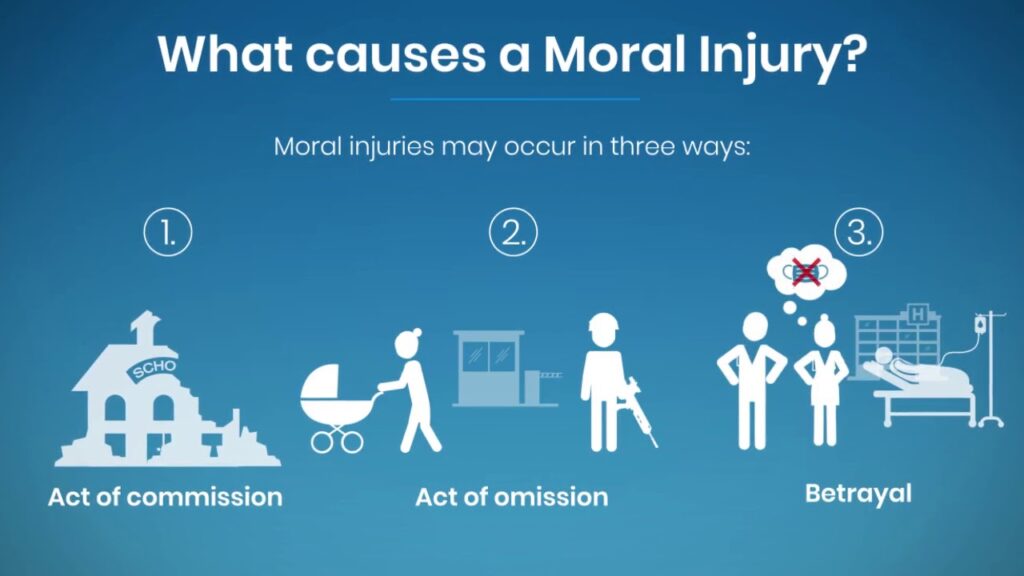
The scale measures three main dimensions:
- Personal transgressions: when the individual feels they violated their own moral values
- Other-induced moral injury: when someone else’s actions violated deeply held beliefs
- Betrayal: when authority figures or trusted individuals caused or allowed moral harm
These dimensions help psychologists understand where the injury originates.
2. What the scale measures
The MIES typically includes items that ask individuals to rate statements such as:
- “I acted in ways that violated my own moral code.”
- “I am troubled by things I witnessed.”
- “I feel betrayed by leaders I once trusted.”
Responses help assess the severity of moral distress and related symptoms.
3. Why the scale matters in psychology
The MIES is crucial because moral injury often hides beneath other clinical symptoms. Without specific measurement, the core issue can be missed.
Psychologists use the scale to:
- guide treatment planning
- identify sources of ethical conflict
- distinguish moral injury from PTSD
- evaluate treatment progress
- support research in trauma psychology
Assessment leads to more targeted and effective interventions.
4. Limitations of the scale
Despite its usefulness, the MIES has limitations:
- It is self-reported and based on personal interpretation
- Cultural and personal moral frameworks influence responses
- It may not capture subtle emotional experiences
- Moral injury can be much broader than one standardized scale
Still, it remains one of the best tools available for structured assessment.
Moral injury Theory
Moral injury theory explains how and why moral violations lead to profound psychological distress. It examines cognitive, emotional, and existential impacts of events that contradict a person’s ethical world.
Below are the core principles of moral injury theory as understood in psychology.
1. Rooted in moral values
Moral injury begins when individuals perceive:
- a violation of their personal morals
- a failure to uphold their own standards
- a betrayal of ethical expectations
- a loss of trust in themselves or others
It is fundamentally tied to identity.
2. Internal conflict
The central element of moral injury is a deep conflict between one’s actions (or observations) and one’s moral expectations.
This leads to:
- guilt
- shame
- moral disorientation
- self-condemnation
- difficulty forgiving oneself
- existential questioning
This inner conflict creates long-lasting emotional pain.
3. Cognitive dissonance
Individuals experience dissonance when their actions contradict their moral beliefs. Moral injury theory explains how dissonance becomes emotionally overwhelming when:
- the stakes are high
- harm occurs
- values are deeply rooted
- responsibility feels personal
This dissonance becomes a core memory that shapes identity.
4. Emotional consequences
Common emotional reactions include:
- guilt and remorse
- shame
- grief
- anger
- betrayal
- worthlessness
- loss of trust
- spiritual distress
These emotions can persist for years if not addressed.
5. Behavioral responses
Moral injury can lead to:
- social withdrawal
- avoidance of reminders
- aggression or irritability
- self-sabotage
- substance misuse
- perfectionism
- isolation from loved ones
These behaviors often reflect attempts to manage overwhelming internal conflict.
6. Existential themes
Moral injury can disrupt:
- identity (“Who am I?”)
- meaning (“Why did this happen?”)
- trust (“Can I rely on others?”)
- morality (“What is right or wrong?”)
This existential strain distinguishes moral injury from fear-based trauma disorders.
7. The role of cultural and personal values
Cultural, religious, and personal values shape:
- what individuals perceive as moral violations
- how they evaluate their actions
- how deeply the injury is felt
- what steps are needed for healing
Thus, moral injury is deeply personal and context-specific.
Examples of moral injury
Moral injury can occur in many roles and settings. Below are real-world examples that illustrate how moral injury develops and how it affects individuals psychologically.
1. Military settings
a. Acting against moral values
A soldier fires a weapon during combat and later learns that they harmed civilians unintentionally. Even if the action was legally justified, the emotional aftermath can be devastating.
b. Witnessing harm
Seeing others commit acts of violence, cruelty, or negligence can cause deep internal conflict.
c. Feeling betrayed by leadership
When soldiers believe leaders placed them in unsafe or unethical situations, moral injury can manifest as anger, betrayal, and despair.
2. Healthcare settings
a. Forced ethical decisions
Doctors or nurses may have to choose which patient receives life-saving care when resources are limited.
b. Failing to prevent harm
A nurse who witnesses medical negligence may carry guilt, even if they weren’t responsible.
c. Organizational betrayal
Healthcare workers may feel abandoned by leadership when support, resources, or staffing are insufficient.
3. First responders
a. Inability to save a life
A firefighter who cannot save a child may blame themselves deeply.
b. Being required to follow orders that feel unethical
For example, responding to a scene but being restricted from helping due to safety protocol.
4. Abuse survivors
a. Being forced into actions against one’s will
Survivors often experience moral injury alongside trauma.
b. Blaming themselves for survival decisions
People may carry guilt for actions that kept them alive but violated moral expectations.
5. Leadership and workplace settings
a. Making decisions that hurt others
Leaders may experience moral distress when layoffs or disciplinary actions conflict with their values.
b. Witnessing wrongdoing
Employees who see unethical behavior—fraud, exploitation, discrimination—may suffer moral injury.
6. Everyday life
a. Hurting someone unintentionally
A parent who loses control and says something harsh to their child may carry lasting guilt.
b. Not intervening in wrongdoing
Witnesses to bullying, harassment, or discrimination may feel they failed morally by staying silent.
Final Thoughts
Moral injury is a profound psychological experience that challenges a person’s understanding of themselves, their values, and their place in the world. It is not a disorder in the DSM-5, but it is a deeply impactful emotional wound that requires empathy, careful assessment, and specialized treatment approaches.
Understanding moral injury through the lens of psychology—its theory, measurement, examples, and treatments—helps individuals recognize the signs and begin the path toward healing. With the right support, people can regain a sense of moral integrity, rebuild inner trust, and reclaim their sense of worth.