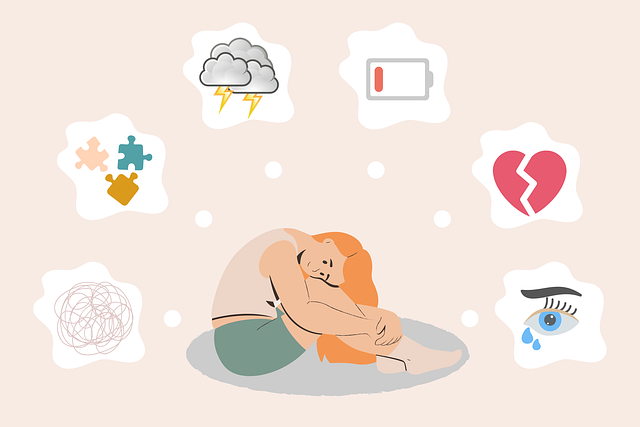
You are on the edge of something real. The therapy is finally going somewhere, the meditation is deepening, the book you are reading is rearranging something important inside you — and all of it is working. Then something pulls back. Hard. Suddenly you want to cancel the next session, put the book face-down on the nightstand, scroll your phone for an hour, eat something, sleep, do absolutely anything except continue becoming the person you can feel yourself approaching.

You tell yourself you are tired. You tell yourself it is not the right time. But somewhere beneath those explanations, something else is happening — something that has nothing to do with laziness or fear of failure. This is ego dissolution anxiety, the specific psychological dread that arrives not when growth is going badly, but precisely when it is going well.
Ego dissolution anxiety describes the fear of losing your existing sense of self through the process of genuine personal growth and psychological transformation. It is not a formal clinical diagnosis — it is an emerging concept in psychology that describes one of the most common and least understood reasons people stop short of the change they say they want.
Understanding it does not make it disappear. But it does make it possible to see it for what it is, rather than for the convincing story it tells about itself. This article explores what ego dissolution anxiety actually is, where it comes from psychologically and neurologically, how it appears in everyday life, and what you can do when you feel it pulling you backward just as transformation begins.
The Experience That Stops Personal Growth Before It Starts
There is a pattern therapists notice so consistently that it has become almost predictable. A person spends months doing meaningful inner work. Slowly, carefully, they begin touching something real — an old grief, a painful belief, a lifelong emotional pattern.
Then, almost immediately after a breakthrough, they disappear.
They cancel sessions. They say they are busy. They decide they need a break. They convince themselves they can continue alone. The reasons sound logical, but beneath them is a different psychological process entirely.
This is the fingerprint of ego dissolution anxiety.
The fear does not appear when growth feels impossible. It appears when growth starts becoming real. The anxiety is not about embarrassment, incompetence, or failure. It is about identity.
At some level, the mind realizes that genuine transformation will require becoming psychologically unfamiliar to yourself. That unfamiliarity feels dangerous. So the self generates resistance.
Most people never recognize what is happening. They mistake it for ordinary doubt. But the timing tells the story: the urge to stop intensifies exactly when the process begins working.
What Ego Dissolution Actually Means in Psychology
In psychology, ego dissolution refers to the temporary loosening or disruption of the ordinary sense of self — the stable narrative identity most people experience as “me.” Researchers studying meditation, psychedelic experiences, and states of deep transformation describe ego dissolution as a reduction in the brain’s ordinary self-referential processing.
In its most intense forms, ego dissolution can involve the temporary disappearance of boundaries between self and world. But ego dissolution also exists on a spectrum.
At the subtle end of that spectrum are the everyday experiences of psychological transformation:
- Realizing your entire self-concept was built around pleasing others
- Understanding a childhood wound for the first time
- Letting go of an identity that no longer fits
- Recognizing that the life you built is not the life you actually want
These moments do not erase the self completely. But they destabilize it enough to create fear.
That fear is ego dissolution anxiety.
The Role of the Default Mode Network in Identity
The neurological system most associated with ego dissolution is the default mode network (DMN), a group of interconnected brain regions involved in self-referential thought, autobiographical memory, and identity maintenance.
The DMN is active when you think about:
- Your personal story
- Your relationships
- Your future
- Your past
- Who you believe yourself to be
Research consistently shows that during deep meditation and psychedelic experiences, activity in the default mode network decreases significantly. This reduction corresponds with the subjective feeling that the ordinary sense of self is loosening.
But you do not need psychedelics for this process to occur.
When therapy, grief, emotional honesty, or genuine insight begins rewriting the self-narrative the DMN has maintained for years, the brain can interpret that disruption as a threat.
The system responsible for maintaining “you” suddenly detects instability.
That instability is what ego dissolution anxiety feels like.
Ego Dissolution in Everyday Life, Not Just Psychedelics
It is important to understand that ego dissolution anxiety is not limited to psychedelic experiences or spiritual retreats.
It appears in ordinary psychological growth:
- The therapy session that finally reaches the real wound
- The relationship that forces emotional honesty
- The career transition that changes your identity
- The grief that dismantles your previous worldview
- The realization that your coping mechanisms no longer work
In these moments, the old identity loosens.
And for many people, that loosening feels terrifying.
The self reaches for familiarity, even if that familiarity is painful. That is why people often return to old patterns precisely when transformation begins.
What Ego Dissolution Anxiety Is — and Why It Is Different
Ego dissolution anxiety is the fear response triggered not by failing to grow, but by the possibility of actually changing.
It is distinct from ordinary growth anxiety.
Ordinary growth anxiety sounds like:
- “What if I fail?”
- “What if I embarrass myself?”
- “What if I’m not capable?”
Ego dissolution anxiety sounds more like:
- “What if I become someone unfamiliar?”
- “What if I lose the version of me I know?”
- “What if transformation changes my relationships, values, or identity?”
The fear is not about incompetence.
It is about identity discontinuity.
That distinction matters because traditional confidence-building strategies often fail to address ego dissolution anxiety. Confidence helps when the fear is failure. It does not help when the fear is transformation itself.
How Ego Dissolution Anxiety Feels From the Inside
The internal experience of ego dissolution anxiety is subtle but recognizable.
People often describe:
- A diffuse sense of dread
- Sudden urges to abandon growth processes
- Intense nostalgia for previous versions of themselves
- A pull toward familiar habits and relationships
- Rational-sounding explanations for stopping
- Emotional exhaustion immediately after breakthroughs
One of the most confusing aspects is how reasonable the resistance sounds.
The threatened self is intelligent. It creates convincing arguments for why the growth should pause.
That is why people experiencing ego dissolution anxiety often believe they are making rational decisions, when in reality they are protecting an identity structure from dissolution.
Who Is Most Likely to Experience It
Some people experience ego dissolution anxiety more intensely than others.
Those most vulnerable often include:
- People with highly structured identities
- High achievers who define themselves through productivity
- Individuals raised in environments where identity ensured safety or belonging
- People with anxious attachment styles
- Highly self-aware or intellectually analytical individuals
The stronger and more rigid the identity structure, the more destabilizing transformation can feel.
When identity has functioned as psychological survival, changing it can feel threatening at the deepest level.
The Psychology Behind the Fear of Losing Yourself
Identity is not simply a personality trait. It is a survival structure.
The psyche builds identity over years to create predictability, continuity, and safety. Your self-concept organizes how you interpret the world, how you behave, and how you maintain relationships.
Without a stable sense of self, life becomes psychologically disorienting.
That is why transformation can activate fear responses even when the change itself is healthy.
Identity as a Survival Mechanism
Terror Management Theory suggests that identity helps protect human beings from existential anxiety and uncertainty.
The self provides:
- Meaning
- Continuity
- Predictability
- Social belonging
- Emotional orientation
When the self is threatened, the brain often reacts as though survival itself is at risk.
This is why ego dissolution anxiety feels so visceral.
At a deep level, the psyche does not easily distinguish between:
- A threat that destroys the self
- A transformation that expands it
Both involve destabilization.
Both trigger resistance.
Why the Psyche Treats Growth as a Threat
The human nervous system evolved to prioritize familiarity over transformation.
Predictability historically increased survival.
As a result, the psyche naturally resists major change, even positive change. The nervous system prefers known discomfort over unknown possibility.
Carl Jung recognized this deeply. He described transformation as individuation — the process of becoming more psychologically integrated and authentic.
But Jung also understood that the old identity would resist this process.
Not because the old self is evil.
Because it is afraid.
The existing structure has kept you functional. It cannot verify what comes next.
So it protects itself.
The Paradox at the Heart of Personal Growth
This is the paradox that makes ego dissolution anxiety so difficult:
Growth requires the old self to loosen.
A transformed person is not psychologically identical to who they were before. Their patterns, beliefs, emotional responses, and relationships may change profoundly.
But the self being asked to transform is the current self.
The old identity must willingly participate in a process that will partially dissolve it.
And it must do this without proof of what waits on the other side.
That is why transformation often requires courage rather than motivation.
The old self cannot fully understand the new self before the transition occurs.
Growth always involves crossing a psychological gap without certainty.
Ego dissolution anxiety is what that gap feels like from the inside.
Signs You May Be Experiencing Ego Dissolution Anxiety
Ego dissolution anxiety has recognizable patterns.
One of the clearest signs is timing.
If your urge to quit intensifies specifically when progress is happening — rather than when things are failing — that strongly suggests ego dissolution anxiety.
Other signs include:
- Repeatedly abandoning therapy just before breakthroughs
- Feeling drawn back toward old identities during growth
- Romanticizing past versions of yourself
- Experiencing anxiety after moments of emotional clarity
- Intellectualizing transformation instead of allowing it
- Replacing one self-development process with another repeatedly
- Feeling exhausted after meaningful psychological insight
Another important sign is backpedaling after moments of truth.
You may experience a genuine realization that feels emotionally undeniable, only to spend the following days minimizing it, rationalizing it away, or reframing it as exaggerated.
The insight itself was real.
But the identity structure it threatens begins defending itself.
How Ego Dissolution Anxiety Shows Up in Real Life
Ego dissolution anxiety rarely announces itself directly.
Instead, it disguises itself as practicality, discernment, or logic.
The Person Who Quits Therapy Just as It Gets Real
Someone spends months building trust in therapy.
Then one session finally reaches the real wound.
They leave emotionally shaken but clearer than they have been in years.
The next day, they decide therapy is no longer necessary.
They tell themselves:
- “I need time to process.”
- “Maybe this therapist isn’t the right fit.”
- “I think I can handle this myself.”
Years later, the same patterns remain.
The therapy was not failing.
It was finally working.
The Overachiever Who Cannot Slow Down
A person whose identity revolves around productivity experiences burnout.
Therapy encourages rest, stillness, and emotional presence.
But slowing down creates panic.
Without achievement, they no longer know who they are.
The anxiety is not laziness.
It is identity destabilization.
The “productive self” feels essential for survival.
The Spiritual Seeker Who Keeps Starting Over
Another person spends years exploring spirituality and personal development.
Books, retreats, practices, teachers — they pursue transformation constantly.
But every time a practice begins producing genuine inner change, they suddenly find flaws with it.
They switch teachers.
They start another system.
They keep searching.
Seeking becomes safer than transformation itself.
The Difference Between Healthy Resistance and Ego Dissolution Anxiety
Not all resistance is unhealthy.
Sometimes slowing down is wise.
Healthy resistance tends to be:
- Specific
- Grounded
- Contextual
- Focused on actual concerns
For example:
- A therapist genuinely violates boundaries
- A process moves too quickly
- A situation feels emotionally unsafe
Ego dissolution anxiety feels different.
It is more diffuse.
The anxiety often lacks a clear object.
And most importantly, it intensifies precisely when the process becomes meaningful.
The timing reveals the difference.
How to Work Through Ego Dissolution Anxiety
You do not overcome ego dissolution anxiety through force.
Trying to overpower the threatened self usually increases resistance.
What helps instead is changing your relationship to the fear.
Reframe the Dissolution as an Addition, Not a Subtraction
One of the most important shifts is understanding that genuine growth does not erase your deepest qualities.
What dissolves is not your humanity.
What dissolves are:
- Defensive identities
- Protective narratives
- Survival-based patterns
- Outdated emotional structures
The values, care, love, and awareness that matter most usually remain.
The self that emerges after transformation is not a stranger.
It is often the same self with less fear organizing it.
Build a Relationship With the Observing Self
Acceptance and Commitment Therapy emphasizes the concept of the observing self — the part of awareness capable of witnessing thoughts, emotions, and identity shifts without becoming identical to them.
Even when your identity feels unstable, awareness itself remains.
Thoughts change.
Roles change.
Narratives change.
But the observing awareness that notices these changes stays present.
Learning to identify with this witnessing perspective creates psychological stability during periods of transformation.
Slow the Process Down With Intentional Grounding
The nervous system processes change more effectively when growth is paced.
Grounding practices help create enough physiological safety for transformation to occur without overwhelming the system.
Helpful grounding practices include:
- Breath awareness
- Walking in nature
- Physical movement
- Consistent routines
- Somatic exercises
- Restorative sleep
- Time away from overstimulation
Grounding is not avoidance.
It is nervous system regulation.
Name What You Are Afraid to Lose
Fear becomes more manageable when it becomes specific.
Ask yourself:
“What exactly am I afraid this growth will take from me?”
The answer often reveals that the fear centers around:
- A role
- A defense mechanism
- A social identity
- A familiar coping strategy
- A predictable emotional structure
Naming the fear reduces its power.
Vague dread is harder to work with than clearly identified attachment.
What Lies on the Other Side
People who move through ego dissolution anxiety rarely describe becoming strangers to themselves.
Instead, they describe becoming more coherent.
More emotionally present.
Less reactive.
More aligned.
The values survive.
The relationships that matter survive.
The essential humanity survives.
What often disappears is the defensive structure built around those things.
The difficulty is that this cannot be fully verified beforehand.
Transformation always requires some degree of trust.
The old self cannot fully understand the new self before the transition occurs.
But people who have crossed this threshold consistently describe the same realization:
What they feared losing was often not their true self.
It was the anxiety they had mistaken for identity.
Frequently Asked Questions About Ego Dissolution Anxiety
What is ego dissolution anxiety?
Ego dissolution anxiety is the fear response triggered by the possibility of genuine psychological transformation. It involves fear of losing or destabilizing the current sense of self during personal growth.
Is ego dissolution anxiety the same as ego death?
No. Ego death refers to a more complete temporary dissolution of identity, often associated with psychedelic or deep meditative experiences. Ego dissolution anxiety refers to the fear surrounding more gradual forms of identity transformation during ordinary growth.
What causes ego dissolution anxiety?
Ego dissolution anxiety is caused by the nervous system’s resistance to destabilizing existing identity structures. The self-concept functions as a survival mechanism, so major transformation can feel threatening even when it is healthy.
Is it normal to fear personal growth?
Yes. Fear of personal growth is extremely common. Transformation naturally creates uncertainty because it changes familiar patterns and identities.
How do I know if I have ego dissolution anxiety?
A major sign is that resistance increases precisely when growth begins working. If you repeatedly quit therapy, personal development, or meaningful change at the threshold of breakthroughs, ego dissolution anxiety may be involved.
Can ego dissolution anxiety be treated?
It is not a clinical diagnosis, but it can be worked with effectively through psychotherapy, Acceptance and Commitment Therapy, grounding practices, and increased awareness of identity-based fear patterns.
What does ego dissolution feel like?
It often feels like diffuse dread, identity instability, nostalgia for old versions of yourself, emotional disorientation, and an urgent desire to return to familiar patterns.
Is fear of losing yourself a mental health condition?
No. Fear of losing yourself during growth is not automatically a mental health disorder. It is a psychologically understandable response to major identity transformation. However, if the fear becomes overwhelming or prevents meaningful functioning, professional support can help.
Final Thoughts
The fear of becoming someone you do not yet recognize is not proof that growth is wrong.
In many cases, it is evidence that something real is happening.
The self that resists transformation is not evil or broken. It is attempting to protect continuity, familiarity, and survival.
But survival and growth are not always the same thing.
At some point, the identity that once protected you can become too small for the life you are trying to live.
Ego dissolution anxiety is the tension between those two realities.
And once you can recognize it clearly, you no longer have to mistake it for truth.