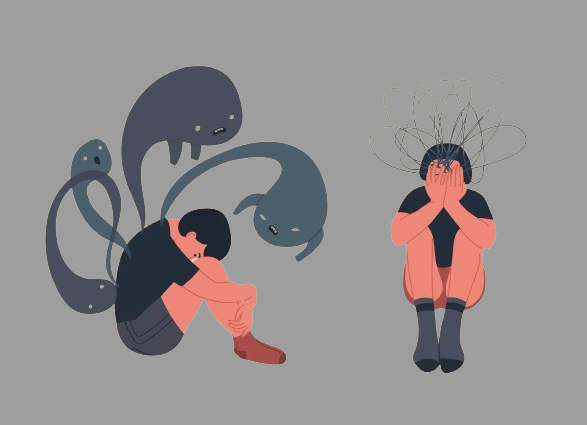
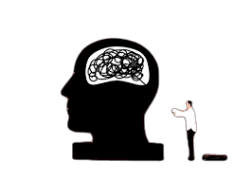
The continuous partial attention disorder symptoms you are about to read may be the most accurately described thing you have encountered all week — and you will probably check your phone before you finish this sentence. You have three browser tabs open that you have not looked at in an hour. You started something this morning that is still unfinished.

You read the same paragraph twice and retained almost nothing from it. And somewhere underneath all of that scattered, restless, low-grade exhaustion, you have been quietly wondering whether something is genuinely wrong with your ability to think.
Nothing is wrong with you. But something is very wrong with the environment your brain has been living in — and the continuous partial attention disorder symptoms you are experiencing have a name, a mechanism, a growing body of clinical research, and a real path to recovery. The term “continuous partial attention” was coined by technologist Linda Stone in 1998 as a behavioral observation about how people were beginning to interact with digital technology.
In 2025, a peer-reviewed study published in Frontiers in Digital Health formalized it as CPAD — a clinical disorder characterized by chronic attentional fragmentation across competing digital streams — and found that 85.3% of licensed mental health professionals recognized it in their clinical practice, with CPAD alone documented in 36.4% of patient records. This is not a personality quirk. This is a condition.
Until now, almost nothing has been written about CPAD for a general audience. The academic papers exist behind paywalls. The Wikipedia entry covers the basic behavioral concept without the clinical depth. The health websites have not caught up.
This article fills that gap entirely. By the time you reach the end, you will know exactly what CPAD is, how to recognize its symptoms in your own life, how it differs from ADHD, what it does to your brain over time, and what clinically grounded strategies can reverse it. Let us start at the beginning.
What Is Continuous Partial Attention Disorder (CPAD)?
CPAD and the broader phenomenon it formalized did not begin with smartphones — it began with the internet itself. Linda Stone, a researcher who worked at Apple and Microsoft before coining the concept in 1998, described continuous partial attention as the behavioral state of dividing one’s attention, scanning and optimizing across multiple streams in an effort never to miss anything.
Her original insight was critical: this is not multitasking. Where multitasking is a conscious, goal-oriented decision to handle multiple tasks in parallel, continuous partial attention is automatic, anxiety-driven, and motivated by the compulsive desire to remain a permanently connected node in the information network. You do not choose to be in a state of CPA. You are pulled there by a digital environment specifically engineered to keep you there.

The 2025 Frontiers in Digital Health study that formalized CPAD as a clinical disorder placed it within a broader taxonomy of digital-era psychopathologies — four diagnostic categories covering the range of conditions produced by hyperconnectivity, algorithmic feedback loops, and the chronic cognitive demands of the modern information environment.
CPAD falls under Type A: Cognitive Fragmentation and Digital Overload Disorders — a category defined by the fragmentation of attention, executive fatigue, and multitasking-related cognitive impairments that arise not from neurological difference but from environmental conditioning.
The word “partial” in the name carries significant clinical weight. In CPAD, attention is never fully committed to anything. It is perpetually split — hovering across multiple tasks, multiple screens, multiple incoming streams — without ever landing completely on any one of them.
You are always sort of reading, sort of listening, sort of working, sort of present. The cognitive cost of that permanent state of partial engagement is enormous, and it accumulates silently across years.
Living in a state of permanent cognitive fragmentation is not the same as being a distracted person. It is a conditioned neurological pattern — and like all conditioned patterns, it can be changed.
CPAD vs Multitasking: A Critical Distinction
The confusion between CPAD and multitasking matters because it determines whether you treat it as a strategy to optimize or a condition to address. Research published in academic literature is clear on the difference: multitasking is intentional and goal-oriented — the deliberate decision to handle multiple tasks in sequence or parallel.
CPAD is something fundamentally different: a chronic state of fragmented focus on numerous stimuli without true engagement in any of them. Multitasking is a verb you choose. CPAD is a state you are in — whether you chose it or not. When the compulsion to check, switch, and scan becomes automatic rather than deliberate, you have crossed from multitasking into continuous partial attention disorder territory.
Continuous Partial Attention Disorder Symptoms: The Full Clinical Picture
The continuous partial attention disorder symptoms that bring most people to this article are not dramatic. They are quiet, persistent, and deeply uncomfortable — not because they are acute, but because they erode the quality of thought, work, and presence in ways that are difficult to name until you have the framework to see them clearly. Here are the eight core symptoms, as they present in clinical and behavioral research.
1. Chronic Inability to Sustain Focus on a Single Task
The most defining feature of CPAD is not that you get distracted occasionally — every human does — but that sustained single-task engagement has become genuinely uncomfortable. Your brain, after months or years of digital overstimulation, has been conditioned to expect novelty at short intervals. The natural lull of deep concentration
The period where nothing new is happening and the mind settles into a task — now registers as a signal to seek stimulation rather than settle further. Stone’s research identified that rapidly switching between tasks impairs working memory capacity, and diminished working memory is one of CPAD’s most measurable consequences. You begin tasks easily. Finishing them, without interruption, has become strangely difficult.
2. Compulsive Interruption-Seeking
This symptom distinguishes CPAD from ordinary distraction, and it is the one most people recognize with a mixture of recognition and embarrassment. You check your phone when it has not buzzed. You open your email without any intention of sending something. You refresh a webpage you looked at three minutes ago. You open a new tab and then close it without knowing why you opened it.
These are not lapses of willpower — they are conditioned behavioral responses. The digital environment has trained your brain to seek the micro-reward of novelty at intervals, and when the interval passes without a stimulus, the brain generates its own interrupt signal. This is the compulsive dimension of CPAD, and it is what makes the condition behaviorally resemble addiction more than it resembles ordinary inattentiveness.
3. Attentional Residue After Task-Switching
Psychologist Sophie Leroy’s research on attentional residue introduced one of the most useful concepts for understanding CPAD’s cognitive cost: when you switch from one task to another, a portion of your attention does not make the switch with you. It remains on the previous task — processing, worrying, rehearsing — while your conscious focus has moved on.
In a person who switches tasks once or twice a day, this residue is manageable. In a person with CPAD, who may switch tasks dozens of times per hour, attentional residue accumulates across a vast number of open loops simultaneously. The result is a progressive narrowing of cognitive bandwidth — a growing sense that your mental workspace is crowded and sluggish, even when no single task is particularly demanding.
4. Cognitive Fragmentation and Surface-Level Processing
One of the most insidious continuous partial attention disorder symptoms is the degree to which depth of processing degrades without the person noticing. You read articles but retain fragments. You listen to conversations while composing responses in your head. You watch something and cannot describe it afterward.
The Frontiers in Cognition research is direct on this point: continuous partial attention leads to a superficial understanding of information and a reduced ability to concentrate on any one task or piece of information. The inputs arrive. They are processed at the surface. They do not consolidate. Over time, this creates a peculiar kind of cognitive hollowness — you have consumed an enormous amount of content and remember almost none of it.
5. Chronic Mental Fatigue and Brain Fog
The prefrontal cortex — the region responsible for sustained attention, executive planning, working memory, and decision-making — does not distinguish between managing a complex project and managing thirty simultaneous micro-switches between tasks. From a metabolic standpoint, constant context-switching is exhausting.
Every time you shift attention, your brain incurs a switching cost: the cognitive overhead of disengaging from one task, reorienting, and re-engaging with another. For CPAD sufferers doing this continuously, the prefrontal cortex operates in a state of chronic overload. The result is the brain fog that so many people describe — a heaviness of thought, a slowness of processing, a sense that the mind is wading through something thick even when the tasks at hand are simple.
This is not laziness. It is metabolic exhaustion produced by a brain that has been managing an unmanageable number of open channels for too long.
6. Heightened Anxiety and Inability to Rest
CPAD creates a nervous system calibrated for perpetual alert. After extended periods of continuous partial attention, the brain learns to expect incoming stimulation — and when it does not arrive, it generates its own low-grade anxiety to fill the gap. This is why sitting quietly without a device has become uncomfortable for so many people. It is why the first impulse upon waking is to check a phone.
It is why watching a film without simultaneously scrolling feels oddly tense rather than relaxing. Stone’s original research noted that CPA leads to increased stress and decreased ability to focus and reflect, and this stress dimension is one of the condition’s most physiologically significant effects. The nervous system has been trained to run hot — and even when the stimulation stops, the arousal system does not immediately follow.
7. Declining Memory and Recall
Working memory is the brain’s immediate workspace — the cognitive system that holds information in active use while it is being processed. When attention is fragmented during encoding, the information being processed does not consolidate effectively. You may read a paragraph, switch your attention to a notification, return to the paragraph, and find that the content has simply not registered.
You may have a conversation that you remember only in fragments an hour later. You may walk into a room and forget why you entered — not because your memory is failing in a clinical sense, but because the information required to answer “why am I here” was encoded during a moment when your attention was already partially elsewhere. Chronic CPAD progressively degrades the quality of memory encoding across every area of life.
8. Reduced Creativity and Diminished Deep Thinking
Insight does not arrive during task-switching. The creative breakthrough, the connecting of two previously unrelated ideas, the solution that feels like it came from nowhere — these are products of sustained, uninterrupted cognitive engagement, the kind where the mind settles deeply enough into a problem that its associative machinery can operate without interference.
Stone’s research found that weaker cognitive flexibility and less creative thinking are measurable features of continuous partial attention — and the mechanism is straightforward. Creativity requires the mental space that CPAD has permanently occupied with noise. The person who could once lose themselves for two hours in a problem now finds that two hours of uninterrupted thought feels almost impossible to sustain.
Recognizing these symptoms in yourself is not self-diagnosis — it is self-awareness. And self-awareness, in the case of CPAD, is genuinely the first step in a recovery process that most people never begin because they never had the language to name what was happening.
What Causes Continuous Partial Attention Disorder in the Digital Age
CPAD is not an accident of individual psychology. It is a predictable consequence of a specific technological environment designed with specific goals that happen to be directly contrary to sustained human attention.
Algorithmic Design and Infinite Scroll
The major social media platforms and content delivery systems of the past two decades were designed — deliberately and precisely — to prevent sustained attention from settling on any single piece of content for too long. Infinite scroll eliminates the natural stopping point of a page end.
Variable reward schedules, borrowed directly from behavioral psychology and slot machine design, produce compulsive checking behavior by delivering unpredictable rewards at unpredictable intervals. Every time you pull down to refresh a feed and something interesting appears, your dopamine system registers a reward and strengthens the behavior that produced it.
After thousands of repetitions across years, this becomes the attentional default state — the chronic digital distraction disorder pattern that CPAD describes.
Notification Architecture
Gloria Mark at the University of California, Irvine, found that the average knowledge worker is interrupted by a notification approximately every six minutes — and requires an average of twenty-three minutes to fully regain focused attention after each interruption.
At six interruptions per hour across an eight-hour day, the mathematics make deep work nearly arithmetically impossible in a standard notification-saturated environment.
The related condition of Notification Hypervigilance Syndrome describes the acute anxiety dimension of this dynamic — the physiological alertness that develops when the nervous system has been conditioned to expect and monitor for incoming signals at all times.
The Dopamine Distraction Cycle
Each notification, each new tab, each social media refresh delivers a micro-dose of dopamine — the neurotransmitter associated with reward anticipation. The brain is an efficiency-optimization machine. When it learns that a particular behavior reliably produces a dopamine hit, it begins preferring that behavior over less reliably rewarding alternatives.
Sustained, demanding cognitive work produces satisfaction, but not reliably, not quickly, and not without effort. Checking a phone produces a small reward instantly and consistently. Over time, the brain’s reward pathway shifts toward favoring the fast, easy, unpredictable reward — and away from the slower, more demanding reward of deep focus. CPAD is, in part, a dopamine-regulation disorder produced by years of conditioning.
Cultural Normalization of Busyness
There is a social dimension to CPAD that Linda Stone identified from the beginning: the desire to be “a live node on the network” is not purely technological — it is also identity-driven.
The culture of perpetual availability, immediate responsiveness, and visible busyness has reinforced continuous partial attention as a marker of importance and productivity. Being always reachable, always responsive, always across multiple simultaneous conversations signals value in professional environments.
This cultural reinforcement means that CPAD is not just a habit — for many people, it is a performance of professional identity, which makes it significantly harder to step back from.
Post-Pandemic Hyperconnectivity
The period between 2020 and 2023 produced a dramatic and largely unexamined acceleration of CPAD-producing conditions. Screen time increased by an average of four to five hours per day globally during lockdown periods. The boundary between work and personal life — already eroding before the pandemic — largely dissolved.
Remote work required constant digital presence in a way that in-person work never had. The attentional architecture that many people built during this period — perpetually online, perpetually monitored, perpetually responsive — became their default operating mode. For a significant proportion of people, it never changed back.
CPAD vs ADHD: The Differences Every Reader Needs to Know
The question of whether what you are experiencing is CPAD or ADHD is one of the most important differential questions in this space — and it is being asked by millions of adults who are noticing significant attentional difficulties for the first time in their lives.
The answer matters because the two conditions, while superficially similar in presentation, have different origins, different mechanisms, and different optimal treatment pathways.
ADHD is a neurodevelopmental disorder. It is present from early childhood, it has a significant genetic component, and it involves structural and functional differences in dopamine transporter systems and prefrontal cortex architecture that exist independently of any digital environment. The attentional difficulties of ADHD are present even in distraction-free environments. They were present before smartphones existed. They do not significantly improve when digital devices are removed.
CPAD is environmentally acquired. It can develop at any age, in any person, given sufficient exposure to the specific attentional demands of hyperconnected digital environments. Critically, CPAD symptoms are dramatically worse in the presence of digital devices and significantly reduced in their absence.
A device-free weekend in a low-stimulation environment will produce measurable improvement in CPAD symptoms within days — something that does not reliably occur with ADHD. CPAD does not respond to stimulant medication in the same way ADHD does, because there is no underlying neurological dysregulation to correct — there is a conditioned behavioral pattern to retrain.
There are two important caveats that every reader deserves to know. First, CPAD and ADHD can coexist — and in fact, CPAD can significantly worsen the functional presentation of ADHD, making a previously manageable condition suddenly feel unmanageable.
Second, CPAD is being misdiagnosed as adult-onset ADHD in clinical settings, because the symptom overlap is substantial and the behavioral history is similar. If you are uncertain which condition you are dealing with, or whether you are dealing with both, a differential assessment with a qualified psychologist or psychiatrist is warranted. Getting the right name for what you are experiencing is not a small thing.
It determines everything about how you approach the solution.
The Neuroscience of CPAD: What Chronic Fragmented Attention Does to Your Brain
The neurological effects of continuous partial attention disorder are not hypothetical — they are measurable, progressive, and important to understand, not because they are irreversible, but because understanding them makes the recovery strategies that follow feel less like lifestyle suggestions and more like medicine.
The prefrontal cortex bears the heaviest burden in CPAD. This region — responsible for executive function, sustained attention, working memory, impulse control, and higher-order decision-making — is placed under chronic demand by constant task-switching. Each attentional shift requires executive function resources: disengaging, reorienting, re-engaging, monitoring.
When this happens dozens of times per hour, the prefrontal cortex operates in a state of sustained overload that progressively depletes its functional capacity across the day. Executive fatigue — the deterioration of decision-making quality and impulse control as cognitive resources deplete — is a well-documented phenomenon, and CPAD accelerates it.
Working memory, the brain’s active cognitive workspace, is particularly vulnerable. Stone’s research identified that rapidly switching between tasks impairs working memory capacity and results in poor performance on learning tasks. Each new task loaded into the working memory while a previous task is still open competes for the same limited resource pool.
CPAD effectively keeps the working memory perpetually crowded — a cognitive traffic jam in which no single thought gets the processing space it needs to consolidate into understanding or memory.
The neuroplasticity dimension of CPAD is perhaps the most sobering: the brain adapts to what it practices most. Stone’s research noted that the chronic presence of continuous partial attention may hamper neuroplasticity and weaken cognitive function over time. The neural pathways associated with sustained, deep attention — pathways that must be regularly used to remain strong — are weakened by years of disuse.
The brain does not passively maintain capacities it is not using. It reallocates those resources to what it is using, which, in CPAD, is the rapid-switching, novelty-scanning attentional pattern.
The stress physiology is equally significant. The HPA axis — the body’s central stress-response system — activates under cognitive overload in the same way it activates under physical threat. Chronic attentional overload produces a low-grade but continuous stress response, with measurable elevations in cortisol that contribute to the fatigue, brain fog, and anxiety that CPAD sufferers experience as a baseline state.
Here is what matters most: neuroplasticity works in both directions. The brain that learned fragmentation through thousands of hours of practice can relearn sustained focus through a different kind of practice. The pathways are not destroyed — they are dormant. Intentional, consistent attention training reactivates them. Recovery is not only possible; for most people, it is faster than they expect.
How to Treat Continuous Partial Attention Disorder: Evidence-Based Recovery Strategies
Treatment of CPAD begins with environment, not willpower — because CPAD was created by an environment, and it cannot be reliably recovered from while that environment remains unchanged. Trying to sustain focused attention while your phone sits unlocked on your desk, while browser notifications fire every six minutes, while every social platform you use is engineered specifically to fracture your attention, is not discipline.
It is a losing battle against a system that was purpose-built to win it.
Digital Environment Restructuring: The Non-Negotiable First Step
Before any technique, framework, or therapy produces lasting results, the attentional environment must be restructured. Turn off every non-critical notification on every device — not reduced, not managed, turned off. Remove social media applications from your phone’s home screen and, where possible, from your phone entirely. Use a single browser window for the task at hand. Close every other tab.
These are not inconveniences — they are the removal of the specific environmental triggers that maintain the CPAD behavioral loop. Notification management alone has been shown to significantly reduce the frequency of task-switching and the cognitive load associated with it. This is not restriction. It is reclaiming the cognitive architecture that the digital environment has been occupying without your permission.
The Pomodoro Technique for Attention Retraining
Stone’s research, as well as the broader literature on task-switching and working memory, supports dedicated single-task time intervals as a core recovery tool — and the Pomodoro Technique operationalizes this precisely. Work in a single, focused block of twenty-five minutes on one task, with all notifications off and no switching permitted. Follow it with a five-minute break.
Repeat four times, then take a longer break. The mechanism here is progressive attention retraining: the prefrontal cortex is being given structured practice in sustained engagement, in gradually increasing doses, until the twenty-five minute interval that initially feels uncomfortably long becomes easy. If twenty-five minutes is currently impossible, start with ten. The capacity rebuilds with consistent practice in a way that is both measurable and faster than most people expect.
Deep Work Scheduling
Cal Newport’s deep work framework adds the structural dimension that Pomodoro provides at the task level. Scheduling two to four hours of daily cognitively demanding, single-task, device-free work — protected from interruption structurally, not just intentionally — begins to rebuild the neurological capacity for sustained thought that CPAD has eroded. The phone goes off.
The door closes. The browser tabs close. Deep work cannot be sustained simply by deciding to do it. It requires the same kind of environmental design that produced the CPAD pattern in the first place — just in the opposite direction.
Mindfulness-Based Attention Training
Mindfulness practice — specifically breath-focused meditation where the practitioner notices when attention has wandered and deliberately returns it — is, mechanically, the direct training of the neural pathway that CPAD degrades.
Every time you notice distraction and return your attention, you are exercising the prefrontal mechanism responsible for attentional control. Research consistently shows that as little as ten minutes of daily focused mindfulness practice produces measurable improvements in sustained attention within eight weeks, including increases in gray matter density in attentional control regions.
Begin with device-based guidance if needed — apps like Headspace or Calm are acceptable starting points — but progress toward device-free practice as quickly as possible, since the presence of a phone activates the CPAD attentional pattern even when the phone is not in use.
Attentional Residue Reduction: The Task Closure Protocol
Sophie Leroy’s research on attentional residue offers a practical and immediately applicable intervention. Before switching from one task to another — whether the switch is chosen or forced — write down the specific next action for the current task in a notebook or document.
One concrete sentence: “Next step: email Maria the revised draft” or “Next step: find the Q3 figure from the spreadsheet.”
This act of closure signals to the working memory that the task is parked with sufficient information to resume — reducing the residue that would otherwise continue competing for cognitive bandwidth. In CPAD sufferers, who may have dozens of open loops running simultaneously, systematic task closure can produce an immediate and noticeable reduction in the mental crowding that contributes to fog and fatigue.
When to Seek Clinical Support
If CPAD symptoms persist despite four or more weeks of consistent, structured behavioral intervention — including notification management, daily single-task practice, and attention retraining — a consultation with a psychologist or psychiatrist is warranted.
The clinical pathway serves two purposes: differential diagnosis (ruling out ADHD, generalized anxiety disorder, or depression, each of which can produce similar attentional presentations) and targeted intervention. Cognitive Behavioral Therapy adapted for attention — addressing both the behavioral patterns and the cognitive beliefs that sustain them — is an evidence-based clinical option. For severe work-function impairment, an occupational therapist specializing in cognitive rehabilitation may also be appropriate.
Self-Assessment: Do You Have Continuous Partial Attention Disorder Symptoms?
The following questions are not a clinical test. They are a reflective framework — a way to look honestly at your attentional life and determine whether what you are experiencing warrants the kind of intentional intervention this article describes.
Do you check your phone before finishing a thought?
Not between tasks — within a single thought. The impulse to reach for the phone that arrives not when a task is complete but when a moment of cognitive demand occurs is one of the clearest behavioral signatures of CPAD.
If this happens routinely, automatic interruption-seeking has been conditioned into your attentional pattern.
Can you read a full page without re-reading the same line?
A functional working memory encodes text sequentially and retains the previous sentences as context for each new one. If you routinely find yourself reading the same line two or three times, the attentional fragmentation during encoding is preventing consolidation.
This is a cognitive fragmentation symptom, not a reading problem.
Do you feel uncomfortable during screen-free silence?
The discomfort that arises during unoccupied, screen-free moments — the reaching, the restlessness, the low-grade anxiety of not having a stream to monitor — is the anxious dimension of CPAD. If stillness feels like a problem to solve rather than a state to inhabit, the nervous system has been calibrated for perpetual stimulation.
Do you frequently switch between tasks without completing any?
If your work pattern involves beginning five things and finishing none of them before the end of a session, the compulsive task-switching of CPAD is disrupting completion as a behavioral outcome.
Task completion requires sustained engagement through the less stimulating middle portions of work — the sections CPAD most reliably abandons.
Has your ability to concentrate deeply noticeably declined in the past two to three years?
This temporal question is diagnostically significant. Genuine ADHD does not suddenly worsen in adulthood without a clear neurological cause. A noticeable, progressive decline in concentration quality over the past two to three years — the period of maximum digital overload for most people — is a strong indicator of acquired attentional degradation consistent with CPAD.
Do you feel mentally tired but cannot explain why?
The executive fatigue produced by chronic context-switching does not feel like the physical tiredness of exertion. It feels like a heaviness of thought, a reluctance to begin, a flatness of cognitive engagement. If you end days feeling mentally spent despite not having done any particularly demanding work, the metabolic cost of attentional fragmentation may be the explanation nobody has offered you before.
If four or more of these questions reflect your consistent experience, a structured approach to CPAD recovery — beginning with the environmental restructuring and attention retraining described above — is strongly indicated. If all six apply consistently, a clinical conversation about differential diagnosis would be a reasonable and worthwhile next step.
Frequently Asked Questions
Q: What are the main continuous partial attention disorder symptoms in adults?
A: The eight core symptoms are: chronic inability to sustain single-task focus, compulsive interruption-seeking even without external triggers, attentional residue accumulation after task-switching, surface-level cognitive processing with poor retention, chronic mental fatigue and brain fog despite low exertion, heightened anxiety and discomfort during screen-free rest, declining working memory and recall, and measurably reduced creativity and deep thinking.
Most adults with CPAD report experiencing most of these simultaneously, often without a clear explanation for why their cognitive function has changed.
Q: Is continuous partial attention disorder a real clinical diagnosis?
A: CPAD is clinically valid but not yet formally listed in the DSM-5. The concept of continuous partial attention was coined by Linda Stone in 1998. In 2025, a peer-reviewed study in Frontiers in Digital Health formalized it as a disorder, found recognition by 85.3% of licensed mental health clinicians, and documented it in 36.4% of patient records.
Its clinical trajectory closely resembles burnout before the WHO classified it in 2019 — widely experienced, clinically recognized, but awaiting formal nosological inclusion.
Q: How is CPAD different from ADHD?
A: ADHD is neurodevelopmental — genetic, present from childhood, and rooted in structural neurological differences in dopamine systems and prefrontal architecture. CPAD is environmentally acquired — it can develop at any age through sustained exposure to hyperconnected digital environments, and it improves measurably in device-free conditions in ways that ADHD does not.
ADHD often responds to stimulant medication; CPAD responds to environmental restructuring and behavioral retraining. Both conditions can coexist, and CPAD can worsen ADHD presentation significantly. A professional differential assessment is recommended if you are uncertain.
Q: Can continuous partial attention disorder be cured?
A: CPAD is reversible. Because it is an environmentally conditioned neurological pattern rather than a structural neurological difference, the same neuroplasticity that allowed the brain to learn fragmented attention can be directed toward relearning sustained focus. Environmental restructuring, Pomodoro-based attention retraining, mindfulness practice, and attentional residue reduction techniques produce measurable improvements in most people within four to eight weeks of consistent application.
Severe or persistent presentations benefit from clinical support through CBT adapted for attention disorders.
Q: What does continuous partial attention do to your brain long-term?
A: Chronic CPAD progressively degrades working memory capacity, weakens the neural pathways associated with sustained attention through disuse, and may hamper neuroplasticity over time according to Stone’s research. The prefrontal cortex experiences chronic executive fatigue from constant task management, and the HPA axis maintains a low-grade stress response from cognitive overload.
The critical point is that these changes are largely reversible — the brain retains the capacity to rebuild attentional neural pathways through intentional retraining. The damage is functional, not structural, and function responds to practice.
Q: What is the best treatment for continuous partial attention disorder symptoms?
A: The most effective treatment pathway begins with environmental restructuring — eliminating notifications, single-screen single-task protocols, and removing apps that trigger compulsive checking. This is followed by behavioral retraining using the Pomodoro Technique and deep work scheduling to rebuild the prefrontal capacity for sustained focus.
Mindfulness-based attention training directly exercises the attentional control pathways CPAD weakens. The task closure protocol from Sophie Leroy’s attentional residue research reduces cognitive load accumulation. For persistent or severe presentations, CBT for attention with a qualified clinician is the evidence-based clinical pathway.
Conclusion
Continuous partial attention disorder symptoms are not a sign that you are weak, undisciplined, or constitutionally unsuited to focused thought. They are the predictable output of a decade or more spent inside an environment that was specifically engineered to prevent the kind of sustained cognitive engagement your brain was designed to be capable of. The name changes everything — because once you know what CPAD is, you can stop blaming yourself for a condition that the digital environment created, and start addressing the actual cause with the actual tools.
Three things are worth carrying away from this article. First, CPAD is real, clinically recognized, and environmentally produced — it arrived from outside you and it can be addressed from the outside in. Second, the symptoms are specific and recognizable, and naming them is not self-pity — it is the kind of accurate self-knowledge that makes recovery possible rather than aspirational. Third, the brain that learned fragmentation can relearn focus — neuroplasticity works in every direction, and the attentional pathways that years of digital overstimulation have weakened are dormant, not destroyed.
You came to this article because something in your cognitive life has changed and you wanted to understand why. You now have the framework, the mechanism, the clinical context, and the tools. What you do with that is yours entirely — but for the first time, you have something more than a vague sense that something is wrong. You have a name for it, a reason for it, and a way back.
Attention is the most intimate thing you own. It is time to take it back.