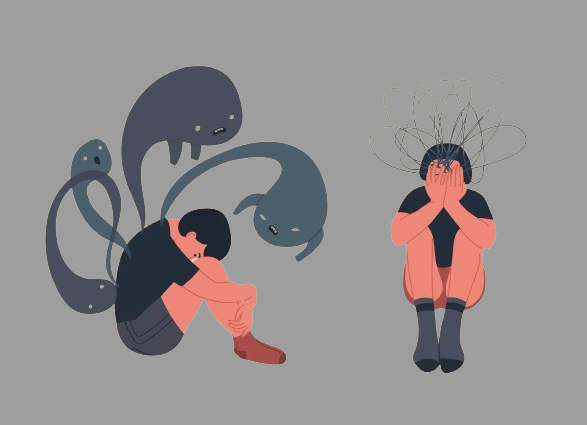
Why does my anxiety feel physical now, when for years it only ever lived in my thoughts? If you have found yourself asking this question at 2 a.m. with your heart pounding for no clear reason, or standing in a grocery store suddenly gripped by dizziness and a tight chest, you are not imagining things and you are not alone.

A growing number of people who once described their anxiety as “just worrying too much” are now experiencing something different and, frankly, more frightening: real, physical sensations that show up in the body without warning. This shift can feel disorienting, especially if you have always thought of anxiety as something that happens in the mind.
The truth is that anxiety was never confined to your thoughts in the first place, and understanding why it now shows up in your chest, stomach, and skin can be the first step toward feeling less afraid of your own body.
What It Means When Anxiety Starts Showing Up in Your Body
For a long time, many people experience anxiety almost entirely as a mental event. It shows up as racing thoughts, a sense of dread, difficulty concentrating, or an inability to stop replaying a conversation or worry. Then, seemingly overnight, something changes. The same underlying anxiety starts producing sensations that feel unmistakably physical, and often unmistakably alarming.
A tight throat. A racing heart. A stomach that will not settle. Numbness in the fingers. For someone encountering this for the first time, it is common to assume something is medically wrong, because these sensations do not feel like “worry” in the way anxiety was always described. This is one of the most disorienting parts of the experience: the symptoms feel too real, too physical, and too intense to be “just anxiety.”
What is actually happening is that your nervous system, which has likely been managing stress and anxious thoughts for a long time, has reached a point where it is expressing that stress through the body rather than only through the mind.
This is not a sign that your anxiety has become more dangerous or that something new and separate is wrong with you. It is a sign that the stress response, which was always physical at its core, has become loud enough to notice. Anxiety was never purely psychological. It has always involved the body; it is only now that the body’s part in the story has become impossible to ignore.
The Physiology Behind Physical Anxiety Symptoms
To understand why anxiety can feel so intensely physical, it helps to understand what is actually happening inside your body when anxiety activates. Anxiety, at its root, is your nervous system’s threat-detection system doing its job, even when there is no immediate danger present.
When your brain perceives a threat, whether that threat is a genuine emergency or an anxious thought about an email you have not answered, it activates what is commonly known as the fight-or-flight response. This response is governed by the sympathetic nervous system, and it triggers a cascade of very real physiological changes designed to prepare your body to either confront danger or flee from it.

Your adrenal glands release adrenaline and cortisol into your bloodstream. Your heart rate increases so that oxygen-rich blood can reach your muscles more quickly. Your breathing becomes faster and shallower to take in more oxygen. Blood flow is redirected away from your digestive system and toward your limbs, which is part of why anxiety so often produces nausea or a strange, hollow feeling in the stomach.
Your muscles tense in preparation for movement that, in the modern world, rarely happens. All of this occurs automatically, without your conscious permission, because this system evolved to protect you from physical danger long before modern life existed. The problem is that this same system activates just as powerfully in response to a stressful email, a difficult relationship, financial pressure, or an anxious thought spiraling out of control. Your body cannot always tell the difference between a genuine emergency and a persistent, low-grade psychological threat, so it responds the same way regardless of the source.
The Most Common Physical Symptoms People Describe
When anxiety becomes physical, it tends to concentrate in a handful of areas that people describe again and again, and recognizing this pattern can be genuinely reassuring because it confirms you are not experiencing something rare or unexplainable.
Chest tightness and a racing or pounding heart are among the most common and most frightening symptoms, largely because they mimic what many people associate with cardiac events. This overlap is precisely why anxiety-related chest symptoms send so many people to emergency rooms, and it is also why doctors are so familiar with ruling out cardiac causes before confirming that anxiety is behind the sensation.
The heart genuinely does beat faster and harder during anxiety, and the muscles around the ribcage genuinely do tighten, which is why the feeling is not imagined even though the underlying cause is not cardiac.
The digestive system is another frequent site of anxiety’s physical expression. Because blood flow is redirected away from digestion during a stress response, many people experience nausea, a tight or “dropping” sensation in the stomach, appetite changes, or symptoms that closely resemble irritable bowel syndrome.
For some, this becomes a cycle in which anxiety about digestive symptoms actually worsens the digestive symptoms themselves, because the gut is deeply connected to the nervous system through what researchers often call the gut-brain axis. Breathing changes are also extremely common, showing up as shortness of breath, a sensation of not getting a full breath, or even a choking feeling in the throat.
This can be one of the most frightening symptoms because breathing feels so fundamental, but it is almost always a direct result of the shallow, rapid breathing pattern that accompanies sympathetic nervous system activation rather than any actual respiratory problem.
Neurological symptoms round out the picture for many people, including dizziness, lightheadedness, tingling or numbness in the hands and face, headaches, and a foggy, disconnected feeling that is sometimes described as derealization. These symptoms often result from subtle changes in breathing and blood oxygen and carbon dioxide levels during anxious episodes, and while they can feel deeply unsettling, they are well documented as part of the anxiety response rather than a sign of neurological damage.
Understanding that these symptoms cluster together in recognizable patterns, rather than appearing as isolated and mysterious events, is often one of the most relieving pieces of information a person can receive.
Why This Is Happening Now, Even If It Never Did Before
One of the most common questions people ask is not simply why anxiety feels physical, but why it started feeling this way recently, after years of anxiety existing mostly in the mind. There are a few explanations that tend to apply, often in combination. The first is cumulative stress. Anxiety that has been managed mentally for a long time, through overthinking, avoidance, or sheer willpower, does not simply disappear if it is never addressed at its physiological root.
Instead, it can build in the nervous system over months or years until the body begins expressing what the mind has been quietly absorbing. In this sense, physical anxiety symptoms are sometimes less a new problem and more a delayed expression of stress that was always there but previously stayed contained to thoughts and worry.

Nervous system sensitization is another important piece of the picture. When the stress response is activated repeatedly over a long period, without adequate recovery time in between, the nervous system can become more reactive, triggering the fight-or-flight response more easily and more intensely than it once did.
This is sometimes described as the nervous system becoming “primed” for anxiety, meaning smaller stressors can now produce larger physical reactions than they used to. Major life transitions can also play a significant role, since periods of change, uncertainty, grief, or upheaval place sustained demand on the nervous system even when a person does not consciously feel overwhelmed.
Finally, for many people, physical symptoms emerge specifically because the mental symptoms of anxiety have been suppressed, minimized, or explained away for so long that the body has, in effect, found a louder way to communicate that something needs attention.
Telling the Difference Between Anxiety and a Medical Emergency
It is important to say clearly that physical anxiety symptoms, however common and well understood, should never be assumed without appropriate medical evaluation, particularly the first time they occur or if their pattern changes. Chest pain, breathing difficulty, and neurological symptoms like numbness can also indicate serious medical conditions, and anxiety should generally be treated as an explanation of exclusion rather than a first assumption, especially for new or severe symptoms.
This is not meant to alarm you, but to encourage the kind of thorough medical evaluation that ultimately allows you to trust the diagnosis of anxiety once it has been given, rather than continuing to wonder whether something was missed.
That said, there are patterns that tend to distinguish anxiety-related symptoms from more urgent medical concerns, and doctors use these patterns regularly. Anxiety symptoms often build gradually or peak within about ten minutes during a panic episode and then subside, whereas certain cardiac or neurological emergencies tend to present differently, often with symptoms that do not follow this rise-and-fall pattern or that occur alongside other red-flag signs.
Anxiety symptoms are also frequently, though not always, connected to a psychological trigger, whether that trigger is consciously identified or not, and they tend to occur in clusters that involve multiple systems at once, such as chest tightness paired with dizziness and a racing mind. None of this is meant to replace professional evaluation. If you experience chest pain, severe shortness of breath, sudden numbness on one side of the body, confusion, or any symptom that feels different or more severe than what you have experienced before, seeking prompt medical care is always the right decision, and doing so is not an overreaction.
What Actually Helps Calm the Physical Loop
Once medical causes have been appropriately ruled out and anxiety has been identified as the source of these physical sensations, there is a great deal that can genuinely help, and much of it works by directly addressing the nervous system rather than only the thoughts that accompany it. Slow, diaphragmatic breathing is one of the most well-supported tools available, because it directly signals to the nervous system that danger has passed, activating the parasympathetic system responsible for rest and recovery.
This is not the same as simply “calming down” through willpower; it is a physiological lever that genuinely interrupts the stress response when practiced consistently, even if it can feel unnatural or unhelpful the first few times you try it.
Regular movement and exercise also play a significant role, partly because physical activity gives the body a natural outlet for the adrenaline and cortisol produced during anxious episodes, essentially completing the fight-or-flight cycle that modern life so rarely allows us to finish. Sleep is another critical piece, since a nervous system that is not adequately rested becomes far more reactive and far more likely to interpret ordinary stress as a genuine threat.
Cognitive behavioral therapy remains one of the most effective structured approaches for anxiety that has become physical, because it works on both levels at once, helping to identify and gently challenge the thought patterns that fuel anxiety while also building tolerance for the physical sensations themselves, so they become less frightening over time even when they occur.
For some people, particularly when symptoms are persistent, severe, or significantly interfering with daily life, medication may also be an appropriate part of treatment, and this is a conversation worth having openly and without shame with a doctor or psychiatrist who can assess your specific situation.
Understanding the Mind-Body Connection Without Dismissing Your Experience
Perhaps the most important shift in understanding physical anxiety is recognizing that “it’s just anxiety” should never be used as a way to dismiss what you are feeling. The word “just” does a great deal of harm in this context, because it suggests the symptoms are less real or less worthy of attention simply because their origin is psychological rather than structural.
In reality, the mind-body connection is not a metaphor. Psychosomatic medicine has spent decades documenting how sustained psychological stress produces measurable, physical changes in the cardiovascular, digestive, immune, and nervous systems. Your chest tightness is real. Your nausea is real. Your dizziness is real. What differs is not whether the symptom exists, but what is generating it.
This distinction matters because it changes how you can respond to your own body. Once you understand that anxiety genuinely alters physiology rather than simply existing as an exaggerated thought pattern, it becomes possible to treat physical symptoms with the same seriousness and compassion you would extend to any other health concern, without either panicking over them or dismissing them as imaginary. Learning to work with your nervous system, rather than fighting against it or fearing it, tends to be one of the most meaningful turning points people describe when anxiety has started to feel physical.
Frequently Asked Questions About Physical Anxiety Symptoms
Can anxiety really cause chest pain that feels like a heart problem?
Yes, anxiety can produce chest tightness, sharp or dull pain, and a racing heart that closely resembles cardiac symptoms, which is why so many people end up in urgent care or the emergency room the first time this happens. The muscles around the ribcage genuinely tense during an anxiety response, and increased heart rate is a normal part of the fight-or-flight reaction, but any new or unexplained chest pain should still be evaluated by a medical professional before being attributed to anxiety.
Why does my anxiety sometimes come on with no obvious trigger?
Anxiety does not always require a conscious trigger to activate, particularly when the nervous system has become sensitized through prolonged stress. Sometimes the trigger is subtle, such as a thought that passes quickly through awareness, a physical sensation that gets misinterpreted as dangerous, or accumulated fatigue, and the resulting physical response can feel as though it arrived from nowhere even when an underlying cause exists.
Is it normal for physical anxiety symptoms to move around my body?
It is common for physical anxiety symptoms to shift locations or intensity from one episode to another, involving the chest one day and the stomach or head the next. This tends to reflect the widespread nature of the stress response, which affects multiple bodily systems simultaneously rather than targeting a single, fixed location.
How long does it usually take to feel less afraid of these symptoms?
This varies significantly from person to person, but many people notice meaningful improvement within several weeks of consistently practicing nervous system regulation techniques and, where appropriate, working with a therapist. Learning to recognize the pattern of your own symptoms tends to reduce the fear response around them considerably, even before the underlying anxiety is fully resolved.
Should I see a doctor even if I’m fairly sure it’s anxiety?
Yes, particularly the first time you experience a new physical symptom or if the pattern of your symptoms changes. A medical evaluation is not a sign that you are overreacting; it is a responsible step that allows you to rule out other causes and then approach anxiety treatment with confidence rather than lingering doubt.
Can lifestyle changes alone resolve physical anxiety symptoms?
For some people, consistent improvements to sleep, movement, and stress management meaningfully reduce or resolve physical anxiety symptoms. For others, particularly when anxiety is more entrenched or severe, professional treatment such as therapy or medication is necessary alongside lifestyle changes, and needing that additional support is not a personal failure.
Moving Forward When Your Body Won’t Stop Talking
If anxiety has started speaking through your body in ways it never used to, that shift is not a sign that something has gone catastrophically wrong or that your anxiety has become unmanageable. It is a sign that your nervous system has been working hard, often quietly, for longer than you may have realized, and it has finally found a way to make that effort impossible to ignore.
Once medical concerns have been appropriately ruled out, understanding the physiology behind what you are feeling can transform these sensations from terrifying mysteries into recognizable, explainable patterns. That understanding alone tends to reduce their intensity over time, because fear of the symptoms themselves often contributes as much to the cycle as the original anxiety does.
With the right combination of nervous system regulation, professional support where needed, and a little more patience with your own body, it is entirely possible to feel less at the mercy of these sensations and more capable of moving through them.