You check his mood the second he walks through the door, adjusting your own tone before he has said a single word. You have not had a full conversation about your own bad day in months, because there never seems to be room for it once you have finished managing his. You know exactly what will upset her, so you plan around it constantly, quietly rearranging your own preferences to keep the peace.

Somewhere along the way, without ever deciding to, you became the emotional thermostat for someone else’s life, responsible for their comfort in a way that no longer leaves much space for your own. This is the lived texture of codependency, a pattern that is often mistaken for devotion until the exhaustion becomes impossible to ignore.
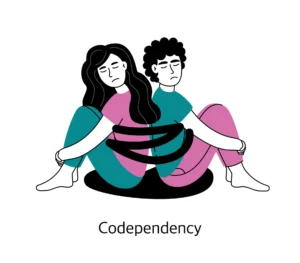
Codependency describes a relational pattern in which a person’s sense of identity, self-worth, and emotional stability becomes excessively organized around another person’s needs, moods, or approval. It typically involves a persistent difficulty setting boundaries, an outsized sense of responsibility for someone else’s feelings or choices, and a diminished connection to one’s own needs and preferences.
While the term originated in the context of relationships with addiction, it has since expanded to describe a much broader relational pattern found in romantic partnerships, friendships, families, and even workplace dynamics, wherever one person’s identity becomes fused with managing another’s emotional world.
What Codependency Actually Means
The concept of codependency first emerged from research and clinical work with families affected by alcoholism, where clinicians noticed that spouses and family members of people struggling with addiction often developed their own consistent set of coping patterns. These included covering for the addicted person’s behavior, managing crises on their behalf, and organizing their own emotional state entirely around the addicted person’s condition.
Over time, therapists and researchers recognized that this same underlying structure, an identity built around managing someone else rather than tending to oneself, appeared far beyond addiction-affected households, and the definition of codependency broadened accordingly.
Today, codependency is generally understood as a learned relational pattern rather than a formal clinical diagnosis, though it shares significant overlap with attachment insecurity and trauma responses. At its core, codependency involves a kind of identity fusion, where a person’s emotional equilibrium becomes so tightly linked to another person’s state that they struggle to distinguish their own feelings, needs, and boundaries from those of the person they are focused on.
This is often accompanied by a persistent, sometimes desperate need for approval and a corresponding fear that expressing a differing need or opinion will lead to conflict or abandonment.
The Psychological Roots of Codependency
Codependent patterns rarely appear out of nowhere. Most people who struggle with codependency in adulthood can trace the origins of the pattern back to specific roles they occupied earlier in life, often within their family of origin.
A child raised in a household affected by addiction, chronic illness, mental health struggles, or ongoing conflict frequently learns to take on a caretaking role far beyond what is developmentally appropriate, monitoring a parent’s mood, managing household stability, or emotionally supporting a struggling caregiver instead of receiving that support themselves. This dynamic, sometimes described as parentification, teaches a child early on that their value lies in what they can provide for others rather than in who they simply are.
Emotionally inconsistent or unavailable caregiving can produce a similar outcome even without addiction or overt dysfunction present. A child whose caregiver was affectionate only when pleased, or who withdrew love and attention unpredictably, often learns to become hyperattuned to that caregiver’s emotional state as a means of securing safety and connection.
This hyperattunement, useful and even necessary in childhood, tends to calcify into a broader relational pattern in adulthood, where the same vigilance and accommodation gets applied to romantic partners, friends, and colleagues, long after the original context that made it necessary has disappeared.
Core Traits and Patterns of Codependency
People experiencing codependency often describe a persistent difficulty saying no, even in situations where refusing would be entirely reasonable and where the consequences of agreeing are genuinely costly to them. This difficulty is rarely about a simple lack of assertiveness skills. It tends to be driven by a deeper anxiety that saying no will damage the relationship, disappoint someone whose approval feels essential, or expose the codependent person to conflict they feel unequipped to handle.
Alongside this, many codependent individuals report an excessive need for approval and validation, where their sense of self-worth rises and falls almost entirely based on how another person is responding to them in any given moment.
Another defining characteristic is an inflated sense of responsibility for other people’s emotions, choices, and outcomes. A codependent partner might feel personally responsible for their significant other’s happiness, taking on the emotional labor of managing that person’s moods as though it were their job to do so, even when the other adult is fully capable of managing their own inner life.
This often extends into enabling behaviors, where the codependent person unintentionally protects someone else from the natural consequences of their choices, whether that involves covering for a partner’s substance use, repeatedly bailing out a family member financially, or making excuses for behavior that would otherwise require accountability.
Perhaps most significantly, codependency tends to involve a gradual erosion of personal identity. Many people who have spent years in codependent patterns report genuine difficulty answering simple questions about their own preferences, hobbies, or goals, because so much of their attention and energy has been directed outward for so long that the inward-facing parts of themselves have grown quiet and unfamiliar.
Codependency Versus Healthy Interdependence
It is worth pausing to clearly distinguish codependency from genuine care, support, and interdependence within a relationship, since these are often confused. Healthy interdependence involves two people who each maintain a distinct sense of self, their own interests, friendships, and emotional resources, while also choosing to support and rely on one another.

In a healthy relationship, supporting a partner during a difficult time does not require abandoning your own needs entirely, and setting a boundary does not trigger catastrophic fear of losing the relationship altogether.
Codependency, by contrast, involves a kind of imbalance where one person’s identity becomes subordinate to the other’s needs on an ongoing basis, not just during an acute crisis. The distinguishing question is often not whether you are being supportive, since support itself is a healthy and valuable relational quality, but whether that support comes from genuine choice and a stable sense of self, or from anxiety, fear of abandonment, and a felt inability to do otherwise.
How Codependency Shows Up in Romantic Relationships
In romantic relationships, codependency frequently manifests as an inability to leave relationships that are clearly unfulfilling or even harmful, driven not by a lack of awareness but by a deep fear of being alone or a belief that the relationship’s problems are somehow the codependent partner’s responsibility to fix.
It can look like consistently prioritizing a partner’s schedule, preferences, and emotional needs over one’s own, to the point where the codependent partner’s own life gradually shrinks around the relationship. Jealousy, anxiety about the partner’s whereabouts or mood, and an intense need for reassurance often accompany this pattern, since the codependent partner’s sense of stability has become so tightly bound to the relationship’s perceived security.
Codependency can also show up as attraction to partners who are emotionally unavailable, inconsistent, or struggling with their own significant issues such as addiction or untreated mental health conditions, since the codependent person’s early conditioning often trained them to find a sense of purpose and identity specifically through caretaking and rescuing.
How Codependency Shows Up in Families and Friendships
Beyond romantic relationships, codependency frequently plays out in family systems and friendships in ways that can be harder to name precisely because they are often culturally reinforced as loyalty or love. An adult child might continue managing a parent’s emotional crises well into their own adulthood, feeling unable to establish independence without guilt.
A friend might consistently absorb another friend’s problems, offering endless emotional labor without ever receiving reciprocal support, and feeling unable to voice frustration about the imbalance for fear of seeming selfish or unkind. In each of these contexts, the underlying structure remains the same: one person’s identity and emotional stability organized primarily around managing another’s needs.
Codependency in the Workplace
Codependent patterns are not limited to personal relationships, and they frequently extend into professional environments in ways that can be harder to identify because they are often mistaken for strong work ethic or team loyalty.
An employee with codependent tendencies might consistently absorb work that was never theirs to begin with, quietly picking up the slack for a struggling colleague or an unreasonable manager rather than raising the issue directly. They often struggle to say no to additional responsibilities even when already overextended, driven by the same underlying fear that refusing a request will lead to disapproval or rejection that shows up in personal relationships.
This pattern can be especially pronounced in caregiving professions, such as healthcare, education, and social work, where the line between appropriate dedication and self-sacrificing overextension can blur easily.
A codependent professional in these fields might find it nearly impossible to leave work at a reasonable hour, take earned time off, or set limits with clients or patients, because their sense of professional worth has become entangled with being endlessly available. Over time, this pattern contributes significantly to workplace burnout, and it often goes unaddressed precisely because the behaviors involved are so consistently praised by employers and colleagues who benefit from them.
Recognizing the Everyday Signs of Codependency
Codependency often reveals itself less through dramatic moments and more through small, repeated patterns that accumulate quietly over time. It might show up as rehearsing conversations in your head for hours before raising even a minor concern with a partner, anticipating their reaction so vividly that the anticipation itself becomes exhausting.
It can appear as a persistent habit of checking in on someone’s mood through subtle cues, their tone of voice, the speed of their replies to a message, the particular way they close a door, and adjusting your own behavior accordingly before any actual conversation has taken place.
Many people with codependent patterns also notice a strong discomfort with receiving help or attention themselves, even when they clearly need it, since their identity has become so oriented around giving rather than receiving. They might deflect compliments, downplay their own struggles when someone asks how they are doing, or feel a flash of guilt when a friend spends an entire conversation focused on them rather than the other way around.
Recognizing these small, everyday patterns is often the first meaningful step toward interrupting the larger cycle, since codependency tends to operate so automatically that it rarely announces itself clearly until someone starts paying close attention.
The Emotional and Physical Toll of Codependency
Chronic codependency exacts a real cost over time, both emotionally and physically. The constant vigilance required to monitor another person’s moods and needs keeps the nervous system in a persistent state of low-grade stress, which can contribute to chronic anxiety, fatigue, and even physical symptoms such as tension headaches or digestive issues.
Emotionally, codependent individuals frequently experience a confusing mixture of resentment and guilt, resentment at the imbalance they sense but struggle to name, and guilt for feeling resentful toward someone they genuinely care about. This internal conflict often prevents them from addressing the pattern directly, since acknowledging their own needs can feel, on some level, like a betrayal of the person they have organized their life around supporting.
Left unaddressed, codependency also tends to compound over time, since each instance of self-sacrifice reinforces the belief that this is simply how relationships work, making it progressively harder to imagine or build a different kind of connection.
The Path Toward Recovery
Recovering from codependency is a gradual process that typically begins with developing awareness of the pattern itself, often through therapy, since codependent behaviors can feel so normalized that they are genuinely difficult to see clearly without outside perspective. Individual therapy, particularly approaches that address underlying attachment wounds and family-of-origin dynamics, can help a person understand where their codependent patterns originated and why they made sense at the time, which tends to reduce shame and increase compassion for oneself throughout the recovery process.
Structured support frameworks specifically designed around codependency recovery, often modeled on the same peer-support principles used in addiction recovery, can also be valuable, offering both community and a practical framework for identifying and interrupting codependent behaviors in real time.
Boundary work forms a central pillar of recovery, and like most meaningful change, it tends to work best when approached gradually rather than all at once. This often starts with small, low-stakes boundaries, learning to notice a genuine preference and voice it even in minor situations, before working up to more significant boundaries in higher-stakes relationships.
Rebuilding a sense of identity outside of caretaking is equally essential, and often the slower, more internal part of the work. This involves deliberately reconnecting with personal interests, values, and goals that exist independent of any specific relationship, and learning to tolerate the discomfort of prioritizing oneself without immediately equating that with selfishness or abandonment of the people who matter.
Over time, this work tends to open the door to a different kind of relationship entirely, one built on interdependence rather than self-erasure, where care for others no longer requires the disappearance of the self.
FAQ
Is codependency a formal mental health diagnosis?
No, codependency is not currently listed as a formal diagnosis in major diagnostic manuals such as the DSM. It is best understood as a well-documented relational and behavioral pattern, closely tied to attachment insecurity and trauma responses, rather than a standalone clinical disorder. That said, many therapists work extensively with codependent patterns, and the concept has strong grounding in clinical literature and decades of therapeutic practice, even without a formal diagnostic code attached to it.
Can someone be codependent without ever having lived with addiction in their family?
Yes, absolutely. While the concept originated in research on families affected by addiction, codependent patterns commonly develop in response to a much wider range of family dynamics, including chronic illness, emotional neglect, inconsistent caregiving, high-control parenting, or growing up as the emotional caretaker for a struggling parent, regardless of whether substance use was ever involved.
How can I tell the difference between being a genuinely caring partner and being codependent?
The clearest distinction usually lies in whether your caring behavior comes from a stable sense of choice or from anxiety and fear. A caring partner can say no when something genuinely does not work for them without feeling that the relationship itself is at risk. A codependent partner often feels that setting any boundary threatens the relationship’s stability, and their supportive behavior is driven more by fear of abandonment or conflict than by simple, uncomplicated generosity.
Does codependency only affect the person exhibiting the caretaking behavior?
No, codependency tends to affect the entire relational system it exists within. While the codependent person often experiences the most obvious personal cost, such as burnout and identity loss, the other person in the dynamic can also be affected, sometimes becoming increasingly dependent on the codependent partner’s caretaking in ways that limit their own growth, accountability, and independence.
Is it possible to be codependent in more than one relationship at the same time?
Yes, and this is actually quite common. Because codependency is a learned relational pattern rather than something specific to one individual relationship, it often shows up across multiple areas of a person’s life simultaneously, including romantic relationships, friendships, and family dynamics, since the underlying pattern tends to travel with the person rather than staying confined to a single relational context.
How long does it typically take to recover from codependent patterns?
There is no fixed timeline for recovery, since it depends heavily on the depth of the underlying patterns, how long they have been reinforced, and the level of support available during the process. Many people notice meaningful shifts within several months of consistent therapeutic work and boundary practice, though fully rebuilding a stable, independent sense of identity is often a longer, ongoing process that continues to deepen over years rather than resolving in a single defined period.
Conclusion
Codependency is not a sign of being too loving or too generous, even though it often gets mistaken for those very qualities. It is a learned survival pattern, built in relationships where love and safety once depended on managing someone else’s needs before your own, and it can be unlearned with patience, support, and honest self-reflection. Recovery does not mean becoming less caring or less devoted to the people who matter to you. It means learning that genuine connection can hold two whole people at once, each with their own needs, boundaries, and identity intact, rather than requiring one person to quietly disappear so the relationship can survive.