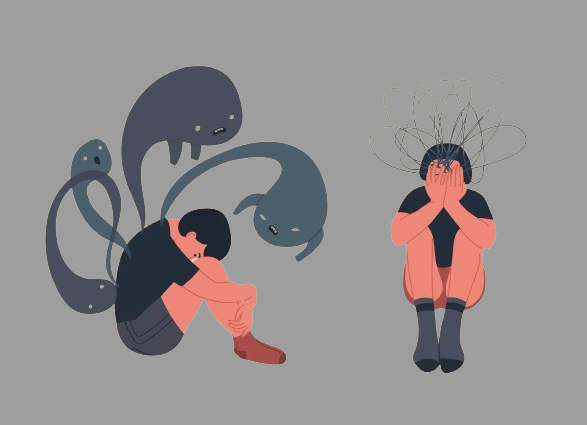
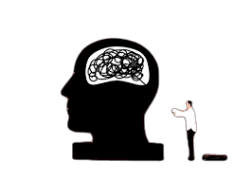
There is a specific kind of exhausted that doesn’t respond to sleep. You can rest for eight or nine hours and still wake up feeling like you never stopped running, your body heavy, your thoughts slow, ordinary tasks like replying to a text or deciding what to eat suddenly requiring far more effort than they should.
For people who are both autistic and have ADHD, a combination often shorthanded as AuDHD, this particular flavor of exhaustion has a name and a real physiological explanation behind it. Understanding AuDHD burnout symptoms is often the first step toward recognizing that what’s happening isn’t laziness, isn’t a personal failing, and isn’t something willpower alone can fix.
This distinction matters enormously, because many AuDHD adults spend years being told, sometimes by others and sometimes by their own inner critic, that they simply need to try harder, organize better, or push through more consistently. That framing misses what’s actually happening physiologically, and it often delays the kind of understanding and support that could genuinely help.
Recognizing burnout for what it is, a predictable and explainable response to chronic overextension, opens the door to a completely different and far more effective approach to recovery.
AuDHD burnout describes a state of profound mental, emotional, and physical depletion that develops when the combined demands of navigating both autistic and ADHD traits, often for years without adequate support or rest, finally overwhelm a person’s capacity to keep functioning at their usual level.
It is not the same as ordinary tiredness after a busy week, and it is not simply a more intense version of stress that anyone might experience. It reflects a specific and compounding form of nervous system depletion that develops uniquely at the intersection of two different neurotypes, each with its own demands, sometimes pulling in opposite directions at once.
What AuDHD Burnout Actually Is
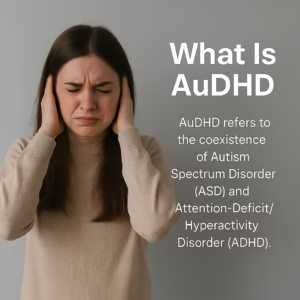
To understand AuDHD burnout, it helps to first understand what AuDHD itself refers to. The term describes the combination of autism spectrum traits and ADHD traits occurring in the same individual, a pairing that research increasingly suggests is common rather than rare, even though the two conditions were historically diagnosed and studied separately for years.
Someone who is AuDHD often experiences autism’s need for predictability, routine, and sensory regulation alongside ADHD’s need for novelty, stimulation, and variety, two sets of needs that don’t always coexist easily within a single day, let alone a single life built around conventional work and social expectations.
Burnout, in this specific context, is distinct from occupational burnout or general life stress, even though the two can certainly compound one another. AuDHD burnout tends to develop specifically from the cumulative cost of operating in an environment not designed for either neurotype, let alone both simultaneously.
This includes the ongoing effort of managing sensory input that others don’t seem to notice, the mental labor of translating one’s natural communication style into something more conventionally acceptable, and the constant internal negotiation between an ADHD brain that craves stimulation and an autistic nervous system that needs far more predictability and recovery time than most environments allow for.
Diagnosis and recognition of AuDHD as a combined presentation have historically lagged behind, partly because autism and ADHD were long studied and diagnosed in separate clinical silos, with many diagnostic frameworks even discouraging clinicians from considering both conditions in the same individual.
This history means many adults now recognizing AuDHD traits in themselves went years, sometimes decades, without an accurate framework for understanding their own experience, often accumulating burnout cycles long before they had language to describe what was actually happening.
Why Two Neurotypes Create a Unique Kind of Exhaustion
The internal tension between autism and ADHD is often what makes AuDHD burnout feel so distinct from either condition experienced on its own. ADHD tends to generate a pull toward novelty, movement, and stimulation, sometimes described as a kind of restless hunger for something new to focus on or engage with.
Autism, meanwhile, tends to generate a strong preference for predictability, routine, and a stable sensory environment, since unpredictability and sensory chaos are often genuinely distressing rather than simply mildly annoying. When both of these operating systems exist within the same person, daily life often becomes an exercise in constantly negotiating between two contradictory sets of needs, seeking stimulation with one hand while trying to protect stability with the other.
This internal negotiation is rarely conscious or deliberate. Most AuDHD individuals don’t wake up each day thinking explicitly about balancing these competing needs; instead, the tension operates quietly in the background, consuming cognitive and emotional resources without the person always realizing where their energy is going.
Over months and years, this background cost accumulates, and it accumulates faster than most people, including many well-meaning friends, family members, and even clinicians, would assume from the outside, since AuDHD individuals often become remarkably skilled at appearing to manage everything smoothly right up until they can’t anymore.
This appearance of smooth functioning is not deceptive; it is itself a survival strategy, developed often from childhood, in environments that rewarded conventional performance and offered little tolerance for visible struggle. Many AuDHD adults describe a lifetime of being told they were “too sensitive” or “not focused enough,” feedback that taught them early to hide the internal cost of managing two competing neurotypes rather than to seek support for it.
By the time burnout becomes visible enough for others to notice, it has often already been building quietly for a very long time.
The Core AuDHD Burnout Symptoms Explained
Cognitive symptoms are often among the earliest and most disruptive signs of AuDHD burnout, showing up as a kind of pervasive brain fog that makes even familiar tasks feel unexpectedly difficult. Memory becomes less reliable, with appointments, conversations, or even the location of everyday items slipping away more easily than usual.
Starting tasks, always a challenge for many people with ADHD, becomes dramatically harder during burnout, since the executive functioning resources that would normally help override inertia are themselves depleted. Even tasks that were once automatic, like following a familiar work process or preparing a simple meal, can suddenly require a level of conscious effort that feels disproportionate and confusing.
Emotional symptoms tend to run in two seemingly opposite directions simultaneously, which can be part of what makes AuDHD burnout so disorienting to experience. On one hand, there is often heightened emotional reactivity, showing up as irritability, sudden tearfulness, or a shorter fuse than usual in response to minor frustrations.
On the other hand, many people describe periods of emotional numbness woven throughout the same stretch of time, a flat, disconnected feeling where even things that would normally bring joy or interest fail to register the way they once did. This oscillation between intensity and numbness is not a contradiction; it reflects a nervous system that has run out of its usual capacity for smooth emotional regulation and is instead swinging unpredictably between extremes.
Physical symptoms often accompany the cognitive and emotional signs, and they can be some of the most persistent and frustrating aspects of AuDHD burnout, since they tend to resist the usual remedies. Fatigue during burnout often doesn’t respond to sleep the way ordinary tiredness does, leaving a person feeling just as depleted after a full night’s rest as before it.
Sensory sensitivities that might normally be manageable, like background noise, certain fabrics, or bright lighting, often intensify noticeably during burnout, becoming genuinely difficult to tolerate rather than simply mildly irritating. Headaches, muscle tension, and digestive discomfort are also commonly reported, reflecting the way chronic nervous system dysregulation shows up throughout the entire body, not just in mood or cognition.
Functional symptoms round out the picture, and they are often what finally prompts someone to seek support, since they are the most visible to others. Skills that were previously reliable, whether that’s speaking fluently in conversation, managing a daily routine, or completing work tasks that once felt straightforward, can noticeably decline during a burnout period.
This loss of previously stable functioning is not a sign of regression or failure; it reflects a nervous system that has temporarily run out of the resources needed to maintain its usual level of output, and it is generally recoverable with the right support and adjustments.
It’s worth adding that these four categories of symptoms, cognitive, emotional, physical, and functional, rarely appear in isolation from one another during an actual burnout period. They tend to interact and compound, with poor sleep worsening emotional regulation, which in turn makes sensory sensitivities feel even more intolerable, which then makes it harder to complete basic tasks, further deepening the sense of falling behind.
Recognizing this compounding pattern can be genuinely useful, since it clarifies why addressing just one symptom in isolation, like trying to simply “sleep more” or “focus harder,” rarely resolves burnout on its own without also addressing the broader pattern driving it.
The Role of Masking in AuDHD Burnout
Masking, the practice of consciously or unconsciously suppressing autistic or ADHD traits in order to appear more conventionally neurotypical, plays an outsized role in why AuDHD burnout develops in the first place. Masking might look like forcing eye contact that feels uncomfortable, rehearsing conversations in advance to sound more natural, suppressing the urge to stim, or pushing through sensory discomfort silently rather than acknowledging it.
Each of these small acts of suppression requires real cognitive and emotional effort, and while any single instance might seem manageable, the cumulative cost of masking across years of daily interactions adds up into a substantial and often invisible debt.
This debt eventually demands repayment, and AuDHD burnout is frequently the form that repayment takes. Because masking is often so automatic and deeply ingrained, many AuDHD adults don’t fully recognize how much energy they’ve been spending on it until burnout forces a kind of involuntary stop, making it impossible to keep up the same level of performance any longer.
Recovery from AuDHD burnout, as a result, often involves a genuine process of unmasking, which means gradually giving oneself permission to stim openly, to decline social interactions that feel overwhelming, and to structure daily life around actual needs rather than around how those needs might appear to others.
How AuDHD Burnout Differs From Depression
Because AuDHD burnout and depression share several overlapping symptoms, including low energy, reduced motivation, and emotional flatness, the two are sometimes confused, both by the person experiencing them and occasionally by clinicians unfamiliar with neurodivergent presentations.
The key distinguishing factor tends to be the underlying cause and pattern. AuDHD burnout is fundamentally a response to chronic overextension and unmet needs, meaning it often improves, sometimes significantly, when demands are reduced and specific accommodations like more predictable routines, reduced sensory input, or extra recovery time are introduced. Depression, while it can certainly be triggered or worsened by burnout, tends to persist even when external demands are reduced, and it often responds to a different combination of interventions.

This distinction matters practically because treating AuDHD burnout as though it were purely depression, without addressing the underlying neurodivergent-specific stressors like masking, sensory overload, and unmet routine needs, often leads to incomplete or frustratingly slow improvement.
A clinician who understands the AuDHD presentation specifically will typically explore both possibilities together, since the two can and often do coexist, rather than assuming one diagnosis automatically explains the entire picture.
How AuDHD Burnout Differs From Autistic Burnout or ADHD Burnout Alone
Autistic burnout, experienced without a co-occurring ADHD presentation, tends to center heavily around sensory overload and the cumulative cost of masking within social and sensory environments. ADHD burnout, on its own, tends to center more around the exhaustion of managing executive dysfunction, time blindness, and the mental effort required to sustain attention and motivation in environments not designed to accommodate a different relationship with focus. AuDHD burnout layers both of these dynamics on top of one another, and it adds an additional dimension that neither condition alone fully captures:
the exhausting internal contradiction between an ADHD brain seeking stimulation and an autistic nervous system needing predictability, both operating within the same person at the same time.
This layered quality is part of why AuDHD burnout can feel more severe or more difficult to recover from than either condition experienced in isolation. Recovery strategies that work well for autistic burnout alone, like reducing sensory input and increasing routine, might inadvertently trigger ADHD-related restlessness or understimulation if applied too rigidly.
Strategies that work for ADHD burnout alone, like introducing more novelty and stimulation, might overwhelm an already taxed sensory system if not carefully calibrated. Effective recovery for AuDHD burnout typically requires holding both sets of needs in mind simultaneously, rather than applying a strategy designed for just one neurotype.
The Burnout Cycle
Many AuDHD adults describe a recognizable pattern that repeats across their burnout episodes, one that can be helpful to understand precisely because recognizing the pattern in real time can sometimes allow for earlier intervention.
The cycle often begins with a surge of energy, frequently fueled by hyperfocus, urgency, or the pressure to meet an expectation, during which sensory needs and fatigue signals get consistently overridden in favor of pushing forward. This surge feels productive, even exhilarating, while it lasts, but it is fundamentally unsustainable, since it depends on ignoring signals the body and brain are actively sending.
Eventually, the surge gives way to a crash, often triggered by a seemingly minor additional stressor that becomes the final straw after weeks or months of accumulated overextension.
During the crash phase, functioning drops sharply, sometimes dramatically, and the symptoms described earlier, the brain fog, the emotional swings, the physical exhaustion, all intensify at once. A partial recovery usually follows, but many AuDHD adults describe this recovery as incomplete, a return to feeling merely less overwhelmed rather than a genuine return to baseline functioning.
Because the underlying patterns that caused the initial burnout often haven’t changed, the cycle frequently repeats, sometimes becoming more severe with each iteration if nothing shifts in how demands and recovery time are managed.
What Genuinely Helps Recovery
Recovery from AuDHD burnout generally begins with reducing masking wherever it’s genuinely possible to do so, even in small, private ways at first, such as allowing natural stimming at home or choosing clothing based on sensory comfort rather than appearance.
This isn’t about abandoning all social adaptation, but about identifying which specific instances of masking are truly necessary versus which have simply become habitual, and beginning to release the ones that aren’t serving a real purpose.
Honoring sensory needs proactively, rather than only addressing them once they’ve become overwhelming, also plays a significant role, whether that means noise-canceling headphones in loud environments, dimmer lighting when possible, or simply permission to leave a situation that has become sensorially unbearable without needing to justify the decision extensively to others.
Building genuine recovery time into a daily or weekly rhythm, rather than only resting once burnout has already taken hold, tends to be one of the most protective long-term strategies.
This might mean deliberately scheduling low-demand time after a socially or sensorially intense event, rather than immediately moving on to the next obligation, treating recovery as a necessary part of the schedule rather than an optional afterthought. Seeking support from a therapist who genuinely understands neurodivergent presentations, ideally one trained in neuroaffirming approaches rather than ones focused primarily on suppressing traits to appear more neurotypical, can also make a substantial difference, both in navigating an active burnout period and in building longer-term strategies to reduce how often burnout occurs in the first place.
Recovery is rarely linear, and it’s worth setting realistic expectations around that from the start. Many AuDHD adults describe good stretches followed by unexpected setbacks, sometimes triggered by something as ordinary as a change in routine or an unusually demanding week. This isn’t a sign that recovery has failed; it reflects the genuinely fluctuating nature of managing two neurotypes simultaneously, and building self-compassion for that fluctuation is often just as important as any specific practical strategy.
FAQ
What does AuDHD burnout feel like compared to normal tiredness? AuDHD burnout involves a depth of exhaustion that doesn’t resolve with sleep, along with cognitive symptoms like brain fog and memory lapses, and it typically follows a prolonged period of masking or overextension rather than a single tiring day.
How long does AuDHD burnout usually last? There’s no fixed timeline, but many people describe burnout episodes lasting weeks to several months, with recovery speed depending heavily on how much the underlying demands and masking can be reduced during that time.
Can AuDHD burnout be misdiagnosed as depression? Yes, because the two share overlapping symptoms like low energy and emotional flatness, though AuDHD burnout typically improves more directly when specific accommodations and reduced demands are introduced, unlike depression, which often requires different interventions.
Is AuDHD burnout the same as autistic burnout? It’s related but distinct, since AuDHD burnout includes the added layer of ADHD-related executive dysfunction and the internal tension between needing stimulation and needing predictability at the same time.
What triggers AuDHD burnout most often? Common triggers include prolonged masking, sensory overload, major life transitions, and extended periods without adequate recovery time, often building up gradually rather than resulting from a single event.
Should I see a professional for AuDHD burnout? If burnout is severe, persistent, or significantly affecting daily functioning, a clinician familiar with neurodivergent presentations can help distinguish it from depression and support a more tailored recovery plan.
Conclusion
If you recognize yourself in these AuDHD burnout symptoms, the exhaustion you’re carrying is real, physiologically grounded, and not a reflection of laziness or personal failure. Your nervous system has been managing two sets of demands that don’t always cooperate with each other, often for far longer than most people around you have realized, and the depletion you feel now is the natural result of that ongoing effort finally catching up. Recovery is genuinely possible, and it tends to begin not with pushing harder, but with permission to rest, to unmask where it’s safe to do so, and to build a life that finally makes room for both sides of how your brain actually works.