Treatment resistant depression is not a character flaw, a failure of willpower, or evidence that you are somehow beyond help. It is a clinically defined condition affecting approximately 30 to 35 percent of everyone diagnosed with major depressive disorder — and it has a specific meaning.
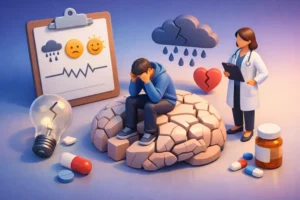
If you have tried at least two antidepressants from different drug classes, taken at an adequate dose for a minimum of six to eight weeks each, and neither produced a meaningful improvement in your symptoms, you meet the standard definition of treatment resistant depression used by the FDA and EMA. You are in the company of tens of millions of people worldwide.
And the reason the standard approach has not worked is not that you are untreatable — it is that standard depression and treatment resistant depression are not the same biological condition, and they do not always respond to the same treatments.
The good news — and this is real, evidence-backed good news — is that the 2026 treatment landscape for treatment resistant depression looks genuinely different from what existed five years ago. New biological mechanisms have been identified. New treatments have been developed around those mechanisms. Trials completed in 2025 and 2026 have produced results that would have seemed extraordinary even recently.
What Treatment-Resistant Depression Actually Is
Most people who receive a depression diagnosis are prescribed a first-line antidepressant, typically a selective serotonin reuptake inhibitor. For roughly 40 to 50 percent of people, this works reasonably well. For another significant group, it produces partial improvement.
And for approximately one third of people with depression, it does not produce adequate relief — and neither does the second medication they try, nor the third.
Treatment resistant depression is not simply severe depression. Severity and treatment resistance are related but different things. A person can have moderate depression that consistently fails to respond to medication, and a person can have severe depression that responds well to the right antidepressant.
The defining feature of treatment resistant depression is the pattern of non-response to adequate treatment trials, not the depth of the symptoms alone.
How Many Failed Antidepressants Define It
The FDA and EMA definition — inadequate response to at least two antidepressants of different pharmacological classes at adequate dose and adequate duration — is the most widely used clinical benchmark.
Adequate dose means the dose shown in clinical trials to be meaningfully above placebo. Adequate duration means a minimum of six to eight weeks, because antidepressants require that window to produce their full biological effect.
A person who tried an SSRI for two weeks, felt nothing, and stopped has not completed an adequate antidepressant trial. Treatment resistance requires evidence that the treatment was given a genuine opportunity to work.
Why Treatment-Resistant Depression Is So Often Misunderstood
The most damaging misunderstanding of treatment resistant depression is the idea that it reflects something wrong with the person rather than something specific about their neurobiology.
People with treatment resistant depression frequently internalize years of treatment failure as evidence that they are uniquely broken or beyond help. Neither is true.
What is true is that depression is not a single, biologically uniform condition. It has subtypes — influenced by genetics, early life stress, inflammation levels, HPA axis dysregulation, neuroplasticity deficits, and trauma history — and first-line antidepressants address only a limited portion of those mechanisms.
When those mechanisms are not the relevant ones for a particular person’s depression, no amount of persistence with the same class of treatment will produce recovery.
Why Antidepressants Fail So Many People With Treatment-Resistant Depression
The standard explanation for how antidepressants work — that depression is caused by low serotonin, and SSRIs work by raising serotonin — was always a simplification. It was a useful one in the early years of antidepressant development, but decades of neuroscience research have established that the biology of depression is substantially more complex.
The serotonin hypothesis explains why some antidepressants help some people some of the time. It does not explain why they fail so reliably in others, and it does not point toward the alternative mechanisms that need to be addressed when the standard approach has not worked.
The Serotonin Hypothesis Was Never the Whole Story
Depression involves the glutamate system, the dopamine system, the HPA axis, the inflammatory immune system, and deficits in neuroplasticity — specifically, reduced BDNF, the protein responsible for the growth and maintenance of neural connections.
For people whose depression is primarily driven by glutamate system dysfunction, neuroplasticity deficits, or chronic inflammation, serotonin-targeting medications are, at best, partially relevant.
This is not a new insight. It is why researchers have been pursuing glutamate-targeting treatments like ketamine for decades, and why that work has now reached clinical implementation with compelling results.
Hidden Reasons Your Depression Does Not Respond to Medication
A substantial proportion of people labeled with treatment resistant depression turn out to have a condition other than standard major depressive disorder driving their symptoms — a condition for which antidepressants are the wrong treatment.
Bipolar II disorder is one of the most commonly missed. The depressive episodes in bipolar II are clinically indistinguishable from unipolar depression during the episode itself. The hypomania — a subtler, often pleasant elevation of mood and energy — goes unrecognized or is never reported.
Prescribing an antidepressant without a mood stabilizer to someone with bipolar II often produces inadequate response or triggers mood cycling.
Undiagnosed ADHD is another frequent culprit, because ADHD is primarily a dopamine and norepinephrine disorder. SSRIs, which target serotonin, do not address those systems.
Hypothyroidism, sleep apnea, chronic pain conditions, and complex PTSD with active trauma dysregulation can all produce depression that is functionally resistant to antidepressants because the biological driver of the depressive symptoms lies outside what those medications can reach.
Before adding the next treatment, the most important step is confirming that the diagnosis itself is accurate.
Ketamine and Esketamine — The Fastest-Acting Treatment for Treatment-Resistant Depression
Ketamine is the most significant pharmacological development in the treatment of treatment resistant depression in a generation. It is not a new drug — it has been used as an anesthetic for decades — but its use as a rapid-acting antidepressant has been one of the most important clinical discoveries of the past twenty years.
The reason it matters for treatment resistant depression specifically is that it works through a mechanism entirely different from every antidepressant that came before it, which means it reaches people whose depression does not respond to serotonin-targeting medications.
How Ketamine Works Differently From Every Antidepressant Before It
Ketamine is an NMDA receptor antagonist. Where SSRIs and SNRIs work by modulating the serotonin and norepinephrine systems, ketamine blocks receptors in the glutamate system — the brain’s primary excitatory neurotransmitter network.
When those receptors are transiently blocked, a cascade of downstream effects follows. BDNF is released in significant quantities in the prefrontal cortex. New synaptic connections begin to form. The neuroplasticity that chronic depression has systematically suppressed is, within hours of a ketamine infusion, restored in measurable ways.
This is why ketamine works so quickly where antidepressants take weeks. The antidepressants are trying to change the system slowly through repeated serotonin modulation. Ketamine is triggering a rapid burst of the neuroplastic repair that depression has been preventing.
IV Ketamine vs Esketamine (Spravato) — What Is the Difference
Intravenous ketamine involves administering the drug directly into the bloodstream at approximately 0.5 mg per kilogram over forty minutes, typically in a clinical infusion suite. A standard protocol involves six infusions over two to three weeks, with the patient supervised throughout.
Response rates in treatment resistant depression range from fifty to seventy percent for meaningful symptom reduction.
This is racemic ketamine — a mixture of two molecular forms of the drug. Esketamine, sold under the brand name Spravato, uses only the S-enantiomer form of ketamine delivered as a nasal spray. It received FDA approval in 2019 specifically for treatment resistant depression and for depression with active suicidal ideation.
It is administered in a certified healthcare setting under observation for two hours post-dose and is co-prescribed with an oral antidepressant. Insurance coverage for Spravato has improved substantially in recent years.
Both forms produce rapid antidepressant effects, but IV ketamine has a larger body of clinical evidence and greater dosing flexibility.
How Long Does Ketamine Relief Last and What Are the Risks
This is the honest limitation of ketamine: the antidepressant effect, without maintenance treatment, typically lasts three to five weeks for most patients.
The initial series of infusions produces remission or significant improvement in many cases. Sustaining that improvement requires a maintenance protocol — typically monthly infusions or booster infusions at intervals determined by symptom tracking.
The psychological experience during ketamine treatment includes dissociation, perceptual changes, and an altered sense of time, which are temporary and end as the drug clears the system. It is not appropriate for people with active psychosis, uncontrolled blood pressure, or certain cardiovascular conditions.
Combining ketamine with psychotherapy — particularly EMDR or somatic work — during the period of enhanced neuroplasticity it creates has been shown to produce more durable outcomes than ketamine alone.
Transcranial Magnetic Stimulation — The Non-Drug Breakthrough for Treatment-Resistant Depression
Transcranial Magnetic Stimulation is a non-invasive brain stimulation treatment that uses focused magnetic pulses to activate specific regions of the brain. It does not require anesthesia, has no systemic medication effects, and is performed while the patient sits comfortably in a chair.
For treatment resistant depression, TMS has been FDA-cleared since 2008, and the evidence for its effectiveness has grown substantially over the years since.
What TMS Actually Does to the Brain
The primary target in TMS for depression is the dorsolateral prefrontal cortex — a region that is measurably underactive in depression and plays a central role in regulating mood, executive function, and the modulation of the limbic system’s emotional responses.
Stimulating this region with repeated magnetic pulses increases its activity and, over a course of treatment, produces changes in neural connectivity that persist beyond the treatment period itself.
A standard TMS protocol involves twenty to thirty sessions over four to six weeks, with each session lasting approximately thirty to forty minutes. Response rates in treatment resistant depression are approximately fifty to sixty percent, which is comparable to medication augmentation strategies but without the systemic side effects.
The SAINT Protocol — Stanford’s Remarkable Remission Rate Result
The most significant development in TMS for treatment resistant depression in recent years is the Stanford Accelerated Intelligent Neuromodulation Therapy protocol, known as SAINT. Developed in the Williams laboratory at Stanford University and now commercialized by Magnus Medical, SAINT delivers ten sessions of a more efficient form of TMS — intermittent theta-burst stimulation — in a single day, repeated over five consecutive days.
Two features make SAINT different from standard TMS. The first is personalized targeting: functional MRI imaging is used to identify each individual’s specific prefrontal-to-anterior-cingulate functional connectivity pattern, and the stimulation is targeted to the precise location most likely to be effective for that person’s brain.
The second is the accelerated intensity: more total stimulation is delivered in five days than a standard TMS course delivers in six weeks.
The results have been remarkable. Stanford’s clinical program reports approximately 79 to 80 percent remission rates in their treated population. A randomized controlled trial published in the journal Brain in February 2026 confirmed 50 percent remission in the active SAINT group versus 20.8 percent in the sham group — statistically significant and substantially higher than the remission rates seen in standard TMS trials.
The FDA cleared SAINT in 2022, and it is now available at an increasing number of specialized centers across the United States. The five-day outpatient format makes it practically accessible in a way that six-week standard TMS programs are not for many people.
Vagus Nerve Stimulation and the January 2026 RECOVER Trial
Vagus nerve stimulation for depression involves a small device, similar in concept to a cardiac pacemaker, surgically implanted under the collarbone. The device delivers mild electrical pulses to the vagus nerve, which connects to brain regions involved in mood regulation, including the locus coeruleus, the nucleus tractus solitarius, and ultimately to limbic structures and the prefrontal cortex.
VNS was FDA-approved for treatment resistant depression in 2005 but remained underused, partly due to reimbursement challenges and partly because the benefit is slow to emerge — typically appearing over months rather than weeks.
What the January 2026 RECOVER Trial Results Actually Mean
The January 2026 RECOVER trial, published in the International Journal of Neuropsychopharmacology, changed the clinical picture for VNS in a meaningful way.
This prospective study followed patients with markedly treatment resistant depression — people who had failed multiple treatments including, in many cases, electroconvulsive therapy — over twenty-four months of adjunctive VNS treatment.
The findings confirmed durable, long-lasting antidepressant benefit sustained across the full two-year period. This is clinically significant because durability of effect is precisely where most TRD treatments struggle. Ketamine’s benefit fades without maintenance. ECT has high relapse rates.
The finding that VNS produces sustained, durable improvement over two years in the most severely treatment resistant patients — people who had failed virtually everything else — represents one of the most important findings in TRD treatment research published in 2026.
The limitation is access: VNS requires surgery, carries a significant upfront cost, and is available at a limited number of centers.
Electroconvulsive Therapy — The Most Misunderstood Treatment in Psychiatry
No treatment in psychiatry has been more thoroughly distorted by cultural myth than electroconvulsive therapy. For many people, the reference point is the movie One Flew Over the Cuckoo’s Nest. Modern ECT has almost nothing in common with that depiction.
It is an outpatient procedure performed under general anesthesia with a muscle relaxant, using carefully calibrated brief-pulse or ultra-brief-pulse electrical stimulation. The patient is unconscious during the procedure, wakes within minutes, and typically returns home the same day.
Modern ECT Is Nothing Like What Popular Culture Shows
ECT produces remission rates of 50 to 70 percent in treatment resistant depression — among the highest remission rates of any treatment available, including ketamine.
It is particularly effective in severe depression with melancholic or psychotic features and in depression with high suicidal risk where a rapid response is clinically essential.
The genuine limitation of ECT is not safety but durability: approximately half of patients who achieve remission relapse within three months without maintenance treatment. Maintenance ECT — continuation sessions at decreasing frequency over months — substantially improves those outcomes.
The cognitive side effects of ECT, including temporary short-term memory disruption, are real and should be discussed honestly with patients, but they are substantially reduced with ultra-brief-pulse protocols and bilateral placement alternatives.
For the right patient in the right clinical context, ECT remains one of the most effective tools available for treatment resistant depression.
Psilocybin-Assisted Therapy for Treatment-Resistant Depression in 2026
Psilocybin is the most discussed emerging treatment in psychiatry, and it is worth being precise about where the evidence actually stands in 2026.
Psilocybin is not an available standard treatment for most people with treatment resistant depression. It is in late-stage clinical development, with Phase 3 trials underway at multiple centers. The FDA has granted Breakthrough Therapy designation, which accelerates the review process but does not constitute approval.
Understanding what the research does and does not show matters for people who are following this area closely.
What the 2026 Research on Psilocybin Says
The 2026 JAMA Psychiatry trial investigating GH001 — a synthetic psilocybin compound — against placebo in treatment resistant depression represents one of the most important data points currently available.
Phase 2 and 3 results have shown that a single or double administration of psilocybin, combined with structured therapeutic preparation and integration sessions, produces significant reductions in depressive symptoms in a meaningful proportion of TRD patients.
The proposed mechanism involves disruption of rigid default mode network activity — the self-referential rumination patterns that characterize depression — combined with a window of enhanced neuroplasticity that follows the experience.
The therapeutic integration component matters enormously. Psilocybin without psychological support produces inconsistent and sometimes distressing results. It is not a pill you take and wait.
When it becomes available as a regulated treatment, it will require specialized clinical infrastructure. For now, people should treat claims about immediate clinical access with skepticism while watching the regulatory process with genuine interest.
Psychotherapy Approaches That Work Alongside Biological Treatments
An important principle for understanding treatment resistant depression is that psychotherapy alone is rarely sufficient for the most severe presentations. The biological abnormalities driving TRD — glutamate system dysfunction, HPA axis dysregulation, neuroplasticity deficits — cannot be resolved through conversation alone.
This is not a dismissal of therapy’s value. It is a recognition that therapy works best for treatment resistant depression when it is combined with biological treatment that addresses the underlying neurological drivers.
Why Talk Therapy Alone Is Often Not Enough for Treatment-Resistant Depression
When the brain is in a state of severe depression, the prefrontal cortex — the seat of rational thought, emotional regulation, and the capacity to benefit from therapeutic insight — is significantly underactive.
A brain that cannot access executive function, cannot sustain attention, and is overrun by limbic distress has limited capacity to engage productively with the cognitive work that psychotherapy requires.
This is why the sequence matters: biological treatment to restore functional brain capacity first, followed by or combined with psychotherapy that can now reach a more receptive mind.
EMDR and Somatic Therapy When Trauma Drives the Depression
For a substantial proportion of people with treatment resistant depression, unprocessed trauma is a significant driver of the ongoing symptoms. Antidepressants do not process trauma. They can reduce the acute symptom load sufficiently to make life more manageable, but as long as the traumatic material remains physiologically active in the nervous system, it continues to generate the dysregulation that produces and maintains depressive states.
EMDR — Eye Movement Desensitization and Reprocessing — has strong evidence for treating the trauma component that can drive medication-resistant depression, particularly when combined with ketamine or TMS that improves neuroplasticity and therefore the brain’s capacity to reprocess traumatic memories.
Somatic experiencing, which works directly with the physiological trauma responses stored in the body, addresses the nervous system dimension of trauma-driven depression that talk therapy alone cannot reach.
Internal Family Systems for Depression Rooted in the Self
Internal Family Systems has become one of the most widely practiced approaches for depression that is rooted in shame-based identity, early relational trauma, and the internal conflict between a person’s various psychological parts.
IFS conceptualizes the mind as containing multiple sub-personalities or parts — the inner critic, the numbed-out protector, the grieving exile, the frenetic manager — and works toward a state in which the person’s core self can take the lead rather than being overrun by traumatized parts.
For people whose treatment resistant depression has a strong identity and relational component, IFS can reach territory that medication, TMS, and ketamine cannot address on their own.
Medication Strategies That Work When First-Line Antidepressants Fail
Before moving to the interventional treatments described above, most psychiatrists will try medication augmentation strategies — adding a second agent to an existing antidepressant rather than switching to an entirely different medication.
These strategies have a meaningful evidence base and remain an important option, particularly as a bridge or in combination with other treatments.
Augmentation and Combination Approaches
Second-generation antipsychotics have the strongest evidence base for antidepressant augmentation in treatment resistant depression.
Aripiprazole, Brexpiprazole, Quetiapine, and Cariprazine have all been FDA-approved as adjunctive treatments for major depression that has not responded adequately to antidepressant monotherapy.
These are not full antipsychotic doses — the augmentation doses are lower and carry a different risk profile from antipsychotic use in psychotic disorders.
They work partly through dopamine system modulation, which is one of the mechanisms that SSRIs alone do not address.
Adding T3 thyroid hormone as an augmentation strategy has a decades-long evidence base and remains an underutilized option.
Combining two different antidepressants from different mechanistic classes — for example, an SSRI with mirtazapine — can also produce responses that neither agent achieves alone.
Lithium Augmentation — The Evidence That Is Often Overlooked
Lithium augmentation is one of the most evidence-backed strategies for treatment resistant depression and one of the most consistently underutilized in contemporary practice.
Adding lithium at therapeutic blood levels to an existing antidepressant has been shown in multiple controlled trials to produce meaningful improvement in a significant proportion of TRD patients, including those who have failed multiple medication trials.
Lithium requires blood level monitoring and has a narrower therapeutic window than most psychotropics, which partly explains its reduced use in an era of simpler-to-manage augmentation agents.
For patients who have not tried lithium augmentation, it remains a clinically significant option that many psychiatrists unfamiliar with its evidence base do not routinely consider.
The Role of Lifestyle, Sleep, and Exercise in Treatment-Resistant Depression
No lifestyle intervention replaces biological treatment for treatment resistant depression. But the evidence for exercise specifically — and for sleep optimization — as active treatment components is now strong enough that they cannot be described as merely supportive or adjunctive.
They have measurable neurobiological effects on precisely the systems that treatment resistant depression disrupts.
What the February 2026 Exercise Research Confirms
A comprehensive meta-analysis published in February 2026, reviewing data across more than two hundred studies, confirmed that aerobic exercise produces antidepressant effects with effect sizes comparable to antidepressant medication in mild to moderate depression, and that it significantly enhances outcomes when combined with biological treatments in more severe presentations.
The mechanism is not simply that exercise feels good. Aerobic exercise triggers BDNF release — the same neurotrophic protein that ketamine stimulates — promoting hippocampal neurogenesis and restoring the neuroplasticity that depression suppresses.
It also regulates the HPA axis, reducing chronic cortisol elevation, and activates the endocannabinoid system.
For someone with treatment resistant depression, a minimum of 150 minutes of moderate aerobic exercise per week is not a wellness suggestion. It is a neurobiological intervention.
Sleep is equally critical: untreated sleep disorders, including sleep apnea, directly maintain HPA axis dysregulation and can be responsible for apparent medication non-response in a significant number of patients.
Why Getting the Right Diagnosis Changes Everything
If there is one practical message that matters most for people who have been struggling with what appears to be treatment resistant depression, it is this: before escalating to the next treatment, it is worth ensuring that the diagnosis is correct.
The category of apparent treatment resistant depression contains a meaningful proportion of people whose non-response to antidepressants is occurring because antidepressants are not the right treatment for their actual condition.
Bipolar Disorder, ADHD, and Trauma Masquerading as Treatment-Resistant Depression
Bipolar II disorder is the most frequently missed diagnosis in people presenting with apparent treatment resistant depression. The hypomania of bipolar II is often mild, brief, and experienced as normal energy and productivity rather than illness.
Standard antidepressants given without mood stabilizers can worsen bipolar cycling. The correct treatment — mood stabilizers with or without specific bipolar-approved antidepressants — produces responses that years of SSRI-based treatment never achieved.
ADHD is similarly often missed: the concentration difficulties, motivation deficits, and emotional dysregulation of ADHD can produce a clinical picture that looks like treatment resistant depression and that responds specifically to ADHD medications, not antidepressants.
Complex PTSD with its chronic nervous system dysregulation and shame-based identity structure requires trauma-specific treatment.
Getting a comprehensive second opinion from a psychiatrist with expertise in complex presentations — not simply a new antidepressant prescription — is among the highest-value steps available to someone who has failed multiple treatment attempts.
How to Find the Right Treatment for Your Treatment-Resistant Depression
The most practical guidance for someone navigating treatment resistant depression is to seek assessment at a center with genuine specialization in complex mood disorders or neuromodulation.
A general psychiatrist in a standard outpatient setting may not have access to or familiarity with ketamine protocols, SAINT, VNS, or the full range of augmentation strategies.
Academic medical centers and university hospitals typically have dedicated TRD clinics or neuromodulation programs. These are the settings most likely to offer a comprehensive evaluation and access to the full spectrum of current treatments.
What to Ask Your Doctor and What to Expect
When seeking evaluation, bring a complete treatment history: every medication tried, the doses used, how long each trial lasted, and what the response was.
This information is essential for determining whether previous trials were genuinely adequate and for identifying patterns in your response history.
Ask specifically about SAINT, ketamine, and lithium augmentation if they have not been discussed. Ask whether your diagnosis has been formally reconsidered — specifically whether bipolar II and ADHD have been evaluated.
Be realistic about timelines. Treatment resistant depression treatment is rarely a single intervention that produces permanent remission. It is typically a process of identifying the combination of approaches — biological, psychological, and lifestyle — that works for your specific neurobiology, and then maintaining those approaches over time.
This article is for informational and educational purposes only and does not constitute medical advice, clinical diagnosis, or treatment recommendations. If you are experiencing severe depression, please seek evaluation from a qualified psychiatrist or mental health professional as soon as possible.
Frequently Asked Questions About Treatment-Resistant Depression
What is treatment resistant depression?
Treatment resistant depression is a form of major depressive disorder that does not respond adequately to at least two antidepressant treatments of different pharmacological classes, taken at an adequate dose for a minimum of six to eight weeks each.
It affects approximately 30 to 35 percent of people with depression and requires different treatment approaches from standard depression.
How many antidepressants do you have to fail for it to be treatment resistant?
The FDA and EMA definition requires inadequate response to at least two antidepressants from different drug classes at adequate dose and adequate duration.
Each trial must be given a genuine opportunity to work — at least six to eight weeks at a therapeutically meaningful dose — before it can be counted as a treatment failure.
Is treatment resistant depression permanent?
No. Treatment resistant depression is not a permanent state. Approximately two-thirds of people with TRD achieve meaningful improvement or remission when they receive appropriate treatment tailored to their specific neurobiology.
The challenge is identifying which combination of biological, psychological, and lifestyle interventions is right for each individual person.
Does ketamine work for treatment resistant depression?
Yes, ketamine is one of the most evidence-backed treatments currently available for treatment resistant depression.
Response rates of 50 to 70 percent for meaningful symptom reduction have been consistently demonstrated. It works within hours through NMDA receptor antagonism and BDNF release, producing rapid neuroplastic changes.
The limitation is that the effect fades without maintenance treatment over time.
What is the SAINT protocol for depression?
SAINT stands for Stanford Accelerated Intelligent Neuromodulation Therapy. It is an FDA-cleared TMS protocol that delivers ten sessions of personalized, fMRI-guided intermittent theta-burst stimulation over five consecutive days.
Stanford’s clinical data shows approximately 79 to 80 percent remission rates. A February 2026 randomized controlled trial confirmed 50 percent remission in the active treatment group versus 20.8 percent in the sham group.
Is ECT safe for treatment resistant depression?
Modern ECT is performed under general anesthesia with a muscle relaxant and uses carefully calibrated brief electrical pulses.
It is one of the safest procedures in psychiatric medicine and produces remission rates of 50 to 70 percent in TRD — among the highest of any available treatment.
Temporary cognitive side effects, particularly short-term memory disruption, are real but substantially reduced with modern ultra-brief-pulse protocols.
Can therapy help treatment resistant depression?
Therapy alone is rarely sufficient for severe treatment resistant depression, because the neurobiological impairments of TRD limit the brain’s capacity to engage productively with psychotherapy.
However, specific therapeutic approaches — particularly EMDR and somatic therapy for trauma-driven TRD, and IFS for identity-based presentations — combined with biological treatment produce significantly better outcomes than biological treatment alone.
What is the most effective treatment for treatment resistant depression in 2026?
There is no single universally most effective treatment because treatment resistant depression is biologically heterogeneous — different subtypes respond to different interventions.
The highest remission rates in current clinical data come from ketamine infusions, the SAINT protocol, and ECT.
The most durable outcomes tend to come from combination approaches that address the biological substrate and the psychological and relational factors that maintain the depression.
The path through treatment resistant depression is rarely straight, and there is no honest way to promise that any single treatment will work for you.
What is true is that the options available in 2026 are genuinely better than anything that existed five years ago. Ketamine and esketamine are now widely accessible. The SAINT protocol has FDA clearance and is available at a growing number of centers. The January 2026 RECOVER trial confirmed that vagus nerve stimulation can produce lasting benefit even in the most severely treatment resistant cases.
The understanding of what drives non-response — and what that means for which treatment to try next — has deepened considerably.
You are not at the end of what is possible. You may simply not yet have reached the treatment that matches what is actually happening in your brain.