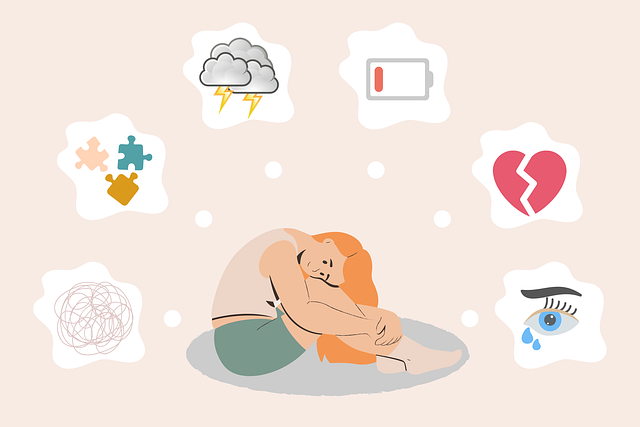
The echoism psychology meaning is one of the most overlooked concepts in modern personality research — yet it explains a pattern millions of people live with every day. While narcissism dominates psychological conversations, its polar opposite quietly shapes the lives of those who shrink themselves to avoid taking up space.

Echoism describes a personality style where a person fears attention, struggles to express their own needs, and compulsively prioritizes others. This article explores what echoism means, the signs that identify it, how it differs from narcissism, what causes it, and how echoists can begin to heal.
What Is Echoism in Psychology?
Echoism in psychology refers to a personality style characterized by an intense discomfort with standing out, receiving attention, or asserting one’s own needs and desires. The term was coined by Dr. Craig Malkin, a clinical psychologist, Harvard Medical School lecturer, and author of Rethinking Narcissism. Dr. Malkin named the concept after Echo, the nymph from Greek mythology who was cursed to only repeat the words of others — never speaking in her own voice.
In psychological terms, echoism sits at the opposite end of the personality spectrum from narcissism. Where a narcissist craves excessive admiration and attention, an echoist actively avoids it. Echoists often feel deeply uncomfortable being praised, celebrated, or even noticed. They tend to silence their own thoughts, suppress their emotional needs, and shrink in social situations — not out of shyness, but out of a deep fear of being perceived as self-centered or burdensome.
Understanding the echoism psychology meaning matters because it helps identify a pattern that standard psychology rarely labels. Echoists are not simply introverted or modest — they experience a compulsive drive to disappear emotionally, which can be just as psychologically damaging as narcissism, though in the opposite direction.
Key Signs of an Echoist
Recognizing echoism requires looking beyond surface-level humility. Echoists often appear selfless or easy-going, but their behavior is driven by fear rather than genuine preference.
One of the clearest signs is a deep discomfort with receiving compliments or praise. When someone acknowledges an echoist’s achievements, they tend to deflect, minimize, or outright deny the praise — not as false modesty, but because positive attention genuinely causes them anxiety. They feel undeserving of the spotlight and will go to great lengths to redirect it elsewhere.
Echoists also struggle significantly with using the word “I.” They find it difficult to say what they want, need, or feel, because expressing a personal preference feels selfish or imposing. In conversations, they defer constantly, ask others what they want first, and rarely volunteer their own opinions unless pressed.
Another prominent sign is a fear of being “too much.” Echoists carry a chronic worry that their emotions, needs, or presence will overwhelm or burden the people around them. As a result, they suppress feelings, minimize problems, and keep their inner world largely hidden — even from those closest to them.
Additionally, echoists are frequently attracted to narcissistic or highly self-assured personalities. This is not coincidental. Narcissists take up enormous emotional space, which allows echoists to remain invisible — a dynamic that feels familiar and, paradoxically, safe.
Finally, echoists tend to prioritize other people’s desires over their own so consistently that they lose touch with what they actually want. Over time, they may find they have no clear sense of personal goals, preferences, or identity outside of how they serve others.
Echoism vs Narcissism — What’s the Difference?
To fully grasp the echoism psychology meaning, it helps to place it within the broader spectrum Dr. Malkin describes in his research. Narcissism and echoism are not simply opposites — they represent two problematic extremes of the same personality dimension, with healthy self-esteem occupying the middle ground.
A narcissist relies on constant external validation to maintain their sense of self-worth. They seek admiration, struggle with empathy, and expect special treatment. An echoist, by contrast, is terrified of being seen as self-important and actively avoids the very attention a narcissist craves. While narcissists inflate their sense of self, echoists deflate theirs.
The healthy middle of this spectrum involves what Dr. Malkin calls “healthy narcissism” — a balanced ability to feel special without needing to diminish others, and to accept care and attention without panic. Echoists fall so far from this middle ground that their self-erasure becomes a psychological liability. They give endlessly but struggle to receive, which creates a chronic emotional imbalance that affects their relationships, self-esteem, and mental health.
It is also worth noting that echoism and codependency overlap but are not identical. Codependents are preoccupied with controlling or fixing others; echoists are preoccupied with not imposing themselves. Both patterns often develop alongside narcissistic relationships, but they arise from different psychological needs.
What Causes Echoism? The Psychology Behind It
Echoism does not appear randomly — it typically develops in response to early relational environments where self-expression was unsafe or unwelcome. The psychological roots of echoism are deeply tied to childhood experiences and attachment patterns.
Many echoists grew up with a narcissistic parent or caregiver — someone who made the child feel that their needs, emotions, or desires were secondary, inconvenient, or even threatening. In these households, expressing excitement, ambition, or need for comfort was either ignored or punished. The child learned, very early, that the safest strategy was to become invisible.
Others develop echoism after repeated messages that self-promotion is shameful. Cultural or family environments that overemphasize modesty, self-sacrifice, or the danger of standing out can train children to suppress their identity in favor of collective harmony. Over time, this learned suppression becomes automatic and deeply ingrained.
Attachment theory offers further context. Echoism is closely linked to anxious and avoidant attachment styles, where the individual learns that their emotional needs will not be reliably met. Rather than risk rejection by asking for care, echoists simply stop asking altogether — a psychological adaptation that was once protective but becomes limiting in adult relationships.
Can Echoists Heal? Steps Toward Psychological Balance
The encouraging reality is that echoism, because it is a learned pattern rather than a fixed disorder, responds well to intentional psychological work. Healing does not mean becoming narcissistic — it means moving toward the healthy middle of the personality spectrum.
Therapy is one of the most effective pathways. Approaches such as inner child work help echoists identify when their need to disappear originated and begin to give that younger self the validation it was denied. Cognitive Behavioral Therapy (CBT) supports echoists in recognizing and challenging the core belief that their needs are burdensome — a belief that feels true but is rooted in early experience, not objective reality.
Self-compassion practices, such as those developed by Dr. Kristin Neff, are particularly valuable because they directly counteract the self-erasure at the heart of echoism. Learning to treat oneself with the same care one offers others is not a small shift — for an echoist, it is a radical act of psychological recovery.
Additionally, practicing small acts of self-assertion in daily life — stating a preference, accepting a compliment without deflecting, using the word “I” without apologizing — gradually rewires the nervous system’s association between self-expression and danger. Progress tends to be gradual, but it is both measurable and lasting.
Healing from echoism ultimately means learning that taking up emotional space is not the same as being self-centered. It is, in fact, a prerequisite for authentic connection.
Frequently Asked Questions About Echoism
Q: What is the meaning of echoism in psychology? The echoism psychology meaning refers to a personality style in which a person has an intense fear of seeming narcissistic and compulsively avoids attention, praise, and self-expression. Coined by Dr. Craig Malkin, echoism represents the psychological opposite of narcissism on the personality spectrum.
Q: Is echoism a mental disorder? Echoism is not currently classified as a mental disorder in the DSM-5. It is described as a personality style or trait pattern rather than a clinical diagnosis. However, when echoism is severe, it can significantly impair relationships and self-esteem, and it often co-occurs with anxiety, depression, or PTSD.
Q: What is the difference between an echoist and a codependent? While both echoists and codependents prioritize others over themselves, the core motivation differs. Codependents are primarily driven by a need to fix, control, or manage others. Echoists, by contrast, are driven by a fear of taking up too much emotional space or appearing self-important. Both patterns can develop in response to narcissistic relationships, but they represent distinct psychological dynamics.
Q: Can an echoist become a narcissist? It is theoretically possible for someone to shift along the personality spectrum in either direction, particularly under chronic stress or in response to life circumstances. However, most echoists do not become narcissists. They are more likely to remain in patterns of self-suppression unless they actively engage in psychological healing work. The goal of therapy is not to move toward narcissism but toward the healthy middle — where self-worth and empathy coexist.
Conclusion
The echoism psychology meaning illuminates a largely invisible pattern of self-erasure that affects far more people than the clinical literature currently acknowledges. Understanding echoism — its signs, its origins, and its relationship to narcissism — gives psychology students and enthusiasts a richer, more complete picture of how personality develops and where it can go wrong. If this topic resonates with you or someone you know, explore related articles on attachment theory, narcissistic abuse recovery, and inner child healing. Feel free to leave a comment below with your thoughts or questions.