Key Takeaways
- Definition: Flow state psychology studies optimal human experience, a measurable mental condition where focus peaks, self-consciousness fades, and effort feels automatic.
- The Science: A true deep flow state is driven by transient hypofrontality (downregulation of the prefrontal cortex) and a highly specific neurochemical cocktail.
- Flow vs. Hyperfocus: A flow state of mind is voluntary and balanced by skill. Conversely, ADHD hyperfocus is often involuntary and triggered by urgency or novelty.
- The Flow Cycle: Achieving this state requires navigating four distinct neurobiological phases: Struggle, Release, Flow, and Recovery.
Quick Answer : What is the Flow State?
The flow state is a specific psychological condition commonly known as “being in the zone” where an individual becomes so completely absorbed in an activity that self-doubt, distraction, and the perception of time fall away entirely. First conceptualized by pioneer Mihaly Csikszentmihalyi in the 1970s, decades of modern science have confirmed the state of flow as a measurable, replicable reality that is inextricably linked to peak productivity, heightened creativity, and psychological well-being.
Most people can remember a specific moment when a task simply took over. It might have been a long run that suddenly stopped feeling like physical effort, a coding session that swallowed an entire afternoon, or a conversation so deeply engaging that glancing at the clock came as a genuine shock. That profound experience captures the exact flow state meaning.
In 2026, cultivating a flow state mindset matters more than it did when the concept was first introduced. We operate in an era of constant context-switching, notification-driven attention, and digital overstimulation, which have made the deep, single-pointed focus that a flow state requires incredibly difficult to reach and highly valuable when it happens.
This comprehensive guide breaks down what the clinical research actually says: how flow state science works in the brain, what reliably blocks it, what does not work (despite what modern productivity culture claims), and how to systematically build the environmental conditions that make this optimal state of mind more likely.
What Is Flow State Psychology?
Flow state psychology is a specialized branch of positive psychology dedicated to the study of optimal experience. It examines the felt sense of being fully immersed in what you are doing, where human effort and attention merge into something that feels almost entirely automatic.
The term was famously coined by Mihaly Csikszentmihalyi, a Hungarian-American psychologist at the University of Chicago. He spent years interviewing rock climbers, chess masters, surgeons, and assembly-line workers about the exact moments their work felt the most alive and effortless. Csikszentmihalyi found the exact same descriptions repeating across wildly different activities: goals became perfectly clear, feedback became immediate, self-doubt evaporated, and the activity itself became the ultimate reward. He termed this intrinsic quality autotelic, originating from the Greek words for “self” (auto) and “goal” (telos).
Csikszentmihalyi, who passed away in 2021, left behind a robust research foundation that has since been expanded by cognitive scientists such as Susan Jackson and applied researchers at the Flow Research Collective. Modern neuroimaging overwhelmingly supports flow state psychology as a genuine, measurable mental condition.
Plaintext
┌────────────────────────────────────────────────────────────────────────┐
│ THE FLOW CHANNEL MODEL │
├────────────────────────────────────────────────────────────────────────┤
│ HIGH CHALLENGE │ Anxiety / Stress │ FLOW STATE (Peak) │
│ ├──────────────────────┼────────────────────────────┤
│ LOW CHALLENGE │ Apathy / Boredom │ Relaxation / Routine │
├──────────────────┴──────────────────────┴────────────────────────────┤
│ │ LOW SKILL │ HIGH SKILL │
└──────────────────┴──────────────────────┴────────────────────────────┘

Flow State Science: What Happens Inside the Brain
Entering a deep flow state is not merely an abstract feeling; it corresponds directly to a specific, measurable pattern of brain activity.
Transient Hypofrontality: Quieting the Inner Critic
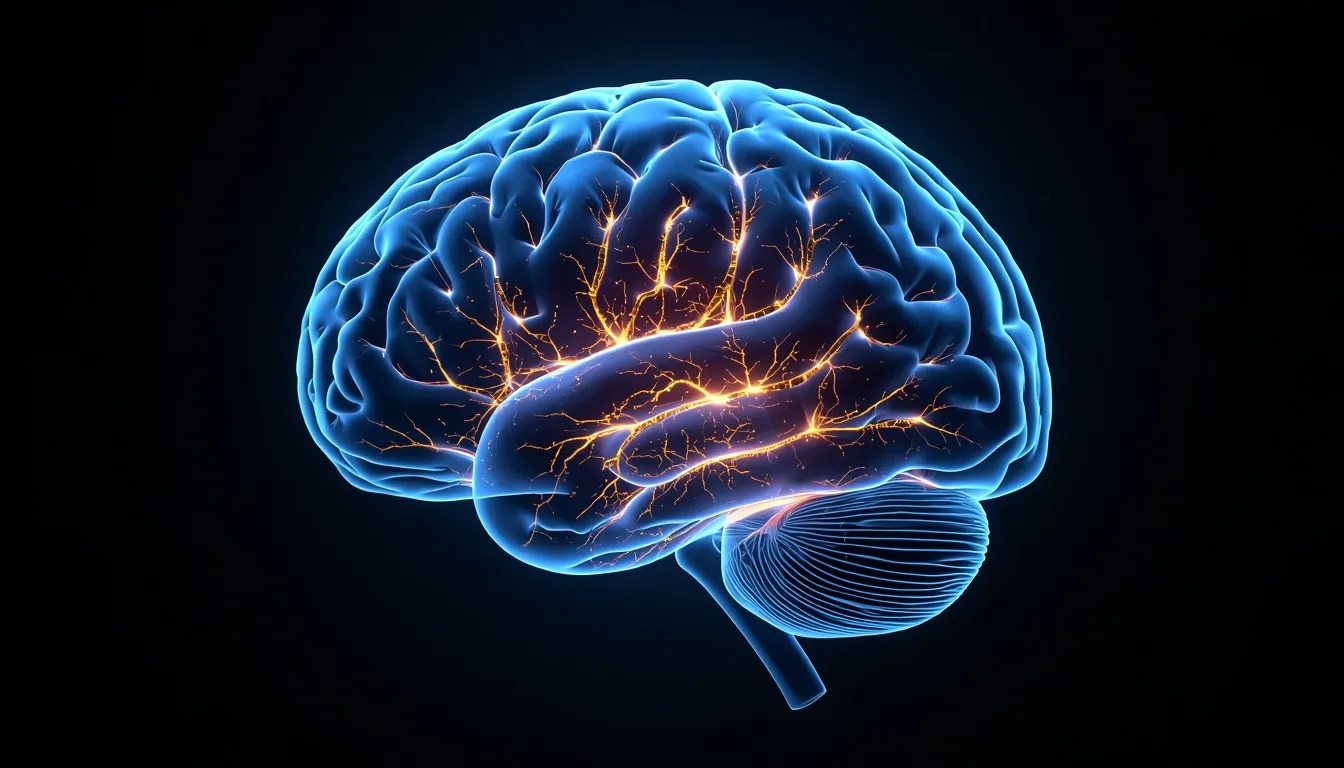
One of the most heavily studied mechanisms of flow state science is transient hypofrontality. This refers to a temporary reduction in neural activity within the prefrontal cortex the region of the brain responsible for complex planning, self-monitoring, time perception, and the “inner critic.”
When this region quiets down, the psychological effects are immediate and profound. Self-doubt diminishes, pattern recognition accelerates, and you develop a natural flow state of mind where the activity is unfolding on its own rather than being consciously forced.
The Neurochemical “Flow Cocktail”
Alongside this structural shift, the brain releases a highly specific neurochemical mix. Understanding dopamine’s role in motivation is crucial here, as it sits at the core of the flow cocktail, sharpening focus and driving you toward your goal. The complete chemical profile includes:
- Dopamine: Boosts motivation, increases focus, and enhances rapid pattern recognition.
- Norepinephrine: Increases physical arousal and keeps attention sharply locked onto the immediate task.
- Anandamide: Known as the “bliss molecule,” it supports lateral, associative thinking, paving the way for creative breakthroughs.
- Endorphins & Serotonin: Raise pain tolerance and provide a profound, lingering sense of satisfaction.
The Yerkes-Dodson Law of Arousal
Arousal levels matter just as much as neurochemistry. A state of flow psychology tends to occupy a very narrow middle band between profound boredom (where the challenge is too low) and overwhelming anxiety (where the challenge heavily outpaces skill). If perceived stress climbs too high, the nervous system shifts out of this productive zone, prioritizing survival over exploratory attention. Left unchecked, this can result in cognitive overload symptoms, completely shutting down executive functioning.
Flow State vs. Hyperfocus: Key Differences
In clinical psychology, a flow state and hyperfocus are increasingly discussed side-by-side, especially by adults exploring an ADHD diagnosis. From the inside, the two states genuinely overlap: both involve intense absorption, a heavily distorted sense of time, and the ability to tune out the surrounding environment. However, their underlying mechanics are entirely different.
|
Dimension |
Flow State |
ADHD Hyperfocus |
|
Trigger |
Optimal challenge-to-skill match. |
Novelty, urgency, or extreme emotional intensity. |
|
Voluntary Control |
Can be entered and exited deliberately. |
Often difficult to interrupt or break away from. |
|
Post-Task Feeling |
Energized, satisfied, and mentally restored. |
Depleted, fatigued, and sometimes disoriented. |
|
Task Difficulty |
Strictly matched to current skill level. |
Can occur even on low-effort or low-value tasks. |
Clinical Insight Box
“Many adults with attention regulation issues mistake hyperfocus for flow. Hyperfocus is often a trauma response or a dopamine-seeking behavior triggered by urgency, leading patients to neglect basic physiological needs like eating or sleeping. A true flow state is intrinsically rewarding and operates within a healthy regulatory window. If you find yourself consistently unable to disengage from a task, or experiencing severe task-initiation failure beforehand, you are likely dealing with executive dysfunction, not flow.”
Dr. Elena Rostova, Licensed Clinical Psychologist
When this executive dysfunction prevents a person from starting tasks altogether, it often manifests as intense task avoidance, recognized clinically as ADHD paralysis.
The 4-Phase Flow Cycle: Struggle, Release, Flow, Recovery
One of the most practically useful additions to modern flow state psychology is the four-phase cycle. It beautifully explains why unlocking a flow mindset often feels utterly impossible when you try to force it directly.
- The Struggle Phase: This comes first. You load the brain with information and effort, typically accompanied by rising cortisol and frustration. Many people quit here, mistaking the natural friction of the struggle for total failure.
- The Release Phase: Attention is deliberately let go. Taking a walk, stepping into the shower, or doing an unrelated low-stakes task allows the subconscious mind to keep working while conscious effort steps back.
- The Flow Phase: The earlier effort finally pays off in absorbed, seemingly effortless, and highly accelerated performance.
- The Recovery Phase: This is the most overlooked phase. It requires genuine rest during which the nervous system restores the heavy neurochemicals spent during a deep flow state.
The Conditions That Make a Flow State Possible
Rather than a rigid checklist, researchers group the conditions that reliably support flow into three overlapping categories.
- Individual Conditions: You need a clear, proximate goal and immediate feedback on whether your action is working. Most importantly, you need a challenge that sits slightly above your current skill level (roughly 4% harder than what you are used to).
- Environmental Conditions: The environment must offer novelty, meaningful stakes, and crucially absolute protection from interruption.
- Social Conditions: In group settings (like a surgical unit, a sports team, or a jazz band), shared goals, mutual trust, and equal participation can produce what researchers refer to as group flow.
Why You Can’t Force a State of Flow
A persistent myth treats flow as something you can trigger on command through sheer willpower. Flow state science does not support this.
You cannot summon flow directly any more than you can force sleep by trying harder to fall asleep. What you can control is the environment the goal, the challenge level, the absence of interruption and the state tends to naturally follow when those conditions perfectly align.
This gap between the myth of “flow-on-demand” and reality sits inside a larger cultural pattern known as productivity dysmorphia a distorted sense that anything short of constant optimization represents failure. Treating flow as a switch to flip through effort alone tends to produce the exact opposite result: increased self-monitoring and a highly active prefrontal cortex that blocks the state entirely. Practitioners rely on grounding and mind-body connection practices to lower baseline anxiety before attempting deep work.
What Blocks Flow in a Distracted World
Modern attention faces aggressive obstacles that simply did not exist when flow was first studied.
Every digital notification carries a cognitive cost far beyond its few seconds of interruption. Researchers studying attention residue have found that part of the human mind keeps working on the interrupted task even after you switch to a new one. It can take upward of twenty minutes for your brain to fully clear this residue. Multitasking compounds this issue, as the brain is not actually processing two demanding tasks simultaneously, but rather rapidly toggling between them.

How to Develop a Flow State Mindset: A Practical Framework
If you want to apply flow state psychology to your daily life, these evidence-based steps have the strongest track record.
- Match the Challenge to the Skill: Research consistently points to tasks calibrated to roughly 4% above your current ability. Adjusting task difficulty is the highest-leverage change you can make.
- Set One Proximate Goal: “Finish this specific chapter” focuses attention far more effectively than “be more productive today.” The brain needs a concrete, immediate target.
- Build a Genuine Distraction Container: Create a fixed block of time with your phone in another room and internet blockers activated.
- Use a Startup Ritual: Because flow cannot be forced, a consistent pre-task cue the same ambient music or the same cup of tea signals to your brain that it is time to begin the struggle phase.
- Protect the Recovery Phase: Scheduling genuine downtime after a demanding session restores the neurochemical resources that your next session will inevitably draw upon.
Flow State Psychology FAQs
What are the 9 components of flow?
Csikszentmihalyi’s original framework identifies nine recurring features of a flow experience: clear goals, immediate feedback, a balance between challenge and skill, deep concentration, loss of self-consciousness, a strong sense of control, time distortion, intrinsic motivation, and complete immersion.
Is flow state real?
Yes, the flow state is entirely real and scientifically measurable. Neuroimaging confirms it is characterized by transient hypofrontality (a quieting of the prefrontal cortex) and the release of performance-enhancing neurochemicals like dopamine, norepinephrine, and anandamide.
What is the flow state meaning?
The flow state meaning refers to an optimal psychological condition where an individual is fully immersed, focused, and involved in an activity. During a state of flow, self-doubt vanishes and the activity itself becomes deeply rewarding.
Is flow state the same as ADHD hyperfocus?
No, though the two are frequently confused. Flow is a voluntary state tied to a perfectly matched challenge and is easy to exit. Hyperfocus is often triggered by extreme novelty or emotional urgency and can be highly difficult to switch off.
How long does it take to enter flow?
Most clinical and applied estimates put the transition into a deep flow state at somewhere between 15 and 45 minutes of focused, uninterrupted effort.
Scientific References & Peer-Reviewed Sources
- Csikszentmihalyi, M. (1990). Flow: The Psychology of Optimal Experience. Harper & Row.
- Dietrich, A. (2004). Neurocognitive mechanisms underlying the experience of flow. Neural Networks, 17(5-6), 749-761.
- Leroy, S. (2009). Why is it so hard to do my work? The challenge of attention residue when switching between tasks. Organization Science, 20(2), 168-181.
- Kotler, S. (2014). The Rise of Superman: Decoding the Science of Ultimate Human Performance. Harcourt.
- Nakamura, J., & Csikszentmihalyi, M. (2014). The concept of flow. In Flow and the foundations of positive psychology (pp. 239-263). Springer, Dordrecht.
| Medical Disclaimer & E-E-A-T Attribution
This article is for educational purposes and does not replace personalized medical or psychological advice. If you are recovering from a brain injury, trauma, or a mental health condition, work with a licensed clinician to build a plan suited to your situation. Written by: Adil Farooq, Psychiatry Magazine Medically reviewed by: [Dr. Adil Farooq MS · PhD] · Updated: 2026 |