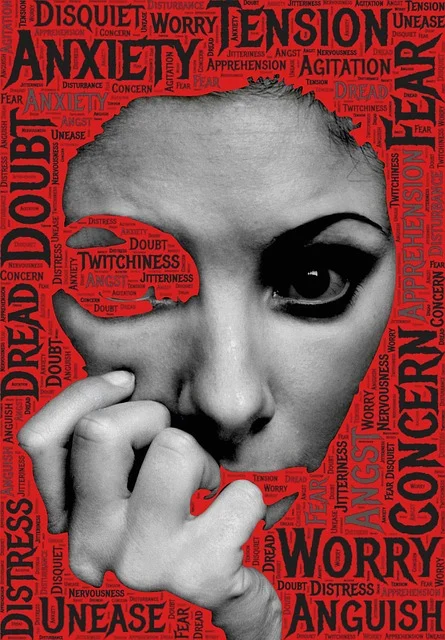
You are chopping vegetables, or holding a baby, or standing on a train platform, when a thought flashes through your mind that makes your stomach drop. It is a thought about hurting someone, maybe someone you love most in the world. You did not ask for it, you do not want it, and it horrifies you. Now you are wondering what it says about you. If this sounds familiar, you may be dealing with harm OCD intrusive thoughts.

This experience is far more common than people admit, because shame keeps it hidden. Many people suffer in silence for years, convinced they are dangerous, when the truth is almost the opposite. The very fact that these thoughts disturb you so deeply is a clue about who you really are.
In this guide, you will learn what harm OCD is, what its intrusive thoughts look like, why they are so common, how they differ from real intent, and which treatments truly help. This article is for education only and cannot diagnose you or replace care from a qualified mental health professional.
Quick Answer: What Are Harm OCD Intrusive Thoughts?
Harm OCD intrusive thoughts are unwanted, distressing thoughts, images, or urges about harming yourself or someone else, which appear against your will and clash with your values. In harm OCD, a subtype of obsessive-compulsive disorder, these thoughts trigger intense fear and lead to compulsions such as avoiding, checking, or seeking reassurance. The thoughts are symptoms of anxiety, not wishes. Treatment, especially exposure and response prevention, is highly effective.
What Is Harm OCD?
Obsessive-compulsive disorder, or OCD, is a condition built on two parts. Obsessions are unwanted thoughts, images, or urges that repeatedly enter your mind and cause distress. Compulsions are the actions, physical or mental, that you do to reduce that distress or to prevent something bad from happening.
OCD comes in many forms, often called themes or subtypes. Some people fear contamination, others fear making mistakes, and others are tormented by doubts about their morality or relationships. Harm OCD is the theme in which the obsessions are about causing harm, either deliberately or accidentally.
The fear may be directed at others, such as a child, partner, or stranger. It may be directed at oneself, as a terror of losing control. It may also take the form of fear of accidental harm, such as worrying that you might have hit someone with your car without noticing. All of these share the same core: a mind locked onto the worst possible outcome, and a heart that cannot bear the idea of being responsible.
OCD affects somewhere in the range of one to three percent of people at some point in life, and it appears across all ages, cultures, and backgrounds. Harm-related obsessions are one of its most common themes. Yet because the content is so upsetting, many people never mention it to anyone, and they may wait years before getting help.
The most important point is that harm OCD is an anxiety condition, not a violent one. The thoughts are not plans, and they are not desires. They are the mind’s misfiring alarm.
What Do Harm OCD Intrusive Thoughts Look Like?
Harm OCD can look different from person to person, but it tends to follow familiar patterns. The thoughts often arrive suddenly, in a flash, and they are usually directed at the people or situations you care about most.
Some people experience a thought or mental image of hurting a loved one, such as a partner, child, or parent. Others have a sudden urge-like feeling when holding something sharp or standing near a ledge, followed by intense fear that they might act on it. Some fear snapping and losing control in a crowded place. Others worry that they may have harmed someone accidentally and cannot be sure that they did not.

New parents often experience this form, which can be especially frightening in the weeks after childbirth. If this is your situation, please know that unwanted thoughts about a baby’s safety are common and treatable, and that talking to your doctor or midwife is a caring and responsible step.
The compulsions that follow are just as important as the thoughts themselves, because they keep the cycle alive. Many people with harm OCD avoid triggers, such as knives, driving, or being alone with certain people. Others check repeatedly, for example by re-reading the news for reports of accidents or retracing their route. Many seek reassurance, asking family members over and over whether they are a good person, or searching online for stories that prove they are not dangerous.
There are also mental compulsions that nobody can see. These include replaying events in your head, mentally reviewing whether you really wanted something, silently repeating phrases, or trying to cancel out a bad thought with a good one. Because these rituals are hidden, even close family members may not realize how much you are struggling.
If you find that your thoughts are often related to right and wrong, you may also be interested in our guide to moral OCD, which explores how the same cycle attaches itself to questions about your character.
Why Intrusive Thoughts Are Normal, and Why Harm OCD Intrusive Thoughts Feel Different
Here is something that surprises almost everyone: unwanted, strange, and even disturbing thoughts are a normal part of being human. Studies in many different countries have found that the vast majority of people report having intrusive thoughts at some point, including thoughts about harm, accidents, or doing something inappropriate.
Think about the last time you stood at a balcony and briefly wondered what it would be like to fall, or imagined swerving your car for a second. Most people shrug these moments off and move on within seconds. The brain produces a huge range of random content, and much of it is nonsense. Our intrusive thoughts guide goes into more detail about how common and harmless most of them are.
So why do some people get stuck? The difference is not in the thought itself, but in how the mind reacts to it. In harm OCD, the thought is treated as a major threat. The person thinks, “Why would I think this? What if it means something? What if I am a dangerous person?” That reaction turns a passing mental blip into a crisis.
Psychologists call this thought-action fusion, the mistaken belief that having a thought is the same as wanting to act on it, or that thinking about something makes it more likely to happen. When a person fuses thought and action, every intrusive idea feels like a confession.
The brain also has a habit of fixating on what it perceives as important. Because you care so deeply about your loved ones, the thought of harming them feels deeply significant, and your mind flags it as urgent. The more attention the thought receives, the more frequently it comes back.
In other words, harm OCD intrusive thoughts feel different not because they are more dangerous, but because they get stuck to fear, meaning, and a powerful need for certainty.
Why People With Harm OCD Are Not the Danger They Fear They Are
This is the question that keeps many people awake at night: what if the thought means something? To understand why it does not, it helps to look at how these thoughts feel and how they differ from genuine intent to harm.
People with harm OCD find their thoughts abhorrent. The thoughts go against their values, which is why they cause so much anguish. Clinicians describe such thoughts as ego-dystonic, meaning they feel foreign and in conflict with who you are. In contrast, a person with genuine intent to harm generally does not feel horror, disgust, or desperate fear about the idea.
People with harm OCD also tend to work hard to prevent harm. They avoid knives, they double-check locks, they stay away from vulnerable people, and they ask for reassurance, all out of a fierce desire to keep others safe. The behavior shows a mind trying to protect, not to attack.
Research and clinical experience consistently show that intrusive thoughts in OCD are not linked with acting violently. The anxiety attached to them is exactly what makes people with OCD so careful. That said, a trained professional is the right person to assess any individual situation, and you should never have to carry this question alone.
It is also important to know that harm OCD is different from other conditions. Psychosis, for example, can involve a loss of insight, voices that give commands, or beliefs that feel completely real, with no sense that the thoughts are unwanted. Antisocial or violent intent is also quite different, since it is usually accompanied by little distress. If you ever feel a genuine urge or intention to harm yourself or someone else, or if you hear voices telling you to do so, please contact emergency services, a crisis line, or a mental health professional right away. In the United States, you can call or text 988. Help is available, and reaching out is the safe and responsible thing to do.
The OCD Cycle: Obsession, Anxiety and Compulsion
To get free of harm OCD, it helps to understand how the cycle works. It follows a simple, predictable loop, and seeing the loop clearly is the first step toward breaking it.
It begins with a trigger, which might be an object, a situation, or simply a random thought. An intrusive thought appears, and the mind interprets it as a sign of danger. Anxiety surges, bringing a racing heart, tight chest, and a feeling that something must be done.
The person then performs a compulsion, whether that is avoiding, checking, reassuring themselves, or mentally reviewing. The anxiety drops, at least for a little while, and the brain learns a lesson: that compulsion worked, so do it again. Unfortunately, the relief is short-lived. Because the person never learns that the thought was harmless on its own, the doubt returns, often louder than before.
This is why reassurance is such a trap. When someone tells you, “You would never hurt anyone,” you feel better for a moment, but your brain files that comfort as evidence that the thought really was a threat that needed to be neutralized. Over time, the need for reassurance grows, and the cycle tightens.
It may also help to know that this loop often feeds on future worry, as in anticipatory anxiety, where the mind spends hours bracing for the next frightening thought. Understanding the cycle gives you a map. Every part of treatment is about interrupting it at the right point.
Why Pushing Away Violent Intrusive Thoughts Backfires
It is natural to want these thoughts gone. You may try to distract yourself, argue with the thought, or tell yourself firmly to stop thinking about it. Sadly, this is one of the surest ways to make the thought stick.
Psychologists have studied this effect for decades. When people are told to avoid thinking about something, such as a white bear, they tend to think about it more. The mind has to keep checking whether it is still avoiding the thought, which keeps the thought active. With harm OCD, the stakes feel much higher, so the effect is even stronger.

Arguing with the thought does not work either, because OCD thrives on doubt. For every reassuring answer you find, your mind can produce a new “but what if.” The goal of treatment is not to win the argument, but to step out of it.
There is a hopeful side to this. If trying to suppress thoughts makes them stronger, then the opposite approach, letting them come and go without reacting, can make them weaker. This is the core idea behind the most effective therapies for OCD, and it is why learning new ways to respond to your thoughts is so powerful.
It can also help to calm the body, since anxiety and the thinking brain feed each other. Learning how to calm the amygdala, the brain’s alarm center, can lower the volume of the fear signal while you practice new responses.
What Causes Harm OCD?
There is no single cause of OCD, and no one is to blame for developing it. Like many mental health conditions, it appears to arise from a mix of biology, temperament, and life experience.
Genetics play a role, since OCD tends to run in families, although having a relative with OCD does not mean you will develop it. Brain imaging studies suggest that circuits involved in detecting errors and threats may be overactive in people with OCD, which makes the brain’s alarm fire more easily.
Personality and thinking style matter too. People who have a strong sense of responsibility, who are perfectionistic, or who find uncertainty hard to tolerate may be more vulnerable. Harm OCD in particular often affects thoughtful, conscientious people who care deeply about doing the right thing.
Life events can act as triggers. Periods of intense stress, major transitions, becoming a parent, and past trauma can all bring on or worsen symptoms. Some people also notice that OCD begins after an illness or during a period of exhaustion.
It is just as important to say what does not cause OCD. Having harm-related thoughts does not mean you secretly desire harm, and no one gets OCD because they are a bad or dangerous person.
Treatment for Harm OCD Intrusive Thoughts
The encouraging news is that harm OCD is highly treatable. With the right help, most people see significant relief, and many return to a life where intrusive thoughts feel like background noise.
The gold-standard treatment is a form of cognitive behavioral therapy called exposure and response prevention, often shortened to ERP. In ERP, you work with a trained therapist to gradually face the thoughts, situations, and feelings you have been avoiding, while choosing not to perform your usual compulsions. For example, you might practice sitting with an unsettling thought without seeking reassurance, or being near an object you have been avoiding.
This may sound frightening, but it is done step by step, at a pace you can handle, and you stay in control throughout. Over time, your brain learns that the anxiety rises and falls on its own, that the feared outcome does not occur, and that you can live with uncertainty. A typical course involves a series of weekly sessions over a few months, and many people notice improvements well before the end.
Medication can also help. Selective serotonin reuptake inhibitors, known as SSRIs, are commonly prescribed for OCD and can reduce the intensity of obsessions and anxiety. They often take several weeks to work, and doses used for OCD are sometimes higher than those for depression. A doctor or psychiatrist can guide this decision, and you should never stop a medication suddenly without medical advice.
Acceptance and commitment therapy and mindfulness-based approaches may also support recovery by helping you relate differently to your thoughts. They teach you to notice a thought, label it as a thought, and let it pass without giving it power.
If finding a specialist nearby is difficult, online therapy for anxiety and OCD can be a convenient and effective option, and many therapists now offer ERP by video. Try to look for someone with specific training in OCD, since general talk therapy that focuses on reassurance or analyzing the thoughts can sometimes make things worse.
Practical Self-Help Strategies Between Sessions
Self-help is not a replacement for professional treatment, but it can support your progress and make the hard days easier. Think of these as small habits that make recovery possible.
Begin by learning to label what is happening. When a frightening thought appears, try saying to yourself, “I am having the thought that I might hurt someone. This is OCD.” Changing the phrasing creates a little distance, which reminds you that a thought is only a thought.
Next, try to let the thought be there without fixing it. You do not have to push it away, answer it, or prove anything. You can go on with what you were doing, even while the thought and the discomfort tag along. This is hard at first, but every time you do it, you teach your brain that the thought does not require action.
Pay attention to your compulsions, including the subtle ones. Notice when you are about to ask for reassurance, check something, or replay a memory. You may not be able to stop right away, but delaying the ritual even for a few minutes can start to weaken it.
Calm your body as well. Slow breathing, gentle movement, and somatic grounding exercises can help settle a racing nervous system, making it easier to stay with uncomfortable feelings. Building your emotional regulation skills over time gives you tools to ride out waves of fear rather than being swept away.
Finally, be kind to yourself. Shame is the fuel that keeps harm OCD hidden. Speaking about your experience with a therapist, doctor, or trusted person can feel like a huge risk, but it is often the moment when real relief begins.
How to Support a Loved One With Harm OCD
If someone you care about has confided in you about these thoughts, your response matters enormously. Listening without judgment can be one of the most healing gifts you can offer.
Start by taking their distress seriously and thanking them for trusting you. You might say, “That sounds really frightening, and I am glad you told me.” Avoid reacting with alarm or suspicion, because shame is already a heavy burden.
It is natural to want to reassure them over and over, but this often keeps the cycle going. A kinder approach is to express confidence in their ability to cope, to acknowledge how hard it is, and to gently encourage treatment. You might say, “I know this feels awful, and I think a therapist who specializes in OCD can help you.”
Avoid helping with compulsions, such as hiding knives, avoiding certain situations on their behalf, or answering the same question again and again. This is called accommodation, and while it comes from love, it can unintentionally reinforce the problem. A therapist can help you and your loved one work out how to reduce accommodation together.
Look after yourself too. Supporting someone with OCD can be tiring, and you deserve support of your own.
When to Seek Professional Help
It is a good idea to speak with a professional if intrusive thoughts take up a lot of your time, cause significant distress, or lead you to avoid people, places, or activities. You do not need to wait until things feel unbearable, and you do not need to be certain that it is OCD.
A primary care doctor is a helpful first step, and they can refer you to a psychologist or psychiatrist who understands OCD. When you meet with them, you can describe your experience in your own words. Mental health professionals are trained to hear difficult thoughts without judgment, and they hear about harm-related obsessions far more often than you might imagine.
Seek immediate help if you feel a real intention or urge to harm yourself or someone else, if you hear voices telling you to hurt someone, or if you feel unable to keep yourself or others safe. Contact your local emergency number or a crisis line. If you are thinking about harming yourself, in the United States you can call or text 988 at any time, and other countries have similar services.
Frequently Asked Questions
Do harm OCD intrusive thoughts mean I will act on them?
No. Intrusive thoughts in OCD are unwanted and clash with your values, and people with harm OCD are very unlikely to act on them. The distress you feel is part of the condition. A qualified professional can assess your individual situation if you are worried.
What is the difference between harm OCD and real violent intent?
People with harm OCD find the thoughts horrifying and go to great lengths to prevent harm. Real violent intent is usually accompanied by little distress or conflict. If you feel a genuine urge or plan to hurt someone, contact emergency services or a professional immediately.
Is harm OCD the same as having intrusive thoughts?
Not exactly. Most people have occasional intrusive thoughts and move on quickly. Harm OCD is when these thoughts become sticky, cause intense distress, and lead to compulsions like avoiding, checking, or seeking reassurance. It is the reaction and the cycle that define the disorder.
Can harm OCD go away on its own?
OCD tends to be chronic and may fluctuate without treatment, often worsening during stress. The good news is that evidence-based therapy, especially exposure and response prevention, helps most people significantly. Seeking help early usually leads to better outcomes and prevents years of unnecessary suffering.
Why do harm OCD thoughts target the people I love?
OCD attacks what matters most to you. Because you value your loved ones deeply, the thought of harming them feels especially threatening, so your mind fixates on it. The target reflects your love and sense of responsibility, not hidden desire.
What is the best treatment for harm OCD?
Exposure and response prevention, a form of cognitive behavioral therapy, is considered the gold standard. Many people also benefit from SSRI medication, alone or alongside therapy. Acceptance-based approaches can help too. Look for a therapist who has specific training in treating OCD.
Should I ask others for reassurance about my thoughts?
It is understandable, but repeated reassurance usually strengthens OCD by teaching your brain that the thoughts are dangerous. A better approach is to work with a therapist on tolerating uncertainty. If you are unsure whether you are in danger or need help, speak with a professional.
Conclusion
Harm OCD intrusive thoughts can make you feel frightened, ashamed, and alone, but they are a recognized symptom of an anxiety condition, not a reflection of your character. The pain you feel about them shows how deeply you care, and with the right treatment, the grip of these thoughts can loosen dramatically.
If you have been struggling in silence, consider taking one small step this week, such as booking an appointment with a doctor or a therapist who specializes in OCD. You do not have to face this alone, and relief is possible. If you ever feel unsafe or at risk of harming yourself or others, reach out to emergency services or a crisis line right away.