You finish your second latte of the morning, and a few minutes later your heart is pounding, your hands feel shaky, and a vague sense of dread settles in just before an important meeting. You wonder whether something is wrong with you. If this sounds familiar, you are far from alone. Anxiety after drinking coffee is one of the most common reasons people start questioning their relationship with caffeine, and it has clear biological explanations.

Coffee does not cause an anxiety disorder on its own, but it can switch on the same body alarm system that anxiety uses, and for some people that alarm is very sensitive. In this guide, you will learn why it happens, how to tell caffeine jitters from an anxiety disorder, how much coffee may be too much, and what you can do right now and long term to feel steadier. This article is educational and not a substitute for advice from a licensed professional.
Quick Answer: Caffeine stimulates your body’s stress response, raising heart rate and adrenaline, which can cause or worsen anxiety symptoms. People who are sensitive to caffeine, have an anxiety disorder, drink a lot, or drink coffee on an empty stomach are more likely to feel jittery, shaky, or panicky afterward.
Anxiety After Drinking Coffee: Why It Happens in Your Body
To understand coffee anxiety, it helps to know what caffeine actually does. Throughout the day, a chemical called adenosine builds up in your brain and gradually makes you feel sleepy. Caffeine fits into the same receptors that adenosine uses, so it blocks the signal. You feel more awake, but the sleepy message is only muted, not removed.
At the same time, caffeine encourages your body to release stress hormones such as adrenaline and cortisol. Your heart beats faster, your blood pressure may rise slightly, your breathing quickens, and your muscles tense. This is the classic fight-or-flight response, the same system that activates when you feel threatened.
Here is where the confusion begins. Your brain reads physical signals to decide how you feel. If your heart is racing and your hands are trembling, your brain may interpret those sensations as danger, even when nothing dangerous is happening. That interpretation can then trigger real worry, and the worry adds even more adrenaline. This loop is why a strong cup of coffee can feel like anxiety out of nowhere, and it is also why people who already notice bodily sensations closely, as described in our article on how anxiety feels physical, are especially prone to it.
Caffeine also reaches its peak in your bloodstream about thirty to sixty minutes after you drink it, and it can linger for several hours. That timing explains why the jitters may arrive after you have already forgotten about your cup.
Common Symptoms of Anxiety After Drinking Coffee
Anxiety after drinking coffee can feel different from person to person, but certain signs show up again and again. Many people notice a racing or pounding heart, trembling hands, sweating, and restlessness. Others feel nauseous, lightheaded, or tight in the chest, or find it hard to take a deep, satisfying breath. Mentally, you might feel on edge, irritable, unable to concentrate, or hit by a sudden wave of dread.
Sam, 29, an illustrative example, drinks a large cold brew on his commute. By the time he reaches the office, his legs are bouncing under the desk, his stomach is knotted, and he is convinced he is about to forget everything he prepared for a presentation. Nothing about the presentation has changed, but his body is sending alarm signals that his mind keeps trying to explain.
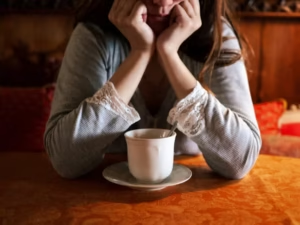
Sometimes these sensations build into something stronger, a wave of fear with a pounding heart, shortness of breath, and a feeling that something terrible is about to happen. Caffeine can trigger this kind of episode, especially in people prone to panic. Our guide on panic attack vs anxiety attack explains how these experiences differ and overlap.
These symptoms usually ease as the caffeine wears off, which can take several hours. If they do not ease, or if you feel chest pain, faint, have a very fast or irregular heartbeat, or struggle to breathe, treat it as a medical issue and seek urgent care or call 911. Anxiety and heart problems can look alike, and it is always safer to be checked.
Coffee Anxiety vs an Anxiety Disorder: How to Tell the Difference
A natural question is whether your reaction is simply caffeine jitters or a sign of an anxiety disorder. The two can overlap, and they can also feed each other, so there is no perfect dividing line. Still, a few patterns can help you sort things out.
Timing is the biggest clue. Caffeine-driven anxiety usually begins within an hour of a drink, fades as the caffeine clears, and returns when you drink again. If you notice that your symptoms follow your coffee schedule and improve on days you skip it, caffeine is likely a major trigger. Anxiety disorders, in contrast, tend to show up regardless of what you drank, and they often come with worry that lingers for weeks or months.
Content matters too. Caffeine jitters are mostly physical: shaky hands, a racing heart, and a wired feeling. An anxiety disorder usually adds persistent thoughts, such as fear of what might go wrong, avoidance of situations, and difficulty relaxing even when you feel physically fine. If your mind is anxious before the coffee even touches your lips, as with anticipatory anxiety, the cause is probably bigger than your cup.
Caffeine can also make an existing anxiety disorder harder to manage, because it raises baseline arousal. Medical guidelines recognize that caffeine can cause or worsen anxiety symptoms, and clinicians often ask about it during evaluations. A simple experiment can help: with your doctor’s approval, reduce caffeine gradually for a few weeks and track how you feel. If anxiety improves, caffeine was a key piece. If it stays high, you may benefit from a professional evaluation.
Why Some People Get Anxiety After Drinking Coffee More Easily
Two people can drink the same cup and have completely different experiences. Genetics play a major role. Variations in the genes that control how quickly your liver breaks down caffeine mean some people clear it fast, while others carry it for many hours. Variations in the adenosine receptors in your brain also change how strongly you feel its effects.
Your current state matters just as much. If you slept badly, are under heavy stress, or are already worried, your nervous system starts closer to the edge, so even a small dose can tip it over. People with panic disorder or generalized anxiety are often more sensitive, and some hormonal shifts, including those around the menstrual cycle, pregnancy, and perimenopause, can change how you respond. Certain medications and supplements can also interact with caffeine, so ask your doctor or pharmacist if you take any.
How you drink coffee changes the effect as well. Coffee on an empty stomach can hit faster, and a large drink downed quickly delivers a sudden spike. Hidden caffeine adds up, too. Energy drinks, pre-workout powders, some pain relievers, soda, tea, and chocolate all contribute. Many people blame a single cup when the real cause is the total across the day.
Finally, sensitivity can change over time. Many people say they could drink coffee freely in their twenties but now feel jittery after one cup. Aging, stress, medication changes, and shifts in sleep or hormones can all make your nervous system react differently.
How Much Coffee Is Too Much If You Get Anxiety After Drinking Coffee?
The U.S. Food and Drug Administration states that up to about 400 milligrams of caffeine a day, roughly four or five cups of brewed coffee, is generally not linked with dangerous negative effects for most healthy adults. That number is a ceiling for safety in the general population, not a recommendation for people prone to anxiety.
Many people with anxiety feel symptoms at much lower amounts, sometimes after a single cup. If that describes you, your personal limit matters more than any guideline. Pay attention to how you feel one to two hours after drinking, and treat that as your guide.

Caffeine content varies widely, so these are rough ranges. An eight-ounce cup of brewed coffee often contains somewhere around 80 to 120 milligrams, while a single shot of espresso is usually closer to 60 to 75. Black tea generally has less, often about 40 to 60, and a can of cola is lower still. Energy drinks can range from modest amounts to well over 200 milligrams, and large coffee-shop sizes can contain several times what a small cup does.
Because anxiety is the issue, a helpful target for many people is not a number but a pattern. Some find that one small cup before noon works well. Others do best with half-caf or tea. Others find that even small amounts are too much and choose decaf. There is no shame in any of these choices.
What to Do Right Now When You Feel Anxiety After Drinking Coffee
If the jitters have already started, the first step is to remind yourself that the feeling is temporary and caused by a substance, not a sign that something is wrong with your mind. That simple thought lowers the fear that fuels the loop. Stop drinking caffeine for the rest of the day, and sip water slowly.
Next, slow your breathing. Breathe in gently through your nose for about four seconds, then breathe out through your mouth for six to eight seconds. The longer exhale tells your nervous system to ease off the alarm. Repeat for a few minutes. Our guide on how to calm your nervous system fast offers more techniques, and our somatic grounding exercises can help you feel your feet, your seat, and the room around you when your mind starts racing.
Eating something small, such as a banana, toast, or yogurt, can cushion the effect if you drank on an empty stomach and help steady your blood sugar. A short, gentle walk can burn off some of the restless energy, though skip intense exercise if your heart is racing.
Then wait it out. Caffeine takes time to clear, so the sensations may last a few hours. Try to avoid scrolling for worst-case health explanations, since fear of the symptoms can make them feel stronger. If symptoms are severe, or you have chest pain, fainting, or trouble breathing, seek urgent medical care right away.
How to Prevent Anxiety After Drinking Coffee Without Giving It Up
You may not need to quit. Many people keep coffee in their lives by adjusting how, when, and how much they drink. Start by eating before you have your first cup, because food softens the spike. Choose a smaller size, and sip slowly over thirty to sixty minutes instead of gulping a large drink on the way out the door.
Timing helps as well. Caffeine can stay in your system for many hours, so cut off coffee by early afternoon, or earlier if you are sensitive. Late-day coffee can disturb your sleep, which then raises anxiety the next day. If you struggle with evenings, our article on anxiety at night explains how nighttime worry works and what can help.
Consider swapping part of your intake. Half-caf, tea, or a smaller shot of espresso can keep the ritual without the same punch. Decaf is not completely caffeine-free, but it usually contains only a small amount, so many people with anxiety find it comfortable.
Drink plenty of water through the day, since thirst and fatigue can add to uneasy feelings. Track your symptoms for a week or two in a notes app, listing what you drank, when, what you ate, and how you felt later.
Pay attention to your stress level as well. A tough week, poor sleep, or a looming deadline can lower your tolerance, so build in flexibility. On high-stress days, choose a smaller cup or switch to tea. Staying inside your window of tolerance, the zone where you can handle stimulation without feeling overwhelmed, makes coffee much easier to enjoy.
Coffee, Sleep, and the Anxiety Cycle
Coffee and anxiety can create a quiet cycle. You sleep poorly, so you drink more coffee to cope. The extra caffeine raises anxiety and makes it harder to fall asleep, so the next night is even worse. Within a few weeks, you may feel permanently wired and tired at the same time.
Maya, 35, another illustrative example, started drinking a fourth cup at 3 p.m. to push through afternoon fatigue. By bedtime she felt restless, and her thoughts raced until after midnight. The next morning she needed even more coffee. Moving her last cup to noon and adding a short afternoon walk broke the pattern within a couple of weeks.
Breaking the cycle means protecting sleep first. Keep a steady bedtime, get morning daylight, and treat tiredness with rest or movement rather than a late caffeine fix whenever possible. If constant worry or dread persists even when you cut back, our article on constant fear for no reason may help you understand what else could be involved.
Cutting Back on Coffee Safely
If you decide to reduce your intake, go gradually. Quitting suddenly can cause caffeine withdrawal, which often brings headaches, fatigue, irritability, trouble concentrating, and low mood for several days. Ironically, these symptoms can feel like anxiety too, and they may tempt you back to the cup.
A simple taper works well for many people. Reduce your daily amount by a small portion every few days, replacing some of it with half-caf or decaf, until you reach a level that feels comfortable. Drink water, sleep well, and expect a few rough days. Most withdrawal symptoms fade within about a week or so, though it varies.
Check with your doctor first if you take medications, are pregnant, have a heart condition, or use caffeine heavily. You do not have to give up coffee forever to feel better. Even a modest reduction can bring noticeable relief for many people who are sensitive.
When Anxiety After Drinking Coffee Needs Professional Attention
Some symptoms need urgent care. Call 911 or go to the nearest emergency room if you have chest pain or pressure, fainting, a very fast or irregular heartbeat that does not settle, severe shortness of breath, or confusion. Anxiety can mimic heart problems, so please do not try to diagnose yourself in an emergency.
Talk to a doctor or licensed therapist if you have frequent panic attacks, if anxiety continues even when you avoid caffeine, if it interferes with work, sleep, or relationships, or if you feel hopeless or afraid much of the time. A professional can check for medical causes, such as thyroid problems, and discuss treatment options. When anxiety stays stuck in high gear, our guide on a nervous system stuck in fear mode may offer helpful context.
If you would like support from home, our online therapy for anxiety page explains how virtual care works. If you are in crisis or having thoughts of self-harm, call or text 988, the Suicide & Crisis Lifeline, at any hour in the United States. This article is educational and is not a substitute for medical or mental health care.
Frequently Asked Questions
Why does coffee give me anxiety?
Caffeine blocks the brain chemical that makes you feel sleepy and triggers the release of adrenaline, which speeds your heart and tenses your body. If you are sensitive, stressed, or prone to anxiety, those sensations can feel like fear. Genetics, sleep, and how much you drink all influence how strongly you react.
How long does coffee anxiety last?
Most people feel the strongest effects within an hour or two, and symptoms often fade over several hours as caffeine leaves the body. In sensitive people, jitters and poor sleep can last longer. If anxiety lasts for days or appears without caffeine, speak with a doctor or therapist.
Can coffee cause panic attacks?
Caffeine can trigger panic attacks in some people, especially those who already have panic disorder or high sensitivity. The racing heart and breathlessness it causes can set off a fear response. If you have frequent attacks, reducing caffeine and speaking with a professional are both sensible steps.
Does decaf cause anxiety?
Decaf contains a small amount of caffeine, usually far less than regular coffee, so most people tolerate it well. A few very sensitive individuals may still notice effects. Anxiety after decaf can also come from other factors, such as stress, expectation, or unrelated health issues, so look at the whole picture.
How do I calm down after too much caffeine?
Stop caffeine, drink water, and eat a small snack. Slow your breathing with long exhales, take a gentle walk, and remind yourself that the feeling will pass. Avoid more coffee or energy drinks. If you have chest pain, fainting, or trouble breathing, seek emergency care right away.
Is it bad to drink coffee if you have anxiety?
Not necessarily. Some people with anxiety tolerate small amounts, while others feel worse even after one cup. Because caffeine can intensify anxiety symptoms, many clinicians suggest limiting it or trying alternatives. Track how you feel and discuss it with your doctor or therapist so you can find what works for you.
Can you suddenly become sensitive to caffeine?
Yes. Changes in stress, sleep, hormones, medications, or health can make your body react differently than before. Aging can also slow how quickly you clear caffeine. If your tolerance seems to have shifted suddenly, cut back gradually and mention it to your doctor, especially if you have other new symptoms.
Conclusion
Anxiety after drinking coffee is common, understandable, and often manageable. Caffeine activates the same stress response that anxiety uses, so jitters, a racing heart, and sudden dread can follow even a single cup. By learning your limits, eating before you drink, watching your timing, protecting your sleep, and cutting back gradually if needed, you can often keep the comfort of a warm mug without the fear. Your reaction does not mean you are weak or broken. It means your nervous system is sensitive and deserves care. If anxiety continues without caffeine, or if it disrupts your life, reaching out to a doctor or licensed therapist is a strong and practical step. You deserve to feel calm in your own body.