| Quick Answer
Anxiety and relationships are closely linked: generalized anxiety disorder (GAD) activates a fight-or-flight response that partners often misread as criticism or rejection. This drives cycles of hypervigilance, reassurance-seeking, withdrawal, and emotional flooding. Couples cope successfully by practicing co-regulation, naming the physiological pattern early, and building communication habits that calm both nervous systems. |
Anxiety and relationships rarely stay in separate lanes. A nervous system that has learned to scan for danger does not switch off when a person walks through the front door at the end of the day. It reads a partner’s sigh, a delayed reply, or a change in tone the same way it reads any other potential threat, and it responds accordingly. Understanding why this happens, and what to do about it as a couple, is the difference between a relationship that slowly erodes under chronic tension and one that becomes a source of genuine regulation and repair.
Understanding the Individual Mechanics of Anxiety
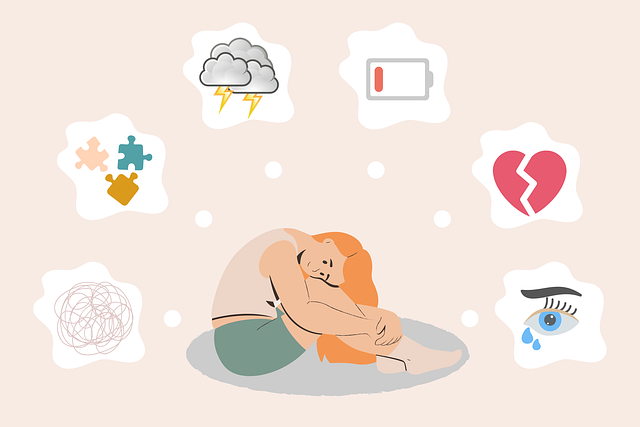
Generalized Anxiety Disorder (GAD) is often described in clinical terms as excessive, difficult-to-control worry occurring more days than not for at least six months. What that definition misses is what GAD actually does to a person’s physiology inside a relationship. The amygdala, the brain’s threat-detection center, cannot reliably distinguish between a genuine danger and an ambiguous relational cue. A partner’s flat tone, a canceled plan, or thirty minutes of silence after a text message can trigger the same fight-or-flight response as an actual physical threat: the sympathetic nervous system floods the body with cortisol and adrenaline, heart rate climbs, breathing becomes shallow, and muscles brace for danger that isn’t actually present.
This is not a character flaw or a choice. It is a measurable somatic response, the body reacting before the conscious mind has had a chance to evaluate the situation rationally. By the time a person “decides” to feel anxious about their partner’s behavior, their nervous system has already been in a heightened state for several seconds or minutes. Cognitively, this physiological arousal narrows thinking and produces predictable cognitive distortions: catastrophizing (“They’re pulling away and this relationship is ending”), mind-reading (“I know they’re annoyed with me”), and personalization (interpreting a partner’s bad day as evidence of relational failure).
Inside a relationship, these mechanics tend to surface in recognizable patterns:
- A racing heart or tight chest when a partner is late, quiet, or difficult to read
- Repeatedly re-reading a text message or conversation for hidden meaning
- Assuming the worst-case interpretation of a neutral comment or facial expression
- Difficulty concentrating on what a partner is saying while internally scanning for signs of conflict
- Physical fatigue, stomach upset, or tension headaches following an emotionally loaded exchange
None of this happens in isolation. Because relationships are built on constant, real-time signal-reading between two nervous systems, one partner’s internal anxiety response inevitably becomes relational data for the other. That is where the individual condition stops being a private experience and starts shaping the couple’s shared dynamic.

The Anxious-Avoidant Loop: How Anxiety and Relationships Intersect
This is the point where individual psychology becomes couples psychology. Attachment styles, the relational blueprints formed in early bonding experiences and studied extensively in attachment theory, largely determine how a person’s anxiety gets expressed once it enters a relationship. A person with an anxious attachment style tends to respond to perceived threat with what researchers call hyperactivating strategies: pursuing closeness, seeking reassurance, escalating bids for connection, and increasing contact until the anxiety is soothed. A person with an avoidant attachment style tends to do the opposite, relying on deactivating strategies: creating distance, minimizing the importance of the relationship, and withdrawing from conflict rather than engaging with it.
When these two styles pair off, which happens more often than chance alone would predict, the result is a self-reinforcing cycle sometimes referred to clinically as the demand-withdraw pattern. The anxious partner’s hypervigilance picks up on a subtle shift in the avoidant partner’s affect and interprets it as distancing. This triggers a pursuit behavior, a question, a request for reassurance, an attempt to talk it through immediately. The avoidant partner, whose nervous system interprets pursuit as engulfment or intrusion, withdraws further to regain a sense of internal safety. That withdrawal confirms the anxious partner’s original fear, intensifying the pursuit. Each partner is, in effect, managing their own nervous system dysregulation in a way that directly dysregulates the other.
Left unmanaged, this loop frequently produces what clinicians describe as emotional flooding: a state of physiological overwhelm in which heart rate spikes past a threshold where rational conversation becomes neurologically difficult. Once flooding occurs, neither partner is capable of the perspective-taking or problem-solving that a disagreement actually requires. Conversations during flooding tend to escalate, shut down entirely, or get revisited later with no real resolution, because the nervous system, not the relationship content, is driving the interaction. This is precisely why so many couples report having “the same argument” repeatedly: the surface topic changes, but the underlying anxious-avoidant loop does not.
Recognizing this pattern is often the single most clinically useful step a couple can take, because it reframes the conflict. It is no longer “my partner doesn’t care enough” versus “my partner is too needy.” It becomes two dysregulated nervous systems responding to each other in predictable, treatable ways.
Evidence-Based Coping Strategies for Couples Managing Anxiety
Co-Regulation as the Clinical Foundation
The single most effective mechanism couples have available is co-regulation, the process by which one person’s calm, regulated nervous system helps down-regulate their partner’s activated one. This happens through concrete physiological channels: a slower, lower-pitched voice, relaxed facial muscles, unhurried physical presence, and steady eye contact all send safety signals through the vagus nerve that logical reassurance alone cannot replicate. Co-regulation is not the same as “calming someone down” through argument or dismissal. It is a nervous-system-to-nervous-system process that has to happen before any content-level conversation can be productive.

For the Partner Experiencing Anxiety
The partner managing GAD or an anxious attachment pattern carries real responsibility in this dynamic, not as blame, but as agency. Specific, practicable strategies include:
- Naming the physiological state out loud rather than acting from it (“My chest is tight and I’m starting to flood, I need two minutes before we keep talking”)
- Practicing a brief interoceptive check-in (What am I actually feeling in my body right now?) before reacting to a perceived slight
- Separating the sensation of threat from the actual evidence for it, using a simple “what do I know vs. what am I assuming” split
- Using grounding techniques, paced breathing, or the 5-4-3-2-1 senses exercise, to lower physiological arousal before initiating a difficult conversation
- Replacing vague reassurance-seeking (“Do you still love me?”) with specific, time-bound requests (“Can we check in by 6 p.m. if something feels off?”)
For the Supporting Partner
The supporting partner’s role is equally clinical, not simply patient. Effective strategies include:
- Responding to the nervous system state behind the words, not only the literal request
- Keeping voice tone and pacing calm and steady, even when a reassurance request feels repetitive
- Avoiding minimizing language (“You’re overreacting,” “It’s not a big deal”), validating the underlying fear without necessarily agreeing with its content
- Setting clear, kind boundaries around the frequency of reassurance-seeking so support remains sustainable rather than depleting
- Naming their own need for space directly (“I need twenty minutes to reset, and I’m coming back”) instead of withdrawing silently, which prevents the anxious partner’s threat-detection system from filling the silence with worst-case assumptions
These strategies work because they interrupt the loop at the physiological level rather than only at the level of communication technique. A couple that learns to co-regulate is, in clinical terms, building a shared nervous system capacity that outlasts any single argument.
When to Seek Professional Support
Home-based coping strategies are genuinely effective for day-to-day friction, but they have real limits. It is time to involve a licensed clinician when anxiety symptoms are interfering with daily functioning independent of the relationship, persistent GAD, panic attacks, or health anxiety that exists whether or not a partner is even present. In these cases, individual treatment gives the anxious partner a foundation of nervous system stability the relationship cannot provide on its own; structured, evidence-based online therapy for anxiety gives that partner concrete tools for managing GAD symptoms before they ever reach the relationship.
Professional support is also warranted when the anxious-avoidant loop has become entrenched: repeated versions of the same argument, a supporting partner who reports chronic emotional exhaustion, trust ruptures that home strategies haven’t resolved, or either partner privately considering ending the relationship over a pattern neither can seem to break alone. At that stage, online couples counseling offers a structured, third-party space where a trained clinician can slow down the demand-withdraw cycle in real time, something that is extremely difficult for two dysregulated nervous systems to do unassisted. Couples who combine both individual anxiety treatment and joint sessions consistently report faster, more durable improvement than those who pursue either path alone.
Frequently Asked Questions
Can anxiety ruin a relationship?
Yes, untreated anxiety can seriously damage a relationship over time. When hypervigilance, reassurance-seeking, and emotional flooding go unaddressed, they create the self-reinforcing anxious-avoidant loop described above, gradually eroding trust and emotional safety. This outcome is not inevitable, though. With awareness of the underlying pattern, consistent co-regulation practice, and appropriate treatment, most couples can interrupt the cycle well before it becomes irreparable.
How do you calm an anxious partner?
Calm an anxious partner by regulating your own nervous system first, then offering steady, predictable reassurance instead of logical argument. Lowering your voice, slowing your speech, and maintaining relaxed body language activate the co-regulation process described earlier, which settles a dysregulated nervous system far faster than reasoning with the content of the fear. Validate what your partner is feeling before addressing whether the fear is factually accurate.
Is anxious attachment the same as generalized anxiety disorder?
No, anxious attachment and Generalized Anxiety Disorder (GAD) are related but clinically distinct. Anxious attachment is a relational pattern, rooted in early bonding experiences, that surfaces specifically around closeness, separation, and perceived rejection. GAD is a diagnosable condition involving chronic, diffuse worry that spans multiple areas of life, not only relationships. A person can experience one, both, or neither, but when they co-occur, they tend to intensify each other significantly.
| Medical Disclaimer & E-E-A-T AttributionThis article is for educational purposes and does not replace personalized medical or psychological advice. If you are recovering from a brain injury, trauma, or a mental health condition, work with a licensed clinician to build a plan suited to your situation.
Written by: Adil Farooq, Psychiatry Magazine Medically reviewed by: [Dr. Adil Farooq MS · PhD] |