Narcolepsy is a chronic neurological sleep disorder that affects the brain’s ability to regulate sleep-wake cycles. People with narcolepsy often experience excessive daytime sleepiness, sudden sleep attacks, and disrupted nighttime sleep, making everyday life challenging.
Although it can feel overwhelming, understanding narcolepsy is the first step toward effective management, treatment, and improved quality of life.
What is Narcolepsy?
Narcolepsy is a sleep disorder where the brain struggles to maintain stable sleep and wake states.
Types of Narcolepsy
- Type 1 Narcolepsy
Includes cataplexy (sudden muscle weakness triggered by emotions) - Type 2 Narcolepsy
Does not include cataplexy but still involves severe daytime sleepiness
What Causes Narcolepsy?
Understanding what causes narcolepsy can help reduce confusion and stigma.
1. Hypocretin Deficiency
A lack of hypocretin (a brain chemical that regulates wakefulness)
2. Autoimmune Factors
The immune system may mistakenly attack sleep-regulating neurons
3. Genetic Factors
Family history may increase risk
4. Environmental Triggers
- Infections
- Stress
- Hormonal changes
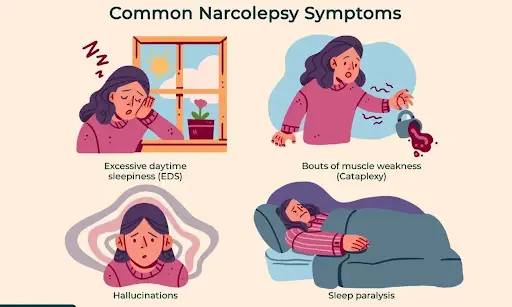
Common Symptoms of Narcolepsy
Recognizing narcolepsy symptoms is crucial for early diagnosis.
Key Symptoms:
- Excessive daytime sleepiness
- Sudden sleep attacks
- Cataplexy (loss of muscle control)
- Sleep paralysis
- Hallucinations before sleep
- Disrupted nighttime sleep
How Do You Know If You Have Narcolepsy?
Ask yourself:
- you feel constantly tired despite enough sleep?
- fall asleep suddenly during the day?
- Do you experience temporary paralysis when waking up?
If yes, you may need a medical evaluation.
How Narcolepsy Affects Daily Life
Narcolepsy impacts more than just sleep:
Work & Productivity
- Difficulty concentrating
- Reduced performance
Relationships
- Misunderstanding from others
- Social withdrawal
Mental Health
- Anxiety
- Depression
- Low self-confidence
How is Narcolepsy Diagnosed?
Diagnosis usually involves:
1. Sleep Study (Polysomnography)
Monitors brain activity during sleep
2. Multiple Sleep Latency Test (MSLT)
Measures how quickly you fall asleep
3. Medical History Evaluation
Detailed symptom analysis
Narcolepsy Treatment Options
While there is no complete cure, narcolepsy treatment focuses on managing symptoms.
1. Medications
- Stimulants for daytime alertness
- Antidepressants (for cataplexy)
- Sleep-regulating medications
2. Lifestyle Changes
- Maintaining a consistent sleep schedule
- Taking short scheduled naps
- Avoiding caffeine before bedtime
3. Behavioral Therapy
- Helps develop coping strategies
- Improves daily functioning
How to Manage Narcolepsy Daily
Managing narcolepsy requires consistency and discipline.
Daily Tips:
- Stick to a fixed sleep routine
- Take planned naps (15–20 minutes)
- Exercise regularly
- Eat balanced meals
- Avoid heavy meals during the day
Narcolepsy in Different Age Groups
Children
- May appear hyperactive
- Struggle in school
Teenagers
- Academic challenges
- Social difficulties
Adults
- Work-related stress
- Relationship strain
Narcolepsy and Mental Health
Living with narcolepsy can lead to:
- Depression
- Anxiety
- Emotional frustration
Addressing mental health is essential for full recovery.
Can Narcolepsy Be Cured?
Currently, there is no permanent cure.
However:
Symptoms can be managed effectively
Many people live normal lives
Treatment significantly improves quality of life
Is Narcolepsy Dangerous?
Narcolepsy itself isn’t life-threatening, but it can increase risks:
- Accidents due to sleep attacks
- Reduced alertness while driving
Proper management reduces these risks.
When to See a Doctor
Seek help if:
- Daytime sleepiness is severe
- You experience cataplexy
- Symptoms interfere with daily life
Living with Narcolepsy: Coping Strategies
Practical Coping Tips
- Educate family and coworkers
- Create a structured routine
- Use reminders and alarms
- Join support groups
Final Thoughts
Narcolepsy is a lifelong condition, but it does not define your future. With the right combination of medical treatment, lifestyle changes, and emotional support, you can lead a productive and fulfilling life.
Awareness leads to control
Treatment leads to improvement
Consistency leads to success
If you suspect narcolepsy, seeking professional help can be a life-changing step.