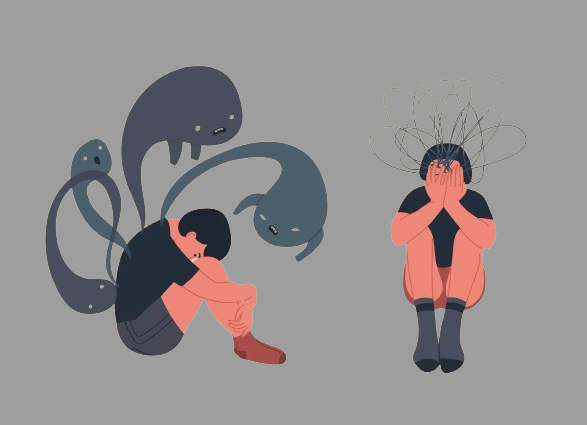
Quick Answer: Yes, you can experience mental stress without anxiety. Stress is a biological response to pressure driven by cortisol, the HPA axis, and the autonomic nervous system. Anxiety is an emotional response rooted in fear and anticipation of a threat. It is entirely possible to experience physical tension, disrupted sleep, and brain fog without ever feeling consciously worried or afraid.
Key Takeaways
- Biological vs. Emotional: Stress activates the body (HPA axis), while anxiety activates the mind’s fear center (amygdala).
- Somatic Symptoms: Unexplained jaw clenching, digestive issues, and “wired but tired” fatigue are primary physical indicators of subconscious stress.
- The Hidden Cause: Accumulated micro-stressors and high allostatic load cause the body to enter survival mode without triggering panic.
- Regulation: Healing requires somatic (body-based) interventions, such as vagus nerve stimulation, rather than traditional talk therapy alone.
You may not feel panicked, worried, or fearful the hallmark emotions of anxiety. Yet, your shoulders are rigidly tight, your sleep is incredibly shallow, your patience is paper-thin, and your cognitive processing feels sluggish. You are likely left wondering what is wrong with you, because something feels fundamentally “off,” but it doesn’t match the traditional definition of anxiety.
If you’ve ever asked yourself, “Why do I feel stressed for no reason?” or “Can you be stressed without being anxious?” you are not alone. You are describing a well-documented physiological state. Mental stress symptoms without anxiety are incredibly common, especially among high-functioning individuals. Understanding the neurobiology behind this phenomenon is the first step toward regulating your nervous system and reclaiming your baseline health.
The Neurobiology: Can You Be Stressed Without Anxiety?
Yes, you can be stressed without anxiety. To understand how, we must separate the body’s biological response from the mind’s emotional response. Stress is a physiological reaction to an external pressure or demand. It is governed by the hypothalamic-pituitary-adrenal (HPA) axis. When you face a demand, this system floods your bloodstream with cortisol and adrenaline to help you meet the challenge.
Anxiety, conversely, is an emotional and cognitive anticipation of a future threat. It primarily recruits the amygdala (the brain’s fear center) and your conscious appraisal of danger. Because these are two related but distinct neural pathways, you can carry a heavy allostatic load defined by the American Psychological Association (APA) as the cumulative wear and tear of chronic stress on the body without your brain interpreting this physical activation as emotional fear.
Stress vs. Anxiety: The Clinical Differences
Understanding the key differences helps explain why your body can be in a state of alarm while your mind insists you are perfectly fine.
|
Factor |
Stress |
Anxiety |
|
Primary Trigger |
External pressure, demands, or overload. |
Internal fear, worry, or perceived threat. |
|
Biological Driver |
HPA axis, cortisol, autonomic nervous system. |
Amygdala, cognitive anticipation. |
|
Physical Sensation |
Tension, exhaustion, somatic symptoms. |
Panic, shortness of breath, trembling. |
|
Emotional Tone |
Can feel flat, numb, or irritable. |
Usually feels intensely fearful or filled with dread. |
|
Duration |
Often resolves when the external demand ends. |
Can persist long after a threat has passed. |
|
Self-Awareness |
You may not notice it until physical symptoms appear. |
Usually consciously felt as intrusive worry. |
Some individuals live in a state of high-functioning stress. They are productive, composed, and outwardly calm, while their nervous system remains quietly and dangerously activated underneath.
The Somatic Signs: Physical Symptoms of Mental Stress Without Anxiety
When the mind suppresses emotional distress to remain productive, the body absorbs the impact. This conversion of mental pressure into physical symptoms is known as somatization. Even if your thoughts remain calm, your body may exhibit chronic stress symptoms through various biological systems.
The most common manifestation is musculoskeletal tension. Chronic activation of the fight-or-flight response keeps muscles primed for action, which clinically presents as bruxism (jaw clenching), cervical spine stiffness, and tension headaches, entirely independent of anxious thoughts. Simultaneously, you may experience severe gastrointestinal distress. The gut-brain axis is highly sensitive to elevated cortisol. According to research in neurogastroenterology, the body will continuously redirect blood flow away from digestion toward survival functions during periods of high allostatic load, resulting in bloating, altered motility, acid reflux, or IBS-like symptoms.
Furthermore, patients frequently report a paradoxical “wired but tired” fatigue. This occurs when your circadian rhythm is disrupted by a constantly elevated cortisol baseline. You feel profound physical exhaustion, yet your nervous system is too activated to allow for restorative, deep sleep. This is often accompanied by heart palpitations without panic, where your resting heart rate increases subtly throughout the day without any accompanying feeling of fear.

Emotional and Cognitive Symptoms
Stress doesn’t only manifest physically; it heavily alters how you process information and emotions, bypassing fear entirely. Rather than hyper-arousal (panic), prolonged mental stress without anxiety often leads to a blunted affect. You may feel a lack of joy, reduced motivation, or profound emotional flatness. Alternatively, you may experience extreme irritability and low frustration tolerance, snapping at minor inconveniences simply because your emotional bandwidth is depleted.
Cognitively, chronic stress directly impairs executive functioning. Elevated, sustained cortisol interferes with prefrontal cortex activity. This disruption results in severe decision fatigue, where small choices feel monumental and exhausting. It also triggers memory lapses, such as losing your train of thought, and a reduced capacity to stay present in conversations or focus on deep work tasks.
The 60-Second Self-Assessment: Is It Stress or Anxiety?
If you are struggling to pinpoint what you are experiencing, ask yourself three clinical questions. First, is your primary discomfort physical (tightness, fatigue, headaches) or mental (racing thoughts, worst-case scenarios)? Second, do you feel a sense of dread about the future, or do you just feel utterly exhausted by the present? Finally, if your current workload or external pressures vanished tomorrow, would your symptoms disappear? If you answered “physical,” “exhausted by the present,” and “yes,” you are likely dealing with somatic symptoms without a medical cause triggered by mental stress, rather than an anxiety disorder.
Why Do I Feel Stressed For No Reason?
This is the most common question patients ask clinicians. Usually, there is a reason, but it isn’t acute or obvious. Modern life is uniquely designed to trigger stress through accumulated micro-stressors. Constant digital notifications, dense decision-making environments, and multitasking do not trigger acute fear. However, they continuously drip-feed stress hormones into your system, raising your baseline until it becomes your new normal.
Additionally, you may be carrying a hidden emotional load. The responsibility for others, financial pressure, or career expectations requires immense cognitive background processing, even if you aren’t consciously worrying about these things. Over time, this culminates in burnout. Burnout rarely feels anxious; it feels numb, detached, and empty. People often misinterpret the physiological exhaustion of burnout as a lack of motivation, failing to recognize it as a severe stress-related state.
How the Body Stores Stress: Fight, Flight, and Freeze
Stress activates your autonomic nervous system. Even without the emotional experience of anxiety, this activation persists quietly in the background through distinct behavioral patterns. The fight response shows up as chronic tight muscles, irritability, and restlessness. The flight response manifests as overworking, avoidance, perfectionism, and constant busyness. Conversely, the freeze response looks like a functional freeze, characterized by shutdown, brain fog, chronic procrastination, and severe emotional numbness.
15 Signs You Have Mental Stress Symptoms Without Anxiety
If you experience several of the following indicators across different categories, your nervous system is likely carrying a hidden somatic stress load:
- Jaw Clenching (Bruxism): Often occurring overnight or during deep concentration.
- Tight Shoulders & Neck: The body’s subconscious physical bracing mechanism.
- Tension Headaches: A dull, persistent ache around the forehead.
- Digestive Upset: Unexplained bloating or stomach discomfort.
- Restless Sleep: Waking up frequently without fearful thoughts.
- Skin Flare-ups: Sudden bouts of adult acne, eczema, or psoriasis.
- Frequent Colds: A compromised immune system due to excess cortisol.
- Overworking: Using productivity to mask nervous system activation.
- Avoiding Downtime: Feeling deeply uncomfortable or restless when resting.
- Constant Busyness: The inability to sit still without a specific task.
- Snapping at Loved Ones: A severely lowered threshold for frustration.
- Emotional Flatness: A distinct lack of joy, enthusiasm, or general affect.
- Forgetfulness: Impaired short-term memory function and blanking on simple words.
- Feeling Wired at Night: Physical exhaustion combined with mental restlessness.
- Trouble Enjoying Hobbies: Activities that used to bring pleasure now feel like chores.
How to Reduce Mental Stress Without Anxiety
Because the issue is rooted in biology rather than fearful thoughts, cognitive behavioral therapy (CBT) or traditional talk therapy alone may not be enough. You must utilize somatic interventions to heal nervous system dysregulation.
Vagal nerve stimulation acts as the brake pedal for your nervous system. You can stimulate it manually through diaphragmatic breathing (inhaling for 4 seconds, exhaling for 8), humming, or brief cold water exposure to shift the body into a parasympathetic state. You should also practice somatic tracking by paying close attention to physical sensations in your body without judgment. Acknowledge the tight chest or tense jaw without trying to fix it immediately, which helps the brain uncouple physical tension from a state of danger. Finally, create rigid boundaries around digital consumption. Stop the continuous drip of micro-stressors by implementing a strict “no-screen” hour before bed, allowing cortisol levels to naturally drop to a restorative baseline.

When to See a Doctor
While mental stress symptoms without anxiety are common, they overlap with several clinical medical conditions. You should seek professional medical evaluation if you experience persistent chest pain, severe and unmanageable chronic fatigue, ongoing insomnia that does not respond to sleep hygiene, or significant digestive pain. A physician can help rule out thyroid disorders, cardiovascular issues, or autoimmune flare-ups that mimic high allostatic load.
Disclaimer: This content is for informational purposes only and does not substitute professional medical advice, diagnosis, or treatment.
Frequently Asked Questions (FAQ)
Can you have physical symptoms of stress without feeling mentally stressed?
Yes. This phenomenon is called somatization. Your autonomic nervous system can remain in a state of high alert, producing physical symptoms like muscle tension, fatigue, and digestive issues, even if you do not consciously feel emotionally overwhelmed or anxious.
What does a cortisol spike feel like without anxiety?
A cortisol spike without anxiety often feels like sudden physical restlessness, a flushed sensation, or a racing heart. Mentally, it typically manifests as severe irritability, a sudden inability to concentrate (brain fog), or feeling “wired but tired.”
Is high-functioning stress a real diagnosis?
While “high-functioning stress” is not a formal DSM-5 diagnosis, it is a widely recognized clinical presentation. It describes individuals who maintain high levels of productivity and outward composure while internally suffering from the physical and cognitive exhaustion of chronic stress.
Why do I feel stressed for no reason?
Usually, there is a reason, but it isn’t a single, obvious event. Accumulated micro-stress, hidden emotional load, sleep deprivation, or burnout can activate your nervous system gradually until the activation feels like your baseline “normal,” making it feel as though it is happening for no reason.
How do you calm your nervous system down from stress without anxiety?
Because the stress is somatic, you must use body-based interventions. Slow, extended-exhale breathing, regular movement, consistent sleep hygiene, reduced digital stimulation, and vagus nerve exercises help shift the body from sympathetic activation toward parasympathetic recovery.
|
Medical Disclaimer & E-E-A-T Attribution This article is for educational purposes and does not replace personalized medical or psychological advice. If you are recovering from a brain injury, trauma, or a mental health condition, work with a licensed clinician to build a plan suited to your situation. Written by: Adil Farooq, Psychiatry Magazine Medically reviewed by: [Dr. Adil Farooq MS · PhD] · Updated: 2026 |